

A whole new world awaits
Lush, breathtaking, complicated, trying. If you weren’t a fan of Monster Hunter as a franchise until you played Monster Hunter: World, consider yourself missing out on something wondrous. Monster Hunter: World is as close to perfection as an action RPG can be.
Everything begins with you. You begin your adventure as a hunter joining the Fifth Fleet  on an expedition to the New World. You are tasked with exploring the vast wild in search of information and science. You’re supported with an assistant — Palicoes — and other officers of the Fifth Fleet, who help with hunting the flora and fauna in the wide unknown so that you may inform the Research Commission of your findings and possibly stop the extinction of vital dragons. The story is engrossing, well-written and easily digestible with hints of more to come as you explore every nook of the new land.
And explore you will because that’s the name of the game here: Hunting. You, the  hunter, go into the world to hunt monsters of all sizes. During your hunts, you’re using your wits and the environment to your advantage, careful not to faint too many times while working to take down a creature so that you may get new parts to craft gear and weapons. The crafting aspect is fantastic. The variety of gear and equipment that can be generated is off the charts, and there is nothing more satisfying than taking down a new enemy and obtaining new, more powerful gear. Capcom knew the essence of the high that comes from winning a hard-fought battle, loot, craft better gear and repeat. And they’ve captured that essence masterfully here with increasing incentives and nuanced pacing. Fighting never feels weird, and it quickly becomes second nature to swing your sword and make waves in battle. My only gripe here is that there is so much to learn with the battle mechanics and item crafting and usage that sometimes it gets overwhelming. Taking your time to read the tutorials and work through scenarios in training is the way to combat that. I’m pleased with this setup because I’d rather get too much information than not enough.
While on your expeditions or even at the hub, stop a moment when you can and admire the beauty that Capcom has created. The game is one of the most beautiful I have ever seen. I frequently stop to watch the scenery and take in the detail of the surroundings.  And, I want to especially highlight the impressive character creation suite. If I can create my own character in a game, I want bold and accurate tools to do so. Monster Hunter: World gave me that and more. I spent two hours with it alone and I still wanted to spend more time there. The wealth of options is outstanding, and I’m extremely impressed with the diversity found within. I can make a character that accurately looks like me with gorgeous options for hairstyles … or not. But I love the options given, and I can’t praise that feature enough.
The soundtrack is another standout in the presentation. It’s fun, fast-paced and engaging. No track is out of place and it’s well-scored with so many different instruments that it puts almost every other adventure title to shame. This is big-budget music and it shows in every situation you’ll find yourself in every environment. Also, the Palicoes’ sound effects are some of the most adorable cat representations I’ve ever heard. If you love cats like I do, you’re going to be saying “Aww, how adorable!” every five seconds and it’s not going to ever get old. That’s the mark of good audio, honestly.
Monster Hunter: World is a masterpiece in adventure. No shortage of things to do, a wealth of options and story and great mechanics come together in a majestic magnum opus of crafting and survival. The hunt for perfection is over with Monster Hunter: World.

 backward in storyline to tell the story of the future. Street Fighter
  roster, even the lower-tier characters.
 Also adding value is the soundtrack, one of Capcom’s masterpieces. The game is set in the mid-to-late 1980s and it sounds appropriate to that era. Beyond the bangers for multiple characters — Sagat, Balrog and Juli/Juni instantly come to mind — even the narration deserves praise. It’s over the top but it fits perfectly. The soundtrack also works well with the graphics. The sprites are big and colorful as are the detailed and stunning stages. It’s one of Capcom’s better-looking games and is a massive improvement from the rest of the Alpha series. It almost looks like it belongs in an entirely different game series.

 characters in the Ratio System is questionable and their movesets being pressed between
  Capcom vs.
 item from Guile, which would help him defeat M. Bison. Third Strike boss Gill drives the plot overall, tying up the loose ends between

 after Mario Kart: Double Dash have begun referencing the previous tracks of yore, sometimes with varied results. Mario Kart 8 manages to gather a lot of stellar new tracks and some old that aren’t favorites but will suffice as entries. A lot of the older tracks are from more recent entries but make no mistake — they are there for the purpose of drawing you in to remind you of the good times and then send you on your merry way to try the new tracks. Tugging at my heart strings with a modern
 instinct” kicks in and I find myself searching every nook and cranny to find hidden supplies and other goodies. During my exploration, of course, I come across people who don’t like Jin. I note the presence of bonfires, which generally indicates who I like to refer to as “dudes.” Dudes are the type that are generally hostile to me and my interests. Those interests involve investigation and saving people in the general populace who require the services of a skilled samurai and contract killer. This is usually how the fight starts: Dudes notice me in my finery and my magical horse frolicking in the countryside and now they want to get reckless about things.
 everyone’s mind, but to get there, Tekken 7 stakes its ambitions on looking back to tell the story of the future. Spoiler alert: With Heihachi gone, there’s only Kazuya and Jin left to carry on the blood feud of the clan. The surrounding entities are on either side of the conflict between father and son, and there will be casualties. But that isn’t Tekken 7’s main story to tell. Really, it’s two questions: How did Kazuya become enmeshed in the devil gene foolishness, and how is Heihachi entangled in that as well? The answers lay with new character Kazumi Mishima, Kazuya’s mother and Heihachi’s wife. She plays a central role in unraveling the mystery of Kazuya’s transformation using the devil gene and why Heihachi threw his child off a cliff more than 40 years before.
 many things will be true at once: The sound will be phenomenal, and the graphics will be stunning. After all, this is a Tekken title; the King of the Iron Fist tournament does not slouch. What’s striking is, this is a four-year-old game and it still looks decent. Tekken has never been one to hold back when it comes to looks, and even with the upgraded PlayStation 4 Pro, it’s still a good-looking game. Tekken 7 could look worse with the benefit of more processing power, and some sections do show the age of the game. However, it’s minimal as far as Tekken is concerned, and Tekken 7 is still a powerhouse when compared to everything else on the market.
 As far as Tekken’s playability, I can’t really attest to it on a hands-on level. Full disclosure: I’m not a good Tekken player. That said, however, I find it a little easier to pick up Tekken and play with the new features added in the arcade mode. I really like that there’s an easy combo assist feature. It makes it far less frustrating to learn the combo system, and it makes it much easier for beginners to understand how moves flow together.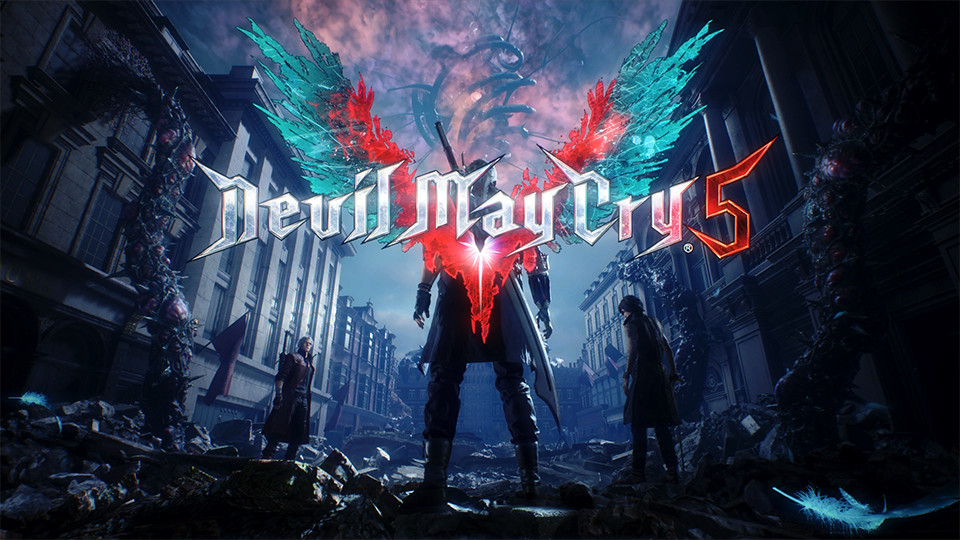
 consoles with the hack and slash style of gaming that put it on the map. I waited five years to play the fifth installment of this series and the kick-ass promotional song “Devil Trigger” helped move that wait right along. In April 2019, me and
 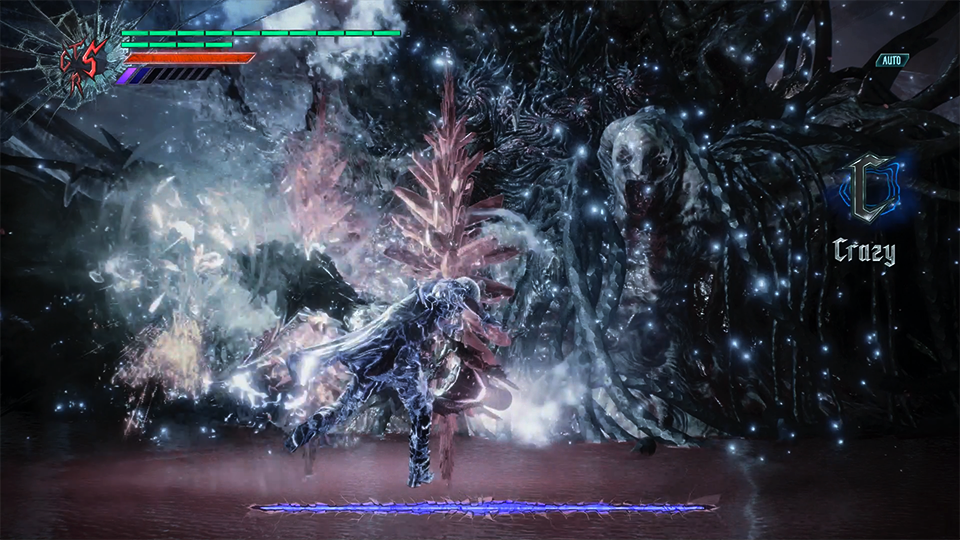 the demon-hunting business but one May night, Nero is accosted by a familiar foe who has not only taken the demon sword Yamato, but also Nero’s demonic arm. Vowing vengeance, Nero pursues the foe to Redwood City where he is introduced to a new evil known as Urizen. He, Dante and fellow demon hunters Trish and Lady are swatted instantly by Urizen. Now having a
 space mecha anime has brought thought-provoking perspectives on issues of humanity and war, and has created a standard for all sci-fi series, especially anime with sci-fi and mecha elements. Through various series, merchandise (including video games for various consoles) and other media, Gundam and its studio, Sunrise Inc., has secured its place among the GOATs of global pop culture. Lyndsey and I have also taken a liking to the Dynasty Warriors game series. I thought: “What would happened if a Dynasty Warriors game was made with Gundam elements?” I got my answer in Dynasty Warriors Gundam 3.
 and determination. Your requests come from a mysterious Gundam suit that asks why humanity’s existence in the universe should continue. This test is conducted in four original story arcs that pair characters from various Gundam series such as the
 was released in the U.S. It wasn’t enough to merely start a life with a character — known as Rubes(kitty) — in my procedurally generated town known as Tokyo; I had to collect everything in my catalogue, build my house into a mansion and catch every insect and fish just for completion sake. In the ensuing 16 years, I have played every iteration of Animal Crossing available. So, you can imagine my palpable joy when a mobile version of Animal Crossing was announced in 2016. Cue Animal Crossing: Pocket Camp in 2017, and I’m still going strong in my quest to build the perfect camp.
 animals that are in one of four locations scattered around the landscape. Four animals will be in these locations with options to talk to you and request items; whether you choose to give them the specific items they request or just chat it up for experience points is up to you. Also new are the aforementioned experience points. Each animal has a meter that gauges their friendship level with you. The higher the level, the more rewards they give in exchange for items they request. The rewards are also new, usually in the form of Leaf Tickets and raw materials that are used in crafting furniture and clothes that can be used to decorate your camp site and