

Groovy competition in rhythm game market
Just when Konami thought it had the market cornered on rhythm games along came In the Groove. The series took the formula of timed arrows, music and dance charts and finessed it into better charts and sensible ratings; or, you know, things Konami lacked after eight games. In the Groove didn’t necessarily perfect the market product but it introduced competition in a nice package that still holds up today.
ITG has the same formula as Dance Dance Revolution: Arrows are timed to a song to  rise (or drop, depending on the song modification used) to meet holders. You’re judged on the timing of your steps and either pass the song or fail based on the cumulative score and effect of your timing. Let’s not get it twisted, though: DDR and ITG are the same thing. Given that ITG cribs a lot of its elements from the originator of the rhythm dance game genre, you aren’t likely to see anything new or mind-blowing when it comes to ITG.
Where ITG shines particularly, however, is the interface and the song choices. There’s a lot to like in those differences. The song wheel interface — which presents songs for play — is crisp as are the song titles. The graphics appear to mimic the best parts of the DDR interface, which is helpful since DDR made an ill-advised change to its look shortly after. It’s also the intricate details such as being able to see a song’s BPM while choosing song mods.
In the Groove’s musical selection is no slouch, either. Many songs sound like something in DDR’s catalog; for example, there’s a series of remixes that immediately calls to mind the Paranoia signature series of DDR. There’s a lot to like with a variety of genres represented.
 ITG shines also in its accessibility: If you can play DDR, you’ll be able to pick up ITG. It’s not hard to understand since it’s using the same engine as DDR. However, the main playability draw comes in its song charts. ITG’s song charts make sense and are intuitive and aren’t haphazardly done or punishing. The difficulty system also makes sense — introducing charts with a higher difficulty than the standard 10 level system that DDR used at the time — which is a must have in a dancing game.
While ITG is a welcome change of pace from DDR, there are some nitpicks that bother me about the series in general. First, some of the song mods available aren’t the most helpful. I’m not keen on silly mods like mines being a default in songs. Thankfully, there’s an option to turn off the mod, but it shouldn’t be a default part of songs at any difficulty. And, likewise, the use of three and four arrows simultaneously — which requires a hand to hit at all arrows at once — is obnoxious. If a song requires it, I usually steer clear of it. That’s not good for the song list and replay value if I’m skipping tracks, and it’s dampens my enthusiasm for an otherwise great soundtrack.
ITG gets its point across with interesting gameplay additions, a good soundtrack and crisp interface. With a few more iterations of the series after its introduction, ITG is great as an alternative on the rhythm game dance floor.
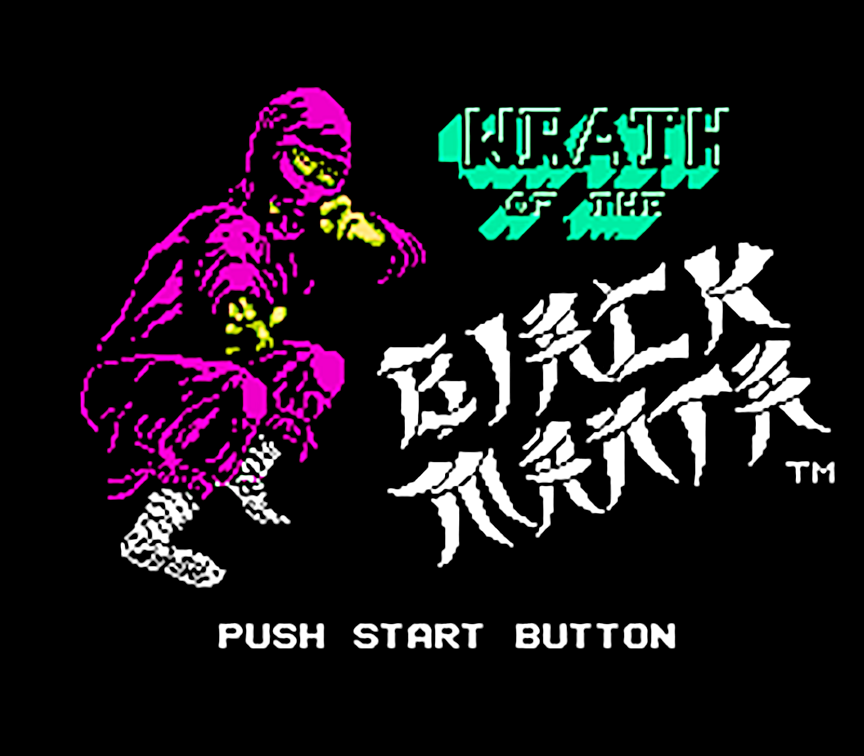
 children in New York City, the apparent bastion of all evil and where the most heinous crimes take place in the video game world. A drug fiend named El Toro is hellbent on turning these children into addicts and it’s up to you and your ninja skills to make Toro get down or lay down with the War on Drugs.™
 The fact that most of the action is ripped off from the infinitely better and more interesting Ninja Gaiden doesn’t help here because you’re going to die a lot from terrible jumping and those aforementioned hits from enemies. The soundtrack also does Manta no favors as it’s just barely serviceable. Even the art is ripped off from somewhere else: Word on those mean streets of
 adventure on the
  by Dr. Light years after the original Mega Man. X is a more powerful version of our blue titan but with free will. 100 years later, after Dr. Light’s death, X was found by Dr. Cain, a robotics expert who developed robots based on X’s design known as “reploids.” However, this began a rise of rebellious reploids, known as mavericks, which led to the formation of a group known as maverick hunters to stop them. Alas, the maverick hunter’s leader Sigma became a maverick (and the series’ main villain), forcing X to team up with another maverick hunter named Zero to stop Sigma’s plan for global domination.
 Control of X is simple as any regular side-scrolling game, especially with the option of switching between the analog sticks or directional buttons. X’s main weapon, the X‑Buster, and other weapons he acquires from a level boss can be powered up in addition to finding upgraded boots, helmet and armor via secret areas in each level. Using a sub screen, I appreciated that it was understandable and simple in organizing items and weapons since, in other side scrolling games, looking for needed items is time consuming and morale-draining. Zero is also playable in
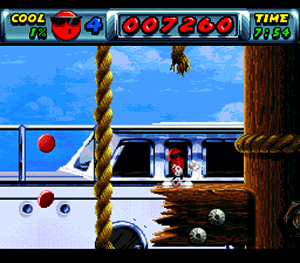 throughout 11 levels in cages. Why its friends are trapped, we’ll never know but it’s up to Spot to rescue them and lecture you about not drinking dark sodas. Spot’s traversal through these 11 levels is nothing short of amazing despite the rampant product placement. It’s surprisingly good, with solid controls that don’t make controlling Spot a chore, and competent simple mechanics that don’t get in the way: It’s mostly jumping and shooting magical sparks at enemies and barred gates. The life system — hilariously denoted by an ever-peeling and deteriorating picture of Spot — is more than generous and there are helper power ups galore to get through levels. The levels themselves have a lot of depth and are timed just right with enough time to explore or get the bare minimum experience in the search for Spot’s missing friend.
 animals that are in one of four locations scattered around the landscape. Four animals will be in these locations with options to talk to you and request items; whether you choose to give them the specific items they request or just chat it up for experience points is up to you. Also new are the aforementioned experience points. Each animal has a meter that gauges their friendship level with you. The higher the level, the more rewards they give in exchange for items they request. The rewards are also new, usually in the form of Leaf Tickets and raw materials that are used in crafting furniture and clothes that can be used to decorate your camp site and
  For a longtime Animal Crossing player, the fun in Pocket Camp is immediately there but not without some caveats. After a certain point, the in-game currency of Bells ceases to be a problem. While scarce in the early going, Bells aren’t an issue once the final upgrade for the
 chance against these planes, it can do air rolls or vertical loops. If you time your attacks right, some planes will drop upgraded firepower or an escort team of two smaller fighter planes to combat the relentless assault from planes that
  The music quality of 1942 is an acquired taste as the repeated use of a snare drum made me think that Capcom phoned in a lackluster drum beat, which made me turn the volume down to continue playing. The challenge is decent since you will be on your toes to avoid enemy fire nonstop. It has strong replay value and would be a great time-killer as a nostalgia trip for arcade veterans. Also, it’s a great example for those who want to know how side-scrolling games played a major impact in the gaming world.