

Father of fighting games gets super upgrade
Gone are the days of roaming a local arcade to play the throng of would-be challengers  and pretenders to the throne of the best local fighting game champion. In its place are home consoles designed to push the power of the arcade. Fighting game franchises have had to keep up or suffer irrelevancy or, worse yet, extinction. The earliest king of the genre, Street Fighter, has had a challenge of sorts: continue forward or go the way of its ride-a-longs of the ‘90s. Super Street Fighter IV attempts to continue the tradition with mostly success.
Super SFIV, at its core, is a fighting fan’s dream. A robust engine with plenty of options  for either the novice or the advanced, SSFIV makes playing a fighting game easy. Even if you haven’t played since the heyday of SFII, there’s a lot of compelling content here to draw you in and get you started in the world of competitive digital fighting. Various modes are here, ready for a deep dive, and there are more than enough new characters and old stalwarts to make fighting interesting. The general rule of thumb is, if the character was in SFII and its derivatives, SFIII or SF Alpha, there’s a good chance they are available for play in SSFIV.
 Fight locales associated with many of the characters are available with a great soundtrack accompanying them. SSFIV does an exceptional job of reminding more experienced fighting enthusiasts of the Street Fighter origins and piquing the curiosity of newer fight fans. The controls also hearken to the old days, so much so that it’s easy to pick up and play and learn about the different systems afforded to each character. Most new characters will play like an older character on the roster so it’s easy to learn the nuance of fighting with a newcomer if you’re experienced with previous SF games. If you aren’t experienced, there’s a great tutorial mode that runs through combo and movesets of each character to teach the basics. That varied level of depth goes a long way toward replay value.
My one gripe out of all the loveliness that is the mixed nostalgia fest of SSFIV is that it’s Capcom being Capcom as usual. For the uninitiated, Capcom gained a reputation in the ’90s for having a solid franchise in Street Fighter II but not being able to count to three. The constant upgrading and reissuing of SFII got old quickly. And, quite frankly, Capcom hasn’t learned its lesson because Street Fighter IV should not have multiple retail versions of its upgrades. Arcade Edition should have been an update that could be bought digitally and downloaded to patch the game up to whatever version Capcom wanted consumers to have. Even when the original version was released, the capability was there. This just screams of cash grab and Capcom being ignorant of tiresome tactics wearing on the fan base. The fact that Ultra Street Fighter IV — one more version beyond this one — exists is proof positive of this.
Other than the fiasco of multiple versions, Capcom has a solid winner on its hands with the fourth entry in the long-running series even as it fades into the background in favor of SFV. If SFV is not your cup of tea, but you want to stay current with the world of Street Fighter, SFIV is a good balance and at the right price now to delve into the world of Ryu, Ken and Chun-Li.

 knucklehead had a major impact on the geek culture scene as well as anime and manga. From graphic novels, to other novelty merchandise and video games, many anime fans worldwide followed his rise from outcast of his ninja village to its legendary savior. During Naruto’s rise, there were many video games for various systems that followed every adventure of our blonde, blue-eyed hero and his friends. I got the opportunity to play one of the Naruto-based games after a recent game shopping expedition when I found Naruto: Ultimate Ninja: Storm.
 Free Battle mode allows you to choose one main fighter with two backup characters against another player or the console’s choice of characters in various stages taken right out of the Naruto universe. Free Battle also allows you to earn extra cash if you defeat their opponents using various moves known as ninjutsu. The extra coinage will be needed in the role playing mode, Ultimate Mission Mode, during which you control Naruto in various missions that involve episodes 1 to 135 of the anime series.
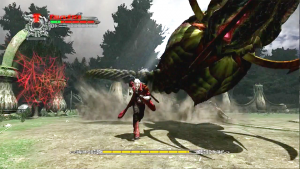 has changed for a more intense experience. Taking place in a remote island town called Fortuna, you assume the role of Nero — a younger version of Dante — who is a member of the Order of the Sword. The Order of the Sword is a militant religious organization formed to destroy demons based on the actions of the Demon-Knight Sparda, who rebelled against the demon underworld to protect humanity. At a recent ceremony to honor Sparda, Dante smashes though a skylight and kills the priest leading the ceremony, setting off a chain of events that would not only put Dante and Nero on a collision course with each other, but also would lead both demon-hunters through a greater mystery to find out the true intentions of the Order and to stop a more vicious plot of a demon-invasion.
 The excellent detail that is used in each level comes to life in the background and cinematic scenes. These were done with high definition technology that will make you feel like you are playing with a masterpiece of art instead of a video game. Capcom’s sound team brings their A‑game again. Each sound and vocal effect combined with Dolby Digital Sound gives an orchestral quality to the game. Capcom did a great job in voice and motion capture for
 modes to choose from. If you’re not informed, you might be a little lost trying to understand just where you should start. With a varied plate to choose from, at the very least the modes are interestingly designed and add value to an already-packed game.