Devil May Cry 3 — 1Q2017 issue

Pho­tos cour­tesy of GiantBomb.com

Dance with the dev­il in Dan­te’s rebound adventure

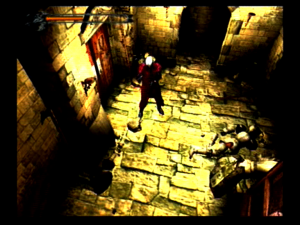
When I final­ly got my own copy of Dev­il May Cry 3, I read that it brought back the melee action that made the first game awe­some to play, but it raised the bar for future install­ments of Capcom’s demon-slay­ing series. Was the praise heaped upon DMC3 well deserved or was this anoth­er way of Cap­com milk­ing a great game series dry for more cash? I got my answer in Dev­il May Cry 3: Dante’s Awak­en­ing, Spe­cial Edition.
Set as a pre­quel to the orig­i­nal DMC, we find our fear­less demon hunter Dante begin­ning to set up shop when a mys­te­ri­ous man named Arkham arrives with a invi­ta­tion from Dante’s broth­er, Vergil. This “invi­ta­tion” turns into a demon-style, reveal­ing that Vergil has not only helped in res­ur­rect­ing a ancient demon­ic tow­er, but also he wants Dante’s amulet to open a por­tal to con­nect the human and with the demon worlds. Dante, of course, is not pleased and sets off to stop Vergil and his plans of world domination.

DMC3 starts from the begin­ning as an explo­sive non­stop melee with brief but impor­tant tuto­ri­als for play­ers to mas­ter Dante’s moves and his sig­na­ture weapons. In addi­tion to the tuto­ri­als, four dif­fer­ent com­bat­ive arts called “styles” are avail­able to Dante, giv­ing him var­i­ous abil­i­ties to increase the pow­er of var­i­ous guns, strik­ing weapons, dodge attacks, and unleash­ing hand-to-hand com­bat with dev­as­tat­ing results. Once Dante defeats a cer­tain boss, he will be able to use them in the form of unique, var­i­ous weapons. There is a lock-on fea­ture to direct­ly tar­get ene­mies that, with prac­tice, will be a valu­able tool to rip ene­mies apart. Also in the spe­cial edi­tion, there are two modes of play: Nor­mal, which is basic DMC speed; or, Tur­bo, where EVERYTHING is clocked up 20 times the nor­mal speed of the game to test your skills. Also, you can play the game not only as Dante, but also as Vergil, who has some seri­ous weapon­ry and moves that would make Jubei Yagyu be in awe.

The game music fits each lev­el with a Phan­tom of the Opera type of feel while the bat­tle scenes uses an electronic/heavy met­al beat that heats up the bat­tles. My only issue is that it’s repet­i­tive every time I fight ene­mies, but it’s well done nonethe­less. The voice act­ing in DMC is top-notch thanks to Reuben Lang­don as Dante and Daniel South­worth (Pow­er Rangers: Time Force) as Vergil. Both actors did the motion cap­ture and voice work for their respec­tive characters.

With the good comes the bad, how­ev­er. While I appre­ci­ate the use of ana­log con­trol in addi­tion to mov­ing the screen cam­era around, the con­trols are tank-like. That is frus­trat­ing because if I’m sur­round­ed by ene­mies, I’m easy pick­ings. Also, the auto­mat­ic fir­ing abil­i­ty of Ebony and Ivory is still in DMC3 but it requires rapid press­ing instead of the flu­id ease found in the first game. I also had to stock up (and I mean STOCK UP) on red orbs to pur­chase pow­er ups for Dante and his weapons or learn new moves since the game was try­ing to do a stick-up job every time I need to make some upgrades. For­tu­nate­ly, I could replay each mis­sion to get more orbs or lev­el up.

DMC3 lives up to its high praise guar­an­tee­ing plen­ty of chal­lenge and replay val­ue when you just want to get medieval on things but legal­ly. This Spe­cial Edi­tion is a no-holds barred adven­ture in demon-slay­ing with the best in the busi­ness. If Cap­com wants to do a movie for Dev­il May Cry, I’m for it, but do it right; in oth­er words Cap­com, stick to the sto­ry and the pay­day bonan­za will take care of itself.

Super Mario Maker — 1Q2016 issue


A mas­ter­piece in the making

Super Mario Mak­er is the Mario game that isn’t quite the stan­dard Mario fare but is the game you didn’t know you need­ed. It is, along­side few oth­ers, the killer app for the Wii U.
Let’s start with what Mario Mak­er isn’t. This isn’t your reg­u­lar Mario hop and bop, save the princess adven­ture. In fact, lit­tle sto­ry if any exists and Peach is bare­ly men­tioned or ref­er­enced. This is Mario stripped down to his bare ele­ments, show­ing how his adven­tures come togeth­er. It’s also real­ly an excuse to revis­it Mario’s past and get some of the new­er enthu­si­asts up to speed, just in time for Mario’s 30th birthday.
The stage is set by uti­liz­ing some of Mario’s great­est games. Mak­ing an appear­ance are ele­ments from the orig­i­nal plat­form­ing mas­ter­pieces Super Mario Bros. and Super Mario Bros. 3. Join­ing those are sec­ondary great­est hit Super Mario World and the more recent hit New Super Mario Bros. U. All four games rep­re­sent some crown­ing achieve­ment for the every­day plumber and thus have some mer­it for mak­ing you revis­it these set pieces to cre­ate your own masterpiece.
Cre­at­ing that mas­ter­piece is sim­ple and intu­itive. The lev­el edi­tor focus­es on lev­els, not worlds, and wise­ly makes the process quick and pain­less. Want to make a lev­el with 10 Bowsers under­wa­ter only to face off against a lone Ham­mer Bros. before the end gate in Super Mario world style and graph­ics? That’s easy. But this is also where the only gripe that I have with the game rears its head. While you may want to make that stun­ning gaunt­let of pain imme­di­ate­ly, you’re lim­it­ed because of the game’s unlock­ing sys­tem. Game styles beyond the initial two and ulti­mate­ly the major­i­ty of your cre­ation library are unlocked via a time sys­tem that goes by days. You can speed it up, but it’s intend­ed to make you the cre­ator spend sev­er­al days try­ing out the sys­tem and get­ting a feel for new ele­ments in a paced envi­ron­ment. I can appre­ci­ate the sense of not want­i­ng too many ele­ments all at once, but the sys­tem is a lit­tle slow and frus­trat­ing when I have a mil­lion ideas that I can’t ful­ly imple­ment for sev­er­al days initially.
Mario Mak­er looks fan­tas­tic for the most part. The non-lev­el edi­tor graph­ics look great and are crisp. The game runs off the Wii U graph­i­cal pow­er so while your new­er game styles and non-edi­tor graph­ics look good on the Wii U gamepad and on the TV, your old­er graph­ics for most of the styles are going to look a lit­tle bad at 1080p res­o­lu­tion on a new­er TV. Nin­ten­do took a risk in not jazz­ing up the old­er game styles and it paid off, quite hon­est­ly. I’d rather play a SMB3 lev­el in the way that it would have looked on the orig­i­nal NES than a fixed ver­sion that’s been changed.
In addi­tion to the graph­ics, the sound­track is a mix of new and old. The main themes asso­ci­at­ed with each game style and lev­el type (Ground, Under­wa­ter, Under­ground, Cas­tle, Air­ship and Ghost House) are remixed for use dur­ing the edit­ing process. They are found, though, in their orig­i­nal form when an actu­al lev­el is played. The remix­es are great and bring some­thing new to the table, while using the orig­i­nal ver­sion does a lot for immer­sion. The game’s illu­sions to spir­i­tu­al pre­de­ces­sor Mario Paint don’t hurt, either. It, too, had a unique sound­track and hear­ken­ing back to that era of cre­ativ­i­ty in sev­er­al places such as the sound­track is a  wel­come inclusion.
What I love most about Mario Mak­er is its sense of Mario love. It’s not afraid to let the gamer take con­trol and it’s also about Nin­ten­do let­ting folks in to see the wheels turn behind one of its most icon­ic fran­chis­es. Nin­ten­do clear­ly loves Mario, whether it’s from a mon­e­ti­za­tion point of tak­ing its inter­nal lev­el edi­tor and turn­ing it loose on the pop­u­la­tion, or from the stand­point that Mario is Nin­ten­do and he’s been giv­en the roy­al treat­ment for a job well done for the past 30 years. Super Mario Mak­er is the company’s love let­ter to Mario fans and well done let­ter at that.

LittleBigPlanet — 3Q2015 issue

Pho­tos cour­tesy of Gamespot.com

A class in mas­ter crafting

There are always games that come with a cer­tain amount of hype. These are the titles that every­one raves about but wind up on your nev­er-end­ing pile of shame. You’ll prob­a­bly buy it but nev­er actu­al­ly get around to play­ing it or play­ing it long enough to see what all the fuss is about. Lit­tleBig­Plan­et is one of those such games.
Quirky is the first adjec­tive I’d use to describe the plat­form­ing game fea­tur­ing Sack­boy, an anthro­po­mor­phic crea­ture that’s fea­tured front and cen­ter at the heart of the game. Sack­boy can be Sack­girl as well, and that’s part of the charm of the game. It can be what­ev­er you want it to be and do just about any­thing you want it to do, in the name of get­ting from point A to point B. The quirk­i­ness comes in the fact that the envi­ron­ment in which it does so is all about Play-Share-Cre­ate. The lev­els of Lit­tleBig­Plan­et are meant to be user-cre­at­ed and shared for online play among the LBP com­mu­ni­ty, so the depth of the game is imme­di­ate­ly obvi­ous and worth the price of admis­sion alone.
Con­trol­ling Sackboy/girl is sim­ple, yet not with­out its prob­lems. It’s much like play­ing any plat­former of the past 20 years and the con­trol scheme is sim­ple and intu­itive in let­ting you fig­ure out what to do and how to apply it lat­er. Where it fal­ters is the jump­ing mechan­ics. While obvi­ous and sim­ple, the jump­ing does feel slight­ly off and floaty, which is a prob­lem in a game that relies on that mechan­ic to car­ry it. It’s annoy­ing to have to re-do sec­tions of a lev­el sole­ly because of a missed jump, and that detracts from the core experience.
While the mechan­ics could use tweak­ing, not much else needs work. The sound­track is fan­tas­tic and fits the game per­fect­ly. It’s a good mix­ture of indie folk and pop, and it imme­di­ate­ly reminds of the bril­liance that is Kata­mari Dama­cy. The graph­ics are also in the realm of per­fect and evoke a cer­tain sort of charm that begs more playthroughs just to see what devel­op­er Media Mol­e­cule could come up with next. It’s breath­tak­ing and sim­plis­tic, like a child’s world come to life, and begs to be admired.
Lit­tleBig­Plan­et is one of the few games of the past few years that demands to be played and war­rants pur­chase of sys­tem just to play it. If you haven’t both­ered to play it by now, you need to stop what you’re doing and get on it. It has its minor prob­lems but they’re noth­ing to keep you from enjoy­ing what’s con­sid­ered a mas­ter­piece. It’s worth every moment of its Play-Share-Cre­ate moniker.

Tatsunoko vs. Capcom — 2Q2015 issue

Tat­sunoko takes on Cap­com in Wii brawl

Every­one who reads GI knows that I’m an otaku. I’m also a big fan of clas­sic ani­me that has set the stan­dard for today’s ani­me. Most of the awe­some-lev­el ani­me old and new has came from Japan’s world-renown Tat­sunoko Pro­duc­tions. So, when I heard that Cap­com was reviv­ing its “Ver­sus” series, I thought that Cap­com was run­ning out of gam­ing ideas. That was until it was announced that Tat­sunoko would play a major role. I thought it was a joke, but I was in shock when the rumors were true and thus the ques­tion came about: What would hap­pen if Cap­com’s heroes met Tat­sunoko’s heroes in a gam­ing for­est? Tat­sunoko vs. Cap­com: Ulti­mate All-Stars for the Wii answered that ques­tion for me.

Devel­oped by Eight­ing and pub­lished by Cap­com, Tat­sunoko vs. Cap­com is a 3D game that places var­i­ous char­ac­ters from both com­pa­nies’ top-sell­ing series into a exclu­sive fight­ing game treat. Inspired by the Mar­vel vs. Cap­com series, TvC allows duos from either Cap­com’s or Tat­sunoko’s ros­ters to fight against oth­er char­ac­ters with the win­ning team going on to face Yami from Cap­com’s adven­ture title Oka­mi. If you like to mix a Cap­com char­ac­ter with a Tat­sunoko char­ac­ter, that’s also pos­si­ble as a way to give the game­play more vari­ety. In addi­tion to the orig­i­nal arcade mode, there are sur­vival and time attack modes that allow you to test your skills via lim­it­ed health regen­er­a­tion and defeat­ing your oppo­nents in the short­est time pos­si­ble. An addi­tion­al fea­ture includes a mini-game shoot­er called “Ulti­mate All-Shooters.”

Con­trol is han­dled with three but­tons, which great­ly sim­pli­fies the learn­ing curve. It’s sim­pli­fied even more thanks to the Wii’s Clas­sic con­troller, Game­Cube con­troller, third-par­ty arcade sticks and the reg­u­lar Wii remote. You will love the char­ac­ter ros­ter con­sist­ing of each com­pa­nies’ top fran­chis­es such as Street Fight­er, Rival Schools, Viewti­ful Joe, Lost Plan­et, Darkstalkers/Vampire and Mega Man for Cap­com while Tat­sunoko is rep­re­sent­ed by Karas, Tekka­man, G‑Force and Yat­ter­man. There are oth­er char­ac­ters that can be unlocked via use of mon­ey (Zen­ny) earned in each game, which also will allow pur­chase of alter­nate end­ings, cos­tume changes and oth­er unlock­able surprises. 

The music is top-notch in each stage, but the intro and end­ings songs are fun to sing and dance to. In par­tic­u­lar, the Gesellschaft (Clear Skies) and the Dai­go Tem­ple (Cher­ry Blos­som) stages are favorites.

Tat­sunoko vs. Cap­com: Ulti­mate All-Stars is an answered prayer for fans of fight­ing games and ani­me. As a first-time con­nois­seur of this type of crossover, TvC is delight­ful game expe­ri­ence. As an otaku gamer, Cap­com can work on my damn nerves at times with their no-thought deci­sions, but in this case, they worked with a renown ani­me com­pa­ny to bring a qual­i­ty prod­uct to a sys­tem that was in SORE need of well-round­ed games. Now only if Cap­com can make amends with Kei­ji Ina­fu­ne. They might be respect­ed once more.

2UP EVALUATION

All of the raz­zle daz­zle hype aside, Tat­sunoko vs. Cap­com is some­thing I want to play. I’m already a fan of most Cap­com fight­ing prop­er­ties, and I love the Ver­sus series, so I’m going to play what­ev­er they come up with next to join forces with and cre­ate mag­ic. In this case, it’s ani­me relat­ed as well, so there’s a win­ning com­bi­na­tion all the way around.

I did­n’t know much about Tat­sunoko before play­ing the game, but after spend­ing a lit­tle time immersed in the super sen­tai world, I learned that it’s some­thing that’s com­pelling to return to time and time again. Nice mechan­ics, an inter­est­ing ros­ter and gor­geous atten­tion to detail with the envi­ron­ments and sound­track make it a nice pack­age. My only gripes are that the sto­ry does­n’t real­ly make a whole lot of sense (real­ly, Yami from Oka­mi, Cap­com? That’s it?), and that not know­ing that much about Tat­sunoko actu­al­ly works against me. Oth­er than that, there’s isn’t a rea­son why I would­n’t play this con­stant­ly, even if it is a Wii exclu­sive. That’s just anoth­er rea­son to go out and buy the now-defunct console.

TvC triv­ia

* The orig­i­nal title for TvC was Tat­sunoko vs. Cap­com: Cross Gen­er­a­tion of Heroes.

* While the game devel­op­ers had the OK to add any char­ac­ter from Tat­sunoko or Cap­com, Tat­sunoko did deny some choic­es because of licens­ing issues; orig­i­nal­ly, Phoenix Wright was sug­gest­ed, but was pulled because of dif­fi­cul­ties with find­ing prop­er attacks for him.

* Most video game review­ers such as G4’s Adam Sessler and IGN’s John Tana­ka were doubt­ful about an out­side-of-Japan release because of Tat­sunoko’s final approved ros­ter of char­ac­ters. They were licensed in oth­er coun­tries, despite being owned by Tat­sunoko, and the lev­el of recog­ni­tion of some char­ac­ters was a concern.

* As of 2012, Cap­com USA senior vice pres­i­dent Chris­t­ian Svens­son has stat­ed that Cap­com could no longer sell the game in phys­i­cal or dig­i­tal form because licens­ing rights with Tat­sunoko expired.

Devil May Cry — 1Q2015 issue

Cap­com’s instant action plat­form­ing classic

In pre­vi­ous install­ments of Otaku Cor­ner, I reviewed man­ga based on Cap­com’s Dev­il May Cry. Ever since DMC’s arrival in 2001, it has grown from a crit­i­cal­ly acclaimed series to writ­ten and visu­al adap­ta­tions in comics, writ­ten nov­els and oth­er var­i­ous mer­chan­dise. Orig­i­nal­ly set in the Res­i­dent Evil uni­verse, because of tech­nol­o­gy restraints and an expand­ing reverse sto­ry­line from Res­i­dent Evil, the series was port­ed to the PlaySta­tion 2. Hav­ing enjoyed expe­ri­enc­ing the man­ga’s action, I won­dered if I would feel the same when I played the first DMC game? I was about to find out.

Dev­il May Cry has ele­ments that are sim­i­lar to Res­i­dent Evil; the only dif­fer­ence is that you will be deal­ing with super­nat­ur­al ene­mies instead of those who were cre­at­ed by uneth­i­cal sci­en­tif­ic exper­i­ments. You assume the role of Dante, a demon hunter/investigator who uses his skills to exer­cise demons for prof­it and to avenge the loss of his fam­i­ly from said crea­tures. One night while work­ing, Dante is hired by a mys­te­ri­ous woman named Trish, who after a brief but amaz­ing test of Dan­te’s skill, hires him to go to an aban­doned cas­tle where Mundus, the demon who is respon­si­ble for the death of Dan­te’s fam­i­ly, is plan­ning a return from hell. Unknown to our badass hero, he has tak­en on a a job that starts out as an oppor­tu­ni­ty for vengeance, but soon will unlock an ancient birthright and his true des­tiny as mankind’s newest pro­tec­tor against demon­ic forces.

Game­play in DMC is a com­plete 180 from Res­i­dent Evil as the bat­tle style is more melee com­bat that run­ning and hid­ing from zom­bies. I found the con­trols pret­ty easy to use, thanks to the ana­log sticks that allow plen­ty of free move­ment to jump and take full advan­tage of Dan­te’s sweet com­bat moves. You will love it when Dante gets to busi­ness imme­di­ate­ly with use of his twin hand­guns that can infict dam­age rapid-fire style and his awsome­ly designed sword Alas­tor that can be upgrad­ed to unlock new attacks. He also has a BIG trump card to real­ly make the demons howl with the use of “Dev­il Trig­gers” (think Goku or Veg­e­ta going Super Saiyan with an arse­nal of weapons and being in god mode).

The graph­ics are beau­ti­ful as Cap­com devel­oped a great game engine and made great use of the PS2’s tech­no­log­i­cal capa­bil­i­ties to bring out the action with­out using the god-awful cam­era angles found in Res­i­dent Evil. I per­son­al­ly liked how each cutscene brought DMC’s sto­ry­line togeth­er with­out any over-the-top dra­ma. The ene­my vari­ety is good, too, rang­ing from demon mar­i­onettes to giant owls and oth­er demon­ic crea­tures. I enjoyed the voice act­ing because it was not forced, flow­ing in sync with the game’s plot. I am proud to say that I would def­i­nite­ly replay this game when I’m feel­ing like I want to rip some demons apart.

Dev­il May Cry is a stand­out orig­i­nal game that is wor­thy of its praise from gam­ing crit­ics the world over. I find this anoth­er tes­ti­mo­ny to the fact that Cap­com can do them­selves and their cus­tomers jus­tice by being true to their craft. I was pleased with my first DMC gam­ing expe­ri­ence and await more in future install­ments of this series.

Injustice: Gods Among Us — 4Q2014 issue

Pho­tos cour­tesy of Polygon.com

Jus­tice takes a new form

There have been a few DC Comics fight­ing games that have tak­en advan­tage of its vari­able super­hero and metahu­man ros­ter. Jus­tice League Task Force and Mor­tal Kom­bat vs. DC Uni­verse are among those that come to mind. And because of MK vs. DC Uni­verse, brought to you pre-Mid­way implo­sion by the com­pa­ny that cre­at­ed that step in the direc­tion of redemp­tion, DC was able to fore­see the fruits of mak­ing a decent game based on their prop­er­ties. Enter Injus­tice: Gods Among Us.

Let’s get straight to the point: Mar­vel has had the mar­ket cor­nered on fight­ing games involv­ing super­heroes for some time now, thanks to the resource­ful­ness and shady under­tones that are Cap­com. So, for Injus­tice to stand a chance in the sud­den­ly re-crowd­ed fight­ing game are­na, it had to be some­thing spe­cial. Thank­ing those gods among us, it is.

Injus­tice plays much like the 2011 reboot of Mor­tal Kom­bat. The com­bat sys­tem is a lot like it in tone and rhythm and the ani­ma­tion style and fram­ing is much like it as well. If you can play that incar­na­tion of MK, more than like­ly you’re going to be able to pick up Injus­tice and run with it in a few short hours. And much like the MK reboot, there’s much more under the pret­ty coat of nos­tal­gia. Injus­tice is deep, with plen­ty to keep the fight­ing game crowd com­ing back for more and just enough to pique the inter­est of casu­als who don’t know much about fight­ing games but want to see who would win in a Bat­man vs. Super­man battle.

That’s some­thing else that’s going to draw in even the unini­ti­at­ed: the name recog­ni­tion. Yes, lots of folks now know who the mer­ry band of mutants are over at Mar­vel, but mil­lions more know the names Bat­man, Jok­er, Super­man, the Flash, Lex Luthor and Won­der Woman. That instant brand recog­ni­tion is what com­pels a cer­tain part of you to come back and learn more about what’s real­ly a good game. While you might not know who Dooms­day is or why the Omega Sanc­tion is instant­ly fatal to most liv­ing beings, you know the names behind the main char­ac­ters for play, or at least most of them, by sight alone.

That brand recog­ni­tion plays a large part in why the game is suc­cess­ful in its mis­sion: The pack­age around it does­n’t have to be slick and beau­ti­ful, but it is. And it’s enough to make the price to play worth it. Tak­ing into account the work that Nether­Realm Stu­dios pre­vi­ous­ly com­plet­ed, Injus­tice is quite the step up graph­i­cal­ly. Every back­ground is gor­geous and lav­ish in the game that’s already beau­ti­ful from the out­set. The graph­ics step up from MK vs. DCU in a way that have to be seen to be believed. And while it does­n’t seem like the game could get any bet­ter look­ing, then there’s the char­ac­ter mod­els. Every char­ac­ter is accu­rate, down to the details from sto­ry­line arcs such as Cri­sis on Infi­nite Earths dif­fer­ences. How­ev­er, while the graph­ics wow, the music isn’t great. It’s not ter­ri­ble, either, but it’s not exact­ly turn-up-the-vol­ume qual­i­ty. It’s just there, which is high­ly unusu­al for the team known for pro­duc­ing out­stand­ing sound­tracks in the MK series.

I may not be able to tell you exact­ly who would win in a fight between Dark­seid and Black Adam, but I can make the point that Injus­tice does the DC uni­verse quite a bit of, well, jus­tice when it comes to a qual­i­ty fight­ing game fea­tur­ing the Dark Knight, Boy Won­der and Man of Steel.

Which ver­sion to buy?

There are two ver­sions to choose from: reg­u­lar edi­tion and ulti­mate edi­tion. Ulti­mate edi­tion, while cost­ing con­sid­er­ably more, is the bet­ter bar­gain because it fea­tures all of the released DLC and char­ac­ter skins. It also comes with Mor­tal Kom­bat com­bat­ant and stal­wart Scor­pi­on as a playable character.

Titanfall — 3Q2014 issue

Photos courtesy of Shacknews.com

Pho­tos cour­tesy of Shacknews.com

Pho­tos cour­tesy of GameSpot.com

Keep calm and pre­pare for Titanfall

Hel­lo, pilots and wel­come to the Fron­tier. The long-antic­i­pat­ed Titan­fall is up for review

William Har­ri­son, GI con­tribut­ing editor

and let me tell you, I had a lot of fun with this one and so will you. It posts a few unique inno­va­tions as well as an online only style all of its own. And, of course, giant robots … every­thing is bet­ter with giant robots. The cam­paign mode is weird at first but it’s noth­ing that can’t be handled.

Titan­fall takes place in the dis­tant future and in anoth­er col­o­nized area of space. Two war­ring fac­tions, the IMC and the Fron­tier Mili­tia, are fight­ing for con­trol of their lit­tle pieces of space and the place they call home. Unfor­tu­nate­ly, the IMC seem to be look­ing to con­trol the area under the flag of Ham­mond Indus­tries, a galac­tic wide­spread com­pa­ny that has its hands in … well, pret­ty much every­thing. Then in comes the Fron­tier Mili­tia, who believe the peo­ple are bet­ter off with­out the watch­ful eye of the IMC and Ham­mond Indus­tries telling you what to do.

Titan­fall is a very impres­sive and beau­ti­ful­ly ren­dered game. It’s cur­rent­ly out for the Xbox One, Xbox 360 and PC. I have it for Xbox One and it’s about the only first-per­son shoot­er that I cur­rent­ly play. The game­play is pret­ty much like Call of Duty, but that’s to be expect­ed when Infin­i­ty Ward closed its doors and reopened to a split in the com­pa­ny not called Respawn Enter­tain­ment and Sledgham­mer Games. Respawn Enter­tain­ment is pret­ty much made up of the devel­op­ers that made the COD series sto­ries and games what they were.

The addi­tion of the Titans (25- to 30-foot-tall robots) and the abil­i­ty to either pilot or have the AI con­trol it makes for a new num­ber of things that can be done. There is a cam­paign mode but it is mul­ti­play­er-based, mean­ing that the sto­ry is con­trolled by the out­come of the win­ning team in some mis­sions. It only allows for 6v6 (12v12, if you include hav­ing the AI-con­trolled Titans on the map as well) so that the games can remain as lag free as pos­si­ble. Don’t want to ride inside your own Titan, well hop out and switch your Titan to either guard or fol­low to help hold a posi­tion or for a lit­tle back­up. I must admit that I am rarely rid­ing inside my Titan when I play. They have a nice selec­tion of weapons for the pilots but only about six for the Titans them­selves, which is fine by me.

The mul­ti­play­er is done real­ly well, but right now there are only sev­en play modes, with the sev­enth as a mash-up vari­ety pack that con­sists of all play modes on all maps ran­dom­ly select­ing both. I believe the Xbox 360 ver­sion is miss­ing a mode or two.

Here is how I see it: Titan­fall is one of those games you hear about and think it would be awe­some if they can pull it off right. Respawn did their home­work and came up with a game that is fun and immer­sive. Unfor­tu­nate­ly, it kind of hin­dered itself by being online only, and although the down­load need­ed to play it on Xbox 360 isn’t as mas­sive as the GTAV down­load (1.3 GB ver­sus 7.9 GB), it’s still a bit annoy­ing. How­ev­er, you don’t have to delete data to play. A match­mak­ing option that puts you with peo­ple in the same skill lev­el would be a nice idea, too. If you haven’t played it, then you should def­i­nite­ly “Pre­pare for Titanfall.”

Metroid Prime — 2Q2014 issue

Pho­tos cour­tesy of GameSpot.com

The return of Samus after 8 years is welcome

As a long­time fan of the Metroid fran­chise, I sup­pose I could be for­giv­en for not mak­ing the imme­di­ate leap onto the Prime band­wag­on. After all, Super Metroid is my bea­con of hope still shin­ing for 2D games, a sym­bol of the pin­na­cle that the genre reached. I mean, I plan to name my first­born daugh­ter Samus. That’s how much I love Metroid. So, when Prime hit the shelves, I was duly skep­ti­cal. It had been eight long years with­out so much as of a whiff of Samus’ scent in the mar­ket of solo games and I was starv­ing. Enter Prime.

Prime isn’t so much a pure Metroid game as it is a com­bi­na­tion of Metroid and first-per­son shoot­ers of the day. What you need to know to under­stand Prime is that it’s set between Metroid and Metroid II: Return of Samus, and it’s the first real game in the series to start putting the pieces of the Metroid saga togeth­er. Samus roams around Tal­lon IV to uncov­er the past of the Chozo (her care­tak­ers after the death of her par­ents in a Space Pirate raid), and takes on the vil­lain­ous group, who are con­duct­ing bio­log­i­cal exper­i­ments on the plan­et. That’s the meat of the sto­ry essen­tial­ly, but it most­ly means that you’re going to do some explor­ing. This being Metroid and all.

The first-per­son con­trols could have been haz­ardous to the game’s health but they aren’t. They’re actu­al­ly sim­ple to use and sur­pris­ing­ly easy to get used to even if you’re inti­mate­ly famil­iar with Super Metroid’s set­up. My main con­cern was how does Samus’ action trans­late to the first-per­son mold? Can she still move around flu­id­ly? And, how is the action han­dled when she has to switch to Morph Ball mode? All of these ques­tions were imme­di­ate­ly answered with a sim­ple playthrough. Action is flu­id and move­ment is clean and paced well. There are no prob­lems with switch­ing modes, and I rather liked how that is han­dled. It’s almost as if some­one on the devel­op­ment team at Retro Stu­dios remem­bered what it was like to imag­ine you were Samus in the Varia Suit.

I appre­ci­at­ed the atmos­phere of Prime, con­sid­er­ing that if a game is to be called Metroid in any way, it must have the “Metroid atmos­phere.” I cer­tain­ly got that as I mean­dered through maze-like cav­erns with fore­bod­ing music play­ing gen­tly in the back­ground. What I appre­ci­at­ed about the sound­track most­ly was the use of old themes to tie the games togeth­er. You can tell you’re play­ing a Metroid game if you lis­ten hard enough, and I liked that the issue was­n’t thrown in my face con­stant­ly. I did­n’t need to be hit over the head repeat­ed­ly that this is a Metroid tale, and the music was polite about remind­ing me.

My only prob­lem with Prime is that while it feels like a Metroid game should, I was­n’t that immersed in the tale. Every Metroid game released up to this point, I played through and was engaged thor­ough­ly. Prime? I real­ly could­n’t get into the sto­ry that much, and I did­n’t real­ly care all that much about the Chozo. I real­ized that because of the way Metroid ends, Samus can’t real­ly go back to the Moth­er Brain issue. How­ev­er, Prime just struck me as boring.

Prime was the start of a good thing, obvi­ous­ly, since there are two sequels and a host of spin­off games. What I was most pleased with, how­ev­er, was the fact that Samus returned in top form. It was about time. Eight years was way too long to go with­out using some ver­sion of the “Metroid instinct.”