
Wait is over for third Marvel vs. Capcom
Fate of Two Worlds shores up Capcom Versus fighting game franchise
Editor’s note: This review originally appeared in Issue 16 (4Q2011). It has been edited for spelling, grammar and clarity.
By Jamie Mosley, former associate editor
Gaming Insurrection
It may seem odd to most gamers that sometimes it takes a long time for a sequel to be released for a successful franchise. Gamers that have just started in the seventh generation of consoles have seen franchises milked literally to death like the Guitar Hero franchise. And we get a new Call of Duty game every single year. The Marvel vs. Capcom franchise, however, hasn’t seen a new installment for a decade, missing out entirely on the sixth generation. Sure, the most recent installment, Marvel vs. Capcom 2, has been ported about a million times, but the fact remains that it took Capcom more than 10 years to make an official sequel. Was it worth the wait?
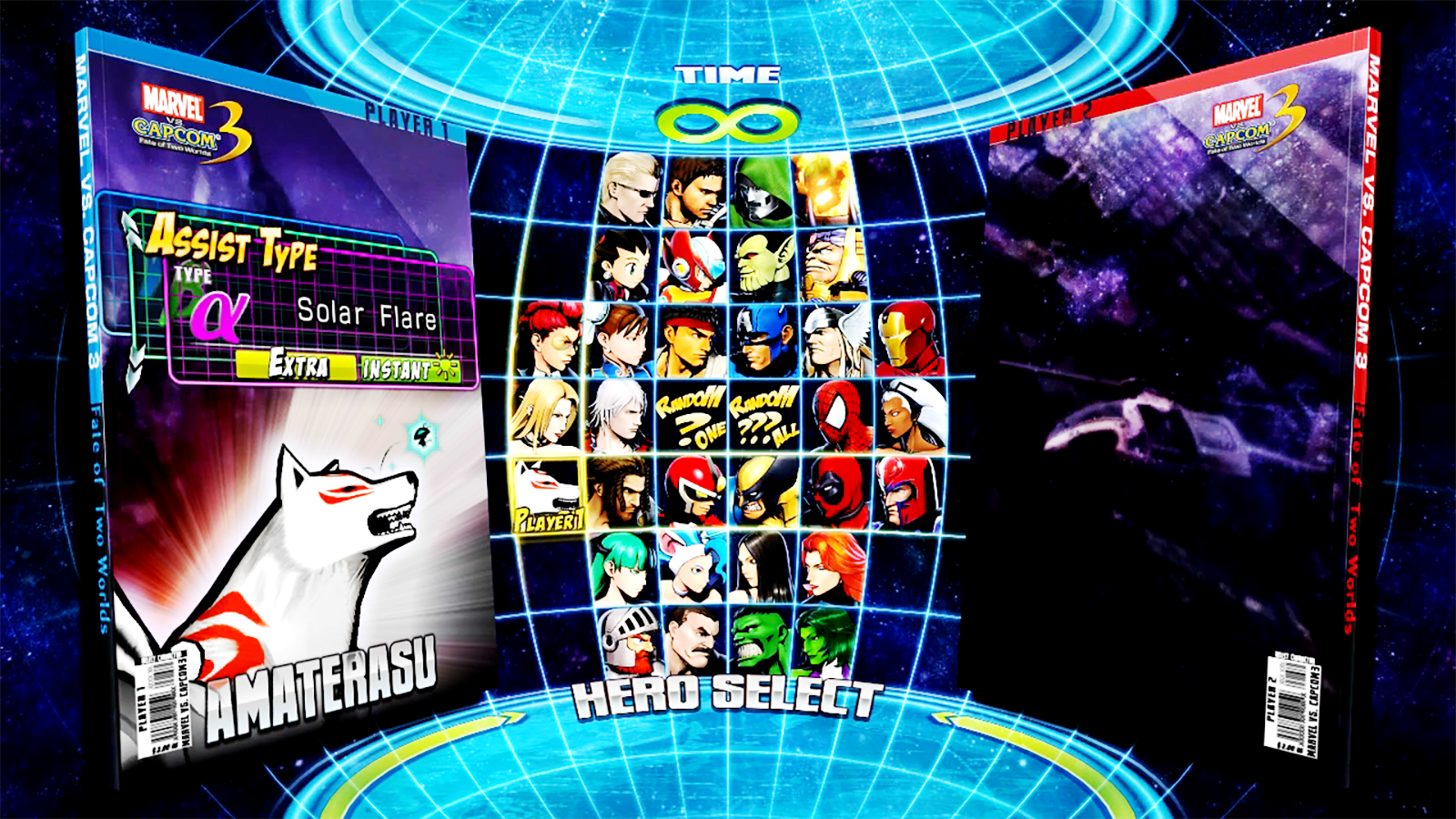
Marvel vs. Capcom 3 is a fighting game that takes characters from the Marvel universe and the Capcom universe and puts them together. Crossovers like this don’t happen often, and it’s exciting to see fan-favorite characters duke it out. The roster includes Chris Redfield, Albert Wesker, Ryu, Amaterasu, Viewtiful Joe, Spider-Man, Captain America, Wolverine, The Incredible Hulk, Iron Man and many others. This epic cast of characters can satisfy most fans of Capcom or Marvel. Despite this, there are a few characters whose lack of appearance is disappointing. Mega Man, who was in the widely successful MvC and MvC2, is absent from this game as is Captain Commando. On top of that, some newer Capcom characters that have recently become quite popular in this generation, Frank West and Phoenix Wright, also don’t make an appearance in MvC3 (Editor’s note: This was rectified in Ultimate Marvel vs. Capcom 3).
Frank West is especially disappointing considering he was in the Wii’s Tatsunoko vs. Capcom: Ultimate All-Stars. Venom, from the Spider-Man universe, would have been a fantastic fit (Editor’s note: Venom returned in Marvel vs. Capcom: Infinite), and the Marvel side is pretty light on villains in general. A lot of the franchises are under-represented, which was quite disappointing. Despite the lack of obvious characters and the smaller roster compared to its predecessor, MvC3 still boasts one of the greatest rosters in fighting game history, in my opinion. The amount of potential awesomeness here is overwhelming. Classic rivalries can be revisited and watching Chris Redfield shoot Spider-Man in the face with a shotgun never gets old. Each character has plenty of unlockable color schemes for their outfits plus a robust arsenal of attacks. Every character feels unique and plays differently than any other of the other characters to choose from. This is especially true for Amaterasu from Okami and Dante from Devil May Cry, two of the most popular characters in the game.
On top of the 30 plus characters available, there are also four unlockable characters. While these characters aren’t especially exciting or anything, it’s still fun to unlock them. The biting thing about MvC3 is the fact that it was promised to have characters to download as DLC and a new gameplay mode, all of which were talked about before the game was even released.
Unfortunately, releasing these characters and an entirely new gameplay mode as DLC so close to the game’s launch looked bad, to say the least. Capcom, of all companies, should be wary of DLC, and releasing it on day one or talking about the DLC in detail before the game has even hit shelves will make this consumer feel cheated, especially when most of it is on the disc already and it has to be paid for to be unlocked.
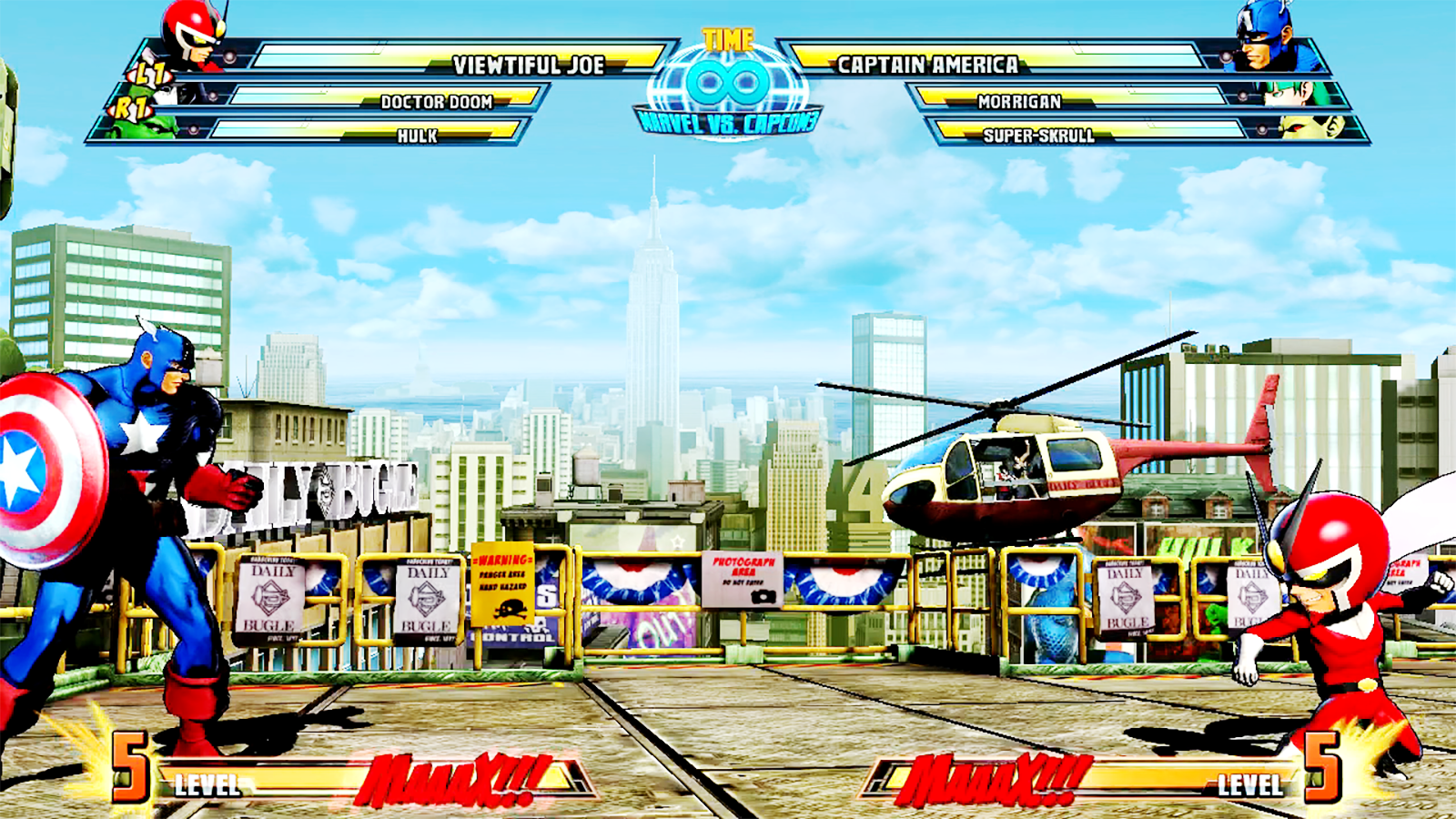
The fighting engine in Marvel vs. Capcom 3 favors players that practice and learn all the different combos, but it also favors button mashers. Essentially, you can try to play the game strategically and be successful, but there is also a huge possibility that someone who has barely played the game could easily defeat a veteran just by mashing on the controller and picking the right team. There are characters that are clearly more powerful than the rest of the roster, and while I really am not too concerned with balance in over-the-top fighting games like this, it will undoubtedly become an issue for serious players. But even so, every character is dangerous in their own way.
Speaking of imbalance, there is a mechanic that can turn the tides of battle in a quick second: the X‑Factor. On the other hand, the ability becomes a great defense when you are left with only one character on your team because it’s a great morale killer. But like I said, balance isn’t a big deal with this game, at least not for me. Just like the Super Smash Bros. games, the point of MvC3 is over-the-top, insane action featuring a roster teeming with variety. It’s fun testing out all the different combinations of characters to find which combination yields the most destructive results. And that is what keeps me coming back to MVC3. The different combinations of teams, attacks and the fun that can be had is endless.
 Playing online certainly boosts the replay factor considerably, and it definitely helps that the online is mostly lag-free. I experienced some while playing over Xbox Live, but the overall experience was fantastic. The ranking system implemented in the game echoes Call of Duty, and even though ranking up in the game is meaningless, it’s still strangely addicting. The online component also ensures that you’ll always have someone to play with, even when your friends aren’t around. Unfortunately, MvC3’s online multiplayer isn’t set up well at all. Just finding a ranked match can be difficult. The second day of playing the game, it became nearly impossible for me to get into a match.
In the end, whether or not you’re a fan of Marvel or Capcom will influence whether or not you will pick the game up, but the more casual fighting fans should give this latest crossover from Capcom at least a rent.
2UP evaluation
By Lyndsey Beatty
I never thought we’d be seeing another entry in the Marvel vs. Capcom series. After 10 years, and plenty of denials on both sides, it’s been made, released and played in quite a few tournaments within the past year. Am I pleased with it? Yes, but with a few caveats.
I don’t want anyone to get the wrong idea: Yes, I love the game. It’s got a great look to it, and the visuals could only go up after 10 years and MvC2. There are a few bothersome things about the look that I don’t care for, such as the matchup screen and the comic book theme, but it’s nothing that would keep me from playing. I also have a problem with some of the character lineup choices. Really, did we need Hulk and She-Hulk? No, probably not. Wolverine and X‑23? Also probably not, but I do recognize that they have individual traits and aren’t necessarily the bane that was the Adamantium Wolverine/Bone Claw Wolverine of MvC2.
My only other gripe with the game is the netcode. Someone at Capcom should have been paying attention to the Street Fighter IV team. Getting online in that game is a smooth experience. Here? Not so much. It’s ridiculously hard to find a match and get started playing, and after it’s over? You go back to the match choice screen. It’s completely unnecessary and it’s a real hindrance to the overall play if you want to enjoy matchups against other people who aren’t your friends. Hopefully, this will be fixed in the already-announced Ultimate Marvel vs. Capcom 3.
Overall, though, it’s a solid entry in the crowded fighting game arena, one that I didn’t think I’d ever see or be able to sit down and enjoy. The package, for what it’s worth, more than sells itself and with downloadable content, it’s worth coming back to this well.
Score: 4 out 5

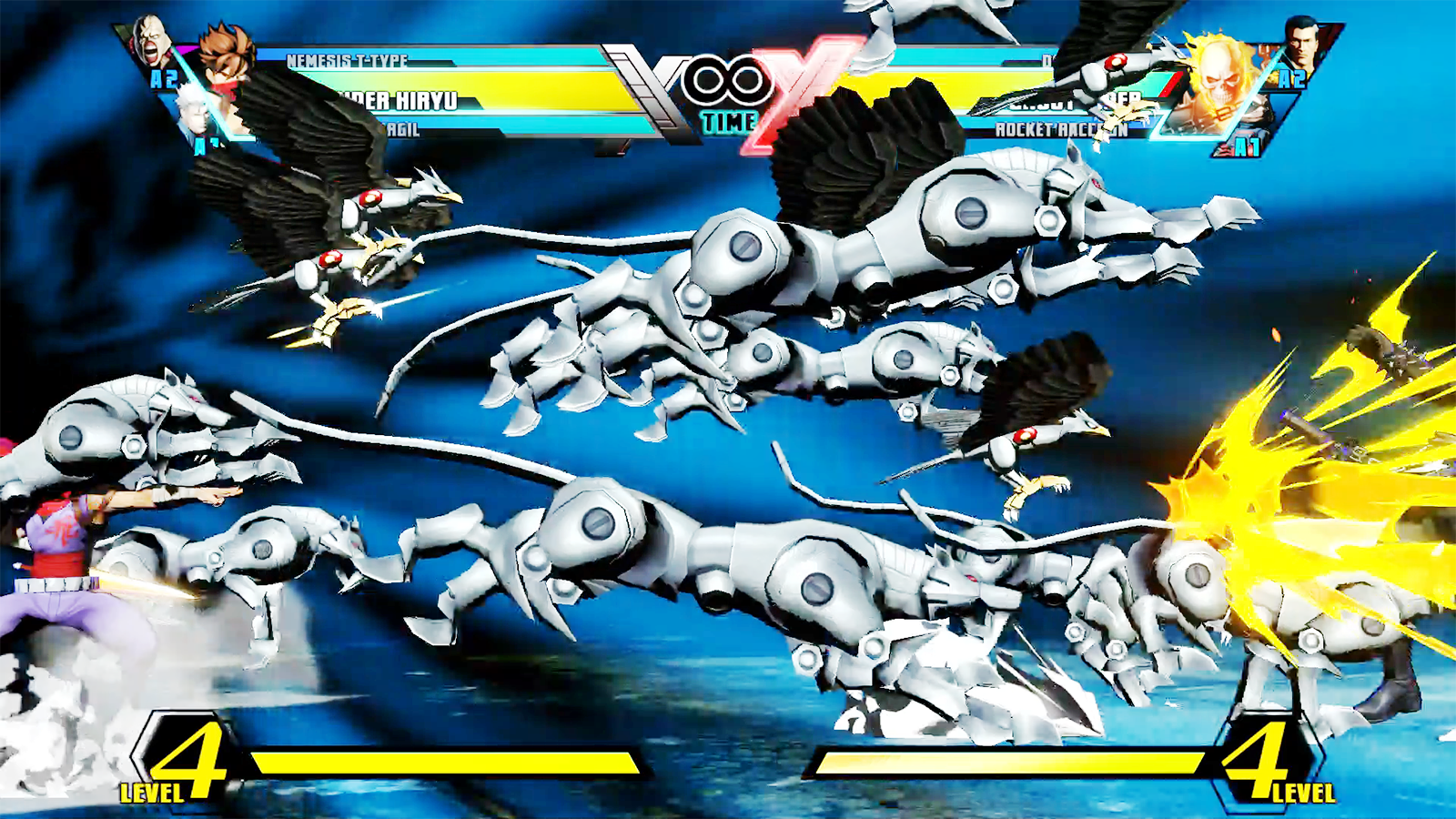
 Ultimate Marvel vs. Capcom 3 isn’t the freshest idea out of Capcom’s camp, but it has quite a bit going for it to warrant a purchase. While it’s too much content to be
 with getting a new one but more with the re-releases of the trilogy of games and the two supplemental games released as upgrades. We know what to expect when it comes to Darkstalkers, but as occasional compilations are released, we have to take a critical look at whether it’s worth your time and currency to engage in Capcom’s release the Kraken in the form of remakes strategy.

 about the game is the fact that it didn’t sell well. That isn’t the game’s fault, though. This is a technically sound port of two fantastic fighting games that play well and work well in what they’re being asked to do: Be a representative of a long-dead fighting franchise to introduce newer folks to the Vampire/Darkstalkers scene. It’s done its job admirably with strong mechanics and gorgeous updated visuals. You can’t ask for more from a retro fighting game. This fantastic fighting fright fest deserves more respect for its ability to shine 25 years after its last release and should scare up a spot in your fighting game collection.
 Marvel, Street Fighter, Tekken and Mortal Kombat for tournament purists, a new Soul Calibur has been announced, and a new Smash is on the horizon and the older games in the series are still played in some circles. Guilty Gear, which has always been quietly in the back of the lunchroom, was a mix of tournament and casual, so it stands to reason that its spiritual successor — BlazBlue — would mimic that notion.
 modes to choose from. If you’re not informed, you might be a little lost trying to understand just where you should start. With a varied plate to choose from, at the very least the modes are interestingly designed and add value to an already-packed game.