
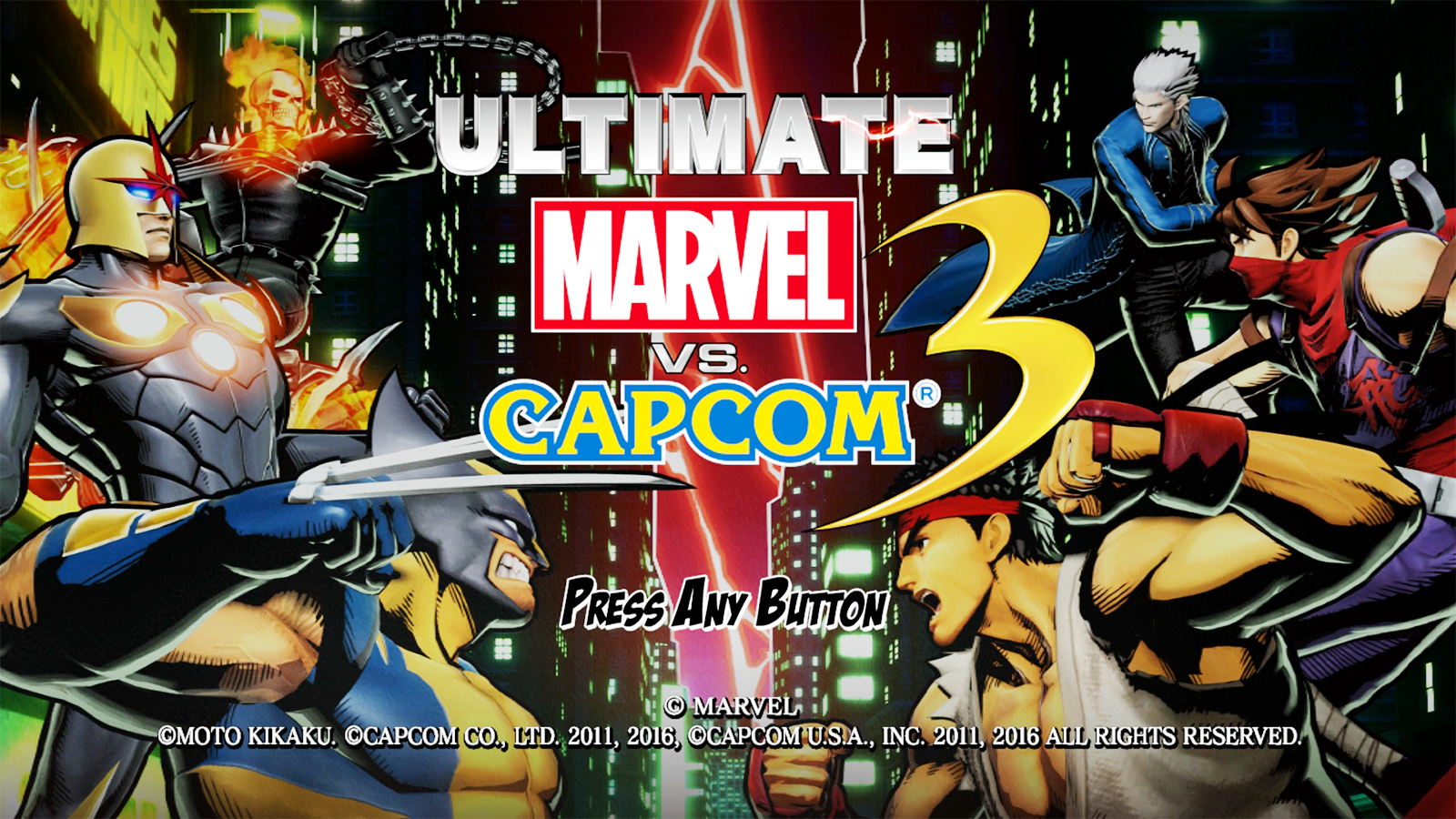
Ultimate MvC3 almost slips back into bad habits
Final version of MvC3 is a true upgrade

Editor’s note: This review originally appeared in Issue 24 (4Q2013). It has been edited for spelling, grammar and clarity.
I usually have a genuine problem with Capcom’s release policy for its fighting games. Generally, I know to expect a revision edition later down the line that adds maybe a few characters and few new backgrounds. Marvel vs. Capcom 3 was no different. I knew what was coming and, sure enough, Capcom played its hand with Ultimate. Curiously, this is a decent play, though like all Capcom releases, it should have come right at the beginning.
Ultimate picks up the slack where vanilla left off. You’re still saving the Earth from Galactus and the basic look of the game is still the same. Except, there’s a few new bells and whistles thrown in for good measure. The new intro throws a fresh coat of paint on the proceedings. The intro is gorgeous, with a freeze-frame look at various battles between Marvel and Capcom characters around the city. There are also a few new backgrounds, though I wish there were more. I particularly loved the new Days of Future Past background with the wanted poster of the X‑Men arc cover re-done with characters’ status from both sides. And, no, Mega Man’s questionable status did not escape my notice.
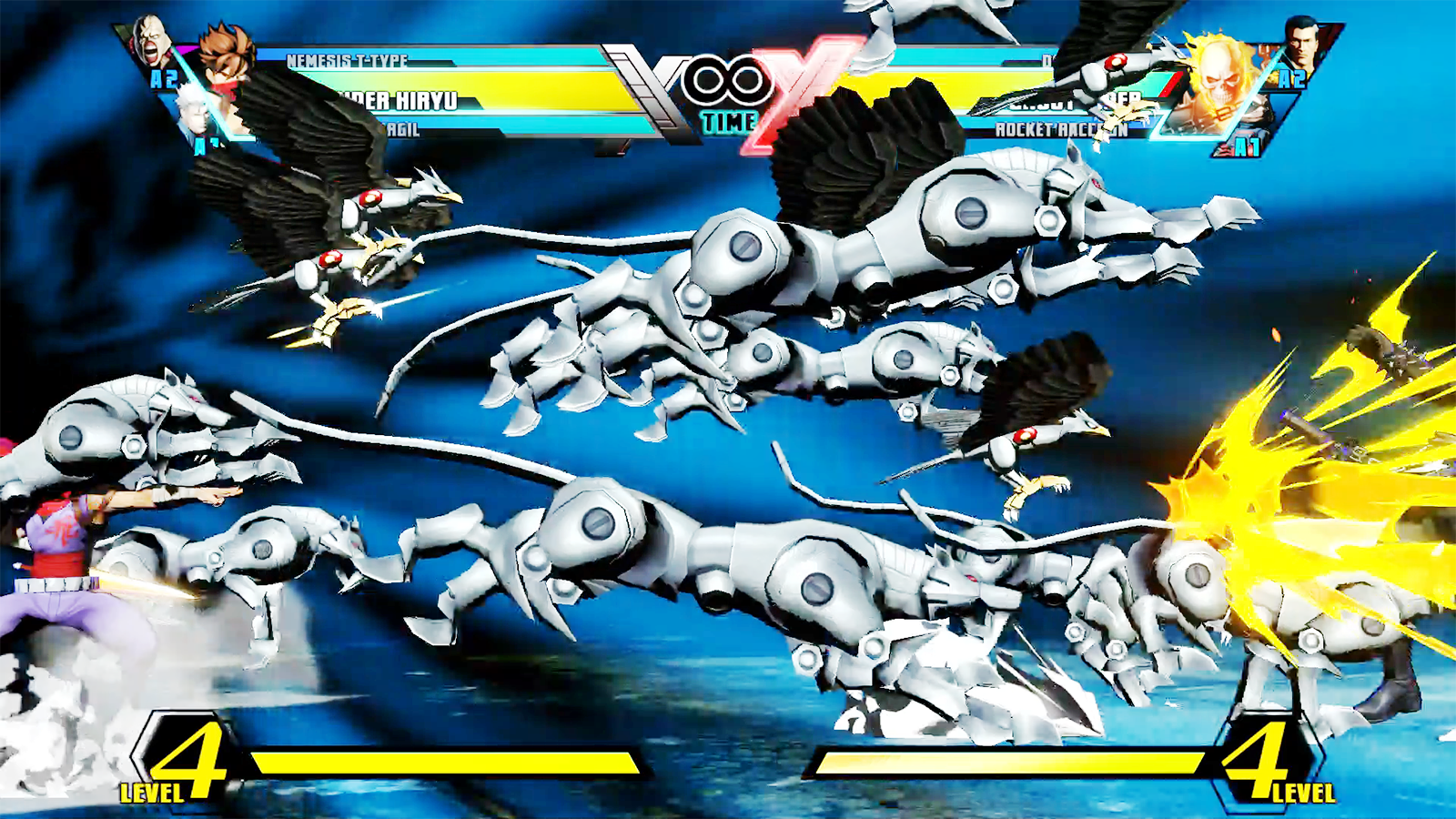
The new characters added to both sides are easily the best reason to pick up the new version. There are 12 new (Phoenix Wright, Firebrand, Frank West, Nemesis T‑Type, Strider Hiryu and Vergil for Capcom; Doctor Strange, Rocket Raccoon, Nova, Iron Fist, Hawkeye and Ghost Rider for Marvel) with the DLC add-ons of Jill Valentine and Shuma-Gorath still available and Galactus made playable through an offline mode. Playing through once more is interesting, just to see how the new characters work within the balance of the game at large. Speaking of balance, new moves have been given to the older characters as well as some tweaks to their movesets and the overall game engine.
Probably the biggest addition aside from the characters is Heroes and Heralds mode. Basically, you choose a faction — Heroes, who will oppose Galactus; or Heralds a la Silver Surfer, who work to soften up the earth for the planet-devouring god — and fight through stages of varying difficulty. As you fight, you acquire ability cards that are used to form a deck. The cards apply special attributes to your team members or to the game itself. It’s a novel and well-executed idea and one that makes sense in the larger scheme of Marvel vs. Capcom. I’m surprised it wasn’t thought of until now, and I’m even more surprised that it’s not in more Capcom games.
 Ultimate Marvel vs. Capcom 3 isn’t the freshest idea out of Capcom’s camp, but it has quite a bit going for it to warrant a purchase. While it’s too much content to be DLC only, it’s a shame that full price was charged for it when it was released. Capcom managed to dodge the usual shenanigans it’s known for with Street Fighter, but it cut it close. Thankfully, Ultimate MvC3’s ride is an entertaining one to take.


 takes away from the game a little bit because it’s distracting and is also unnecessary. I know I’m playing the game with a Sony product; I don’t need it shoved in my face constantly that this was originally a Sony exclusive game.
 engine make up the core of one of its flagship fighting franchises featuring samurai. If you’re in the mode for beautiful fighting in the Japanese feudal era, you’ve come to the right place in the 2019 revival of Samurai Shodown.
 from 18 base roster fighters and duke it out in feudal Japan with various motivations. All are investigating a coming catastrophe, but their intention in the face of a sinister environment is unique. Timeline-wise, the game is set between the prequel Samurai Shodown V and the original Samurai Shodown. So, you’re getting a taste of the story before the main series even kicks off.
 As a title set in feudal Japan, the music must reflect the environment — and it’s well done as well. The use of traditional Japanese instruments has always been present in Samurai Shodown and it’s used liberally and to great effect. Also, the voice work is excellent. We appreciate the Japanese language, and it sounds beautiful and clear here.
 instinct” kicks in and I find myself searching every nook and cranny to find hidden supplies and other goodies. During my exploration, of course, I come across people who don’t like Jin. I note the presence of bonfires, which generally indicates who I like to refer to as “dudes.” Dudes are the type that are generally hostile to me and my interests. Those interests involve investigation and saving people in the general populace who require the services of a skilled samurai and contract killer. This is usually how the fight starts: Dudes notice me in my finery and my magical horse frolicking in the countryside and now they want to get reckless about things.
 playing games a long time, and I can’t say until now that I’ve ever been just wowed by a game where I specifically take in-game photography to use as a background. This is what you buy the latest console for and the best


 everyone’s mind, but to get there, Tekken 7 stakes its ambitions on looking back to tell the story of the future. Spoiler alert: With Heihachi gone, there’s only Kazuya and Jin left to carry on the blood feud of the clan. The surrounding entities are on either side of the conflict between father and son, and there will be casualties. But that isn’t Tekken 7’s main story to tell. Really, it’s two questions: How did Kazuya become enmeshed in the devil gene foolishness, and how is Heihachi entangled in that as well? The answers lay with new character Kazumi Mishima, Kazuya’s mother and Heihachi’s wife. She plays a central role in unraveling the mystery of Kazuya’s transformation using the devil gene and why Heihachi threw his child off a cliff more than 40 years before.
 many things will be true at once: The sound will be phenomenal, and the graphics will be stunning. After all, this is a Tekken title; the King of the Iron Fist tournament does not slouch. What’s striking is, this is a four-year-old game and it still looks decent. Tekken has never been one to hold back when it comes to looks, and even with the upgraded PlayStation 4 Pro, it’s still a good-looking game. Tekken 7 could look worse with the benefit of more processing power, and some sections do show the age of the game. However, it’s minimal as far as Tekken is concerned, and Tekken 7 is still a powerhouse when compared to everything else on the market.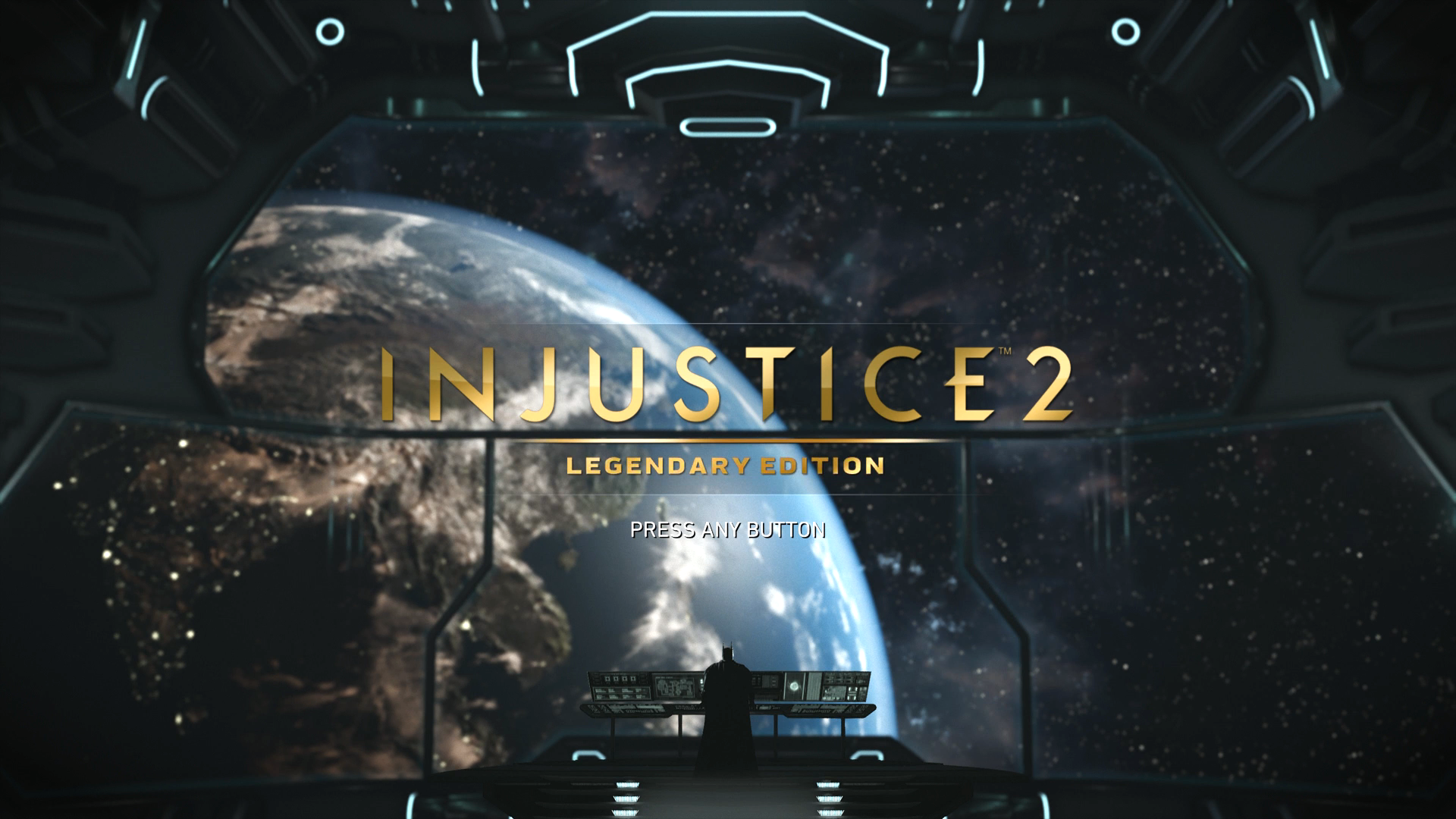
 good in the first Injustice is much-better looking the second time around. The user interface got a newer, sleeker coat of paint, and all the character models and backgrounds look better and cleaner, too. The character select screen even looks better and more fluid. NetherRealm’s fighting game visuals get better with each game, so this is just a testament to their growing prowess. The music isn’t standout, but it’s serviceable.