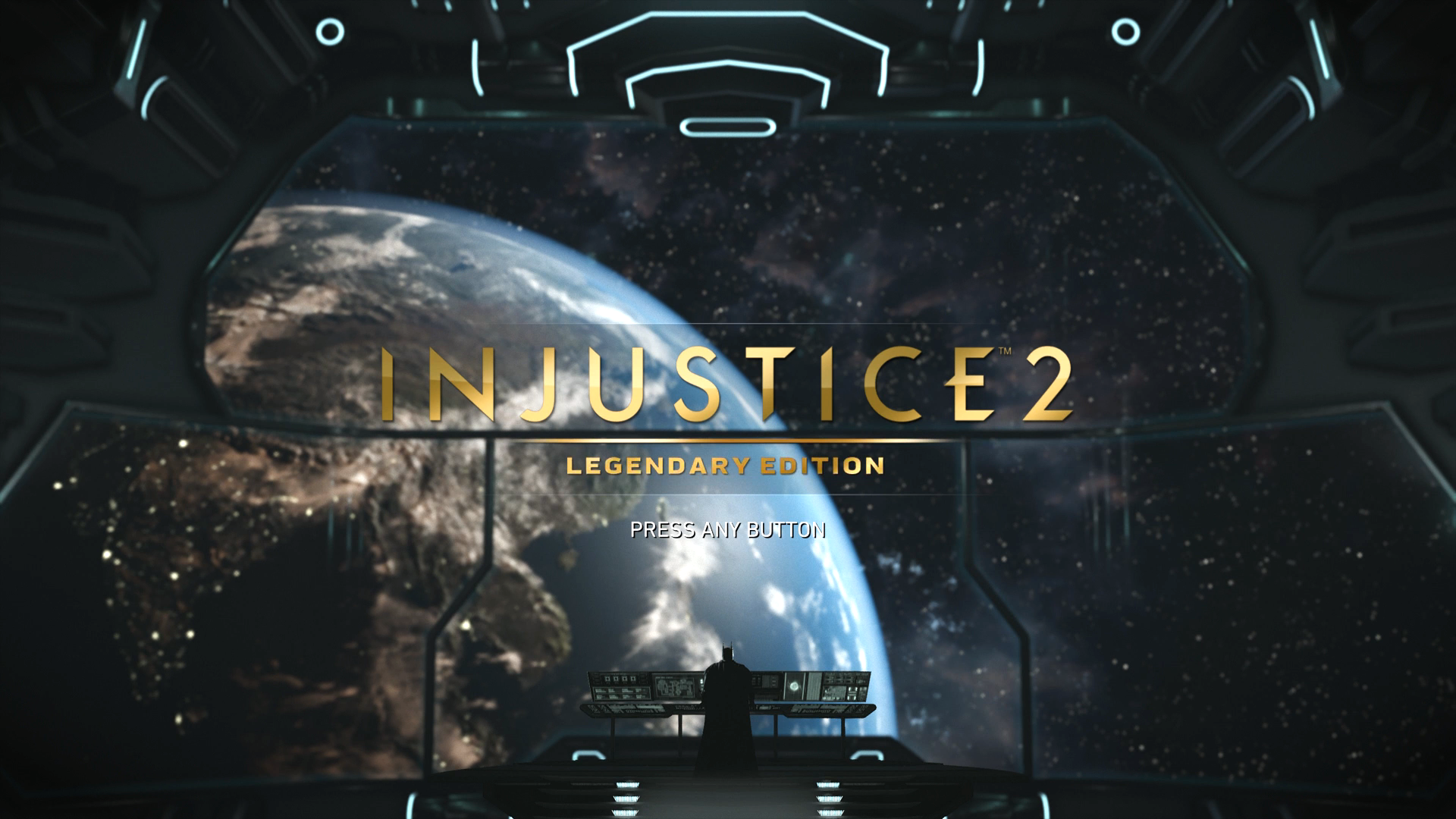
The intricacies of determining the winner of the storied fight between Batman and the Joker all depend on prep time for Batman and the Joker’s maniacal state at the time of the battle. We’ve thought this through and determined that even with minimal prep time, Batman could win this fight considering his previous experience with the Joker. To simulate it, we would need only one thing: the Injustice series of games. And considering Injustice 2 has more chances for this to happen with proper simulation, you can best believe we’re diving deep into the solid sequel DC comic book fighting game.
Injustice 2 is a competent storyteller in its quest to be a DC comic book simulator. Set after the fall of Superman’s tyrannical regime, Injustice 2 places Batman at the forefront again to take on the task of rebuilding society and combating a new threat in the form of The Society. Mixing in longtime Superman foe Braniac only adds to the chaos. What it boils down to is that these are characters you know from the DC universe — even if you’re passingly familiar with them — fighting it out to stop Superman from continuing his reign of tyranny established in the previous game.
Where Injustice 2 shines is its presentation and its characters. Everything that looked good in the first Injustice is much-better looking the second time around. The user interface got a newer, sleeker coat of paint, and all the character models and backgrounds look better and cleaner, too. The character select screen even looks better and more fluid. NetherRealm’s fighting game visuals get better with each game, so this is just a testament to their growing prowess. The music isn’t standout, but it’s serviceable.
Despite its shiny upgraded presentation, I’m still not a fan of how it plays. The combat doesn’t feel natural, like say, how Mortal Kombat feels. It still feels like it’s a step or two behind MK and like it’s trying too hard to differentiate itself from that series by throwing a wrench into the basic combo setups. I’m also not a fan of the unlock system. It’s a lot of gear to unlock for a lot of characters, but I don’t really have the time or the inclination to sit and work on it. I’m not saying have it unlocked immediately when I first start the game, but I am saying it needs to be easier. The experience is not the most enjoyable.
Injustice 2 is a nice upgrade from the first game. It’s got the name factor, characters you probably know and slick presentation that will catch most anyone’s eye who is into fighting games. Whether you’re a comic book fan or a casual fighting game connoisseur, Injustice 2 is worth a look to see if it’s worth its weight in kryptonite.
Marvel vs. Capcom now infinitely frustrating series
The Marvel fighting game scene is well known by now and well worn. Pretty much, anyone who’s anyone in the Marvel comic universe and movies has been in a Marvel Versus game. This is nothing new by now. You’ve seen these people before and, if you’re a Capcom fan, you have seen their side of the roster in other games before you got here. So, what exactly are you getting out of playing the latest iteration in the long-running Marvel Versus Capcom series? Not much, but Capcom already knew that. They just hoped you wouldn’t notice.
If you’re invested in the Marvel Cinematic Universe but don’t know anything about the comics, MvC: Infinite serves as a starting point for understanding the comics side of things in preparation for Avengers Endgame. Oh, yeah, there’s some Capcom story set up, too, as an afterthought. Really, this is several stories mashed together: From Marvel, you get the Infinity Saga and Age of Ultron story; from Capcom comes Sigma and Mega Man X’s story and some of Vampire Savior/Darkstalker’s 3 arc dealing with Jedah Dohma. The story kind of makes sense in a mashed-up way. It’s not half bad, given that the previous efforts of Marvel vs. Capcom 3 to give a cinematic team up was decent and miles ahead of any other title in the series to date. Mostly, the Marvel Versus series has followed an established comic book arc — Marvel vs. Street Fighter was mostly Apocalypse and the first Marvel vs. Capcom focused on Onslaught — and this is no different. Where it falters is oversimplification.
The Infinity Saga is never truly finished in the comics because Marvel constantly returns to it over the years to explain a lot of things. Also, thinking critically about what this is really based on, the story of the Infinity Saga really took about 18 of the 22 MCU movies to tell its story. You cannot tell this story in two games — Marvel Super Heroes being the first to tell this arc. Infinite tries to and winds up half accomplishing it with some weird, forced Capcom story side foolishness thrown in for good measure, because hey, Capcom is also in the name.
You get the sense that if Capcom’s angle of things was removed, this would be just fine, and Infinite would be OK without it. That does not help Capcom at all here. Immediately, it destroys the need for a new team-up game and renders Capcom’s side of the roster unnecessary. I do not feel Ryu or Chun Li are useful in any of the situations presented in the story mode.
The roster is actually not bad, but with the few new additions locked behind a DLC paywall, you’re kind of left to wonder would Infinite be just a tad bit better if the more noteworthy characters were available from the start. The base group is basically a retread roster from MvC3, and the new additions should have been in the series; the fact that we’re just now getting Black Widow, Black Panther, Jedah and the Winter Soldier is a crime that only Capcom seems to like committing.
In addition to the generic oversimplification of the story, the presentation is just as generic and bland. The Marvel Versus series has always had strong presentation, and to be frank, this ain’t it, as the kids say these days. The backgrounds are good, but some of the character designs have an oof level the size of Ultron Sigma’s final form. They are, quite frankly, terrible a lot of the time. There seems to be an attempt at realism but not, at the same time, because some of the Marvel characters look like their MCU counterparts, but then when you look closer, there’s a detail that keeps them from looking exactly like the actor or actress that plays the character.
For example, look at Captain America and Captain Marvel. Captain America, from far away, looks exactly like MCU Winter Soldier-era Captain America as portrayed by real-world Captain America stalwart Chris Evans. Up close, however, Cap looks just enough different for you to realize that Evans probably didn’t consent to his likeness for the game. Same for Captain Marvel and actress Brie Larson. It’s a small but noticeable quibble I have here. And, some of these Capcom characters look atrocious. Ryu’s face on the title screen is horrific. The sprites look terrible here but in game, he looks fine. It’s a shame because every other game in the series has been OK in terms of the graphics. Sure, they weren’t award-winning, but they reflected the series’ growth. Infinite looks like it took about 10 steps back in a lot of respects.
The music is just as bland. Each iteration of the Versus series has had some bangers on the soundtrack — even the much-maligned Marvel vs. Capcom 2’s soundtrack was memorable if not catchy. Here, there is absolutely nothing noteworthy. It’s the first Versus game where I don’t have something from the soundtrack saved, which is not good at all. As I played through the story mode, I kept waiting for something to jump out at me, and I got nothing. I was not impressed.
The controls didn’t impress, either. There has been a noted trend, since MvC3 was released, to simplify the game system for the Versus games to make them more accessible.
While I’m always a fan of drawing in the casual fan for these types of games, I’m not a fan of ruining a good thing. MvC2 was still accessible to even the most casual fighting game player, and this is even worse than the toning down of the controls between MvC2 and MvC3. There is no depth to the combo system now, and that doesn’t help Infinite in any way.
I’m underwhelmed when it comes to Marvel vs. Capcom Infinite. Nothing plays in its favor, nothing makes any sense, and the team-up crossover event is showing its age in every facet of the game. There’s nothing new here to make me say wow or push me to play as I did the other games in the series. If Capcom were to lose the Marvel license again, it wouldn’t be a shocker or unwarranted.
It’s time to admit that the series is not an infinite source of amusement. Unfortunately, at this point, it’s merely a finite source of fighting game goodness.
As a child of the early ’90s, Final Fight not only increased my addiction to arcade games, but also introduced me further to Capcom’s skyrocketing rise as a game developer. I dived into Final Fight 2 to relive my arcade glory days.
In Final Fight 2, time has passed since Mike Haggar, Cody Travers and Cody’s friend Guy defeated the Mad Gear gang, restored peace to the streets of Metro City and rescued Haggar’s daughter Jessica from the Mad Gear’s leader, Belger. That peace is short-lived when the remnants of Mad Gear return under a new leader and kidnap Guy’s fiancée, Rena, and Guy’s sensei, Genryusai.
With Cody away on a trip with Jessica and Guy away on secret training, Haggar is joined by Rena’s sister, Maki, and Haggar’s friend Carlos Miyamoto on a worldwide quest to crush the Mad Gear and rescue Rena and Genryusai. FF2 has a lot going for it; it’s a direct sequel never released in arcades with a lot of new material despite no new general mechanics.
FF2 has an expanded battlefield with Haggar, Maki and Carlos starting their journey in Hong Kong and ending that journey in Japan. The main protagonists make their way through several locales in Europe in their search for Rena, all the while surrounded by improved graphics over the first game. The backgrounds are high quality, and the sprites are well-drawn and crisp for each character with a lot of attention to detail.
The attention to detail also shows up in the controls. Overall, control is simple even though each character has a unique fighting style. Haggar still has his pro wrestling moves, Maki makes use of Ninjitsu and Carlos practices martial arts and sword skills. Though they are generic in execution, it’s fun to see how each character operates during the fight.
Power-ups are still obtained via smashing various objects and range from steamed Chinese buns to a pair of shoes that can increase health or score points. Finding either a Genryusai or Guy doll will give an extra life or invincibility. As for the music, it is arcade perfect just like its predecessor. It’s a nice soundtrack of early Capcom brawler, and it fits the action perfectly in each of the game’s locations.
As much as I enjoyed FF2, the game does have some flaws. While each character has their own awesome special moves, using them does cost health. That’s annoying when you’re trying to use more powerful moves to defeat bosses and trying not to die at the same time. Also, during the timed bonus stages, control is hit or miss when striking objects; if it’s not done perfectly, you lose the bonus points. I also got frustrated when I couldn’t take the weapons I found into other areas. That cheapens the use of the weapon and makes it useless shortly after picking it up. And, the challenge level is ridiculous. I needed a cheat code just to get to the real ending in expert mode. It’s too easy to die and taking hits from off-screen enemies is terrible.
Final Fight 2 placed the series in the ranks of Capcom’s top-tier franchises. While it hasn’t seen the level of push of say, Street Fighter or Resident Evil, the beat-’em-up is fondly remembered as one of Capcom’s crowning achievements.
It’s not been that long ago that Killer Instinct was still being recognized in the top echelon of fighting game series. But that was then, and this is now, and folks have a critical eye toward the legacy of the defunct series. What folks really want to know: Where does KI Gold – the 2.5 sequel game – appear in that legacy?
I’m old enough to remember the launch of KI2 and then Gold for the Nintendo 64 in 1996. I was heavily into fighting games then, still sticking with Mortal Kombat and looking for something new to supplement that fighting game itch. Enter Gold, which is an upgrade of KI2 for the home market. It’s a slight uptick in graphics, music and tweaks over the arcade version. The upgrades make it the better version of the game and push it toward must-have status for the N64.
Control-wise, KI Gold is easy to pick up and a lot more accessible than its predecessor. For context, I barely understood the combo system of the first game, but by the time Gold came along, I could hold my own against other KI masters, such as longtime friend of GI David Rhodes. If I could actually win some rounds and every so often matches against him, that’s evidence that the system is improved for casual fans. The concept of linkers and chain combos made much more sense with a little in-game explanation, so this made the learning process a lot easier to grasp. The change in systems was the best in terms of accessibility.
Gold’s graphics are a slight improvement over the arcade version and even more so over the original game. But, in comparison to other games on the market at the time, Gold doesn’t hold up particularly well. Putting it alongside other games available at the same time, such as Tekken 2, doesn’t bode well for Gold. In particular, there are janky textures that snag and tear in the background environments, which detracts from the otherwise solid character models.
The soundtrack, much like the previous game, carries the burden for the rest of the game. Rare’s sound department was known for pumping out good music, and Gold’s soundtrack has quite a few bangers. It’s a lot of hard rock and a few techno tracks thrown in for good measure, but it still holds up. In particular, the character select theme – which was re-created for the 2013 revival of the series – is a toe-tapper and still sounds fantastic on modern sound systems.
But, the pertinent question still remains: Where does Gold rank in fighting game genre legacy? It depends. If you care about flashy combos and aren’t too much of a technical content fighting purist, Gold is probably your fancy. It’s got enough to draw the casual fan in, but it’s light on the technical aspect of fighting games that the longtime purist would be looking for. It’s fun to play and revisit from time to time, but if you’re looking to get bogged down in frame data and dig a little deeper, Gold isn’t going to be your color. Your best bet is to look to the future of the series, and let this instinct die out.
In a previous issue, I reviewed Disney’s Chip ’n Dale Rescue Rangers for the NES. I reviewed the game as a nod to the times of the late ’80s and early ’90s where you knew the ins and outs of your favorite shows, including the opening and ending theme songs. With the arrival of Disney+ and Capcom’s re-release of Disney Afternoon-themed games for current consoles, I heard that Disney’s dynamic duo had another game for the NES. I reviewed Chip ’n Dale Rescue Rangers 2 to see if it would jump start my carefree kid memories.
Rescue Rangers 2 starts off with our furry heroes and their comrades enjoying a well-deserved rest after stopping their notorious arch nemesis, Fat Cat, in the first game. However, like most great villains, Fat Cat was able to mastermind his escape from prison and acquire the legendary Urn of the Pharaoh to re-launch his fiendish plans. With Fat Cat on the loose and having evil spirits at his disposal, the Rescue Rangers are the only ones standing between Fat Cat and world peace.
Rescue Rangers 2’s gameplay is exactly like the original; you can choose either Chip or Dale to battle through several levels to do battle against Fat Cat’s legions of henchmen who are determined to stop our heroes from saving the day. Chip and Dale can jump, duck and used pint-sized boxes to throw either horizontally or vertically to defeat enemies. These boxes have various power-ups, such as acorns, to replenish health, extra lives or Rescue Rangers plaques that can earn Ranger icons. These icons will give the character of your choice an extra heart.
The controls also remain the same from the first game. Rescue Rangers veterans will be familiar with the control layout, but newcomers will go through trial and error until they are comfortable.
All the levels and backgrounds were done with great care, making me believe that I was playing an actual episode of Rescue Rangers. I commend Capcom for letting Disney animators work their magic on heroes and boss characters, ensuring that the bosses provided a challenge without losing Disney elements.
As much as I enjoyed Rescue Rangers 2, it’s not without some flaws. I stated earlier that controlling either Chip or Dale would take practice; that is important since during stages, you cannot go back to a lower level to pick up items without losing a life. That makes things unnecessarily tough. Also, the Rescue Rangers’ roles were drastically from the first game. The first game incorporated Monterey Jack, Gadget and Zipper into finding hidden paths, scouting for enemies, and backup and reach support; they’re now reduced to background scenery with little screen time.
Audio-wise, the music sounds dialed-in like the music from “1945,” showing that Capcom’s development starts strong but becomes weak in certain areas. Finally, the challenge level is high, but I advise players to have special cheat codes enabled if they want to finish this game. You shouldn’t have to use them, but they are a must here.
Chip ’n Dale Rescue Rangers 2 has delivered, keeping intact all the elements that made it a Disney favorite but, unfortunately, keeps some of Capcom’s bad habits as well. The Disney Afternoon lives on in this small but solid sequel.
“Devil may cry.” To some, it sounds like the latest quote from one of Hollywood’s biggest action stars. To me, it’s one of Capcom’s biggest franchises that does not involve “Street Fighter” and “Resident Evil” that is a labor of love to play. Nero and Dante are back along with some new faces to raise more demonic hell across next gen gaming consoles with the hack and slash style of gaming that put it on the map. I waited five years to play the fifth installment of this series and the kick-ass promotional song “Devil Trigger” helped move that wait right along. In April 2019, me and EIC Lyndsey were on a spur-of-the-moment gaming shopping spree and not only did we pick up a PlayStation 4 Pro, but also we picked up a bounty of games including DMC5. Could it surpass previous successes that defined the series?
In DMC5, years after the events in DMC4, Nero has gotten Dante’s blessing to jump in the demon-hunting business but one May night, Nero is accosted by a familiar foe who has not only taken the demon sword Yamato, but also Nero’s demonic arm. Vowing vengeance, Nero pursues the foe to Redwood City where he is introduced to a new evil known as Urizen. He, Dante and fellow demon hunters Trish and Lady are swatted instantly by Urizen. Now having a HUGE chip on his shoulder, Nero returns with a new arm and partner in crime, Nico, and sets out on his second adventure filled with old and new allies and enemies while making his name as a master demon hunter to surpass his infamous uncle.
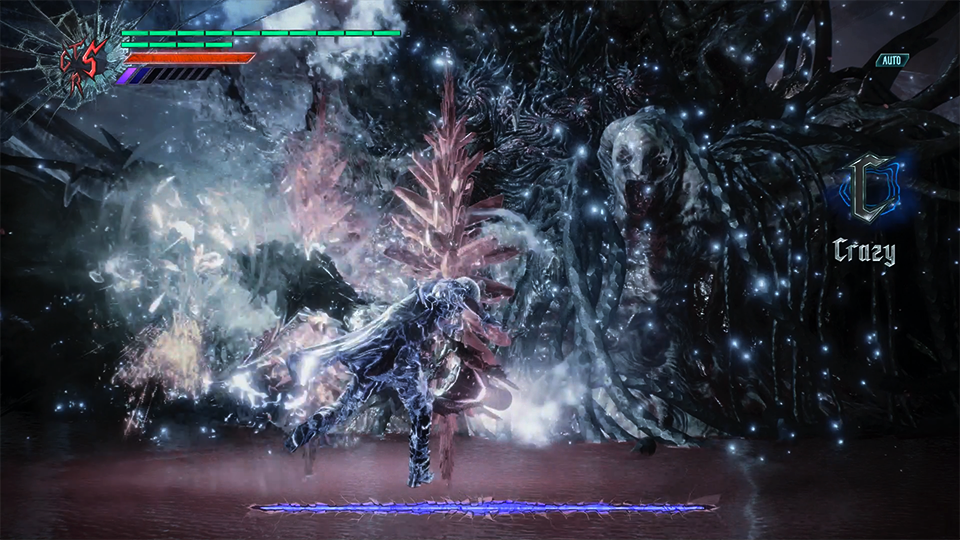
Gameplay in DMC5 follows the same high-speed action formula found in previous games in the series. Controlling Nero, Dante and the newest character V is perfect. Nero still has his trusty sword Red Queen and revolver Blue Rose, but instead of his Devil Bringer he uses a prosthetic arm called a Devil Breaker, which was developed by Nico. It has extra punch than the Devil Bringer and can be upgraded after battles with various bosses.
Dante has his dual pistols Ebony and Ivory as well as his usual swords Rebellion and Sparta, but also has five additions: Cavilare (a motorcycle that when separated, becomes a buzzsaw-like weapon); Balrog (yes, THAT Balrog), gauntlets and boots that increases Dante’s melee power tenfold; KalinaAnn2, a modified version of the KalinaAnn used in DMC3; and, Dr. Faust, a hat that shoots out red orbs when worn.
V has some tricks up his sleeve with his familiars Griffon, a demon hawk capable of firing lightning bolts and projectiles; Shadow, a panther-like familiar that is melee combat oriented, using its body to form blade and needle weapons; and, finally Nightmare, a golem-familiar that moves slowly, but packs a MAJOR punch against giant enemies. I should also note that Nightmare can change his height to titan-level and use a huge laser beam to destroy enemy bosses, which allows V to use his Royal Fork cane and its copies to land the finish blow.
Another feature I liked in DMC5 was the training session that allows you to learn and practice available skills before purchasing them, allowing you to decide whether to buy or hold off.
The RE5 engine brings every detail to life, complementing Dolby Atmos sound’s abilities, which made me think I was playing a 3D movie instead of a video game. The voice cast is a mix of well-known and new voice actors led by Reuben Langdon, Johnny Yong Bosch and Daniel Southworth reprising their roles as Dante, Nero and Vergil, respectively. Stephanie Sheh returns as Kyrie but in voice form only. I also give kudos to Brian Hanford for voicing V and Faye Kingslee as Nico. Brad Venable as Griffon stole the show, and Kate Higgins (Bleach, Code Geass) and Wendee Lee were excellent as Lady and Trish.
The only negative thing I have about the game is the camera control. It has improved GREATLY, but it still takes some time to masterfully plan a character’s next move. The power-up situation that occurred in DMC4 was fixed, but you still need to conserve your red orbs, especially if you use Dr. Faust.
DMC5 is worthy of replay because of its excellent blend of action, drama and environment. Capcom is doing this series right again and while I don’t agree that milking a franchise is the best business decision, DMC fans can begin to forgive Capcom for its lack of judgement for DMC: Devil May Cry. Let the healing begin.
Fun facts
Reuben Langdon, Johnny Yong Bosch and Daniel Southworth have a connection to the Power Rangers franchise. Bosch was the second Black Ranger in Mighty Morphin’ Power Rangers and the Green Ranger in Power Rangers ZEO and Power Rangers Turbo, while Langdon did stunt work and Southworth played the Quantum Ranger in Power Rangers: Time Force. All have provided voice and motion capture work for the DMC series.
Southworth and Wendee Lee had dual roles as Urizen and Eva, Dante’s and Vergil’s mother.
If Redwood City looks like London, you are correct. Capcom sent the DMC5 development team to London — specifically Midhurst in West Sussex, Rochester, Kent, Canterbury and Leeds Castle in Kent — for inspiration in designing locations in the game. Various models and clothes were acquired and scanned in London and Serbia.
In addition to the RE5 engine, Capcom used Microsoft’s Simplygon graphic software to assist with graphics and the intermission graphics.
The most notable song of the game, “Devil Trigger,” by Casey and Ali Edwards, has had more than 2.8 million views on Capcom Japan’s YouTube channel. Ali Edwards was also the lyricist and vocalist for the game’s ending theme “Legacy,” with composition by Kota Suzuki.
Though I play a lot of fighting game series, I keep coming back to Street Fighter. I don’t know if it’s out of habit or because I’m comfortable with the series’ systems, but I find myself intimately familiar with the Capcom creation. It started with Street Fighter II for SNES, not the arcade. As the series moved along incrementally, so did I and I discovered the upgrade. The home port of Super Street Fighter II for SNES was one of the best and that accolade still stands after nearly 30 years.
Though Capcom still hadn’t learned to count to three and Super Street Fighter II reeks of milking the franchise for all it was worth, it’s technically a good port. This is the best version of the arcade experience before Super Turbo, and the SNES, despite its problems with censorship, is the best version you’re going to get. Super is where you’re introduced to the four new challengers, who add some interesting elements. Each of their fighting styles are already represented in the game with other stalwarts, but they’re fun to play, nevertheless.
The music has hit its peak here, too. It’s the same as the original Street Fighter II and Hyper Fighting, but it’s Street Fighter at peak Street Fighter. That also applies to the controls. It’s the Street Fighter that you know and love but cleaned up just a tad.
My main gripe with the game is the fact that it’s not Street Fighter III, which it would have been if not for the insistence of Capcom not counting ahead. Capcom knew it had a winner on its hands but repeatedly milked the franchise until there was nothing else to wring from it. Super would absolutely have been great if not for the fact that Super Turbo came a year later and there had already been two other incremental iterations of the game previously. That cheapens Super to a degree all around. However, given that Super Turbo did not come home from the arcades for the SNES, Super gets a boost in nostalgic factor.
What you need to take away from SSFII is the refinement of the Street Fighter II experience, and this is where it shines. Everything about Street Fighter II was at peak condition and refined to a tee with this iteration. Yes, this is pre-Turbo super moves and specials but in a way that makes it the last true unspoiled Street Fighter II experience. It was so good that later Street Fighter games attempt to replicate this version with modes that play like Super with no super moves and most, if not all, of its mechanics. That’s how you know it’s a defining moment in a series’ lifespan. It’s a super fighting game for a super system that still holds up.
As a child of the 1980s, there was one major requirement I had to know: the major prime time action shows and what nights and networks that they came on. Two of those shows were Knight Rider on Fridays on NBC and Airwolf on Saturdays on CBS. These two shows were so popular that Acclaim Entertainment was able to get license rights from Universal Television to develop video games for both shows. In a previous issue of GI, we reviewed Knight Rider for the NES in the Torture of the Quarter section. Could Airwolf break this curse of popular shows turned into horrible games? It was time to find out.
Airwolf follows the plot based on the TV show in that you take the role of Stringfellow “String” Hawke, who is given a mission by the CIA to rescue prisoners of war from unknown terrorist groups using the top-secret helicopter known as Airwolf. As String conducts the mission, he finds out that one of the prisoners being held is his long-lost brother who was declared missing in action during the Vietnam War. This gives him added incentive to carry out his given mission.
Airwolf’s gameplay is a simulated first-person view that was applied to the Knight Rider game. You have the view of Airwolf that is clear enough to see your enemies and to attack enemy strongholds such as aircraft towers, prisoner camps and repair depots. However, this is the game’s Achilles’ heel. Control is not flexible when you need it to be during dogfights with enemy aircraft. You’re required to shoot first or destroy aircraft towers if you don’t fire your limited missiles with precise timing. The inflexibility rears again when you land at a prisoner camp landing gently and still die.
The graphics were OK, but they were akin to flight simulator games that were highly popular during the ’80s. To give Airwolf a fraction of a chance for a good review, I found the debriefing scene excellent, giving me the appropriate data of destroyed enemies, rescued prisoners and intercepted missiles.
Sadly, I was ENRAGED that Acclaim could be this sloppy with a franchise such as Airwolf. Don’t get me wrong, Acclaim did go on to make better video games based on popular franchises, but like Knight Rider, Airwolf failed to show me any redeeming reason for replay.
Airwolf — like Knight Rider — are games that are recommended only for the diehard fans of the ’80s that want to relive the action-packed nights of their childhood. While I loved both shows, unfortunately their action-packed formula that produced major ratings for TV did not translate well into video game format. Acclaim did learn well from these mistakes, but they gave the first MasterClass lesson in video gaming of being careful with popular franchises. If you want my advice, skip both games and play them on readily available emulators; you’ll save time and hard-earned money.
Fun Facts
Airwolf was created by Donald P. Belisario, who was known for pop culture-worthy shows such as Quantum Leap, Magnum, P.I., JAG and NCIS, which is still airing on CBS.
The actual Airwolf was based on a Bell 222 helicopter designed for corporate travel, emergency medical transport and utility transport. A full replica of Airwolf was on display at a Tennessee aviation museum but has since been sold to a private collector in Bel Aire, Calif.
There were numerous versions of Airwolf made for various home systems, but a side scrolling arcade version was developed by Japanese developer Kyugo in 1987. Acclaim released the NES version a year later, after the show went off the air four years earlier.
Dark Knight’s second outing a rousing adventure
As a Batman fan, I hold a special place in my heart for most of the big-screen adaptations of the Caped Crusader’s fight to clean up Gotham. Batman Returns, despite its problems, is at the top of the list in terms of favorite aesthetics in a Batman film. That said, I wasn’t sure if I felt the same affection for the game version.
The story is the same as the film: You, as the Dark Knight, battle the nefarious Penguin and his equally foolish partner Catwoman as they join forces to take over Gotham and wreak havoc. Because you are technically superior (and richer) than your foes, you have an arsenal at your disposal that helps you take out the criminal element that is doing the bidding of the meddlesome bird man and troublesome minx. Really, if you’ve watched the superb film, you shouldn’t be at a loss here as to what you need to do. It follows the plot exactly, including the encounters that Batman has with lesser henchmen. Being a game based on a movie property sometimes has its perks.
Controlling the Dark Knight is much like you would expect from watching the movie. Batman is easy to guide around, though there are a few spots where the directions and what to do could be a little more clearly pointed out. However, Batman is fluid and moves quickly enough that getting around Gotham to take on the Penguin and Catwoman isn’t much of a problem.
Returns, foremost, is stunning visually. Much like the film, the game’s graphics are top-notch and evoke that well-known Tim Burton feel. The graphics are so well done that it almost appears that they were taken directly from the movie and inserted into the game. The colors are rich and pop when necessary in the game’s color palette, though it doesn’t stray far from the movie’s muted coloring too much.
Much like the graphics, the sound is also spot on and close to the movie’s backing tracks. Of course, there are a few appropriations because you’re not getting a full orchestra with composer Danny Elfman on the SNES chip, but the music is sufficient and gets the job done.
Batman Returns is a decent adventure set to the tune of the popular sequel on the silver screen. It’s a paint-by-the-numbers sequel with gorgeous, rich visuals that somehow manage to do the movie version justice in the 16-bit era. It’s comfortable and easy going, so you’re not missing anything if you’re looking for the best follow up that features Batman. The Bat, the Cat and the Penguin have a good adaptation on their hands with this 16-bit recreation of Gotham.
Castlevania. The name alone is well renowned to veteran gamers worldwide as one of Konami’s masterpiece franchises, having expanded from the NES to various gaming consoles and a glorious revival in anime form thanks to Netflix. As a video game veteran myself, I know of the many battles between the GOAT vampire hunting Belmont family and the infamous prince of horror monsters, Count Dracula. Ever since I was exposed to the first Castlevania game, I fell under its spell, wanting my chance to place a stake into Dracula’s chest. I finally got my chance to do so when I got my first game, Castlevania III: Dracula’s Curse for the NES.
In Dracula’s Curse, you take on the role of Trevor C. Belmont, forefather of series hero Simon Belmont, who is called upon to save his village of Warakiya from Dracula and his resurrected army of darkness. Trevor has one small but powerful advantage with him: the ability to transform into three partner spirits: Alucard, Dracula’s forgotten son; Grant Denasty, pirate terror of the seas; and, Sypha Belnades, vampire hunter/mystic warlord. Along with this shaper-shifter ability and equipped with the mystic whip and Poltergeist ax bequeathed by the Poltergeist King, Trevor sets off into the night ready to do battle against Dracula.
Gameplay is basic like most action-platforming games with simple moves such as moving left and right with the control pad, jumping with a button, and attacking with basic weapons by using combinations for special weapons. These controls have special designations for Grant, controlling how high he can jump and climb walls, and for Alucard, who can transform into a bat. To give this team of vampire hunters an extra advantage, Trevor can upgrade his mystic whip to a long-ranged chain whip and can use various Warakiya items such as the banshee boomerang, battle ax and a pocket watch that temporarily freezes enemies. Sypha has her magic staff as her main weapon in addition to using elemental orbs that can produce fire, ice and thunder attacks. Grant has use of the dagger, but he can only use the mystic ax as his secondary weapon. Alucard has use of a destructive ball that can be upgraded to shoot three directions.
While I appreciate these effective techniques to dispatch the undead, there were flaws such as learning to time each attack or risk falling off a stage. Also, whichever partner spirit Trevor teams up with, the partner takes damage, creating a struggle to survive in certain stages. I also learned that you collect stone hearts to power weapons and if Alucard is your partner, he would turn into a bat. That’s fine but that skill eats up your hearts and if you run out, he could turn back into human form putting him and Trevor in a MAJOR bind.
Adding to the frustration, there is a time limit to complete each stage, adding either challenge to gameplay or making you curse and smash your controller to pieces.
A word to the wise: Dracula’s Curse is challenging but LOOK hard for special items such as leg of werewolf, which refills your life meter; and, the invisibility potion that also gives temporary protection to give you the upper hand. Also, if you must go up a row of stairs, ALWAYS press up on the control pad to walk otherwise you will fall and lose a life.
The game’s music is excellent, staying true to the series’ theme of classical horror. If you heard a Castlevania theme before, you won’t hear anything new here. This isn’t Castlevania IV just yet, after all. The replay value is there although it will require you to have patience to and excellent strategic skills when choosing paths to take and partner spirits to work with.
Castlevania III: Dracula’s Curse is an example of how Konami built a respected franchise in its early days without disrespecting their development staff and letting them do what they do best. Dracula’s Curse is good but not without its quirks and flaws. If you love old-school platforming in the Castlevania control vein, jump in and partner up to take on Dracula once more.

 time, Batman could win this fight considering his previous experience with the Joker. To simulate it, we would need only one thing: the Injustice series of games. And considering Injustice 2 has more chances for this to happen with proper simulation, you can best believe we’re diving deep into the solid sequel DC comic book fighting game.
 good in the first Injustice is much-better looking the second time around. The user interface got a newer, sleeker coat of paint, and all the character models and backgrounds look better and cleaner, too. The character select screen even looks better and more fluid. NetherRealm’s fighting game visuals get better with each game, so this is just a testament to their growing prowess. The music isn’t standout, but it’s serviceable.
 Despite its shiny upgraded presentation, I’m still not a fan of how it plays. The combat doesn’t feel natural, like say, how Mortal Kombat feels. It still feels like it’s a step or two behind MK and like it’s trying too hard to differentiate itself from that series by throwing a wrench into the basic combo setups. I’m also not a fan of the unlock system. It’s a lot of gear to unlock for a lot of characters, but I don’t really have the time or the inclination to sit and work on it. I’m not saying have it unlocked immediately when I first start the game, but I am saying it needs to be easier. The experience is not the most enjoyable.

 You get the sense that if Capcom’s angle of things was removed, this would be just fine, and Infinite would be
 Guy defeated the Mad Gear gang, restored peace to the streets of Metro City and rescued Haggar’s daughter Jessica from the Mad Gear’s leader, Belger. That peace is short-lived when the remnants of Mad Gear return under a new leader and kidnap Guy’s fiancée, Rena, and Guy’s sensei, Genryusai.


 For context, I barely understood the combo system of the first game, but by the time Gold came along, I could hold my own against other
  Gold’s graphics are a slight improvement over the arcade version and even more so over the original game. But, in comparison to other games on the market at the time, Gold doesn’t hold up particularly well. Putting it alongside other games available at the same time, such as Tekken 2, doesn’t bode well for Gold. In particular, there are janky textures that snag and tear in the background environments, which detracts from the otherwise solid character models.
 Dale to battle through several levels to do battle against Fat Cat’s legions of henchmen who are determined to stop our heroes from saving the day. Chip and Dale can jump, duck and used pint-sized boxes to throw either horizontally or vertically to defeat enemies. These boxes have various power-ups, such as acorns, to replenish health, extra lives or Rescue Rangers plaques that can earn Ranger icons. These icons will give the character of your choice an extra heart.
 As much as I enjoyed Rescue Rangers 2, it’s not without some flaws. I stated earlier that controlling either Chip or Dale would take practice; that is important since during stages, you cannot go back to a lower level to pick up items without losing a life. That makes things unnecessarily tough. Also, the Rescue Rangers’ roles were drastically from the first game. The first game incorporated Monterey Jack, Gadget and Zipper into finding hidden paths, scouting for enemies, and backup and reach support; they’re now reduced to background scenery with little screen time.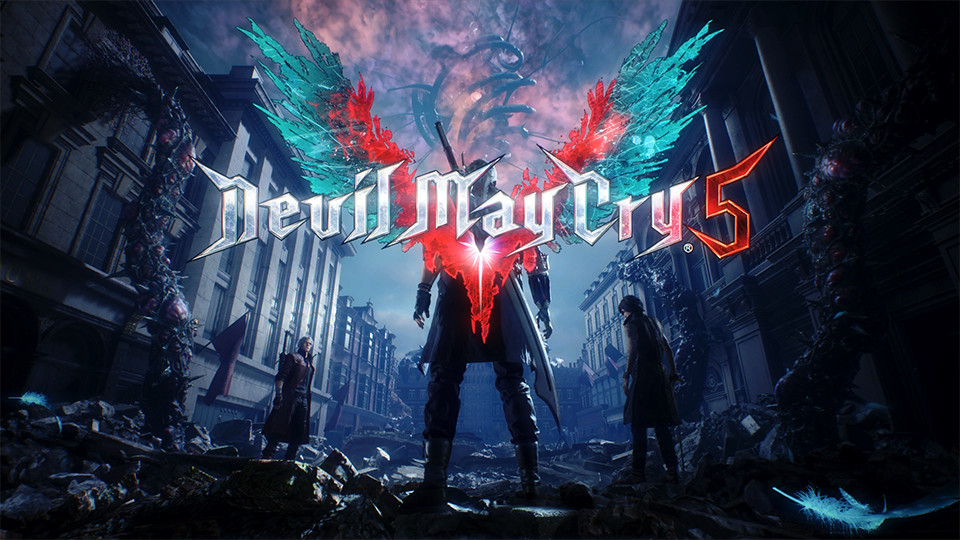
 the demon-hunting business but one May night, Nero is accosted by a familiar foe who has not only taken the demon sword Yamato, but also Nero’s demonic arm. Vowing vengeance, Nero pursues the foe to Redwood City where he is introduced to a new evil known as Urizen. He, Dante and fellow demon hunters Trish and Lady are swatted instantly by Urizen. Now having a
  Gameplay in
 Hyper Fighting, but it’s Street Fighter at peak Street Fighter. That also applies to the controls. It’s the Street Fighter that you know and love but cleaned up just a tad.
 unknown terrorist groups using the top-secret helicopter known as Airwolf. As String conducts the mission, he finds out that one of the prisoners being held is his long-lost brother who was declared missing in action during the Vietnam War. This gives him added incentive to carry out his given mission.
 The graphics were
 Batman is easy to guide around, though there are a few spots where the directions and what to do could be a little more clearly pointed out. However, Batman is fluid and moves quickly enough that getting around Gotham to take on the Penguin and Catwoman isn’t much of a problem.
 moving left and right with the control pad, jumping with a button, and attacking with basic weapons by using combinations for special weapons. These controls have special designations for Grant, controlling how high he can jump and climb walls, and for Alucard, who can transform into a bat. To give this team of vampire hunters an extra advantage, Trevor can upgrade his mystic whip to a long-ranged chain whip and can use various Warakiya items such as the banshee boomerang, battle ax and a pocket watch that temporarily freezes enemies. Sypha has her magic staff as her main weapon in addition to using elemental orbs that can produce fire, ice and thunder attacks. Grant has use of the dagger, but he can only use the mystic ax as his secondary weapon. Alucard has use of a destructive ball that can be upgraded to shoot three directions.