

Latest, greatest adventure

Goemon’s Great Adventure has always had the unfortunate position in gaming of coming after the excellent Mystical Ninja Starring Goemon. It can’t help but follow in the shadow of the game as its direct sequel, and it’s never going to stand up to make itself the premier entry in the series. What it does have going for it though are two things: Rarity and some improvements in areas where the other entries struggled.
Based on real-life figure Goemon Ishikawa, the titular hero stays saving the day in an alternate Edo with his allies Ebisumaru, Yae and Sasuke. In this tale, the gang witnesses an Ebisumaru lookalike steal the Old Wise Man’s new dead-resurrecting device and wreak havoc on the land. It’s a cute setup and it doesn’t take much to get into the story of the two zany ninjas. Where this entry excels is the much-improved interface. Though it seems less personal and plotted out like Super Mario World with a world map, it’s a welcome relief from the sometimes-confusing layout of Mystical Ninja Starring Goemon. It’s nice to just choose a location on the map and go there without having to remember how to get there.
Also improved are the mechanics. The biggest change in the game is arguably the switch from over-the-shoulder view la Mario 64 back to a side-scroller in the vein of Legend of the Mystical Ninja. Despite how jarring it may have seemed at first, eventually I came to love the fact that it’s slightly easier to move around and get a feel for the characters than it was in Starring Goemon. Movement seems more substantial and there’s no more fighting with the wonky camera that won’t cooperate.

The way it looks is better also in Great Adventure. Everything is cleaned up and less polygonal, though some characters retain that blocky look no matter what. However, the glow up is most noticeable in the environment. Edo looks fantastic, with the beautiful recreation of feudal Japanese architecture standing out the most. I was always impressed with the Mystical Ninja series in what it tried to do graphically, and this is a solid-looking entry.
Just as good as the graphics is the sound. Mystical Ninja, as a series, is known for its sublime soundtrack and Great Adventure doesn’t disappoint. We’ve covered this in our review of the game’s tracks (Editor’s Note: See Issue 39) for Beat.Trip.Game, and it’s so good it’s worth mentioning multiple times.
Though it’s an improvement in most areas, there are some spots where it could be  polished a little more. Some of the translation is rough and there are frequent grammar errors in the text. For a game that relies on text to get the point across, that’s too jarring and takes me out of the experience. Another gripe is that, while most of the mechanics are improved, some of the new mechanics — such as the pole vault — need some work. It’s not hard to do — once you figure it out. The problem is that it takes much too long to figure out. If I have to watch a playthrough video to get the concept, it’s doing too much.
Goemon’s Great Adventure is a technically sound and competent entry in a much-loved series. Despite my initial annoyance with it 25 years ago, it’s grown on me with another replay. While it’s not as great as the stellar Mystical Ninja Starring Goemon, it’s definitively a welcome entry in the series. One thing we’re going to do is let Goemon be great, and he achieves it with this solid entry in the franchise.


 established in the original game: You pop clusters of like-colored bubbles in an effort to clear established puzzles. This basic premise was set up in the first game for the
  But let’s be honest, what you came here for was to learn if the puzzle gameplay is up to the standard established by the first game. Yes, it is, and here’s why: Not much changed. No crazy weird mechanics shoehorned in, no missteps in how the bubbles bank or strange concepts cobbled together (aside from the sticky platforms that inexplicably start showing up halfway through the story mode) make appearances here. You can be rest assured that it’s the Bust-A-Move that we all know and love.
 mechanics are tight and quick movement is clean and precise, even with the wonky
 the lack of everything else. Sort of.

 For context, I barely understood the combo system of the first game, but by the time Gold came along, I could hold my own against other
 can get it right or mess it up horribly, where it is forever known as the “messed up version of Tetris.” Luckily, Magical Tetris Challenge by Capcom manages to dodge that label and add a few elements to the main game to refresh an older title.
 play begins: For every line cleared, a small amount of energy is added to a magic meter. Fill up the magic meter and you get what we’ve termed at
 Mastering powersliding means a world of difference in race times, especially when you have bragging rights at stake. Old mechanics, such as the weight class concept, are still present but it seems everyone has a better representation with respect to how a class really controls. The lightweights feel like, well, lightweights. The heavyweights actually feel like they’re heavy to handle.
 Palace is interestingly laid out and the graphical quality of the castle still blows away the competition 20 years later. Watching Mario run around, run and jump and be Mario but in a non-2D sprite is pure heaven for Mario lovers like myself.
  The soundtrack makes up for the illness-inducing gameplay. The soundtrack is fantastic and it’s worthy of a mainline Mario game, easily. From running around in the plains of Bob-omb Battlefield to traversing numerous obstacles to take on the King of the Koopas, Mario 64 is a dream come true in terms of audio pleasure.
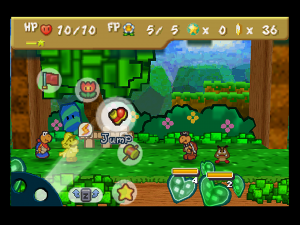 Mario fills that void nicely with an engaging tale of teamwork and camaraderie. I was most impressed with the depth of the characters and the deft way Intelligent Systems fleshed out the world of Mario and some of his never-before-seen allies who come from all walks of the Mario life.