Gundam Versus — Issue 38

Gun­dam soars in top-notch mecha simulator

I’m a HUGE Gun­dam fan. Next to my love of Mega Man, Gun­dam is my sec­ond great­est obses­sion. Because of lim­it­ed space, I’ll have to be con­tent with the lim­it­ed Gun­dam merch that I have amassed. The lat­est addi­tion was giv­en to me for my recent birth­day; it made me recall play­ing a Gun­dam arcade fight­ing game at Nashicon 2016. Would it serve to sat­is­fy my hunger for giant robots caus­ing mas­sive dam­age and beat­ing them­selves to obliv­ion? “Gun­dam Ver­sus” for PlaySta­tion 4 gave me my answer.

Gun­dam Ver­sus has some unique advan­tages going for it as a fight­ing game. Its source mate­r­i­al is based on a uni­ver­sal­ly rec­og­nized ani­me series. Unlike oth­er fight­ing games, it does not have a sto­ry­line, allow­ing you to jump straight to the action with­out know­ing back­ground sto­ry. That sold me as some­one who knows a series’ back­ground, not need­ing knowl­edge about spe­cif­ic char­ac­ters’ background.

The abil­i­ty to choose a series favorite from a ros­ter of more than 90 mobile suits from var­i­ous Gun­dam works ensures that you are not lim­it­ed to char­ac­ters in Gun­dam series only aired in the U.S. Each stage is open area, allow­ing you to plan offense or defense with the ben­e­fit of hid­ing or run­ning from your oppo­nents while recov­er­ing from attacks. Also, you can have two addi­tion­al char­ac­ters to back you with one serv­ing as a strik­ing part­ner to tag team oppos­ing forces with the per­fect tim­ing. They are avail­able to have a train­ing ses­sion to get you famil­iar with your cho­sen suit.

Those who are not accus­tomed to run-and-gun gam­ing will get frus­trat­ed and want to quit play­ing. The open bat­tle­field requires a 360-degree view, which the PS4 con­trols are decent enough to help han­dle the action. While Gun­dam Ver­sus made an hon­or­able attempt to include all Gun­dam ele­ments, some open­ing themes were played on repeat way too much and that took away the focus from game­play and placed it on the music. Music for the game is top notch, which is to be expect­ed from the Bandai Nam­co sound team. This was the first time the team did an inter­na­tion­al col­lab­o­ra­tion with the Czech Phil­har­mon­ic Orches­tra for the open­ing visu­al. That adds some fla­vor and extras to the pre­sen­ta­tion. While I was dis­ap­point­ed that the game didn’t offer an Eng­lish dub track, the orig­i­nal Japan­ese audio for the Gun­dam fran­chise ensured that Ver­sus has the appro­pri­ate Gun­dam feel.

A down­side is that cer­tain series I liked and want­ed to use suits from are stuck as paid con­tent, which left Gun­dam fans like me at Bandai Namco’s mer­cy regard­ing afford­able pricing.

Gun­dam Ver­sus is a tes­ti­mo­ny of how ani­me, sci-fi and fight­ing games have merged to cre­ate a prod­uct that is playable for every­one, regard­less of fan­dom knowl­edge. As a Gun­dam afi­ciona­do, Ver­sus is well worth the time spent play­ing and is the next best thing to own­ing a Gun­dam or mobile suit. I wel­come this new addi­tion to my Gun­dam col­lec­tion as I con­tin­ue my quest to build a mas­ter­piece col­lec­tion of all things Gundam.

Tekken 7: Fated Retribution — Issue 38

Tekken’s fate unknown after mile­stone entry

Tekken is about a cer­tain sub­stance and style. The fight­ing engine is so deep in Tekken that if you’re just start­ing with the sev­enth game, you’re at an imme­di­ate dis­ad­van­tage because you’re behind. Way behind. Sto­ry-wise, you’re behind, too. There’s so much going on with the Mishi­ma clan that you’re bound to be ask­ing the ques­tion: Why now? Tekken isn’t just answer­ing that; it’s pos­ing the ques­tion of what’s next?

For the Mishi­ma clan — and Tekken’s ros­ter at large — the future is the ques­tion on everyone’s mind, but to get there, Tekken 7 stakes its ambi­tions on look­ing back to tell the sto­ry of the future. Spoil­er alert: With Hei­hachi gone, there’s only Kazuya and Jin left to car­ry on the blood feud of the clan. The sur­round­ing enti­ties are on either side of the con­flict between father and son, and there will be casu­al­ties. But that isn’t Tekken 7’s main sto­ry to tell. Real­ly, it’s two ques­tions: How did Kazuya become enmeshed in the dev­il gene fool­ish­ness, and how is Hei­hachi entan­gled in that as well? The answers lay with new char­ac­ter Kazu­mi Mishi­ma, Kazuya’s moth­er and Heihachi’s wife. She plays a cen­tral role in unrav­el­ing the mys­tery of Kazuya’s trans­for­ma­tion using the dev­il gene and why Hei­hachi threw his child off a cliff more than 40 years before.

While Bandai Nam­co is set­ting up the pay­off, look around. You’re in a Tekken game and many things will be true at once: The sound will be phe­nom­e­nal, and the graph­ics will be stun­ning. After all, this is a Tekken title; the King of the Iron Fist tour­na­ment does not slouch. What’s strik­ing is, this is a four-year-old game and it still looks decent. Tekken has nev­er been one to hold back when it comes to looks, and even with the upgrad­ed PlaySta­tion 4 Pro, it’s still a good-look­ing game. Tekken 7 could look worse with the ben­e­fit of more pro­cess­ing pow­er, and some sec­tions do show the age of the game. How­ev­er, it’s min­i­mal as far as Tekken is con­cerned, and Tekken 7 is still a pow­er­house when com­pared to every­thing else on the market.

The sound­track is excel­lent, though I want­ed a lit­tle more from it. I real­ize that not every Tekken sound­track is going to be the first Tag, where every track was a banger. How­ev­er, this is Tekken, and a cer­tain bar has been set by past games that cur­rent games must live up to. There are some bangers here, but not near­ly enough. For ref­er­ence, I have every Tekken sound­track ever released, arcade and home ver­sions. For the first four games, I have the entire sound­track saved on my iPod. As the series pro­gressed, I had few­er songs from each sound­track. As of Tekken 7, I have two tracks. It’s a good sound­track, but it just isn’t any­thing I haven’t heard before in a Tekken game. Tekken 8, or what­ev­er it will be called, will have to step things up in the sound department.

As far as Tekken’s playa­bil­i­ty, I can’t real­ly attest to it on a hands-on lev­el. Full dis­clo­sure: I’m not a good Tekken play­er. That said, how­ev­er, I find it a lit­tle eas­i­er to pick up Tekken and play with the new fea­tures added in the arcade mode. I real­ly like that there’s an easy com­bo assist fea­ture. It makes it far less frus­trat­ing to learn the com­bo sys­tem, and it makes it much eas­i­er for begin­ners to under­stand how moves flow together.

Tekken, despite hav­ing only four attack but­tons, has always been about depth, and that’s scary for the unini­ti­at­ed like myself. With the assist fea­ture, I’m more inclined to take the time to learn and dig just a lit­tle deep­er with the series. It’s a fan­tas­tic addi­tion that needs to stick around in future entries.

The char­ac­ter cus­tomiza­tion mode also deserves some praise as it’s com­ing along nice­ly. It’s been around now for at least three games, and it’s got­ten bet­ter each iter­a­tion. This is part of the depth of Tekken — along with its engine and com­bo sys­tem — that makes it such a great series. Tekken 7 takes care of the details, and the obvi­ous love and care put into the cus­tomiza­tion sys­tem gives the game con­tin­ued life, even as it gets a lit­tle long in the tooth. The fact that new char­ac­ters and upgrades are still being released is fan­tas­tic con­sid­er­ing the game’s age.

With the sto­ry­line dic­tat­ing growth and the graph­ics engine need­ing to catch up to oth­er fight­ing game dar­lings, Tekken has its work cut out in keep­ing up with the sur­round­ing com­pe­ti­tion. Tekken 7 does an admirable job demon­strat­ing its sta­bil­i­ty and abil­i­ty to lead the pack as the King of the Iron Fist, and its longevi­ty and intu­itive fea­tures con­tin­ue to make it an attrac­tive option for those need­ing a fix from Mishi­ma and Co. Tekken 7 is good enough to keep its crown and can prob­a­bly shrug off new chal­lenges for the throne until its time for the eighth go-round. Long live the king.

Injustice 2: Legendary Edition — Issue 38

Injus­tice 2 hits right notes in super rematch

The intri­ca­cies of deter­min­ing the win­ner of the sto­ried fight between Bat­man and the Jok­er all depend on prep time for Bat­man and the Joker’s mani­a­cal state at the time of the bat­tle. We’ve thought this through and deter­mined that even with min­i­mal prep time, Bat­man could win this fight con­sid­er­ing his pre­vi­ous expe­ri­ence with the Jok­er. To sim­u­late it, we would need only one thing: the Injus­tice series of games. And con­sid­er­ing Injus­tice 2 has more chances for this to hap­pen with prop­er sim­u­la­tion, you can best believe we’re div­ing deep into the sol­id sequel DC com­ic book fight­ing game.

Injus­tice 2 is a com­pe­tent sto­ry­teller in its quest to be a DC com­ic book sim­u­la­tor. Set after the fall of Superman’s tyran­ni­cal regime, Injus­tice 2 places Bat­man at the fore­front again to take on the task of rebuild­ing soci­ety and com­bat­ing a new threat in the form of The Soci­ety. Mix­ing in long­time Super­man foe Bra­ni­ac only adds to the chaos. What it boils down to is that these are char­ac­ters you know from the DC uni­verse — even if you’re pass­ing­ly famil­iar with them — fight­ing it out to stop Super­man from con­tin­u­ing his reign of tyran­ny estab­lished in the pre­vi­ous game.

Where Injus­tice 2 shines is its pre­sen­ta­tion and its char­ac­ters. Every­thing that looked good in the first Injus­tice is much-bet­ter look­ing the sec­ond time around. The user inter­face got a new­er, sleek­er coat of paint, and all the char­ac­ter mod­els and back­grounds look bet­ter and clean­er, too. The char­ac­ter select screen even looks bet­ter and more flu­id. NetherRealm’s fight­ing game visu­als get bet­ter with each game, so this is just a tes­ta­ment to their grow­ing prowess. The music isn’t stand­out, but it’s serviceable.

Despite its shiny upgrad­ed pre­sen­ta­tion, I’m still not a fan of how it plays. The com­bat doesn’t feel nat­ur­al, like say, how Mor­tal Kom­bat feels. It still feels like it’s a step or two behind MK and like it’s try­ing too hard to dif­fer­en­ti­ate itself from that series by throw­ing a wrench into the basic com­bo setups. I’m also not a fan of the unlock sys­tem. It’s a lot of gear to unlock for a lot of char­ac­ters, but I don’t real­ly have the time or the incli­na­tion to sit and work on it. I’m not say­ing have it unlocked imme­di­ate­ly when I first start the game, but I am say­ing it needs to be eas­i­er. The expe­ri­ence is not the most enjoyable.

Injus­tice 2 is a nice upgrade from the first game. It’s got the name fac­tor, char­ac­ters you prob­a­bly know and slick pre­sen­ta­tion that will catch most anyone’s eye who is into fight­ing games. Whether you’re a com­ic book fan or a casu­al fight­ing game con­nois­seur, Injus­tice 2 is worth a look to see if it’s worth its weight in kryptonite.

Marvel vs. Capcom Infinite — Issue 38

Mar­vel vs. Cap­com now infi­nite­ly frus­trat­ing series

The Mar­vel fight­ing game scene is well known by now and well worn. Pret­ty much, any­one who’s any­one in the Mar­vel com­ic uni­verse and movies has been in a Mar­vel Ver­sus game. This is noth­ing new by now. You’ve seen these peo­ple before and, if you’re a Cap­com fan, you have seen their side of the ros­ter in oth­er games before you got here. So, what exact­ly are you get­ting out of play­ing the lat­est iter­a­tion in the long-run­ning Mar­vel Ver­sus Cap­com series? Not much, but Cap­com already knew that. They just hoped you wouldn’t notice.

If you’re invest­ed in the Mar­vel Cin­e­mat­ic Uni­verse but don’t know any­thing about the comics, MvC: Infi­nite serves as a start­ing point for under­stand­ing the comics side of things in prepa­ra­tion for Avengers Endgame. Oh, yeah, there’s some Cap­com sto­ry set up, too, as an after­thought. Real­ly, this is sev­er­al sto­ries mashed togeth­er: From Mar­vel, you get the Infin­i­ty Saga and Age of Ultron sto­ry; from Cap­com comes Sig­ma and Mega Man X’s sto­ry and some of Vam­pire Savior/Darkstalker’s 3 arc deal­ing with Jedah Dohma. The sto­ry kind of makes sense in a mashed-up way. It’s not half bad, giv­en that the pre­vi­ous efforts of Mar­vel vs. Cap­com 3 to give a cin­e­mat­ic team up was decent and miles ahead of any oth­er title in the series to date. Most­ly, the Mar­vel Ver­sus series has fol­lowed an estab­lished com­ic book arc — Mar­vel vs. Street Fight­er was most­ly Apoc­a­lypse and the first Mar­vel vs. Cap­com focused on Onslaught — and this is no dif­fer­ent. Where it fal­ters is oversimplification.

The Infin­i­ty Saga is nev­er tru­ly fin­ished in the comics because Mar­vel con­stant­ly returns to it over the years to explain a lot of things. Also, think­ing crit­i­cal­ly about what this is real­ly based on, the sto­ry of the Infin­i­ty Saga real­ly took about 18 of the 22 MCU movies to tell its sto­ry. You can­not tell this sto­ry in two games — Mar­vel Super Heroes being the first to tell this arc. Infi­nite tries to and winds up half accom­plish­ing it with some weird, forced Cap­com sto­ry side fool­ish­ness thrown in for good mea­sure, because hey, Cap­com is also in the name.

You get the sense that if Capcom’s angle of things was removed, this would be just fine, and Infi­nite would be OK with­out it. That does not help Cap­com at all here. Imme­di­ate­ly, it destroys the need for a new team-up game and ren­ders Capcom’s side of the ros­ter unnec­es­sary. I do not feel Ryu or Chun Li are use­ful in any of the sit­u­a­tions pre­sent­ed in the sto­ry mode.

The ros­ter is actu­al­ly not bad, but with the few new addi­tions locked behind a DLC pay­wall, you’re kind of left to won­der would Infi­nite be just a tad bit bet­ter if the more note­wor­thy char­ac­ters were avail­able from the start. The base group is basi­cal­ly a retread ros­ter from MvC3, and the new addi­tions should have been in the series; the fact that we’re just now get­ting Black Wid­ow, Black Pan­ther, Jedah and the Win­ter Sol­dier is a crime that only Cap­com seems to like committing.

In addi­tion to the gener­ic over­sim­pli­fi­ca­tion of the sto­ry, the pre­sen­ta­tion is just as gener­ic and bland. The Mar­vel Ver­sus series has always had strong pre­sen­ta­tion, and to be frank, this ain’t it, as the kids say these days. The back­grounds are good, but some of the char­ac­ter designs have an oof lev­el the size of Ultron Sigma’s final form. They are, quite frankly, ter­ri­ble a lot of the time. There seems to be an attempt at real­ism but not, at the same time, because some of the Mar­vel char­ac­ters look like their MCU coun­ter­parts, but then when you look clos­er, there’s a detail that keeps them from look­ing exact­ly like the actor or actress that plays the character.

For exam­ple, look at Cap­tain Amer­i­ca and Cap­tain Mar­vel. Cap­tain Amer­i­ca, from far away, looks exact­ly like MCU Win­ter Sol­dier-era Cap­tain Amer­i­ca as por­trayed by real-world Cap­tain Amer­i­ca stal­wart Chris Evans. Up close, how­ev­er, Cap looks just enough dif­fer­ent for you to real­ize that Evans prob­a­bly didn’t con­sent to his like­ness for the game. Same for Cap­tain Mar­vel and actress Brie Lar­son. It’s a small but notice­able quib­ble I have here. And, some of these Cap­com char­ac­ters look atro­cious. Ryu’s face on the title screen is hor­rif­ic. The sprites look ter­ri­ble here but in game, he looks fine. It’s a shame because every oth­er game in the series has been OK in terms of the graph­ics. Sure, they weren’t award-win­ning, but they reflect­ed the series’ growth. Infi­nite looks like it took about 10 steps back in a lot of respects.

The music is just as bland. Each iter­a­tion of the Ver­sus series has had some bangers on the sound­track — even the much-maligned Mar­vel vs. Cap­com 2’s sound­track was mem­o­rable if not catchy. Here, there is absolute­ly noth­ing note­wor­thy. It’s the first Ver­sus game where I don’t have some­thing from the sound­track saved, which is not good at all. As I played through the sto­ry mode, I kept wait­ing for some­thing to jump out at me, and I got noth­ing. I was not impressed.

The con­trols didn’t impress, either. There has been a not­ed trend, since MvC3 was released, to sim­pli­fy the game sys­tem for the Ver­sus games to make them more accessible.

While I’m always a fan of draw­ing in the casu­al fan for these types of games, I’m not a fan of ruin­ing a good thing. MvC2 was still acces­si­ble to even the most casu­al fight­ing game play­er, and this is even worse than the ton­ing down of the con­trols between MvC2 and MvC3. There is no depth to the com­bo sys­tem now, and that doesn’t help Infi­nite in any way.

I’m under­whelmed when it comes to Mar­vel vs. Cap­com Infi­nite. Noth­ing plays in its favor, noth­ing makes any sense, and the team-up crossover event is show­ing its age in every facet of the game. There’s noth­ing new here to make me say wow or push me to play as I did the oth­er games in the series. If Cap­com were to lose the Mar­vel license again, it wouldn’t be a shock­er or unwarranted.

 It’s time to admit that the series is not an infi­nite source of amuse­ment. Unfor­tu­nate­ly, at this point, it’s mere­ly a finite source of fight­ing game goodness.

Final Fight 2 — Issue 38

Cap­com brawler takes fight worldwide

As a child of the ear­ly ’90s, Final Fight not only increased my addic­tion to arcade games, but also intro­duced me fur­ther to Capcom’s sky­rock­et­ing rise as a game devel­op­er. I dived into Final Fight 2 to relive my arcade glo­ry days.

In Final Fight 2, time has passed since Mike Hag­gar, Cody Tra­vers and Cody’s friend Guy defeat­ed the Mad Gear gang, restored peace to the streets of Metro City and res­cued Haggar’s daugh­ter Jes­si­ca from the Mad Gear’s leader, Bel­ger. That peace is short-lived when the rem­nants of Mad Gear return under a new leader and kid­nap Guy’s fiancée, Rena, and Guy’s sen­sei, Genryusai.

With Cody away on a trip with Jes­si­ca and Guy away on secret train­ing, Hag­gar is joined by Rena’s sis­ter, Maki, and Haggar’s friend Car­los Miyamo­to on a world­wide quest to crush the Mad Gear and res­cue Rena and Gen­ryu­sai. FF2 has a lot going for it; it’s a direct sequel nev­er released in arcades with a lot of new mate­r­i­al despite no new gen­er­al mechanics.

FF2 has an expand­ed bat­tle­field with Hag­gar, Maki and Car­los start­ing their jour­ney in Hong Kong and end­ing that jour­ney in Japan. The main pro­tag­o­nists make their way through sev­er­al locales in Europe in their search for Rena, all the while sur­round­ed by improved graph­ics over the first game. The back­grounds are high qual­i­ty, and the sprites are well-drawn and crisp for each char­ac­ter with a lot of atten­tion to detail.

The atten­tion to detail also shows up in the con­trols. Over­all, con­trol is sim­ple even though each char­ac­ter has a unique fight­ing style. Hag­gar still has his pro wrestling moves, Maki makes use of Nin­jit­su and Car­los prac­tices mar­tial arts and sword skills. Though they are gener­ic in exe­cu­tion, it’s fun to see how each char­ac­ter oper­ates dur­ing the fight.

Pow­er-ups are still obtained via smash­ing var­i­ous objects and range from steamed Chi­nese buns to a pair of shoes that can increase health or score points. Find­ing either a Gen­ryu­sai or Guy doll will give an extra life or invin­ci­bil­i­ty. As for the music, it is arcade per­fect just like its pre­de­ces­sor. It’s a nice sound­track of ear­ly Cap­com brawler, and it fits the action per­fect­ly in each of the game’s locations.

As much as I enjoyed FF2, the game does have some flaws. While each char­ac­ter has their own awe­some spe­cial moves, using them does cost health. That’s annoy­ing when you’re try­ing to use more pow­er­ful moves to defeat boss­es and try­ing not to die at the same time. Also, dur­ing the timed bonus stages, con­trol is hit or miss when strik­ing objects; if it’s not done per­fect­ly, you lose the bonus points. I also got frus­trat­ed when I couldn’t take the weapons I found into oth­er areas. That cheap­ens the use of the weapon and makes it use­less short­ly after pick­ing it up. And, the chal­lenge lev­el is ridicu­lous. I need­ed a cheat code just to get to the real end­ing in expert mode. It’s too easy to die and tak­ing hits from off-screen ene­mies is terrible.

Final Fight 2 placed the series in the ranks of Capcom’s top-tier fran­chis­es. While it hasn’t seen the lev­el of push of say, Street Fight­er or Res­i­dent Evil, the beat-’em-up is fond­ly remem­bered as one of Capcom’s crown­ing achievements.

Killer Instinct Gold — Issue 38

A killer Nin­ten­do 64 fight­ing sequel

It’s not been that long ago that Killer Instinct was still being rec­og­nized in the top ech­e­lon of fight­ing game series. But that was then, and this is now, and folks have a crit­i­cal eye toward the lega­cy of the defunct series. What folks real­ly want to know: Where does KI Gold – the 2.5 sequel game – appear in that legacy?

I’m old enough to remem­ber the launch of KI2 and then Gold for the Nin­ten­do 64 in 1996. I was heav­i­ly into fight­ing games then, still stick­ing with Mor­tal Kom­bat and look­ing for some­thing new to sup­ple­ment that fight­ing game itch. Enter Gold, which is an upgrade of KI2 for the home mar­ket. It’s a slight uptick in graph­ics, music and tweaks over the arcade ver­sion. The upgrades make it the bet­ter ver­sion of the game and push it toward must-have sta­tus for the N64.

Con­trol-wise, KI Gold is easy to pick up and a lot more acces­si­ble than its pre­de­ces­sor. For con­text, I bare­ly under­stood the com­bo sys­tem of the first game, but by the time Gold came along, I could hold my own against oth­er KI mas­ters, such as long­time friend of GI David Rhodes. If I could actu­al­ly win some rounds and every so often match­es against him, that’s evi­dence that the sys­tem is improved for casu­al fans. The con­cept of link­ers and chain com­bos made much more sense with a lit­tle in-game expla­na­tion, so this made the learn­ing process a lot eas­i­er to grasp. The change in sys­tems was the best in terms of accessibility.

Gold’s graph­ics are a slight improve­ment over the arcade ver­sion and even more so over the orig­i­nal game. But, in com­par­i­son to oth­er games on the mar­ket at the time, Gold doesn’t hold up par­tic­u­lar­ly well. Putting it along­side oth­er games avail­able at the same time, such as Tekken 2, doesn’t bode well for Gold. In par­tic­u­lar, there are janky tex­tures that snag and tear in the back­ground envi­ron­ments, which detracts from the oth­er­wise sol­id char­ac­ter models.

The sound­track, much like the pre­vi­ous game, car­ries the bur­den for the rest of the game. Rare’s sound depart­ment was known for pump­ing out good music, and Gold’s sound­track has quite a few bangers. It’s a lot of hard rock and a few tech­no tracks thrown in for good mea­sure, but it still holds up. In par­tic­u­lar, the char­ac­ter select theme – which was re-cre­at­ed for the 2013 revival of the series – is a toe-tap­per and still sounds fan­tas­tic on mod­ern sound systems.

But, the per­ti­nent ques­tion still remains: Where does Gold rank in fight­ing game genre lega­cy? It depends. If you care about flashy com­bos and aren’t too much of a tech­ni­cal con­tent fight­ing purist, Gold is prob­a­bly your fan­cy. It’s got enough to draw the casu­al fan in, but it’s light on the tech­ni­cal aspect of fight­ing games that the long­time purist would be look­ing for. It’s fun to play and revis­it from time to time, but if you’re look­ing to get bogged down in frame data and dig a lit­tle deep­er, Gold isn’t going to be your col­or. Your best bet is to look to the future of the series, and let this instinct die out.

Chip ‘N Dale Rescue Rangers 2 — Issue 38

Fur­ry duo return in sol­id fun

In a pre­vi­ous issue, I reviewed Disney’s Chip ’n Dale Res­cue Rangers for the NES. I reviewed the game as a nod to the times of the late ’80s and ear­ly ’90s where you knew the ins and outs of your favorite shows, includ­ing the open­ing and end­ing theme songs. With the arrival of Dis­ney+ and Capcom’s re-release of Dis­ney After­noon-themed games for cur­rent con­soles, I heard that Disney’s dynam­ic duo had anoth­er game for the NES. I reviewed Chip ’n Dale Res­cue Rangers 2 to see if it would jump start my care­free kid memories.

Res­cue Rangers 2 starts off with our fur­ry heroes and their com­rades enjoy­ing a well-deserved rest after stop­ping their noto­ri­ous arch neme­sis, Fat Cat, in the first game. How­ev­er, like most great vil­lains, Fat Cat was able to mas­ter­mind his escape from prison and acquire the leg­endary Urn of the Pharaoh to re-launch his fiendish plans. With Fat Cat on the loose and hav­ing evil spir­its at his dis­pos­al, the Res­cue Rangers are the only ones stand­ing between Fat Cat and world peace.

Res­cue Rangers 2’s game­play is exact­ly like the orig­i­nal; you can choose either Chip or Dale to bat­tle through sev­er­al lev­els to do bat­tle against Fat Cat’s legions of hench­men who are deter­mined to stop our heroes from sav­ing the day. Chip and Dale can jump, duck and used pint-sized box­es to throw either hor­i­zon­tal­ly or ver­ti­cal­ly to defeat ene­mies. These box­es have var­i­ous pow­er-ups, such as acorns, to replen­ish health, extra lives or Res­cue Rangers plaques that can earn Ranger icons. These icons will give the char­ac­ter of your choice an extra heart.

The con­trols also remain the same from the first game. Res­cue Rangers vet­er­ans will be famil­iar with the con­trol lay­out, but new­com­ers will go through trial 
and error until they are comfortable.

All the lev­els and back­grounds were done with great care, mak­ing me believe that I was play­ing an actu­al episode of Res­cue Rangers. I com­mend Cap­com for let­ting Dis­ney ani­ma­tors work their mag­ic on heroes and boss char­ac­ters, ensur­ing that the boss­es pro­vid­ed a chal­lenge with­out los­ing Dis­ney elements.

As much as I enjoyed Res­cue Rangers 2, it’s not with­out some flaws. I stat­ed ear­li­er that con­trol­ling either Chip or Dale would take prac­tice; that is impor­tant since dur­ing stages, you can­not go back to a low­er lev­el to pick up items with­out los­ing a life. That makes things unnec­es­sar­i­ly tough. Also, the Res­cue Rangers’ roles were dras­ti­cal­ly from the first game. The first game incor­po­rat­ed Mon­terey Jack, Gad­get and Zip­per into find­ing hid­den paths, scout­ing for ene­mies, and back­up and reach sup­port; they’re now reduced to back­ground scenery with lit­tle screen time.

Audio-wise, the music sounds dialed-in like the music from “1945,” show­ing that Capcom’s devel­op­ment starts strong but becomes weak in cer­tain areas. Final­ly, the chal­lenge lev­el is high, but I advise play­ers to have spe­cial cheat codes enabled if they want to fin­ish this game. You shouldn’t have to use them, but they are a must here.

Chip ’n Dale Res­cue Rangers 2 has deliv­ered, keep­ing intact all the ele­ments that made it a Dis­ney favorite but, unfor­tu­nate­ly, keeps some of Capcom’s bad habits as well. The Dis­ney After­noon lives on in this small but sol­id sequel.

Devil May Cry 5 — 4Q2020 issue

Fifth time’s a charm: DMC 5 hunts down payoff

Dev­il may cry.” To some, it sounds like the lat­est quote from one of Hollywood’s biggest action stars. To me, it’s one of Capcom’s biggest fran­chis­es that does not involve “Street Fight­er” and “Res­i­dent Evil” that is a labor of love to play. Nero and Dante are back along with some new faces to raise more demon­ic hell across next gen gam­ing con­soles with the hack and slash style of gam­ing that put it on the map. I wait­ed five years to play the fifth install­ment of this series and the kick-ass pro­mo­tion­al song “Dev­il Trig­ger” helped move that wait right along. In April 2019, me and EIC Lyn­d­sey were on a spur-of-the-moment gam­ing shop­ping spree and not only did we pick up a PlaySta­tion 4 Pro, but also we picked up a boun­ty of games includ­ing DMC5. Could it sur­pass pre­vi­ous suc­cess­es that defined the series?

In DMC5, years after the events in DMC4, Nero has got­ten Dante’s bless­ing to jump in the demon-hunt­ing busi­ness but one May night, Nero is accost­ed by a famil­iar foe who has not only tak­en the demon sword Yam­a­to, but also Nero’s demon­ic arm. Vow­ing vengeance, Nero pur­sues the foe to Red­wood City where he is intro­duced to a new evil known as Urizen. He, Dante and fel­low demon hunters Trish and Lady are swat­ted instant­ly by Urizen. Now hav­ing a HUGE chip on his shoul­der, Nero returns with a new arm and part­ner in crime, Nico, and sets out on his sec­ond adven­ture filled with old and new allies and ene­mies while mak­ing his name as a mas­ter demon hunter to sur­pass his infa­mous uncle.

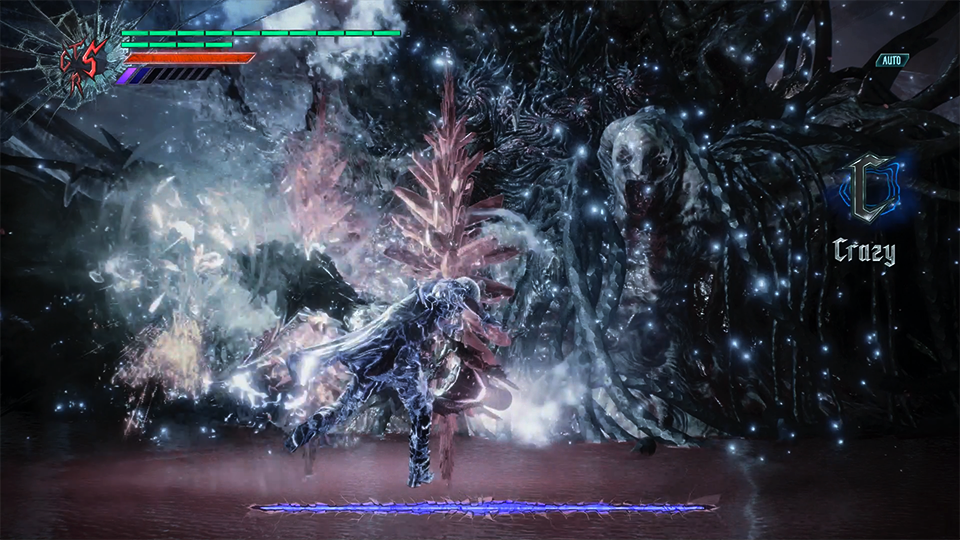
Game­play in DMC5 fol­lows the same high-speed action for­mu­la found in pre­vi­ous games in the series. Con­trol­ling Nero, Dante and the newest char­ac­ter V is per­fect. Nero still has his trusty sword Red Queen and revolver Blue Rose, but instead of his Dev­il Bringer he uses a pros­thet­ic arm called a Dev­il Break­er, which was devel­oped by Nico. It has extra punch than the Dev­il Bringer and can be upgrad­ed after bat­tles with var­i­ous bosses.

Dante has his dual pis­tols Ebony and Ivory as well as his usu­al swords Rebel­lion and Spar­ta, but also has five addi­tions: Cav­i­lare (a motor­cy­cle that when sep­a­rat­ed, becomes a buz­z­saw-like weapon); Bal­rog (yes, THAT Bal­rog), gauntlets and boots that increas­es Dante’s melee pow­er ten­fold; KalinaAnn2, a mod­i­fied ver­sion of the Kali­naAnn used in DMC3; and, Dr. Faust, a hat that shoots out red orbs when worn.

V has some tricks up his sleeve with his famil­iars Grif­fon, a demon hawk capa­ble of fir­ing light­ning bolts and pro­jec­tiles; Shad­ow, a pan­ther-like famil­iar that is melee com­bat ori­ent­ed, using its body to form blade and nee­dle weapons; and, final­ly Night­mare, a golem-famil­iar that moves slow­ly, but packs a MAJOR punch against giant ene­mies. I should also note that Night­mare can change his height to titan-lev­el and use a huge laser beam to destroy ene­my boss­es, which allows V to use his Roy­al Fork cane and its copies to land the fin­ish blow.

Anoth­er fea­ture I liked in DMC5 was the train­ing ses­sion that allows you to learn and prac­tice avail­able skills before pur­chas­ing them, allow­ing you to decide whether to buy or hold off.

The RE5 engine brings every detail to life, com­ple­ment­ing Dol­by Atmos sound’s abil­i­ties, which made me think I was play­ing a 3D movie instead of a video game. The voice cast is a mix of well-known and new voice actors led by Reuben Lang­don, John­ny Yong Bosch and Daniel South­worth repris­ing their roles as Dante, Nero and Vergil, respec­tive­ly. Stephanie Sheh returns as Kyrie but in voice form only. I also give kudos to Bri­an Han­ford for voic­ing V and Faye Kingslee as Nico. Brad Ven­able as Grif­fon stole the show, and Kate Hig­gins (Bleach, Code Geass) and Wendee Lee were excel­lent as Lady and Trish.

The only neg­a­tive thing I have about the game is the cam­era con­trol. It has improved GREATLY, but it still takes some time to mas­ter­ful­ly plan a character’s next move. The pow­er-up sit­u­a­tion that occurred in DMC4 was fixed, but you still need to con­serve your red orbs, espe­cial­ly if you use Dr. Faust.

DMC5 is wor­thy of replay because of its excel­lent blend of action, dra­ma and envi­ron­ment. Cap­com is doing this series right again and while I don’t agree that milk­ing a fran­chise is the best busi­ness deci­sion, DMC fans can begin to for­give Cap­com for its lack of judge­ment for DMC: Dev­il May Cry. Let the heal­ing begin.

Fun facts

  • Reuben Lang­don, John­ny Yong Bosch and Daniel South­worth have a con­nec­tion to the Pow­er Rangers fran­chise. Bosch was the sec­ond Black Ranger in Mighty Mor­phin’ Pow­er Rangers and the Green Ranger in Pow­er Rangers ZEO and Pow­er Rangers Tur­bo, while Lang­don did stunt work and South­worth played the Quan­tum Ranger in Pow­er Rangers: Time Force. All have pro­vid­ed voice and motion cap­ture work for the DMC series.
  • South­worth and Wendee Lee had dual roles as Urizen and Eva, Dante’s and Vergil’s mother.
  • If Red­wood City looks like Lon­don, you are cor­rect. Cap­com sent the DMC5 devel­op­ment team to Lon­don — specif­i­cal­ly Mid­hurst in West Sus­sex, Rochester, Kent, Can­ter­bury and Leeds Cas­tle in Kent — for inspi­ra­tion in design­ing loca­tions in the game. Var­i­ous mod­els and clothes were acquired and scanned in Lon­don and Serbia.
  • In addi­tion to the RE5 engine, Cap­com used Microsoft’s Sim­ply­gon graph­ic soft­ware to assist with graph­ics and the inter­mis­sion graphics.
  • The most notable song of the game, “Dev­il Trig­ger,” by Casey and Ali Edwards, has had more than 2.8 mil­lion views on Cap­com Japan’s YouTube chan­nel. Ali Edwards was also the lyri­cist and vocal­ist for the game’s end­ing theme “Lega­cy,” with com­po­si­tion by Kota Suzuki.

Super Street Fighter II4Q2020 issue

Super fight­ing fun again

Though I play a lot of fight­ing game series, I keep com­ing back to Street Fight­er. I don’t know if it’s out of habit or because I’m com­fort­able with the series’ sys­tems, but I find myself inti­mate­ly famil­iar with the Cap­com cre­ation. It start­ed with Street Fight­er II for SNES, not the arcade. As the series moved along incre­men­tal­ly, so did I and I dis­cov­ered the upgrade. The home port of Super Street Fight­er II for SNES was one of the best and that acco­lade still stands after near­ly 30 years.

Though Cap­com still hadn’t learned to count to three and Super Street Fight­er II reeks of milk­ing the fran­chise for all it was worth, it’s tech­ni­cal­ly a good port. This is the best ver­sion of the arcade expe­ri­ence before Super Tur­bo, and the SNES, despite its prob­lems with cen­sor­ship, is the best ver­sion you’re going to get. Super is where you’re intro­duced to the four new chal­lengers, who add some inter­est­ing ele­ments. Each of their fight­ing styles are already rep­re­sent­ed in the game with oth­er stal­warts, but they’re fun to play, nevertheless.

The music has hit its peak here, too. It’s the same as the orig­i­nal Street Fight­er II and Hyper Fight­ing, but it’s Street Fight­er at peak Street Fight­er. That also applies to the con­trols. It’s the Street Fight­er that you know and love but cleaned up just a tad.

My main gripe with the game is the fact that it’s not Street Fight­er III, which it would have been if not for the insis­tence of Cap­com not count­ing ahead. Cap­com knew it had a win­ner on its hands but repeat­ed­ly milked the fran­chise until there was noth­ing else to wring from it. Super would absolute­ly have been great if not for the fact that Super Tur­bo came a year lat­er and there had already been two oth­er incre­men­tal iter­a­tions of the game pre­vi­ous­ly. That cheap­ens Super to a degree all around. How­ev­er, giv­en that Super Tur­bo did not come home from the arcades for the SNES, Super gets a boost in nos­tal­gic factor.

What you need to take away from SSFII is the refine­ment of the Street Fight­er II expe­ri­ence, and this is where it shines. Every­thing about Street Fight­er II was at peak con­di­tion and refined to a tee with this iter­a­tion. Yes, this is pre-Tur­bo super moves and spe­cials but in a way that makes it the last true unspoiled Street Fight­er II expe­ri­ence. It was so good that lat­er Street Fight­er games attempt to repli­cate this ver­sion with modes that play like Super with no super moves and most, if not all, of its mechan­ics. That’s how you know it’s a defin­ing moment in a series’ lifes­pan. It’s a super fight­ing game for a super sys­tem that still holds up.

Airwolf — 4Q2020 issue

Let this low-fly­ing mess stay grounded

As a child of the 1980s, there was one major require­ment I had to know: the major prime time action shows and what nights and net­works that they came on. Two of those shows were Knight Rid­er on Fri­days on NBC and Air­wolf on Sat­ur­days on CBS. These two shows were so pop­u­lar that Acclaim Enter­tain­ment was able to get license rights from Uni­ver­sal Tele­vi­sion to devel­op video games for both shows. In a pre­vi­ous issue of GI, we reviewed Knight Rid­er for the NES in the Tor­ture of the Quar­ter sec­tion. Could Air­wolf break this curse of pop­u­lar shows turned into hor­ri­ble games? It was time to find out.

Air­wolf fol­lows the plot based on the TV show in that you take the role of Stringfel­low “String” Hawke, who is giv­en a mis­sion by the CIA to res­cue pris­on­ers of war from unknown ter­ror­ist groups using the top-secret heli­copter known as Air­wolf. As String con­ducts the mis­sion, he finds out that one of the pris­on­ers being held is his long-lost broth­er who was declared miss­ing in action dur­ing the Viet­nam War. This gives him added incen­tive to car­ry out his giv­en mission.

Airwolf’s game­play is a sim­u­lat­ed first-per­son view that was applied to the Knight Rid­er game. You have the view of Air­wolf that is clear enough to see your ene­mies and to attack ene­my strong­holds such as air­craft tow­ers, pris­on­er camps and repair depots. How­ev­er, this is the game’s Achilles’ heel. Con­trol is not flex­i­ble when you need it to be dur­ing dog­fights with ene­my air­craft. You’re required to shoot first or destroy air­craft tow­ers if you don’t fire your lim­it­ed mis­siles with pre­cise tim­ing. The inflex­i­bil­i­ty rears again when you land at a pris­on­er camp land­ing gen­tly and still die.

The graph­ics were OK, but they were akin to flight sim­u­la­tor games that were high­ly pop­u­lar dur­ing the ’80s. To give Air­wolf a frac­tion of a chance for a good review, I found the debrief­ing scene excel­lent, giv­ing me the appro­pri­ate data of destroyed ene­mies, res­cued pris­on­ers and inter­cept­ed missiles.

Sad­ly, I was ENRAGED that Acclaim could be this slop­py with a fran­chise such as Air­wolf. Don’t get me wrong, Acclaim did go on to make bet­ter video games based on pop­u­lar fran­chis­es, but like Knight Rid­er, Air­wolf failed to show me any redeem­ing rea­son for replay.

Air­wolf — like Knight Rid­er — are games that are rec­om­mend­ed only for the diehard fans of the ’80s that want to relive the action-packed nights of their child­hood. While I loved both shows, unfor­tu­nate­ly their action-packed for­mu­la that pro­duced major rat­ings for TV did not trans­late well into video game for­mat. Acclaim did learn well from these mis­takes, but they gave the first Mas­ter­Class les­son in video gam­ing of being care­ful with pop­u­lar fran­chis­es. If you want my advice, skip both games and play them on read­i­ly avail­able emu­la­tors; you’ll save time and hard-earned money.

Fun Facts

  • Air­wolf was cre­at­ed by Don­ald P. Belis­ario, who was known for pop cul­ture-wor­thy shows such as Quan­tum Leap, Mag­num, P.I., JAG and NCIS, which is still air­ing on CBS.
  • The actu­al Air­wolf was based on a Bell 222 heli­copter designed for cor­po­rate trav­el, emer­gency med­ical trans­port and util­i­ty trans­port. A full repli­ca of Air­wolf was on dis­play at a Ten­nessee avi­a­tion muse­um but has since been sold to a pri­vate col­lec­tor in Bel Aire, Calif.
  • There were numer­ous ver­sions of Air­wolf made for var­i­ous home sys­tems, but a side scrolling arcade ver­sion was devel­oped by Japan­ese devel­op­er Kyu­go in 1987. Acclaim released the NES ver­sion a year lat­er, after the show went off the air four years earlier.