Dark Knight’s second outing a rousing adventure
As a Batman fan, I hold a special place in my heart for most of the big-screen adaptations of the Caped Crusader’s fight to clean up Gotham. Batman Returns, despite its problems, is at the top of the list in terms of favorite aesthetics in a Batman film. That said, I wasn’t sure if I felt the same affection for the game version.
The story is the same as the film: You, as the Dark Knight, battle the nefarious Penguin and his equally foolish partner Catwoman as they join forces to take over Gotham and wreak havoc. Because you are technically superior (and richer) than your foes, you have an arsenal at your disposal that helps you take out the criminal element that is doing the bidding of the meddlesome bird man and troublesome minx. Really, if you’ve watched the superb film, you shouldn’t be at a loss here as to what you need to do. It follows the plot exactly, including the encounters that Batman has with lesser henchmen. Being a game based on a movie property sometimes has its perks.
Controlling the Dark Knight is much like you would expect from watching the movie. Batman is easy to guide around, though there are a few spots where the directions and what to do could be a little more clearly pointed out. However, Batman is fluid and moves quickly enough that getting around Gotham to take on the Penguin and Catwoman isn’t much of a problem.
Returns, foremost, is stunning visually. Much like the film, the game’s graphics are top-notch and evoke that well-known Tim Burton feel. The graphics are so well done that it almost appears that they were taken directly from the movie and inserted into the game. The colors are rich and pop when necessary in the game’s color palette, though it doesn’t stray far from the movie’s muted coloring too much.
Much like the graphics, the sound is also spot on and close to the movie’s backing tracks. Of course, there are a few appropriations because you’re not getting a full orchestra with composer Danny Elfman on the SNES chip, but the music is sufficient and gets the job done.
Batman Returns is a decent adventure set to the tune of the popular sequel on the silver screen. It’s a paint-by-the-numbers sequel with gorgeous, rich visuals that somehow manage to do the movie version justice in the 16-bit era. It’s comfortable and easy going, so you’re not missing anything if you’re looking for the best follow up that features Batman. The Bat, the Cat and the Penguin have a good adaptation on their hands with this 16-bit recreation of Gotham.
Castlevania. The name alone is well renowned to veteran gamers worldwide as one of Konami’s masterpiece franchises, having expanded from the NES to various gaming consoles and a glorious revival in anime form thanks to Netflix. As a video game veteran myself, I know of the many battles between the GOAT vampire hunting Belmont family and the infamous prince of horror monsters, Count Dracula. Ever since I was exposed to the first Castlevania game, I fell under its spell, wanting my chance to place a stake into Dracula’s chest. I finally got my chance to do so when I got my first game, Castlevania III: Dracula’s Curse for the NES.
In Dracula’s Curse, you take on the role of Trevor C. Belmont, forefather of series hero Simon Belmont, who is called upon to save his village of Warakiya from Dracula and his resurrected army of darkness. Trevor has one small but powerful advantage with him: the ability to transform into three partner spirits: Alucard, Dracula’s forgotten son; Grant Denasty, pirate terror of the seas; and, Sypha Belnades, vampire hunter/mystic warlord. Along with this shaper-shifter ability and equipped with the mystic whip and Poltergeist ax bequeathed by the Poltergeist King, Trevor sets off into the night ready to do battle against Dracula.
Gameplay is basic like most action-platforming games with simple moves such as moving left and right with the control pad, jumping with a button, and attacking with basic weapons by using combinations for special weapons. These controls have special designations for Grant, controlling how high he can jump and climb walls, and for Alucard, who can transform into a bat. To give this team of vampire hunters an extra advantage, Trevor can upgrade his mystic whip to a long-ranged chain whip and can use various Warakiya items such as the banshee boomerang, battle ax and a pocket watch that temporarily freezes enemies. Sypha has her magic staff as her main weapon in addition to using elemental orbs that can produce fire, ice and thunder attacks. Grant has use of the dagger, but he can only use the mystic ax as his secondary weapon. Alucard has use of a destructive ball that can be upgraded to shoot three directions.
While I appreciate these effective techniques to dispatch the undead, there were flaws such as learning to time each attack or risk falling off a stage. Also, whichever partner spirit Trevor teams up with, the partner takes damage, creating a struggle to survive in certain stages. I also learned that you collect stone hearts to power weapons and if Alucard is your partner, he would turn into a bat. That’s fine but that skill eats up your hearts and if you run out, he could turn back into human form putting him and Trevor in a MAJOR bind.
Adding to the frustration, there is a time limit to complete each stage, adding either challenge to gameplay or making you curse and smash your controller to pieces.
A word to the wise: Dracula’s Curse is challenging but LOOK hard for special items such as leg of werewolf, which refills your life meter; and, the invisibility potion that also gives temporary protection to give you the upper hand. Also, if you must go up a row of stairs, ALWAYS press up on the control pad to walk otherwise you will fall and lose a life.
The game’s music is excellent, staying true to the series’ theme of classical horror. If you heard a Castlevania theme before, you won’t hear anything new here. This isn’t Castlevania IV just yet, after all. The replay value is there although it will require you to have patience to and excellent strategic skills when choosing paths to take and partner spirits to work with.
Castlevania III: Dracula’s Curse is an example of how Konami built a respected franchise in its early days without disrespecting their development staff and letting them do what they do best. Dracula’s Curse is good but not without its quirks and flaws. If you love old-school platforming in the Castlevania control vein, jump in and partner up to take on Dracula once more.
I’m a DanceDanceRevolution fan from way back when, in that time and space before the U.S. really discovered the series and when we dealt with hastily put-together mixes that didn’t really capture the feel of DDR. Ah, those were the heady days of 2002. Alas, DDRfinally blew up in the U.S., and we finally started receiving mixes much like Japan. The problem was, we were getting them years after the fact, and when we did get them, they were mostly lacking — broken, incomplete messes that you were better off pretending didn’t exist. That, my friends, is where we join our story already in progress with Dance Dance Revolution Extreme 2.
Never mind that there is no DDR Extreme 2 in Japan. We’re going to set that aside for a minute to focus on the fact of why it exists in the U.S. DDR Extreme 2 is borne of the failure of Konami to do right by its fans outside of Japan. We received DDR Extreme in 2004, a full two years after the original was released in arcades and for PlayStation 2 in Japan. That game is absolute garbage: It’s nothing like what Japan received, which is a game that’s much closer to the arcade version of Extreme. We received a broken and changed-for-the-worse song interface, missing and weird songlist and grading mechanics that were excised as of DDR 5th Mix. Now that you’re all caught up, you should see the reason why we needed a do-over game of sorts. That’s where Extreme 2 comes in.
Extreme 2 is a decent addition to the U.S. console DDR library of games. It features the song wheel interface and restores the 5th Mix grading mechanics. The song list is great, too, finally featuring at least some of the songs found in the Japanese version such as Cartoon Heroes (Speedy Mix), Irresistiblement, Speed Over Beethoven and Paranoia Survivor/Survivor Max, which were all new to Japanese Extreme when it was released. It closely mirrors the home release of Japanese Extreme, which meant Konami was finally taking the U.S. market seriously.
Because it’s so close to the Japanese version of Extreme (editor’s note: We reviewed this title in the 2Q2013 issue), we’re going to skip the focus on how it plays other than to tell you that the timing windows remain loose as they always are in the U.S. versions, if you care about that sort of thing. From experience, it’s much easier for me to get an A grade on Paranoia Survivor in the American version than in the Japanese version. The American versions always have had more loose timing windows, and it makes playing a lot easier. The options are pretty much the same, though you will have to spend time unlocking songs because, as with previous U.S. releases, it’s missing the System Data Support feature found in the Japanese versions. That feature unlocks a previous game’s data using the current game. While this would have been helpful in Extreme 2, it’s not so bad to have to play through the Event mode or Dance Master mode, though you will be tired of certain songs after the fifth time through.
And Dance Master mode is where you may spend a decent amount of time trying to unlock certain things. Dance Master is not a terrible mode but some of the conditions are not easy and require an intimate knowledge of DDR. If you’ve bought this version, chances are you are experienced enough with DDR for this not to be a problem, but for the unexperienced this might be a tedious exercise in, well, exercise.
And, because many of the servers are now down, we can’t really comment on the online modes. While active they were interesting and fun to play against others using the early precursor to PlayStation Network, but alas, 15 years later there are no servers for Extreme 2, so that’s a loss. You aren’t really missing anything there because there is always the latest version of DDR and Stepmania, which are immediately superior to a 15-year-old game.
DDR Extreme 2, an anomaly itself, is an OK addition to the U.S. library. Though I fault Konami and its U.S. branch heavily for screwing up DDR Extreme enough to have to do a second go-round, the well-rounded redone songlist kind of makes up for the extremely boring mess that preceded Extreme 2.
Growing up as a gamer, there was always a series I could count on to provide a lot of enjoyment: Mario Kart. High quality, fun racing ensued as did a familiarity with the system that made up racing in the Mushroom Kingdom. But as time has marched on, there are dark clouds over the kingdom and it’s not necessarily Bowser’s fault for the foolishness for once; it’s Nintendo’s greed.
Mario Kart in mobile form has always been a safe bet for the Nintendo racing fan. Being able to race with your favorite Mario characters and take it on the go? Where do I sign up? But Mario Kart Tour, the latest mobile property for the gaming giant, is not a fun tour … er, trip. It’s Mario Kart for the SNES dumbed and watered down with gatcha elements tacked on for good measure.
Mario Kart Tour takes the usual Mario Kart formula and adds things like gatcha pulls to unlock special characters, karts and gliders, usually in the high-end category, as well as level up your established roster. The gatcha pulls are obnoxious because it’s dependent on luck of the draw using real money to fund the pulls. The real money — that you’re pulling out of your wallet — is spent in the form of rubies, which allow you to pull from pipes possibly containing the high-end items in batches of one pull for five rubies or 10 pulls for 45 rubies. Though the rubies are moderately priced, it’s the fact that you must buy the rubies or complete sometimes ridiculous challenges to get rubies that makes it beyond the pale.
And, just as infuriatingly, there’s the character/kart/glider system that’s tied to the stages chosen for each tour. Each level has three or four specific characters that are favored on this track. Usually, the characters that are favored are the flavor of the tour; that is, a character or variation created especially for the specific tour. As always, they are high-end and exceedingly hard to acquire. Because this is tied into the pipe pulls, it’s also a cash grab designed to pull in the most dedicated who have the most money and time to spend fiddling around with a mobile game. These “whales,” as they are called in online circles, keep this cash grab going and endorse this continued behavior from Nintendo, which, in all honesty, is atrocious.
In addition to the tool-like single-player mode, there is the multiplayer mode from hell. I wish I could somehow convey the trash-like qualities of multiplayer in words, but I’m at a loss without getting an FCC fine for profanity. The multiplayer plays like garbage and ignores any sort of mechanics that Tour attempts to create in the single-player campaign. It is utter chaos in every match and those lucky enough to do well have to be doing that with sheer luck. It can’t be from actual skill and good mechanics, because Tour is missing the mark in both areas.
The mechanics, lacking in skill and refinement, are a serious problem. Now, I’m cognizant of the fact that this is a mobile game, so we’re not talking precision like a main entry would have. However, this is rough even for a mobile game. Often, drifting is difficult and ultra mini-turbos are next to impossible. Given that I’ve mastered the drifting feature in Mario Kart with every entry starting from the Nintendo 64 days, I shouldn’t have this much trouble maintaining a drift. The combo system, while interesting and a great feature, is not refined as well as it should be. There should be a meter that shows me the length of time between combo actions and how much time I have left if you’re going to tell me that I have a time limit on those actions. Sometimes, combos drop inexplicably, ruining a run at a challenge that requires a certain number.
Equally problematic are the weapons system and the AI level. I tend to race comfortably on 100cc, but I will race on 150cc and 200cc (with a purchased Gold Pass) if I’m working on improving scores in the bi-weekly ranked cups. In the months since I’ve begun playing, I’ve noticed the aggression of the computer-controlled karts steadily creeping up, which is a problem. It’s mostly noticeable on the weekly favored track, which quickly gets infuriating when you’re trying to maintain a ranking and the computer is hell bent on keeping you from achieving this goal. The weapons system plays a large part in this because it’s nearly impossible sometimes to receive your character’s specific weapon or a frenzy or even a useful frenzy despite your character more than likely being a high level.
Also lowering Tour’s fun factor is the character system. As in other games in the series, there are a variety of characters from the Mushroom Kingdom and Nintendo in general that can be and have been added to the roster. The sheer variety is great but the need to unlock and pay for these varieties is the problem. It’s greedy as hell that you have to buy rubies to possibly unlock a character to do well in the featured tour track or magically come up with the ways to earn them, which are far and few in between. Basically, Nintendo wants you to spend money and they’re not afraid to pimp out Mario Kart to achieve this goal, so they’ll nickel and dime you constantly.
And I hope you love a lot of the tracks already pulled into Tour because track variety is lacking. There are a lot of not-fun tracks that seem to be repeated quite often. That decreases the enjoyment of racing because you know you aren’t going to want to mess around with a cup that has an obnoxious track (I’m glaring at you, 3DS Rainbow Road).
Visually, Tour is fine. It looks like Mario Kart and has all the elements of the racing god we’ve come to know and love. As a matter of fact, the game looks like a better version of the Wii U’s Mario Kart 8, just below Mario Kart 8 Deluxe for the Switch. Those oft-repeated tracks are gorgeous recreations of old faithful favorites from the SNES, Nintendo 64 and Game Boy Advance titles with a few new cities of the world tracks thrown in the mix. In the beginning there were a lot of different city tracks, but because of the pandemic, work on the tour has been kept to already established tracks from the series that can quickly be converted for use in Tour.
Musically, Mario Kart is known as having a banger soundtrack for every game. Tour doesn’t slouch in that department with the new tracks, but it does mess up with some of the older tracks. I’m not quite sure how a game can get one part of the soundtrack right but mess up the other parts, but Tour somehow manages to do it. Any of the new tracks that were created for Tour are excellent. The menu themes are excellent, as well, with new tunes mixed in with remixed favorites from previous games. But then you get to an older track, let’s say Koopa Troopa Beach from the SNES. It does not sound the same as the original version at all. The pitch sounds off by a few notes, as if someone recreated it for Tour and kind of, sort of remembered the way the original sounded. Rainbow Road from the SNES has the same problem. It sort of resembles the original tunes but also … not really. I’m not quite sure what I’m going to get from tour to tour, so I don’t necessarily get my hopes up in terms of music quality when I see an older track announced.
All my problems with Mario Kart Tour are fixable, but that’s up to Nintendo to work on and decide if it’s worth it this far in. With increasing frequency, however, I find myself saying this might be the part of the Tour that’s my last stop.
Super Mario Land Mario’s first adventure outside of the Mushroom Kingdom just happens to also be his first in the portable sphere. Mario Land is a serviceable adventure filled with the weird and different (Tatanga, anyone?), but it’s still good Mario. The mechanics resemble SMB, and the graphics keep things familiar enough despite spaceships and pyramids making an appearance. Keep this early Mario as an option on the go.
Score: 3.5 out of 5
Super Mario Land 2: 6 Golden Coins Mario’s second handheld adventure is a step up in terms of … everything. There are more power ups, more stages and more enemies to take on, including Wario, who is introduced to the world at large here. The six titular golden coins mean more places to explore and more to do, which is always helpful in a Mario title. The controls get a little crisper and the graphics are gorgeous for a handheld title. This is one to own, even if you’re not a super Mario fan.
Score: 4 out of 5
Mario Kart: Super Circuit Mario’s first foray into the handheld karting side of things is a mixed bag. On the one hand, it’s Super Mario Kart finally on a handheld system. That instantly makes it worth checking out by itself. On the other hand, the difficulty and rating system make it a frustrating experience. If you’re used to the rubber band AI from the two previous titles, you’ll find it well worn here. And good luck getting the max number of coins and stars possible in the bid to max out the game. But, it’s still decent Mario Kart overall and the game plays exactly like you’d expect. That’s a winning attribute that helps salvage this race.
Super Mario Bros. 2 an uneven, heavy-handed sequel
If there were ever a time when Mario was considered not to be fun, this would be it. I have always had a major fascination with Mario and the Mushroom Kingdom, but the true sequel to one of the greatest games of all time made me wish I didn’t go down the rabbit hole. At first glance, SMB 2 is your typical sequel: Improved graphics and new concepts, such as the addition of the Poisonous Mushroom. But there’s immediately something off putting about the game. It’s familiar yet foreign. A lot of the same enemies are used and the game has a lot of the same story-specific elements as its predecessor. The objective remains the same: Save Princess Peach from the invading Koopa army. But this is where things take sinister and not-so-pleasant turn. I’m not going to beat around the bush: The difficulty level is not friendly. If you didn’t start with Super Mario Bros., stop right now and go back and study up that game. The sequel is designed to be set up and buoyed by the original. If you start here, you’re setting yourself up for failure. The new levels were designed to take “super” players to task and show them that Mario isn’t the cakewalk they thought him to be. So, born from that are Sisyphean efforts such as warps that return you to an earlier part of the level; or my favorite: The fact that using level warps at all prevents advancement to the real ending of the game. This is Ghouls and Ghosts before Ghouls and Ghosts. This frustrating tactic of punishing the player for being too good is exactly why the follow up to Super Mario Bros. would have never flown in America and why we didn’t see the game until a full five years after its release in Japan. People traditionally play Mario to relax, not be thrown backward in a never-ending loop of anger and frustration. This doesn’t appeal to the mass players and it’s cheap and perverse that Mario is used in this way. While it’s not the same Mario in a lot of respects, the same old charm is present. The whimsical jaunt through the Mushroom Kingdom is now fraught with all types of danger, but it’s still pretty to behold. And the music is still the main act of beauty and source of joy in what is a dark skip through the forest of Mario. Somehow, through all of the anger, Koji Kondo’s masterpieces never seem to get old. For the sake of your controllers, I suggest investing in cheat codes to get through SMB 2. It’s one of the few games I would ever give this advice about to beat. We Americans might be lazy and unchallenged (editor’s note: Nintendo confirmed that this is the real reason why we received the much-easier-but-still-hard SMB 2 USA/Doki Doki Panic ripoff), but at least our controllers remain intact and whole, no thanks in small part to getting a far easier version of Mario 2. Super Frustration Bros. would have been a more apropos title for the sequel to the greatest game of all time.
Mario Kart has always been an interesting experience. Combining go-karting and Mario has and is a recipe for success for Nintendo, quite honestly. And, by the time Nintendo got around to making the sequel to the smash hit Super Mario Kart, they knew they had a surefire massive hit on their hands. Mario Kart 64 takes everything you loved about the first game and immeasurably increases it. The Mario characters, the tracks, the secrets; everything about Mario Kart 64 is better than the original in every respect. Driving has improved with better steering qualities for all characters including the bonafied introduction of powersliding. Mastering powersliding means a world of difference in race times, especially when you have bragging rights at stake. Old mechanics, such as the weight class concept, are still present but it seems everyone has a better representation with respect to how a class really controls. The lightweights feel like, well, lightweights. The heavyweights actually feel like they’re heavy to handle. While I’m an admitted long-term Mario Kart aficionado, I have to admit that if you’re going to get into Mario Kart, this is the title to do so with. It’s not hard to pick up MK64 and grasp the mechanics. It’s also easy to play with friends who understand the nuances of Mario Kart so that you’re not left behind for very long. And it’s the playing with others that makes this one of the best party games ever created. MK64 has Battle Mode as its ace in the hole and it makes it one of the first quintessential party games, alongside Goldeneye, Super Smash Bros. and Mario Party. With all that it has going for it, however, there a few minor drawbacks. First, if rubber band AI bothers you, this is not the game for you. MK64’s AI is one of the worst offenders of the rubber banding practice and it gets worse as you go through the single player race campaign. Combine that with the punishing difficulty of 100cc and 150cc races and you have a frustrating, controller-throwing mess. Second, this is the second game after Mario 64 where Mario characters are vocalized. I promise you will get tired of hearing characters say their favorite phrase long before you finish any of the modes. It gets old quickly and makes one wish they could turn the sound off, except that you’ll realize quickly that the soundtrack is actually great. This, however, is the game that turned me against Mario characters talking. Mario Kart 64 is polarizing to some players: Some think it’s one of the greatest kart racing games ever made while others hate it. I tend to be in the middle; it’s a great entry in the kart racing genre, but there are some fairly major quirks with how it plays to throw a wrench into things. I like to think that the fun and the quality associated with Mario Kart boosts it out of the middle of the pack.
Most of the gaming world would agree that Super Mario 64 is one of the greatest games of all time. I would agree also except for two things: First, the game gives me a tremendous headache after about 10 minutes of play; and, second, I’m not like most people. See, where I have a problem with Mario 64 is where most people don’t have a problem. Don’t get me wrong; I love the leap forward that presents itself as soon as you boot up the game for the first time. I was — and still am — in awe of the wonderment that is seeing Mario in 3D after playing 2D Mario games for the majority of my gaming career. However, I’m not in concert with the idea that it’s one of the greatest games of all time. Why? Just because it was the first to fully realize a formerly 2D character in 3D splendor? Because it’s Mario and just because it’s Mario? No, I can’t form my opinion or even include the game in the conversation of greatest game of all time just because of any of those things. There has to be some valid reasoning and while there are some great points for it, I’m not sold 100 percent. Mario 64, graphically, is steps ahead of almost everything for the Nintendo 64. Note that I said almost. Most games don’t hold a candle to Mario in fully realized 3D and, even with his polygonal block style as with most early N64 games, Mario still looks like a king. Peach’s Palace is interestingly laid out and the graphical quality of the castle still blows away the competition 20 years later. Watching Mario run around, run and jump and be Mario but in a non-2D sprite is pure heaven for Mario lovers like myself. But there’s that blockiness that I mentioned before. It’s obvious throughout and can be jarring from time to time. And for motion sickness sufferers like myself, the 3D is nigh unbearable. It’s all I can do not to vomit after 20 minutes, so my playtime is immediately limited because of the visuals. I should not be wanting to vomit after playing a Mario game. The soundtrack makes up for the illness-inducing gameplay. The soundtrack is fantastic and it’s worthy of a mainline Mario game, easily. From running around in the plains of Bob-omb Battlefield to traversing numerous obstacles to take on the King of the Koopas, Mario 64 is a dream come true in terms of audio pleasure. And, this is, after all, the first commercial game where Mario actually speaks. It’s a joy to hear him squeal and squawk for the first time as he explores the various worlds. With all of my negative sentiments about the leap from 2D to 3D for Mario, I still appreciate the masterpiece that is Mario 64. Groundbreaking and simultaneously frustrating? Yes. But it’s frustration worth having even if it takes a tumble down my list of greatest games ever.
The moment you know Mario has gone on too many adventures is when you know you’ve played way too much Mario. Paper Mario, the sequel to the hard-to-top Super Mario RPG, is when I knew I’d played way too much Mario and seemed to expect way too much from a Mario game. The joke, however, was on me as I realized that an in-depth and long adventure awaited, and a story was to be told here that needed to be told after the highlight of RPG. Paper Mario starts out much like any other Mario game: The princess has been kidnapped and Mario needs to save her. However, there’s a twist in the danse macabre that is Mario and Bowser’s eternal struggle over Peach. Bowser has managed to get his hands on the Star Rod, imprisons most of the wish-granting community and has literally absconded with Peach and her court into the sky. This is the point at which you should be saying, “Really Bowser? You just helped save your universe in RPG and you’re back to creating problems again?” But, nevertheless, the story must go on and Paper Mario fills that void nicely with an engaging tale of teamwork and camaraderie. I was most impressed with the depth of the characters and the deft way Intelligent Systems fleshed out the world of Mario and some of his never-before-seen allies who come from all walks of the Mario life. Another impressive part of the tale is the tongue-in-cheek humor sprinkled liberally throughout. Paper Mario isn’t afraid to be self-referential or pinch off other games when it calls for shaking up the routine “Mario saves Peach” bit. Spoilers ahead: There is a section that calls for a certain princess to become a virtual Solid Snake-like character and it immediately calls forth images of Metal Gear Solid. That kind of borrowing is the kind of thing that’s allowed and plays well within the context that Mario is the king of all that he surveys and even in his spinoff titles, he can still run with the best of the best, pay homage and still come out smelling like roses. In his second RPG outing, Mario still plays just as well as his first attempt in the role-playing sphere. Paper looks like and plays out like a storybook, which is fresh and inviting to old diehards like myself. The mechanics are simple to learn and are layered enough that an experienced RPGer can jump right in and understand what’s going on without much explanation. If you played the first game, concepts such as timed defense, timed offense and first hits will make sense. It’s that kind of referencing that makes the game a success: It’s easy to pick up and play, regardless of your level of familiarity with the series’ system. My main gripe, though, is that the game feels sprawling and slightly disjointed at times. That’s a great problem to have actually, but there are times when backtracking and the seemingly endless sidequests tend to distract from the main goal. Still, I’d rather have that problem than be bored with nothing to support the main story. Also, as a rather nitpicky side gripe, the final boss fight is one of the most aggravating fights I have ever experienced. I was easily in that battle for half an hour solely because of the boss’ ability to heal, not because I was doing anything particularly wrong. If, at the end of the battle, I say, “I will never fight this end battle again,” there is a problem there. It was as if it was protracted and drawn out for the sake of being a hard boss battle. My issues aside, though, I had an engaging and memorable time playing through and I couldn’t wait to work through a new chapter in the saga that was Paper Mario. This is a tale you literally can’t put down.
Super Mario Maker is the Mario game that isn’t quite the standard Mario fare but is the game you didn’t know you needed. It is, alongside few others, the killer app for the Wii U.
Let’s start with what Mario Maker isn’t. This isn’t your regular Mario hop and bop, save the princess adventure. In fact, little story if any exists and Peach is barely mentioned or referenced. This is Mario stripped down to his bare elements, showing how his adventures come together. It’s also really an excuse to revisit Mario’s past and get some of the newer enthusiasts up to speed, just in time for Mario’s 30th birthday.
The stage is set by utilizing some of Mario’s greatest games. Making an appearance are elements from the original platforming masterpieces Super Mario Bros. and Super Mario Bros. 3. Joining those are secondary greatest hit Super Mario World and the more recent hit New Super Mario Bros. U. All four games represent some crowning achievement for the everyday plumber and thus have some merit for making you revisit these set pieces to create your own masterpiece.
Creating that masterpiece is simple and intuitive. The level editor focuses on levels, not worlds, and wisely makes the process quick and painless. Want to make a level with 10 Bowsers underwater only to face off against a lone Hammer Bros. before the end gate in Super Mario world style and graphics? That’s easy. But this is also where the only gripe that I have with the game rears its head. While you may want to make that stunning gauntlet of pain immediately, you’re limited because of the game’s unlocking system. Game styles beyond the initial two and ultimately the majority of your creation library are unlocked via a time system that goes by days. You can speed it up, but it’s intended to make you the creator spend several days trying out the system and getting a feel for new elements in a paced environment. I can appreciate the sense of not wanting too many elements all at once, but the system is a little slow and frustrating when I have a million ideas that I can’t fully implement for several days initially.
Mario Maker looks fantastic for the most part. The non-level editor graphics look great and are crisp. The game runs off the Wii U graphical power so while your newer game styles and non-editor graphics look good on the Wii U gamepad and on the TV, your older graphics for most of the styles are going to look a little bad at 1080p resolution on a newer TV. Nintendo took a risk in not jazzing up the older game styles and it paid off, quite honestly. I’d rather play a SMB3 level in the way that it would have looked on the original NES than a fixed version that’s been changed.
In addition to the graphics, the soundtrack is a mix of new and old. The main themes associated with each game style and level type (Ground, Underwater, Underground, Castle, Airship and Ghost House) are remixed for use during the editing process. They are found, though, in their original form when an actual level is played. The remixes are great and bring something new to the table, while using the original version does a lot for immersion. The game’s illusions to spiritual predecessor Mario Paint don’t hurt, either. It, too, had a unique soundtrack and hearkening back to that era of creativity in several places such as the soundtrack is a welcome inclusion.
What I love most about Mario Maker is its sense of Mario love. It’s not afraid to let the gamer take control and it’s also about Nintendo letting folks in to see the wheels turn behind one of its most iconic franchises. Nintendo clearly loves Mario, whether it’s from a monetization point of taking its internal level editor and turning it loose on the population, or from the standpoint that Mario is Nintendo and he’s been given the royal treatment for a job well done for the past 30 years. Super Mario Maker is the company’s love letter to Mario fans and well done letter at that.


 and his equally foolish partner Catwoman as they join forces to take over Gotham and wreak havoc. Because you are technically superior (and richer) than your foes, you have an arsenal at your disposal that helps you take out the criminal element that is doing the bidding of the meddlesome bird man and troublesome minx. Really, if you’ve watched the superb film, you shouldn’t be at a loss here as to what you need to do. It follows the plot exactly, including the encounters that Batman has with lesser henchmen. Being a game based on a movie property sometimes has its perks.
 Batman is easy to guide around, though there are a few spots where the directions and what to do could be a little more clearly pointed out. However, Batman is fluid and moves quickly enough that getting around Gotham to take on the Penguin and Catwoman isn’t much of a problem.
 Much like the graphics, the sound is also spot on and close to the movie’s backing tracks. Of course, there are a few appropriations because you’re not getting a full orchestra with composer Danny Elfman on the SNES chip, but the music is sufficient and gets the job done.
 myself, I know of the many battles between the
  moving left and right with the control pad, jumping with a button, and attacking with basic weapons by using combinations for special weapons. These controls have special designations for Grant, controlling how high he can jump and climb walls, and for Alucard, who can transform into a bat. To give this team of vampire hunters an extra advantage, Trevor can upgrade his mystic whip to a long-ranged chain whip and can use various Warakiya items such as the banshee boomerang, battle ax and a pocket watch that temporarily freezes enemies. Sypha has her magic staff as her main weapon in addition to using elemental orbs that can produce fire, ice and thunder attacks. Grant has use of the dagger, but he can only use the mystic ax as his secondary weapon. Alucard has use of a destructive ball that can be upgraded to shoot three directions.
 While I appreciate these effective techniques to dispatch the undead, there were flaws such as learning to time each attack or risk falling off a stage. Also, whichever partner spirit Trevor teams up with, the partner takes damage, creating a struggle to survive in certain stages. I also learned that you collect stone hearts to power weapons and if Alucard is your partner, he would turn into a bat. That’s fine but that skill eats up your hearts and if you run out, he could turn back into human form putting him and Trevor in a
 finally blew up in the U.S., and we finally started receiving mixes much like Japan. The problem was, we were getting them years after the fact, and when we did get them, they were mostly lacking — broken, incomplete messes that you were better off pretending didn’t exist. That, my friends, is where we join our story already in progress with Dance Dance Revolution Extreme 2.
 2004, a full two years after the original was released in arcades and for PlayStation 2 in Japan. That game is absolute garbage: It’s nothing like what Japan received, which is a game that’s much closer to the arcade version of Extreme. We received a broken and changed-for-the-worse song interface, missing and weird songlist and grading mechanics that were excised as of
 unlock special characters, karts and gliders, usually in the high-end category, as well as level up your established roster. The gatcha pulls are obnoxious because it’s dependent on luck of the draw using real money to fund the pulls. The real money — that you’re pulling out of your wallet — is spent in the form of rubies, which allow you to pull from pipes possibly containing the high-end items in batches of one pull for five rubies or 10 pulls for 45 rubies. Though the rubies are moderately priced, it’s the fact that you must buy the rubies or complete sometimes ridiculous challenges to get rubies that makes it beyond the pale.
 In addition to the tool-like single-player mode, there is the multiplayer mode from hell. I wish I could somehow convey the trash-like qualities of multiplayer in words, but I’m at a loss without getting an

 checking out by itself. On the other hand, the difficulty and rating system make it a frustrating experience. If you’re used to the rubber band
 friendly. If you didn’t start with Super Mario Bros., stop right now and go back and study up that game. The sequel is designed to be set up and buoyed by the original. If you start here, you’re setting yourself up for failure.
 This frustrating tactic of punishing the player for being too good is exactly why the follow up to Super Mario Bros. would have never flown in America and why we didn’t see the game until a full five years after its release in Japan. People traditionally play Mario to relax, not be thrown backward in a never-ending loop of anger and frustration. This doesn’t appeal to the mass players and it’s cheap and perverse that Mario is used in this way.
 Mastering powersliding means a world of difference in race times, especially when you have bragging rights at stake. Old mechanics, such as the weight class concept, are still present but it seems everyone has a better representation with respect to how a class really controls. The lightweights feel like, well, lightweights. The heavyweights actually feel like they’re heavy to handle.
 With all that it has going for it, however, there a few minor drawbacks. First, if rubber band
 Palace is interestingly laid out and the graphical quality of the castle still blows away the competition 20 years later. Watching Mario run around, run and jump and be Mario but in a non-2D sprite is pure heaven for Mario lovers like myself.
  The soundtrack makes up for the illness-inducing gameplay. The soundtrack is fantastic and it’s worthy of a mainline Mario game, easily. From running around in the plains of Bob-omb Battlefield to traversing numerous obstacles to take on the King of the Koopas, Mario 64 is a dream come true in terms of audio pleasure.
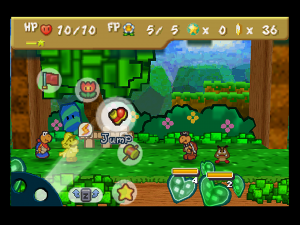 Mario fills that void nicely with an engaging tale of teamwork and camaraderie. I was most impressed with the depth of the characters and the deft way Intelligent Systems fleshed out the world of Mario and some of his never-before-seen allies who come from all walks of the Mario life.
 elements from the original platforming masterpieces Super Mario Bros. and Super Mario Bros. 3. Joining those are secondary greatest hit Super Mario World and the more recent hit New Super Mario Bros. U. All four games represent some crowning achievement for the everyday plumber and thus have some merit for making you revisit these set pieces to create your own masterpiece.
 nitial two and ultimately the majority of your creation library are unlocked via a time system that goes by days. You can speed it up, but it’s intended to make you the creator spend several days trying out the system and getting a feel for new elements in a paced environment. I can appreciate the sense of not wanting too many elements all at once, but the system is a little slow and frustrating when I have a million ideas that I can’t fully implement for several days initially.