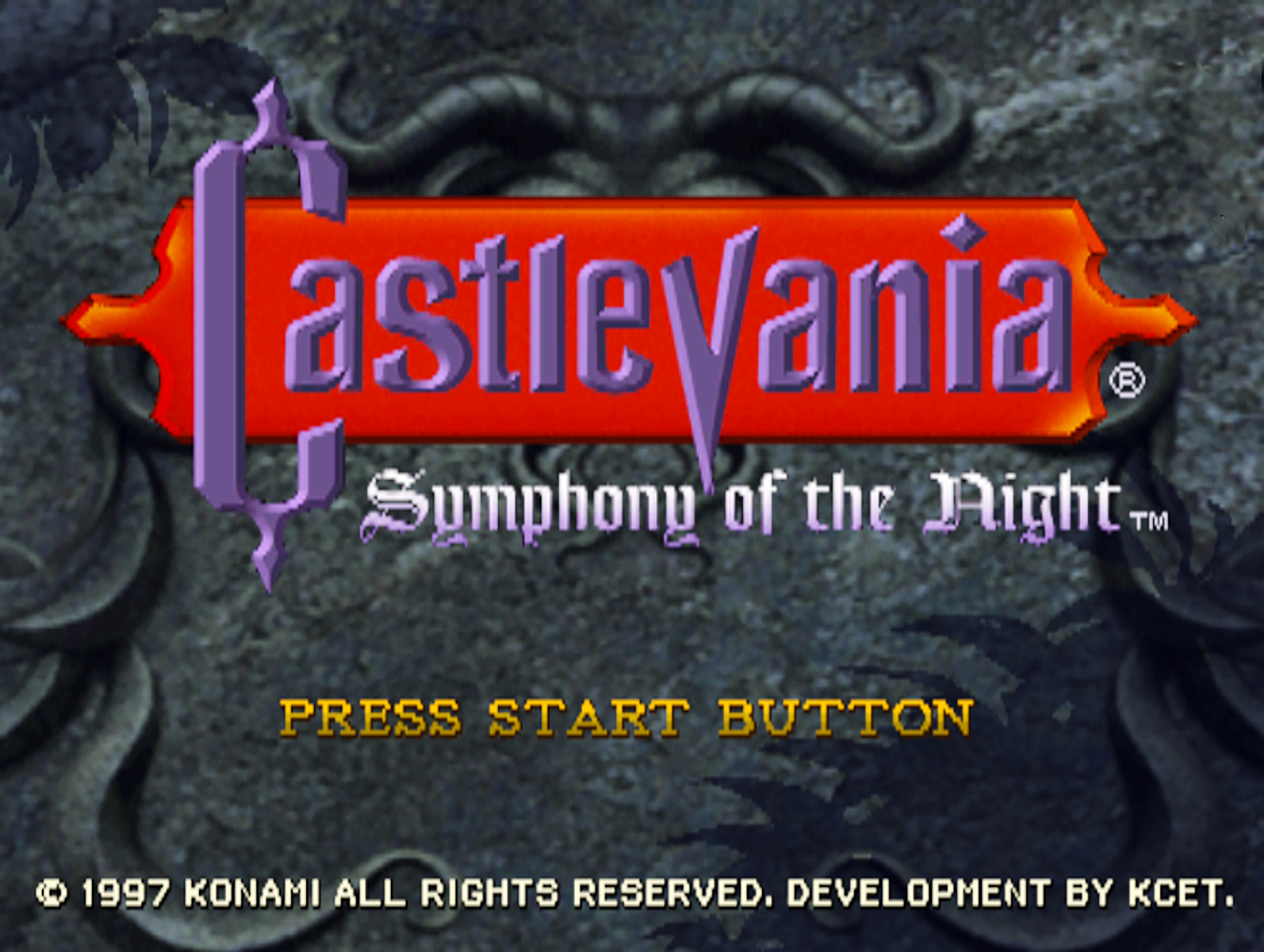
Castlevania: Symphony of the Night Konami, 1997
Symphony of the Night plays a sweet song of woe
I fully admit that I’m a little late for the Halloween party that is Castlevania: Symphony of the Night. I really stopped paying attention to the series after Super Castlevania IV, mostly because it’s a hard series and I have a lot of love for that game and the original. I didn’t need anymore Castlevania. But after coaxing from friends, making the MetroidVania connections and knowing its legendary status, here we are, and it’s taken a bite out of me.
Symphony of the Night, in all its gothic horror, appeals to me on several levels. The story is familiar in that Alucard — son of Dracula and a supporting character in the third game — is attempting to stop his father once again. That familiarity is enough to get me going because it’s all I need to know about what’s going on. Sure, I’m kind of used to a Belmont leading the way, but Symphony of the Night doesn’t need to rely on that kind of tradition.
The tradition that it does lean on is gameplay. The combat and movement are excellent, and it feels second nature to move around. Keeping it simple but adding the RPG elements was a fantastic design choice. Most of the new weapons are cool, and fighting enemies is a beautifully built song and dance. Best of all, there is an in-game map included. For a sprawling game requiring massive platforming, a map is required, and Symphony hits the mark by automatically including this.
Graphically, the game is gorgeous. Konami did something beautiful here and Castlevania looks better than ever. The gothic details are something to behold and are eye-catching as well as pleasing to someone with a goth sensibility and yearning for video games. The soundtrack is just as beautiful, necessitating finding the soundtrack to add to the collection. There are familiar riffs (Vampire Killer makes a cameo) and new chords to strike that are masterpieces, which is expected of the legendary Konami sound.
Alas, while trying to think of anything wrong with it, I’ve concluded that Symphony of the Night is a well-executed masterpiece. It hits all the marks and pulls no punches in elegance, craftsmanship. It’s telling that most Castlevania games later in the series use Symphony as the template on which they build. Symphony is a building crescendo of greatness, culminating in solid storytelling, gameplay and world-building.
Ah, Frankenstein. This legendary horror monster has come a long way from the time his story was written by Mary Shelley. One of the most popular horror monsters of all time, Frankenstein moved from modern written adaptations to various movies, a cartoon version for a breakfast cereal and finally in video games such as Castlevania. During his video game tenure, Frankenstein has been the subject of a Bandai game in which he is the main villain, making a digital name for himself. Frankenstein: The Monster Returns for the NES was his big break.
In Frankenstein: The Monster Returns, in an unknown part of Europe the legendary monster has been resurrected thanks to lighting that struck his battered tombstone in an ancient cemetery. Fully restored, Franky and his band of minions attacked a nearby village, and he kidnaps Emily, the daughter of the village elder. With Emily and all the land in great peril, it is up to an unknown hero to answer the call to finally end Franky’s reign of terror and make the land prosperous again.
The graphics of the game are typical of common 8‑bit action-adventure games. Although I’ll give Bandai credit for attempting to match various scenes to the original novel, certain sections made me think I was playing a jumbled mix of Batman, the original TMNT, and Castlevania. Controls are also like Castlevania, which is welcome familiarity. However, this scheme can be problematic because precision is not abundant here. You will miss platforms and it’s the fault of the control design, not you.
The music is appropriately chilling and horror themed. However, sometimes it tries to do too much. Unfortunately, this is a weak spot because the music will try its best to outdo Castlevania, and it’s nowhere near that level of audio masterpiece. Frankenstein: The Monster Returns is a campy B‑movie game that gave an iconic monster a chance to shine. Frankenstein would be second place to Castlevania since no other Universal monsters got their own game and managed to outshine Castlevania and Frankenstein. Franky’s misadventure, while not quite as good as Castlevania, is still able to scare up a good time.
SNK is still around doing things in this modern fighting game landscape. Their latest release, Garou: City of the Wolves, is a certified banger and is getting a lot of play in the critic sphere because the original is so beloved. And that’s one of the best things Mark of the Wolves managed to do: Leave a good legacy and stay relevant 25 years later. Mark of the Wolves does a lot of things with the Fatal Fury name for the sake of progress. Taking place 10 years after the death of crime lord Geese Howard during the King of Fighters Tournament as depicted in Real Bout Fatal Fury, Mark introduces a new cast with Terry Bogard returning to the fray to lead the charge. Terry takes the young Rock Howard, Geese’s scion, under his wing to fight for South Town and justice in general. But the specter of Geese haunts them. And there is a new villain in the mix, Kain, to take Geese’s place and up the stakes. The plot is interesting and engaging. Getting used to a whole new cast minus Terry takes a minute and learning their background and motivation is fun.
The character designs are cool, as they are in most SNK games. The sprites look great and are large and detailed. The backgrounds, while colorful, aren’t nearly as detailed, though there are a lot of animations going on that make them lively. Overall, the look isn’t too different than what you’d expect from an SNK arcade game, but the Dreamcast does give it a little boost.
The soundtrack is a little generic, which is surprising because I was expecting some nice tracks. I’m spoiled by the often-maligned SvC Chaos, which had a great soundtrack despite the surrounding mess, because it was released in the same era by SNK. However, despite the generic undertones, the soundtrack doesn’t deter the surrounding overall product.
And the surrounding product, gameplay-wise, is fine. New mechanics, like the Tactical Offense Position and Just Defend, are welcome new pieces in the series’ repertoire. Just Defend, which is like Street Fighter III’s parry mechanic, has hung around and made appearances in other games such as Capcom vs. SNK 2’s K‑Groove so I’d say it’s a good addition 25 years later. And with the new mechanics, the game plays well, too. If I could pick it up and play it with little exposure to SNK’s style of fighting and do well, it’s safe to say that Mark has a good feel. That feel is present in the varied modes, with Survival as the most fun out of all offered.
Mark is a great fighting game and still holds up well. It has the attraction of early 2000s fighting game finesse, and it serves as a good introduction to the world of SNK if you’re not well-versed in the series. A well-rounded fighting game with strong mechanics and good environment are the marks of a future legend.
Ah, Kiryu Kazuma. Sega’s legendary former mobster turned hero is a living video game legend. Every time he defeats a heinous colleague from his past, he wants to go back to his honest life of taking care of his family of orphans. Sadly, no matter how much the Dragon of Dojima desires peace, new enemies arise with grand delusions of power to rule Japan in public and its underworld of crime. As always, Kiryu saves the day at significant risk to his physical and mental health. This time, those threats hit home with even greater secrets and risks that could unleash possible civil war in the criminal underworld (Again? Yes, again) in Yakuza 6: The Song of Life.
Taking place after the events in Yakuza 5, Yakuza 6 has our hero doing three years in prison. Various crime groups such as the Saio Triad and the Jingweon Mafia have taken advantage of the Tojo Clan’s vulnerability. When Kiryu is released, he finds out that his ward Haruka Sawamura, who was a rising pop idol, suddenly retired and moved to Onomichi city in Hiroshima where she has an infant son, Haruto. Kiryu then discovers that Haruka is in a coma at a Kamurocho hospital after a hit-and-run accident. With these explosive elements plus a mysterious secret in Onomichi that could cause a raging gang war through the country, Kiryu once again sets out to stop those who bring harm to his city and his family.
The control in previous Yakuza games that won me over remains and is improved thanks to the rebuilt Dragon game engine. When not in fighting mode, Kamurocho has been given a refreshed, crisp view. I appreciate the detail in Kiryu’s fighting scenes; he can use weapons to do massive damage and look nice while doing so. Another new feature is item storage. While stats must be increased to be able to carry more items, Kiryu can now use his smartphone to hold various food and health items and level up whenever he gains experience points. I especially liked the idea that Kiryu can obtain certain drinks from vending machines, including beer, which will increase his fighting power. I also love the clan battles feature where Kiryu can form a group to take down various characters in a time limit and win cash and experience for his fighters. And I also enjoyed the Club Sega section where I could play arcade games like Hang-On and Virtua Fighter.
The music is excellent and varied, making me feel that I’m watching a Yakuza movie than playing the game. If the game’s excellent detail to vital areas of gameplay was not enough to sell me on it, I was stoked to find that Kazuchika Okuda of New Japan Pro Wrestling and acclaimed actor/comedian Beat Takashi made appearance as main villains in the game.
However, as much as I love the game, there are some negatives in Yakuza 6 that didn’t make me stop playing entirely but gave me some pause. During the fighting scenes where Kiryu gets ahold of an enemy’s weapon, he dispatches them in true Yakuza fashion, violent and, at times, gory and disturbing. It was a bit much for me and seemed kind of unnecessary.
Another thing that bothers me is the rampant and obvious Sony product placement. It takes away from the game a little bit because it’s distracting and is also unnecessary. I know I’m playing the game with a Sony product; I don’t need it shoved in my face constantly that this was originally a Sony exclusive game.
Finally, there is a side quest that Kiryu can’t turn down. It’s not really a side quest but the game tries to present it as though it is. That’s annoying. If you want me to do the quest, just mark it as mandatory and move on.
Yakuza 6: The Song of Life is a magnum opus to Kiryu Kazuma, but it also marks an evolution point for the series. Although Kiryu is no longer the primary protagonist, he has been in new Yakuza games such as Like a Dragon. For now, Kiryu and company can take a well-deserved break with this chapter in the life of the Dragon of Dojima.
I’m not ashamed to say I have a favorite Dance Dance Revolution mix. For anyone who knows me, they know it’s the Japanese home version of DDR Extreme. While it’s the mix I played the least in the arcades, by the time it came home and I got a copy of it, it quickly grabbed the top spot in my heart.
There is a golden age of DDR and Extreme is the pinnacle. Hitting the sweet spot as the last game of the golden age, JP Extreme is a solid home port with the necessary arcade songs and a fantastic mix of console old and new songs. All the pertinent Extreme songs are on the roster: 1998, A, Across the Nightmare, DDR, Sakura, Paranoia Survivor & Survivor Max, The legend of Max and V. Unlike the American port of Extreme, it’s as if someone played the arcade version and thought an accurate port was the right thing to do.
The home version plays exactly like the arcade version and, if you’re savvy enough, you can find a way to enable Marvelous timing, arcade timing windows and the Boost and Wave mods found in the arcade version only. Generally, the Japanese versions of DDR are spot on, and this port — even without the additions — is still faithful.
The home version features all the usual features that you’ve come to expect: Diet Mode, Edit Mode, Lesson Mode and Training Mode. One of the best things about the mix, however, comes in the options. If you have save data from Party Collection, you can unlock all the songs in Extreme, and if you need to, you can unlock all the songs in DDR Max and Max 2. That saves time and gets you to the meat and potatoes of what you came here to do: play awesome DDR songs.
And the roster is awesome. There is nary a repeat in sight that drags the mix down (ahem, we’re looking at you AM-3P and your various remixes). The quality of songs is high, and a lot of the Konami originals added here are welcome additions and crossovers from Beatmania IIDX. Of note is Max.(period), which was new as of Extreme JP’s home release. Max.(period) is one of the new Boss Songs and is a great addition. Boss Songs in this mix are indeed all the Boss Songs from the arcade version, which lends credibility to the mix and its authenticity.
There isn’t much wrong with this mix. The unlock system, if you don’t have support data from Party Collection, is kind of aggravating but it’s not so terrible that the mix isn’t worth your time. It’s time consuming but it only means playing more DDR.
If you’re going to play a home version and don’t have Stepmania, take the time to import DDR Extreme JP. Extreme JP is the closest port of Extreme to the arcade short of Stepmania and well worth the money to track down a copy, a PlayStation 2 and swap discs.
A great roster, solid mechanics and peak DDR in its golden age form makes it a must-buy if you’re at all into dance games and Bemani. DDR Extreme JP was a good final step in the series.
DDR Extreme JP versus DDR Extreme NA
The DDR Extreme versions released in Japan and America are wildly different. DDR Extreme JP is the closest port of the arcade version that you’re going to get unless you have Stepmania and fine tune your installation to match that arcade version. The American version, released in 2004, is not an accurate port. It features different graphics that replace the well-known song wheel and Groove Radar featured in DDR Max and Max 2 and a song roster that did not resemble the arcade version with a lot of licensed songs and few Konami originals and Bemani crossovers that were introduced in the arcade version. Also, the combo and grading systems are different: A combo break automatically results in a max A grade, Extra Stage requires clearing an 8‑footer on Heavy instead of AA grade on any song’s Heavy difficulty, and Encore Extra Stage/One More Extra Stage was removed.
To correct the missteps of Extreme NA, Extreme 2 was released in 2005 for the PlayStation 2 with a slightly more accurate song roster to match the arcade version of Extreme.
We love to say that this isn’t your old man’s whatever whenever something has changed. As cliché as this is — and make no mistake this is cliché — Capcom’s newest entry in the old man fighting game that is Street Fighter isn’t your daddy’s Street Fighter. It isn’t even your brother’s Street Fighter, where he used to let you beat him up in versus mode and hit you with Flash Kicks to magically come back and win. No, this is the young man and casual’s Street Fighter. This is a new era of fighting designed to get everyone involved whether they’ve executed a Hadoken or not.
Street Fighter 6 came out with a fresh coat of paint, new mechanics but something different under the hood. It plays like Street Fighter V, but without the V‑Trigger mechanics. Now, it’s back to the basics and Drive Gauge, a new mechanic that can turn the tide of a battle quickly. The Drive Gauge rewards offense and creativity in combos while discouraging defensive turtling. This plays into the larger, established Street Fighter repertoire of super arts and parries. It’s nice for a veteran because it’s something new and good for newbies to the world of Street Fighter because it’s not super complicated to learn.
Something else new that benefits everyone is the introduction of three types of control schemes: Classic, Modern and Dynamic. Classic plays much like the old Street Fighter of yore with a six-button layout (Jab, Strong, Fierce, Short, Forward, Roundhouse), Modern has a simplified four-button layout (think Marvel vs. Capcom 2) and Dynamic is an offline only slant where the CPU chooses the most appropriate button presses for moves. It’s a strong, smart decision designed to open the door for more players to get involved in your long-running series that seems overwhelming and daunting at first. Another smart decision included is the tutorial and variety of modes. SF6 does its darndest to have something for everyone, and it’s immediately seen in the modes available at the start. Fight Hub, a returning and revamped World Tour Mode and a robust training mode make this a massive buy and win for the fighting game connoisseur. Fight Hub is where you’ll probably spend most of your time; it’s where matchmaking takes place as well as emulated older versions of Street Fighter live.
However, I tend to live in World Tour Mode. As a devoted fan of the original mode (Editor’s note: See Issue 52 for our coverage of the popular mode from Street Fighter Alpha 3), as soon as it was announced I knew I was a day one purchase. And with more than two years of wheeling and dealing with my created character, I can enthusiastically say I love it. I enjoy running around the fleshed-out Metro City (of Final Fight fame) with my lookalike fighter. I love that they took the concept born of Alpha 3 and gave it a soul and personality after so many years, and I love that it’s easy to get into and plays as well as it does.
The beauty of this new chapter of Street Fighter also lies in the character and environment designs. Street Fighter has always looked nice and SF6 is no different. The stage design is gorgeous, and the character models look nice. Even the weird creations that can come out of World Tour Mode have a nice look to them. We spent time at GI going through some of the characters and just marveling over how far Street Fighter has come with character design because it’s evident in this game just in the character select screen. The newbies in Marisa, Manon, Kimberly, Lily and JP are fun and cool, and the older stalwarts like Ryu, Ken and Dhalsim look fantastic. The soundtrack, while lacking in some areas, does have some toe tappers. Though I’m not a fan of Juri, I love her theme and Luke’s has grown on me. I’m almost certain there will be more additions to my liking as more seasons are released and revisions are made.
While there is so much to like here, I do have some nitpicks to address. First, while I’m a fan of seeing familiar faces, there are so many returning folks that don’t need to be here. We are in a post-Street Fighter III: 3rd Strike land in-game story-wise, so why are we still dealing with M. Bison/Super Dead Dictator™? Capcom said he really was dead after the in-game events of Street Fighter V, so having him as DLC is unnecessary. Likewise, I don’t need to know what Akuma is up to. I want more of the 3rd Strike characters back and I want the mystery of G, my favorite Street Fighter character, solved. Also, Capcom better not give us a million paid revisions, either. They better roll out updates as free upgrades and act like they’ve learned their lesson during the past 34 years of Street Fighter II agency. I say this because I can see the writing on the wall, and I don’t want to have to pay for the next upgrade of the mainline series.
I love Street Fighter 6. I love seeing the plot payoff of older games (i.e. Li-Fen, the young girl in the intro of 3rd Strike, is here and older, which helps tie down when the game takes place), and I love to see the continuity of Street Fighter and other Capcom games coming together. I really enjoy playing SF6, it’s teaching this old dog new tricks and I find myself fully invested in the future of the granddaddy of fighting games more than ever.
Street Fighter Alpha 3 Max (PlayStation Portable)
Let’s get this out the way quickly: Alpha 3 Max is the best portable version of Alpha 3 available. It’s even one of the best ports of Alpha 3 among the numerous ports of the game. It has everything that its big brother consoles have and then some, with the massive final updated roster that each successive entry has introduced, and improvements made to the different established modes.
The graphics are nice and large, and the music is still as top notch as ever. But there is a catch because there always is: This is only available for the PlayStation Portable. So, if you can track down that defunct system, get this to have it on the go and have a blast as only one can with Alpha 3 in its final form glory. It’s worth a look just for the complete roster alone.
Score: 4 out of 5
——————————————————————————————————————–
Street Fighter Alpha Anthology (PlayStation 2)
This collection of Street Fighter Alpha games is sublime, especially if you have a PlayStation 2 laying around. It features all the Alpha games, remixes and arranged versions, the Alpha 2 Gold revision and a nice port of Super Gem Fighter Mini-Mix. The best part of the collection is that it plays nicely in every game. It plays like a dream and handles well with a good PS2 controller or joystick.
Even better is the included Hyper Street Fighter Alpha, which allows pitting different Alpha characters against each other using that specific game’s mechanics and rulesets. Think Alpha 2’s Rose versus Alpha 3 V‑ISM Rose. That’s the hidden draw of the game, one that’s not advertised and that you won’t discover without time invested. However, with smooth play and convenience much like 30th Anniversary collection, this is a must buy for the PS2 collection.
Good but not great. That’s what Street Fighter Alpha 2 represents for me. I don’t hate the game these days. After a mature return to the game after many years spent adoring Street Fighter Alpha 3, I can honestly say the game is a good setup for the king of the hill that is Alpha 3.
Because Capcom has advised that Street Fighter Alpha 2’s story supersedes Alpha’s story, we’re not rehashing anything here. Just know that everyone is after M. Bison at this point because he’s up to no good as he always is and will be, and Akuma enters the chat because he supposedly killed Ryu and Ken’s master Gouken. Everything that happens in Alpha 2 sets Alpha 3 up in a way that explains why M. Bison is so powerful by the end of the series and why he’s significantly weaker during Street Fighter II. It’s compelling even if you’re a casual fan of Street Fighter.
The graphics haven’t made a significant leap between Alpha games and yet they somehow look cleaner. They’re chunkier and larger, and you can tell they’re getting closer to the Alpha 3 streamlined version that became the hallmark of the Street Fighter experience in the early to mid-2000s before the advent of Street Fighter IV.
Thankfully, while there isn’t a big leap forward in the look between games, there is a sizable improvement in the soundtrack of Alpha 2. Quite a few tracks stand out and it’s worth hunting down the playlist because there are some gems. It’s still not at the Alpha 3 level but it’s getting there if you need reassurance.
What I didn’t care for in Alpha has improved in Alpha 2: how it plays. The play feel has improved with the introduction of Custom Combos, and while clunky to execute, it’s a nice change of pace for the series. They’re in their infancy here so don’t expect the absolute dominance of Alpha 3 V‑ISM but they are cool to see and it’s satisfying to get them to work consistently in play once you know what you’re doing. Watching high-level play shows how Alpha 2 is meant to be played, and it demonstrates Alpha 2’s strengths: Nuanced strategy and a clean engine.
Alpha 2 does have its quirks, though. Sometimes the game just doesn’t feel quite right and by that I mean, I don’t like how it feels sometimes. It can simultaneously feel slow and sluggish but then it course corrects and the game plays like a dream. Combos work but then sometimes, I struggle to get things going. I can’t place my finger on it, even years later, but there’s something off about Alpha 2 but I’ve learned to accept it for what it is and overall just accept Alpha 2. It may be because I didn’t start the series until Alpha 3, but Alpha 2 doesn’t always feel right. I still prefer to play Alpha 3 in every respect, but acceptance of Alpha 2 is a sign of maturity.
Alpha 2 is the midpoint of the Alpha series and that’s OK. It’s got its growing pains but the growth is there and it’s still regarded as a strong fighting game. Alpha 2 has value and as the middle child of the series, it’s got a lot to offer and a certain charm that is brightened by the fact that Capcom learned its lesson and seemingly learned to count to three. Alpha 2 is a good bridge to greatness.
Street Fighter Alpha sets the tone for spinoff franchise
I promise I can see the potential in the original Street Fighter Alpha: Warriors’ Dreams. I can look down from my high perch of love for Alpha 3 and accept that the series came from somewhere. After all, every series must have a start. But it’s a long hard stretch to say it’s an all-time great start.
Street Fighter Alpha establishes the series’ story: After Ryu wins the first World Fighting Tournament (as depicted in Street Fighter), he returns home to find his master Gouken murdered and sets out to get revenge. At the same time, Chun-Li, Guile and Charlie — along with other various members of the cast such as newcomer Rose — work together to take down M. Bison, who is working to establish his empire and achieve world domination. Know two things about the story: One, it’s a sequel to 1987’s Street Fighter and a prequel to Street Fighter II; and, two, its storyline is supplanted by Street Fighter Alpha 2. Capcom deployed this strategy with the Darkstalkers/Vampire series as well, which was coincidentally created around the same time as Alpha. And this isn’t the only instance of crossover concepts, either.
Alpha plays and feels much like early Vampire as well. The new additions of multi-level super combos and air blocking are here, too, and like Vampire, represent an upgrade from the days of Super Turbo. But, as much as I like the upgraded mechanics, I don’t like how Alpha plays. It feels clunky and slow with a molasses edge to the movesets. While the series did eventually improve with time and speed adjustments, it’s painfully obvious here that it needed a speed boost.
Alpha also resembles Vampire in presentation. The graphics are nice and big, and the sprites are nicely drawn. It’s an early version of the Alpha 3 presentation that we’ve come to know and love, and it’s pleasing to see it here. The music isn’t at the Alpha 3 level yet, but there are a few tracks that might make you tap your toe.
What I wanted from the first game in the Alpha series shows up later in the final game, but the start isn’t terrible. It needed some work and given that Alpha 2 made improvements on this solid foundation in Alpha, I think it’s safe to call this the beta of the Alpha series.
There was a time when all the early generation Street Fighter games weren’t available in the same place. Us old-timers had to own multiple systems and collections on those systems to complete the library of fighting street games. But then along came the 30th anniversary of the landmark fighting game franchise and wouldn’t you know, Capcom thought it prudent to offer a bonanza of Street Fighter. Whether or not it’s a bountiful buffet is still up for judgment.
Street Fighter 30th Anniversary Collection aims to do one thing: Give you all the Street Fighter you can shake a stick at. Included out of the box are: Street Fighter, all versions of Street Fighter II (including Tournament Battle, exclusive to the Nintendo Switch); Street Fighter Alpha, Street Fighter Alpha 2 and Street Fighter Alpha 3 Upper; and, Street Fighter III: New Generation, 2nd Impact: Giant Attack and 3rd Strike. This essentially covers all the bases for early Street Fighter, which is great. Give me everything in one package and let me choose what I want to play. But alas, there is a catch: All the versions included are the arcade versions of the games. That means, for example, with Street Fighter Alpha 3 you aren’t going to get World Tour Mode. Whatever you received in the arcade is what you’re getting here so I hope you like the vanilla versions because that’s what’s served here. That’s not a bad thing if you love Street Fighter, and it’s the smart solution because including the home additions would have pushed this collection to double discs or more.
The package is fine graphically. The games included are going to look exactly the way they did when they were released, which is exactly how they should here and isn’t the focus. What should be the focus is the surrounding package and it’s nice. The graphics look clean, and menus are inviting. However, I do have a gripe with the menus: Capcom is in dire need of a copy editor. I found at least one error in the text (Akuma’s bio in Super Street Fighter II X for the curious), and this isn’t the first time I’ve found this type of thing (there’s an error in Super Street Fighter IV’s text as well).
As a former professional editor, this type of thing in video games gets on my nerves. Capcom is a billion-dollar company; hiring a copy editor to spell check the menus and text shouldn’t be a problem. It reeks of sloppiness, though I shouldn’t be surprised as this is the same company that refuses to translate the board game in Project Justice or the dating sims in both versions of Rival Schools. But I digress. The presentation is good, and it looks fine on modern systems.
The music is the same as the graphics: just as you remember it and perfectly fine. There is a sound test and that’s helpful if you don’t already have any of the tracks in your music collection. There are a few remixes in the menus that you may not have heard before, but there isn’t anything noteworthy like say Mega Man X Legacy Collection. The extras are mid, though some of the artwork and the official timelines provided are neat. It’s just that there isn’t a lot of it and there should be with this many games included.
And just like the presentation, the playability is just as good as you remember. I was able to finish several games in the arcade mode — once I adjusted the difficulty, which is a godsend — and everything felt great even with a PlayStation 4 Pro controller. I also jumped online to test the netcode, and it was decent. However, with the superior Fightcade now in full swing, fighting online with 30th Anniversary has been made irrelevant.
This is the collection to end all Capcom collections for their fighting games. Yes, Capcom insists on releasing other collections with these games, but this is a good stop gap if you want the mainstream stuff all in one place. Come for the nostalgia and the convenience and maybe stay for the extras. Three decades of Street Fighter should be a spectacle to behold but it’s lacking in the knock your socks off draw-ins. It’s still a rad street fight, however.


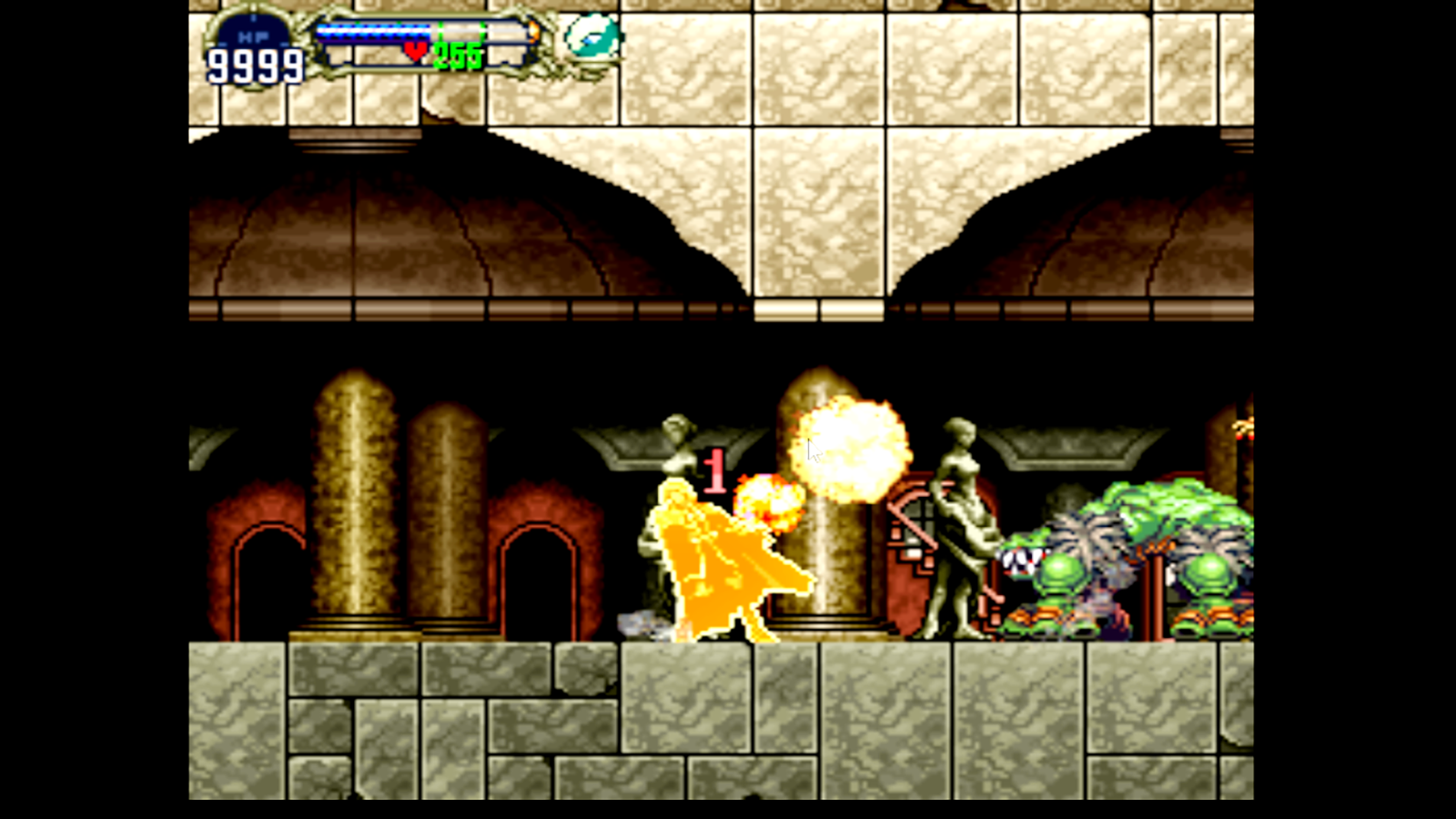
 Graphically, the game is gorgeous. Konami did something beautiful here and Castlevania looks better than ever. The gothic details are something to behold and are eye-catching as well as pleasing to someone with a goth sensibility and yearning for video games. The soundtrack is just as beautiful, necessitating finding the soundtrack to add to the collection. There are familiar riffs (Vampire Killer makes a cameo) and new chords to strike that are masterpieces, which is expected of the legendary Konami sound.

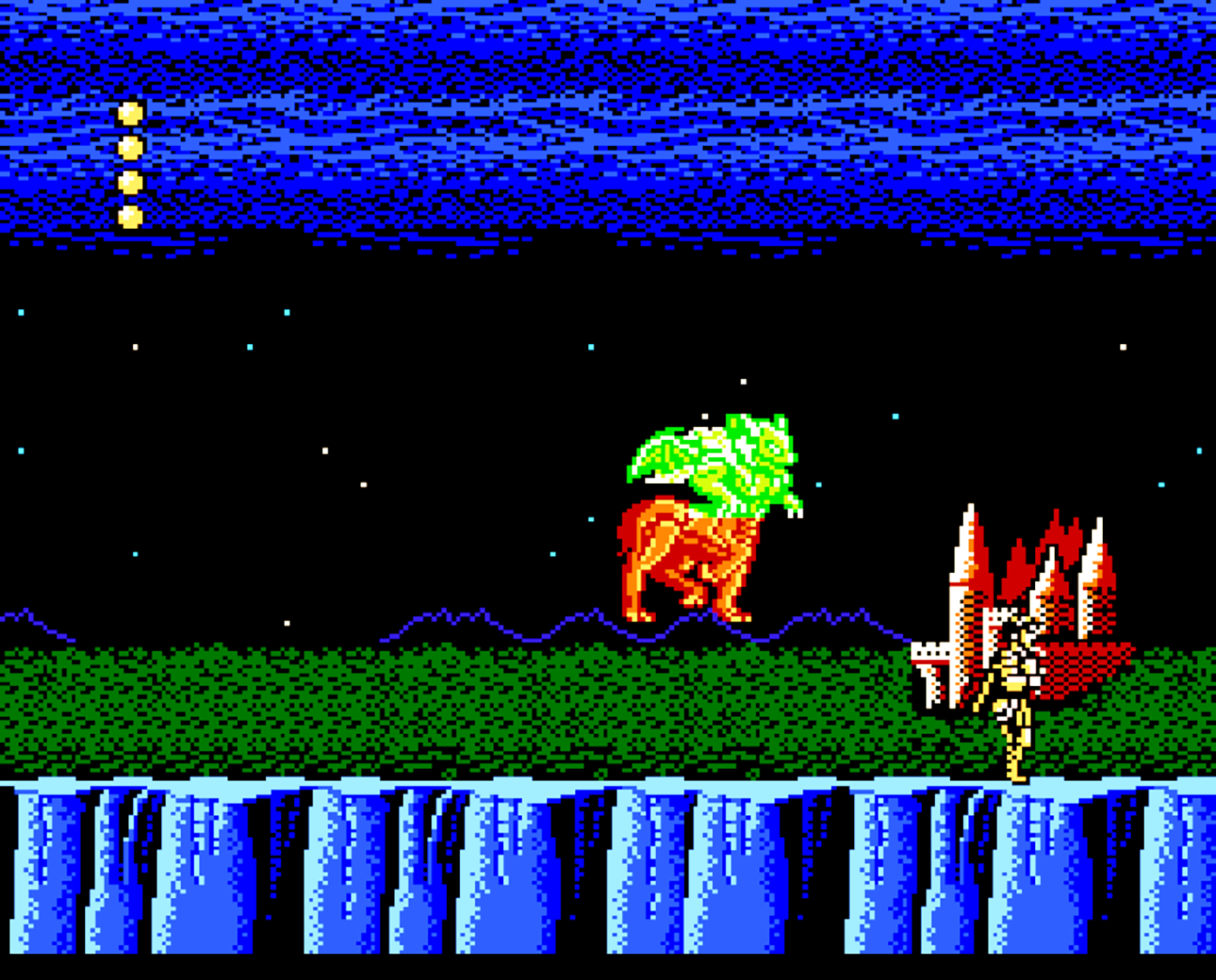
 The graphics of the game are typical of common 8‑bit action-adventure games. Although I’ll give Bandai credit for attempting to match various scenes to the original novel, certain sections made me think I was playing a jumbled mix of Batman, the original


 Offense Position and Just Defend, are welcome new pieces in the series’ repertoire. Just Defend, which is like Street Fighter III’s parry mechanic, has hung around and made appearances in other games such as Capcom vs.

 takes away from the game a little bit because it’s distracting and is also unnecessary. I know I’m playing the game with a Sony product; I don’t need it shoved in my face constantly that this was originally a Sony exclusive game.
 last game of the golden age,
 from Party Collection, is kind of aggravating but it’s not so terrible that the mix isn’t worth your time. It’s time consuming but it only means playing more


 What I didn’t care for in Alpha has improved in Alpha 2: how it plays. The play feel has improved with the introduction of Custom Combos, and while clunky to execute, it’s a nice change of pace for the series. They’re in their infancy here so don’t expect the absolute dominance of Alpha 3 V‑


 The music is the same as the graphics: just as you remember it and perfectly fine. There is a sound test and that’s helpful if you don’t already have any of the tracks in your music collection. There are a few remixes in the menus that you may not have heard before, but there isn’t anything noteworthy like say Mega Man X Legacy Collection. The extras are mid, though some of the artwork and the official timelines provided are neat. It’s just that there isn’t a lot of it and there should be with this many games included.