

Jump into this fantastic anime series brawler
If you’re a manga aficionado like me, you’ve heard of Shonen Jump magazine. For 50  years, Japan-based publisher Shueisha Inc. brought to the world to legendary characters such as Son Goku, Monkey D. Luffy and Naruto Uzimaki. With these characters and their respective series, they became overnight hits in Japan with various movies, merchandise (including video games) and separate graphic novels. It was only a matter of time that the SJ phenomenon would branch out to the rest of the world being published in various languages including English. Shonen Jump, undisputedly, has become the standard of introducing new anime and manga series. J‑Stars Victory VS+ is an example of that standard.
Published by Namco Bandai and co-developed with Spike Chunsoft, J‑Stars takes more  than 50 characters from 32 series within the Shonen Jump universe and pits them against each other in various locations within each SJ series. The story mode consists of each SJ character preparing for the “Jump Battle Tournament,” devised by the god of Jump World to determine its strongest champions who will defend it from evil forces posing as strong fighters.
Within the story mode there are four arcs: Dynamic with Luffy, Hope with Naruto, Investigation with Toriko and Goku and Pursuit with Ichigo. Regardless of the arc you choose, your character and their respective comrades will face off against others to obtain essential parts for your provided ship and badges required to enter the tournament. I like the story mode, and I also like that the arcade versus mode is an option when you just want to pit characters against each other to see who would win.
Control is simple, which has your characters roam free during battle to pull off their signature moves along with a Dragon Ball-styled map to track the battle’s progress. However, the downside is the game camera: It moves wildly about and constantly requires adjustment. At the end of each successful battle, your characters not only gain experience points, but also gain currency called “jump coins,” which upgrades skills and clothing and unlocks various theme music and additional characters to strengthen your team.
All of the sound in the game is courtesy of Namco Bandai’s excellent sound department and the use of Dolby Digital. There isn’t an English voice track in J‑Stars, but the Japanese voice track for each character is performed perfectly, as if you’re watching a Shonen Jump anime. J‑Stars Victory VS+ is perfect for an anime convention tournament or if you want to spend a day with friends immersing yourselves in Shonen Jump lore.
This anime-infused brawler is another testament to Shonen Jump’s recognition of being a leader in global pop culture and how anime and manga are quickly becoming visual arts that aren’t just for kids.
Fun facts
- J‑Stars Victory+ was billed as the “ultimate Jump game,” combining past and newer jump titles.
- Unlike “Tatsunoko vs. Capcom: Cross Generation of Heroes,” licensing for all the Jump characters was not a serious issue. According to producer Koji Nakajima, the real problem was determining actions for characters that do not fight. Solving this problem required numerous negotiations with Shueisha and the respected licensee for each series to determine what was and was not acceptable for those characters.
- J‑Stars Victory VS + introduced the “new class” of SJ series such as The Disastrous Life of Saiki K., Gintama, To Love Ru and Reborn!. These titles have been licensed for North America by various anime and manga distributors.

 best fighting games and then upsell them for the next couple of generations since the current console might not have backward compatibility. Capcom is no stranger to this, having released several Street Fighter collections over the years. The final game series to get this treatment was Darkstalkers aka Vampire in Japan with the Vampire Collection.
 The gameplay style didn’t change too much between games but it’s unique and has character enough to encourage even the most hardened street fighter to come back and learn more. There are advanced techniques such as Dark Force and chains to learn as well as movesets that require some controller gymnastics to master.
  The best thing about the series — other than the gameplay — is the soundtrack.
 rise (or drop, depending on the song modification used) to meet holders. You’re judged on the timing of your steps and either pass the song or fail based on the cumulative score and effect of your timing. Let’s not get it twisted, though: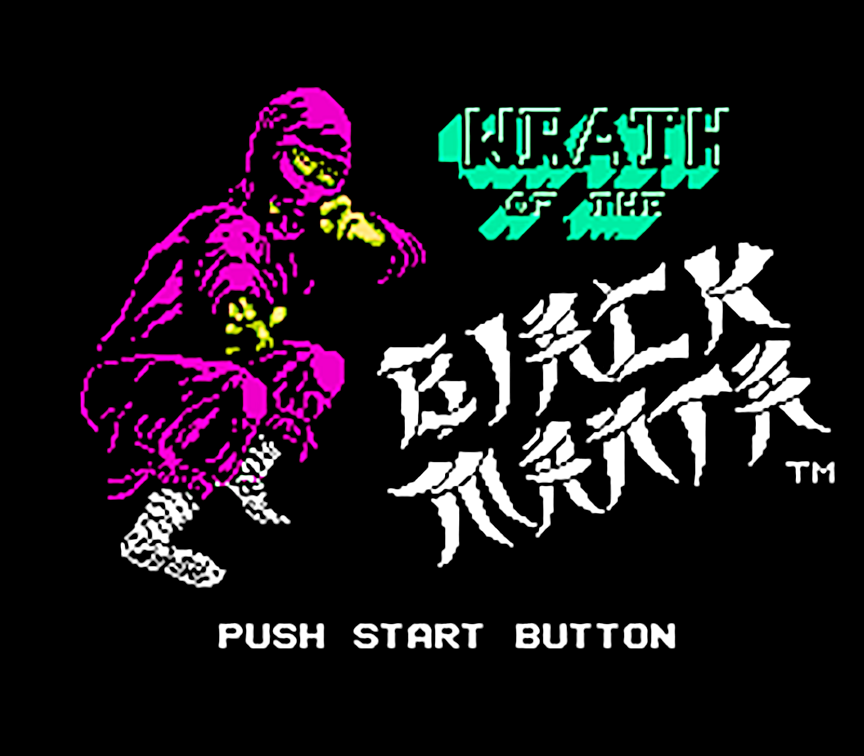
 children in New York City, the apparent bastion of all evil and where the most heinous crimes take place in the video game world. A drug fiend named El Toro is hellbent on turning these children into addicts and it’s up to you and your ninja skills to make Toro get down or lay down with the War on Drugs.™
 The fact that most of the action is ripped off from the infinitely better and more interesting Ninja Gaiden doesn’t help here because you’re going to die a lot from terrible jumping and those aforementioned hits from enemies. The soundtrack also does Manta no favors as it’s just barely serviceable. Even the art is ripped off from somewhere else: Word on those mean streets of
 by Dr. Light years after the original Mega Man. X is a more powerful version of our blue titan but with free will. 100 years later, after Dr. Light’s death, X was found by Dr. Cain, a robotics expert who developed robots based on X’s design known as “reploids.” However, this began a rise of rebellious reploids, known as mavericks, which led to the formation of a group known as maverick hunters to stop them. Alas, the maverick hunter’s leader Sigma became a maverick (and the series’ main villain), forcing X to team up with another maverick hunter named Zero to stop Sigma’s plan for global domination.
 Control of X is simple as any regular side-scrolling game, especially with the option of switching between the analog sticks or directional buttons. X’s main weapon, the X‑Buster, and other weapons he acquires from a level boss can be powered up in addition to finding upgraded boots, helmet and armor via secret areas in each level. Using a sub screen, I appreciated that it was understandable and simple in organizing items and weapons since, in other side scrolling games, looking for needed items is time consuming and morale-draining. Zero is also playable in
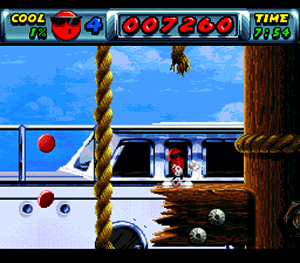 throughout 11 levels in cages. Why its friends are trapped, we’ll never know but it’s up to Spot to rescue them and lecture you about not drinking dark sodas. Spot’s traversal through these 11 levels is nothing short of amazing despite the rampant product placement. It’s surprisingly good, with solid controls that don’t make controlling Spot a chore, and competent simple mechanics that don’t get in the way: It’s mostly jumping and shooting magical sparks at enemies and barred gates. The life system — hilariously denoted by an ever-peeling and deteriorating picture of Spot — is more than generous and there are helper power ups galore to get through levels. The levels themselves have a lot of depth and are timed just right with enough time to explore or get the bare minimum experience in the search for Spot’s missing friend.
 animals that are in one of four locations scattered around the landscape. Four animals will be in these locations with options to talk to you and request items; whether you choose to give them the specific items they request or just chat it up for experience points is up to you. Also new are the aforementioned experience points. Each animal has a meter that gauges their friendship level with you. The higher the level, the more rewards they give in exchange for items they request. The rewards are also new, usually in the form of Leaf Tickets and raw materials that are used in crafting furniture and clothes that can be used to decorate your camp site and
  For a longtime Animal Crossing player, the fun in Pocket Camp is immediately there but not without some caveats. After a certain point, the in-game currency of Bells ceases to be a problem. While scarce in the early going, Bells aren’t an issue once the final upgrade for the
 chance against these planes, it can do air rolls or vertical loops. If you time your attacks right, some planes will drop upgraded firepower or an escort team of two smaller fighter planes to combat the relentless assault from planes that
  The music quality of 1942 is an acquired taste as the repeated use of a snare drum made me think that Capcom phoned in a lackluster drum beat, which made me turn the volume down to continue playing. The challenge is decent since you will be on your toes to avoid enemy fire nonstop. It has strong replay value and would be a great time-killer as a nostalgia trip for arcade veterans. Also, it’s a great example for those who want to know how side-scrolling games played a major impact in the gaming world.
 for either the novice or the advanced,
 Free Battle mode allows you to choose one main fighter with two backup characters against another player or the console’s choice of characters in various stages taken right out of the Naruto universe. Free Battle also allows you to earn extra cash if you defeat their opponents using various moves known as ninjutsu. The extra coinage will be needed in the role playing mode, Ultimate Mission Mode, during which you control Naruto in various missions that involve episodes 1 to 135 of the anime series.