

Anime fighter creates clash of titans
If you’re a fighting game enthusiast like myself, you’re happy to see the community  enjoying mainstream success now in the esports landscape. For many years, it was relegated to a fringe activity, something only nerds with nothing else better to do and a lack of hygiene were known for entertaining. Now, it’s all over the place and there’s money to be earned. But this is now a professional-grade enterprise and anime games are taking center stage. One of the best? Dengeki Bunko: Fighting Climax.
The game series that I lovingly refer to as that “all-star anime fighting game” is a blast to  play. You choose from 19 playable and 30 assist characters from various anime series who team up in duos to fight each other. Even if you’re mildly into anime, there are some well-known stars of the medium and some obscure names that will make you do a little research. For instance, your favorite editor is an anime junkie and has seen or heard of most of the series with some standout selections that she’s personally watched: Oreimo, Boogiepop Phantom, The Devil is a Part-Timer and Toradora. There are others like Sword Art Online that are mainstream enough to draw in even the newest anime watcher.
 So, how does it play? Much like you’d expect an anime game to play: Super floaty physics and off-the-wall attacks that feel like they do a ton of damage but probably don’t in terms of fighting games. The game feels good once you start playing, and like most games of the genre, there are levels to the play system. You can come in on the ground floor of fighting game knowledge and be able to play and then there’s competitive fighting game-level of play that requires intimate knowledge of the game’s systems. That range serves the game well as a draw for multiple groups and it’s a testament to Sega’s development prowess.
The voice acting, a major part of a project like this, must be top notch and it is. Because Sega garnered most of the animations’ voice actors, there’s a high level of consistency and gloss over the game’s audio. The backgrounds are also faithful to the different anime series, so expect to be wowed with the production values.
Overall, if you’re into anime enough to go to conventions regularly or just having a passing interest, Dengeki Bunko: Fighting Climax is a good buy. Yes, it’s got that “super anime” feel to it, but there’s a solid engine and mechanics wrapped up in an extremely gorgeous package that deserves to be played here. This fancy fan-service fighter is enough to make an otaku like myself sit up and take notice.

 years, Japan-based publisher Shueisha Inc. brought to the world to legendary characters such as Son Goku, Monkey D. Luffy and Naruto Uzimaki. With these characters and their respective series, they became overnight hits in Japan with various movies, merchandise (including video games) and separate graphic novels. It was only a matter of time that the
  than 50 characters from 32 series within the Shonen Jump universe and pits them against each other in various locations within each
 animals that are in one of four locations scattered around the landscape. Four animals will be in these locations with options to talk to you and request items; whether you choose to give them the specific items they request or just chat it up for experience points is up to you. Also new are the aforementioned experience points. Each animal has a meter that gauges their friendship level with you. The higher the level, the more rewards they give in exchange for items they request. The rewards are also new, usually in the form of Leaf Tickets and raw materials that are used in crafting furniture and clothes that can be used to decorate your camp site and
 for either the novice or the advanced,
 Free Battle mode allows you to choose one main fighter with two backup characters against another player or the console’s choice of characters in various stages taken right out of the Naruto universe. Free Battle also allows you to earn extra cash if you defeat their opponents using various moves known as ninjutsu. The extra coinage will be needed in the role playing mode, Ultimate Mission Mode, during which you control Naruto in various missions that involve episodes 1 to 135 of the anime series.
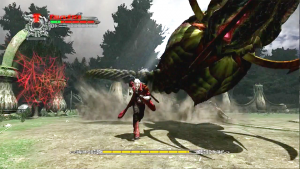 has changed for a more intense experience. Taking place in a remote island town called Fortuna, you assume the role of Nero — a younger version of Dante — who is a member of the Order of the Sword. The Order of the Sword is a militant religious organization formed to destroy demons based on the actions of the Demon-Knight Sparda, who rebelled against the demon underworld to protect humanity. At a recent ceremony to honor Sparda, Dante smashes though a skylight and kills the priest leading the ceremony, setting off a chain of events that would not only put Dante and Nero on a collision course with each other, but also would lead both demon-hunters through a greater mystery to find out the true intentions of the Order and to stop a more vicious plot of a demon-invasion.
 The excellent detail that is used in each level comes to life in the background and cinematic scenes. These were done with high definition technology that will make you feel like you are playing with a masterpiece of art instead of a video game. Capcom’s sound team brings their A‑game again. Each sound and vocal effect combined with Dolby Digital Sound gives an orchestral quality to the game. Capcom did a great job in voice and motion capture for
 modes to choose from. If you’re not informed, you might be a little lost trying to understand just where you should start. With a varied plate to choose from, at the very least the modes are interestingly designed and add value to an already-packed game.
 Festival takes that concept and turns it on its head. With Festival, you’re tasked with moving around a typical Animal Crossing town in the form of a large board game. The town is transformed by spaces that can be events, Stalk Market sale stops and visits from the usual assortment of guests that visit a normal town in the franchise.
 protect his kingdom, finds out that his main lady Queen Sophia is captured by his once-trusted adviser, Achille. To make matters worse, Achille has developed a drill that has pierced the underworld, allowing him to create an army of undead monsters to terrorize the kingdom. All is not lost as is seems that as Maximo was free-falling, the Grim Reaper makes a deal for him to return to the living world in exchange for returning the lost souls to the underworld. Maximo accepts and begins his quest to free Sophia and restore the peace taken by Achille.
  Maximo retains the elements from Ghosts ‘N Goblins and Adventure Island but allows freedom to explore all of the stages thanks to its
 tutorials for players to master Dante’s moves and his signature weapons. In addition to the tutorials, four different combative arts called “styles” are available to Dante, giving him various abilities to increase the power of various guns, striking weapons, dodge attacks, and unleashing hand-to-hand combat with devastating results. Once Dante defeats a certain boss, he will be able to use them in the form of unique, various weapons. There is a lock-on feature to directly target enemies that, with practice, will be a valuable tool to rip enemies apart. Also in the special edition, there are two modes of play: Normal, which is basic