

Super Mario Bros. 2 an uneven, heavy-handed sequel
 If there were ever a time when Mario was considered not to be fun, this would be it. I have always had a major fascination with Mario and the Mushroom Kingdom, but the true sequel to one of the greatest games of all time made me wish I didn’t go down the rabbit hole.
At first glance, SMB 2 is your typical sequel: Improved graphics and new concepts, such as the addition of the Poisonous Mushroom. But there’s immediately something off putting about the game. It’s familiar yet foreign. A lot of the same enemies are used and the game has a lot of the same story-specific elements as its predecessor. The objective remains the same: Save Princess Peach from the invading Koopa army. But this is where things take sinister and not-so-pleasant turn.
I’m not going to beat around the bush: The difficulty level is not  friendly. If you didn’t start with Super Mario Bros., stop right now and go back and study up that game. The sequel is designed to be set up and buoyed by the original. If you start here, you’re setting yourself up for failure.
The new levels were designed to take “super” players to task and show them that Mario isn’t the cakewalk they thought him to be. So, born from that are Sisyphean efforts such as warps that return you to an earlier part of the level; or my favorite: The fact that using level warps at all prevents advancement to the real ending of the game. This is Ghouls and Ghosts before Ghouls and Ghosts.
 This frustrating tactic of punishing the player for being too good is exactly why the follow up to Super Mario Bros. would have never flown in America and why we didn’t see the game until a full five years after its release in Japan. People traditionally play Mario to relax, not be thrown backward in a never-ending loop of anger and frustration. This doesn’t appeal to the mass players and it’s cheap and perverse that Mario is used in this way.
While it’s not the same Mario in a lot of respects, the same old charm is present. The whimsical jaunt through the Mushroom Kingdom is now fraught with all types of danger, but it’s still pretty to behold. And the music is still the main act of beauty and source of joy in what is a dark skip through the forest of Mario. Somehow, through all of the anger, Koji Kondo’s masterpieces never seem to get old.
For the sake of your controllers, I suggest investing in cheat codes to get through SMB 2. It’s one of the few games I would ever give this advice about to beat.
We Americans might be lazy and unchallenged (editor’s note: Nintendo confirmed that this is the real reason why we received the much-easier-but-still-hard SMB 2 USA/Doki Doki Panic ripoff), but at least our controllers remain intact and whole, no thanks in small part to getting a far easier version of Mario 2. Super Frustration Bros. would have been a more apropos title for the sequel to the greatest game of all time.

 Mastering powersliding means a world of difference in race times, especially when you have bragging rights at stake. Old mechanics, such as the weight class concept, are still present but it seems everyone has a better representation with respect to how a class really controls. The lightweights feel like, well, lightweights. The heavyweights actually feel like they’re heavy to handle.
 With all that it has going for it, however, there a few minor drawbacks. First, if rubber band
 Palace is interestingly laid out and the graphical quality of the castle still blows away the competition 20 years later. Watching Mario run around, run and jump and be Mario but in a non-2D sprite is pure heaven for Mario lovers like myself.
  The soundtrack makes up for the illness-inducing gameplay. The soundtrack is fantastic and it’s worthy of a mainline Mario game, easily. From running around in the plains of Bob-omb Battlefield to traversing numerous obstacles to take on the King of the Koopas, Mario 64 is a dream come true in terms of audio pleasure.
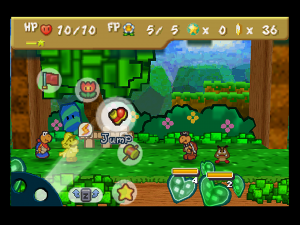 Mario fills that void nicely with an engaging tale of teamwork and camaraderie. I was most impressed with the depth of the characters and the deft way Intelligent Systems fleshed out the world of Mario and some of his never-before-seen allies who come from all walks of the Mario life.
  That kind of borrowing is the kind of thing that’s allowed and plays well within the context that Mario is the king of all that he surveys and even in his spinoff titles, he can still run with the best of the best, pay homage and still come out smelling like roses.
 elements from the original platforming masterpieces Super Mario Bros. and Super Mario Bros. 3. Joining those are secondary greatest hit Super Mario World and the more recent hit New Super Mario Bros. U. All four games represent some crowning achievement for the everyday plumber and thus have some merit for making you revisit these set pieces to create your own masterpiece.
 nitial two and ultimately the majority of your creation library are unlocked via a time system that goes by days. You can speed it up, but it’s intended to make you the creator spend several days trying out the system and getting a feel for new elements in a paced environment. I can appreciate the sense of not wanting too many elements all at once, but the system is a little slow and frustrating when I have a million ideas that I can’t fully implement for several days initially.
 it meant to duel an older sibling who had far better hand-and-eye coordination and reflexes and why teenagers seem to do much better at games than little kids.
 many years to get the hang of certain events. This is mostly because there wasn’t a lot of info out there in the days before the Internet and because, again, I had terrible untrained coordination and reflexes. Even today, with a wealth of tips out there, it’s still hard to get a bull’s‑eye in the archery, and it’s been nearly 30 years. Graphically, there’s a few things to look at, especially for an
  The music, while not especially memorable, is still serviceable. It’s not something you’re going to be humming well after you’ve put down that turbo controller, but it’s not bad, either. A lot of the tracks are well done and fit the general mood of the event you’re participating in. There are a lot of sound effects in the game and they are generally what make the game what it is.
 hell and high water. But wait, this time it’s different! No, you aren’t saving Pauline this time around; no, you’re Donkey Kong Jr., the scion of Kongdom saving your incorrigible father from the clutches of evil human Mario. The fact that another ape has to save his parental figure from Mario in a complete role reversal begs several questions: Where was Junior when his father was kidnapping innocent maidens and running rampant? Why would Mario even bother to kidnap the great ape in the first place? Sure, there’s the motive of revenge, but you’re never going to get your question answered, try as you might. You just have to accept that
  Instead, you’ll watch Junior repeatedly get eaten alive by crocodiles (we’re not sure why a plumber would employ these dangerous live creatures to kill an ape), nailed by random falling objects and fall to his obvious and horrific death, all because he’s underdeveloped at jumping and climbing.
 While the challenges may be different, there isn’t much else different about the games. The music and graphics from the 8‑bit era remain intact and about the only thing that’s changed is the slick modern packaging of the Ultimate Remix itself and the addition of leaderboards and championship mode. So, don’t come into this expecting depth or some magical upgrade to modern day standards of graphics.
 much like playing any platformer of the past 20 years and the control scheme is simple and intuitive in letting you figure out what to do and how to apply it later. Where it falters is the jumping mechanics. While obvious and simple, the jumping does feel slightly off and floaty, which is a problem in a game that relies on that mechanic to carry it. It’s annoying to have to re-do sections of a level solely because of a missed jump, and that detracts from the core experience.
 tend to ignore the meter altogether. Also, the foot rating is missing and song difficulty rating numbers have yet to come (that’s not until Max 2). But the song wheel has been freshened up so it looks a lot better and is a little more palatable.
 away songs like Share My Love and Dive, but overall it’s quite a few excellent choices thrown together to make a good song list. The variety is nice and it feels like a good fresh start for a series that had a lot of repeats in the first five games.