

Bubble Bobble Part Deux
Bust-A-Move gets down again in sequel

Long ago, bubble popping took hold of my interest, right about the time I started getting hair on my chest and some sense acquired when it came to good quality video games. And wouldn’t you know it, my late great mama — the dearly departed GI Mama — also divined that she was a fan of the bubble-popping nonsense that I’d brought home for my Super Nintendo. Alas, my tastes had to grow so we looked for more bubble-popping nonsense and found there was a sequel or two to the madness. What apropos popped up was Bust-A-Move 2.
Now, let’s not get it twisted: This is the same old Bust-A-Move you’re used to playing if busting bubbles is your thing. Nothing is drastically different than the formula  established in the original game: You pop clusters of like-colored bubbles in an effort to clear established puzzles. This basic premise was set up in the first game for the SNES and it hasn’t changed, no matter the iteration. But what has changed somewhat is the presentation. In this version, there is an illuminated map puzzle path that your character can choose, and decisions have to be made to get to the end puzzle. The decision to include a visible path structure is a nice step forward, but still needs some payoff to be a gamechanger.
Slightly different yet familiar are the graphics. Bust-A-Move 2 hasn’t really changed all that much in the looks department. There are some new graphics for the backgrounds during puzzles, the characters are more defined and the bubbles themselves are more crisp and deeper hued to pop but that’s about it. It looks OK for an N64 puzzle game, but there are others out there doing a lot more with the same console resources, such as Magical Tetris Challenge.
The soundtrack is a little more bubbly than the original but has a little less charm than the first game. The songs are slightly catchy, but not nearly as memorable as the first game’s 16-bit organ-inspired schtick. However, what you’ll really notice that’s different is the addition of voices. Now, your character and the opponents make a little noise when they achieve a combo. It’s cute, even with the shrill squawking that shows up in the menu.
 But let’s be honest, what you came here for was to learn if the puzzle gameplay is up to the standard established by the first game. Yes, it is, and here’s why: Not much changed. No crazy weird mechanics shoehorned in, no missteps in how the bubbles bank or strange concepts cobbled together (aside from the sticky platforms that inexplicably start showing up halfway through the story mode) make appearances here. You can be rest assured that it’s the Bust-A-Move that we all know and love.
My beloved late GI Mama once declared Bust-A-Move a cheating game while I was molly whopping her in a versus mode run. She said she’d see me in the sequel. Well, the sequel here is just enough justification to wait for that rematch in heaven when my time comes. It’s nothing new but then again, sometimes sticking with the establishment is the best idea when it comes to bubbles part deux.

 Turbo, with the North American or Japanese versions available for play. In all cases, these are arcade rom versions gathered together in one spot and you can freely switch between them on free play. Collection-wise, this is a top-tier package for those who love fighting games made by Capcom. Mainstream money maker that’s still around today? That’s Hyper Street Fighter
  create. Rival Schools and Project Justice are especially egregious because while they’ve been ported to PlayStation Network, we haven’t gotten a full, unaltered port of either game. A modern translation of the board game and simulation mode in both games is not that hard, but I digress again because we know we are never getting it. It’s a shame because this collection as pulled together in 2022 could have used some better curation.
 mechanics are tight and quick movement is clean and precise, even with the wonky


 awesome about
 are not easy, but once you’ve got the nuance it’s a whole new world of profits. The controls are simple to pick up and once you’ve built yourself up stamina-wise, the fruits of your labor are obvious. There’s something super satisfying about working the land, planting crops and caring for your animals in a day’s work and then reaping the benefits. There is planning involved also, which adds an extra layer of depth. Knowing how to spend your day wisely — whether it be tending to the farm or socializing in town — is important, and adds to the overall experience.
  but it’s a little catchy so it doesn’t necessarily grate the way you’d think hearing the same tune would for more than 20 minutes of farm work and socializing.
 the story other than you’re racing against other Beetle drivers on six varied tracks. There are several modes including a time trial, championship and two-player duel, but that’s about it. You’re also racing with only Beetles, though they vary in color with different stats. There are two unlockable Beetles, but that’s pretty much all there is in terms of rewards. The depth really lies in the tracks and their nooks and crannies. There are a ton of secrets and shortcuts that help in the point-gathering modes or to shave time in the time trials, and that sort of makes up for
  the lack of everything else. Sort of.
 looks phenomenal. It’s the first game to use this technique, and it set the standard in 2000 in terms of presentation. The backgrounds are also well done and inspire runs through the game. It’s clearly an early 2000s game, but that only portends good things about the Dreamcast and what it was capable of.
 While everything is great in terms of presentation and control, I’d be remiss in mentioning that there is one bothersome flaw with Jet Grind Radio. While the controls are easily analogous to early Tony Hawk games, it wasn’t easy to pick up the game and know what’s going on immediately. It’s a little too inaccessible at first, like it’s asking you to have some in-depth knowledge ahead of playing for the first time. You may not be familiar with the concepts the game is throwing at you, and it’s the game’s responsibility to ease you into the fray. Thankfully, the surrounding game is so good that you’ll come back to get more in-depth with the trappings of Tokyo-to.
 everyone’s mind, but to get there, Tekken 7 stakes its ambitions on looking back to tell the story of the future. Spoiler alert: With Heihachi gone, there’s only Kazuya and Jin left to carry on the blood feud of the clan. The surrounding entities are on either side of the conflict between father and son, and there will be casualties. But that isn’t Tekken 7’s main story to tell. Really, it’s two questions: How did Kazuya become enmeshed in the devil gene foolishness, and how is Heihachi entangled in that as well? The answers lay with new character Kazumi Mishima, Kazuya’s mother and Heihachi’s wife. She plays a central role in unraveling the mystery of Kazuya’s transformation using the devil gene and why Heihachi threw his child off a cliff more than 40 years before.
 many things will be true at once: The sound will be phenomenal, and the graphics will be stunning. After all, this is a Tekken title; the King of the Iron Fist tournament does not slouch. What’s striking is, this is a four-year-old game and it still looks decent. Tekken has never been one to hold back when it comes to looks, and even with the upgraded PlayStation 4 Pro, it’s still a good-looking game. Tekken 7 could look worse with the benefit of more processing power, and some sections do show the age of the game. However, it’s minimal as far as Tekken is concerned, and Tekken 7 is still a powerhouse when compared to everything else on the market.
 As far as Tekken’s playability, I can’t really attest to it on a hands-on level. Full disclosure: I’m not a good Tekken player. That said, however, I find it a little easier to pick up Tekken and play with the new features added in the arcade mode. I really like that there’s an easy combo assist feature. It makes it far less frustrating to learn the combo system, and it makes it much easier for beginners to understand how moves flow together.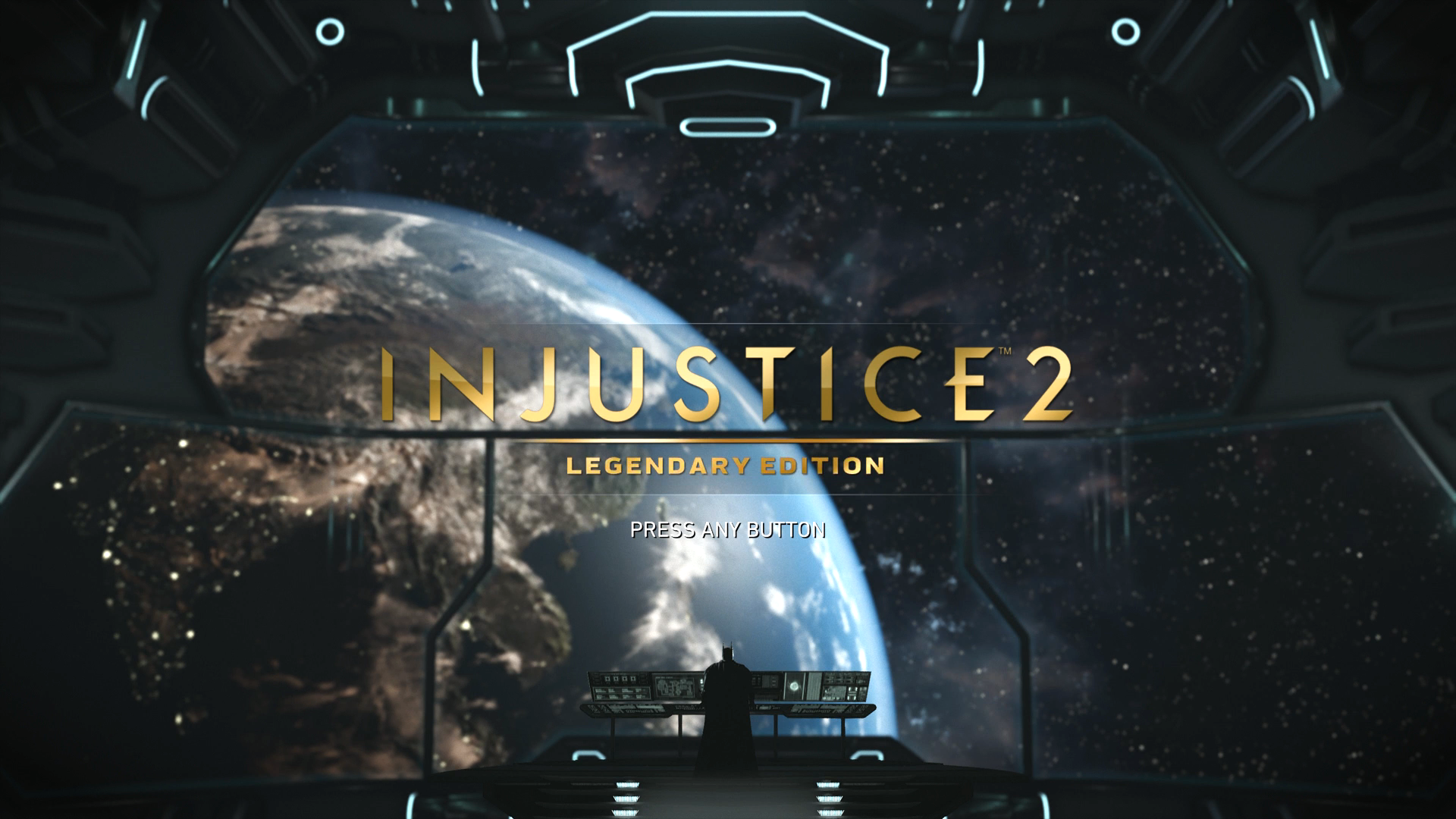
 good in the first Injustice is much-better looking the second time around. The user interface got a newer, sleeker coat of paint, and all the character models and backgrounds look better and cleaner, too. The character select screen even looks better and more fluid. NetherRealm’s fighting game visuals get better with each game, so this is just a testament to their growing prowess. The music isn’t standout, but it’s serviceable.