
Castlevania: Symphony of the Night
Konami, 1997

Symphony of the Night plays a sweet song of woe
I fully admit that I’m a little late for the Halloween party that is Castlevania: Symphony of the Night. I really stopped paying attention to the series after Super Castlevania IV, mostly because it’s a hard series and I have a lot of love for that game and the original. I didn’t need anymore Castlevania. But after coaxing from friends, making the MetroidVania connections and knowing its legendary status, here we are, and it’s taken a bite out of me.
Symphony of the Night, in all its gothic horror, appeals to me on several levels. The story is familiar in that Alucard — son of Dracula and a supporting character in the third game — is attempting to stop his father once again. That familiarity is enough to get me going because it’s all I need to know about what’s going on. Sure, I’m kind of used to a Belmont leading the way, but Symphony of the Night doesn’t need to rely on that kind of tradition.
The tradition that it does lean on is gameplay. The combat and movement are excellent, and it feels second nature to move around. Keeping it simple but adding the RPG elements was a fantastic design choice. Most of the new weapons are cool, and fighting enemies is a beautifully built song and dance. Best of all, there is an in-game map included. For a sprawling game requiring massive platforming, a map is required, and Symphony hits the mark by automatically including this.
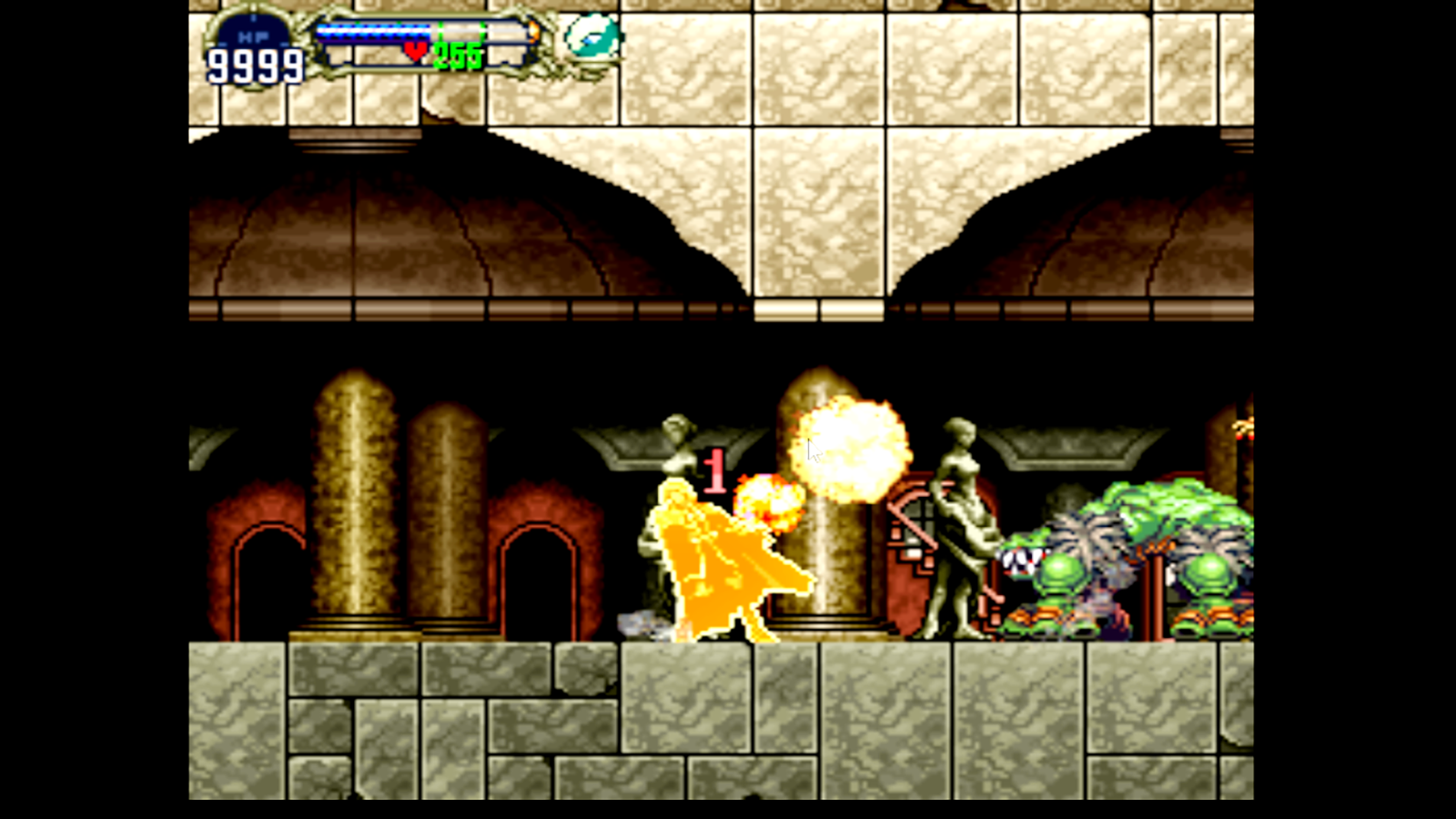
 Graphically, the game is gorgeous. Konami did something beautiful here and Castlevania looks better than ever. The gothic details are something to behold and are eye-catching as well as pleasing to someone with a goth sensibility and yearning for video games. The soundtrack is just as beautiful, necessitating finding the soundtrack to add to the collection. There are familiar riffs (Vampire Killer makes a cameo) and new chords to strike that are masterpieces, which is expected of the legendary Konami sound.
Alas, while trying to think of anything wrong with it, I’ve concluded that Symphony of the Night is a well-executed masterpiece. It hits all the marks and pulls no punches in elegance, craftsmanship. It’s telling that most Castlevania games later in the series use Symphony as the template on which they build. Symphony is a building crescendo of greatness, culminating in solid storytelling, gameplay and world-building.


 What I didn’t care for in Alpha has improved in Alpha 2: how it plays. The play feel has improved with the introduction of Custom Combos, and while clunky to execute, it’s a nice change of pace for the series. They’re in their infancy here so don’t expect the absolute dominance of Alpha 3 V‑
 Street Fighter Alpha establishes the series’ story: After Ryu wins the first World Fighting Tournament (as depicted in Street Fighter), he returns home to find his master Gouken murdered and sets out to get revenge. At the same time, Chun-Li, Guile and Charlie — along with other various members of the cast such as newcomer Rose — work together to take down M. Bison, who is working to establish his empire and achieve world domination. Know two things about the story: One, it’s a sequel to 1987’s Street Fighter and a prequel to Street Fighter


 The music is the same as the graphics: just as you remember it and perfectly fine. There is a sound test and that’s helpful if you don’t already have any of the tracks in your music collection. There are a few remixes in the menus that you may not have heard before, but there isn’t anything noteworthy like say Mega Man X Legacy Collection. The extras are mid, though some of the artwork and the official timelines provided are neat. It’s just that there isn’t a lot of it and there should be with this many games included.







 to discern. Some items blend well, and some enemies look like they could be helpful items. It’s a shame considering the graphics are clean and deeply hued with a comic book ink feel. Chuck has a nice sprite and matches well with the concept as do the dinosaurs. However, while they look nice, nothing nice can be said about the soundtrack. It’s monotonous and boring, and there’s nothing that stands out. It’s boring and goofy, much like the gameplay and the concept, which does nothing to endear anyone looking for a nice solid early Super Nintendo or Genesis platformer.
 well, sometimes he moves almost too well. I had the same issue here as I did with the later Wii version: Mario slides around entirely too much. I have to keep in the back of my mind to undercompensate and overcorrect with running and jumping movements constantly, and it’s a bit much to keep up with while trying to play well. When I want Mario to stop running, it should be instantly. There shouldn’t be extra frames of stopping. Also, some of the jumps don’t feel as clean as they should if we’re basing it on the known Mario standard. It’s all a little too loosey-goosey for my liking and makes clean play a little bit more of a chore than I’d care to do. Later entries have cleaned this up, but it’s obvious here and I can cut it some slack because it has been fixed. Just know that it’s part of the “new” experience.