

Stomping step stone
New Super Mario Bros. DS a good trial run

Now, y’all know I love me some Mario. I’m a Mario girl and have been for a long time. A whole issue devoted to him and his exploits aside, there are few mainline Mario games that I haven’t played and enjoyed. As a connoisseur on all things Mario, his leap to 3D was not one of my favorite things to experience because of the surprise condition of motion sickness. So, imagine my happiness when the series took the sidestep to start producing 2D games again. Nintendo’s first entry, New Super Mario Bros., was a warm-up if not a practice session for something greater.
The story starts pleasantly enough with Bowser kidnapping Princess Peach for the millionth time. It’s standard fare for Mario games at this point and it’s serviceable enough because that’s what you’re supposed to do in Mario games: save the princess. But there’s something different here: a newer style of graphics and play mechanics to whet your appetite for that “new” in the title. The game looks cleaner and brighter as compared to the last 2D outing — Super Mario World for the SNES — and Mario is more defined. Yes, you’re still in the Mushroom Kingdom but it looks newer. The way you play is also new. Mario’s getting around a lot better in modern times and it started here with a new butt stomp, wall jump, triple jump and new power-ups in the Mini Mushroom, Mega Mushroom and the Blue Koopa Shell. These power-ups are welcome additions to the Mario repertoire and are fun to use.
My main gripe comes from the new mechanics, however. While I love that Mario moves  well, sometimes he moves almost too well. I had the same issue here as I did with the later Wii version: Mario slides around entirely too much. I have to keep in the back of my mind to undercompensate and overcorrect with running and jumping movements constantly, and it’s a bit much to keep up with while trying to play well. When I want Mario to stop running, it should be instantly. There shouldn’t be extra frames of stopping. Also, some of the jumps don’t feel as clean as they should if we’re basing it on the known Mario standard. It’s all a little too loosey-goosey for my liking and makes clean play a little bit more of a chore than I’d care to do. Later entries have cleaned this up, but it’s obvious here and I can cut it some slack because it has been fixed. Just know that it’s part of the “new” experience.
New Super Mario Bros. has the Mario charm the series is known for as well. It’s fun to play and discover new secrets and see the new concepts work out in a series that puts in the work to innovate and stay relevant. This first game was the stepping stone for the phenomenal New Super Mario Bros. Wii, and you can clearly see where it’s going in terms of the total package. It’s not an insult to say this was the practice run and that practice makes perfect, especially if you’re New Super Mario Bros., and you’re compared to other mainline Mario games, and you sell 30 million copies as the best-selling DS game of all-time. Clearly, this is a mega Mario hit and good starting point for the 2D throwback of the franchise.

 established in the original game: You pop clusters of like-colored bubbles in an effort to clear established puzzles. This basic premise was set up in the first game for the
  But let’s be honest, what you came here for was to learn if the puzzle gameplay is up to the standard established by the first game. Yes, it is, and here’s why: Not much changed. No crazy weird mechanics shoehorned in, no missteps in how the bubbles bank or strange concepts cobbled together (aside from the sticky platforms that inexplicably start showing up halfway through the story mode) make appearances here. You can be rest assured that it’s the Bust-A-Move that we all know and love.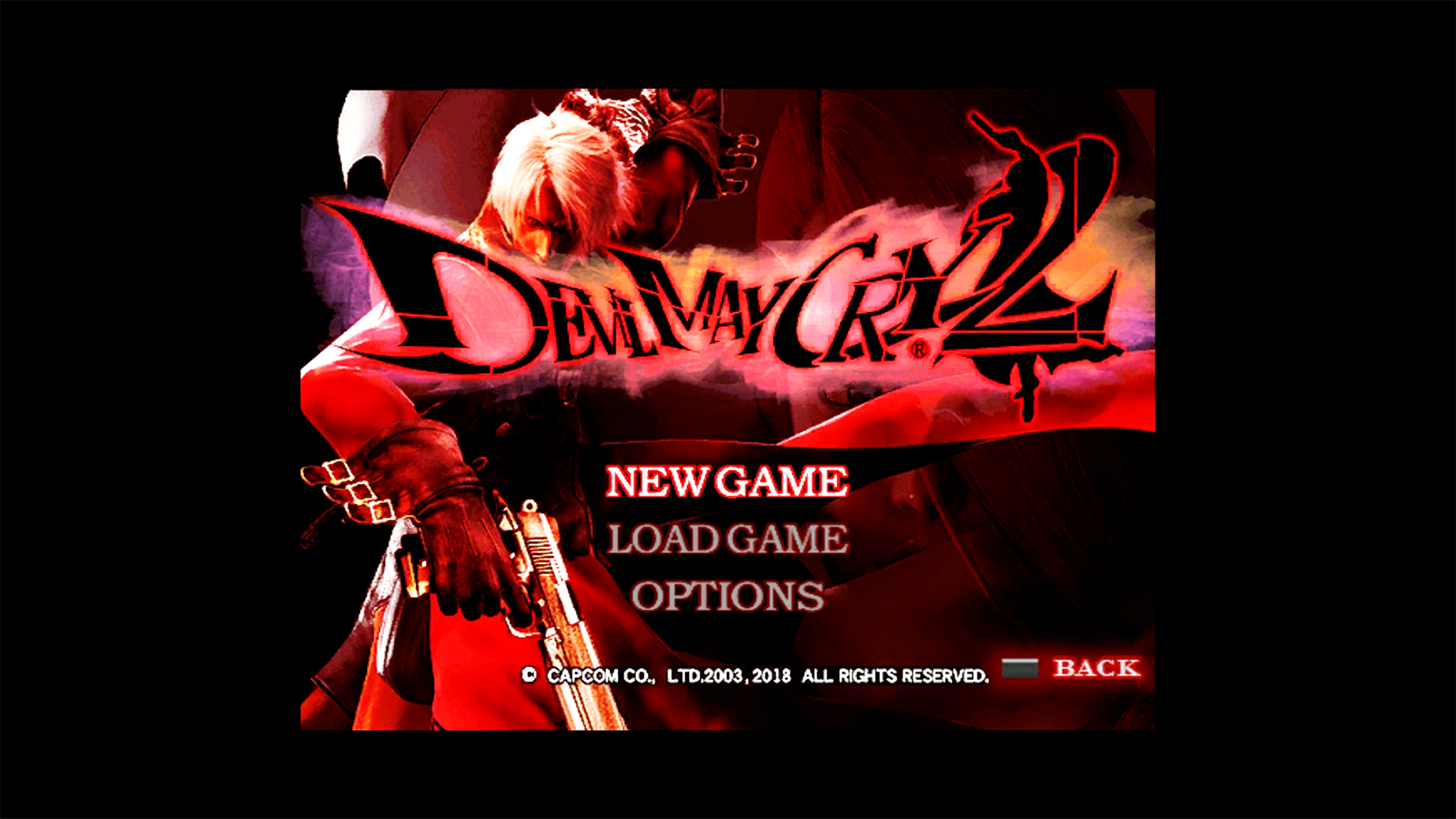

 establishes itself on the island of Vie de Marli. Arius’ true goal is to find holy relics called Arcanas so that he can obtain the powers of the ancient demon Argosax. Now locked in a race against time, Dante and Lucia must battle against Argosax and put an end to Arius’ madness before the world is plunged into eternal darkness.
  in and out oddly in underground areas. And, it was too rigid when it needed to move with Dante. The controls were tank-like — Capcom’s normal standard operational procedure — but it was more annoying when I was shooting at enemies long distance and wasting ammo and mobility. The tanking of Dante is counter to him being agile, which was a major selling point that catapulted him to stardom. Another issue was that the in-game store sold various skill and weapon upgrades including health items but were ridiculously expensive despite me having the ability to gather more coins seamlessly here than in the original game. That’s a major turnoff because it’s a chore. More work for more expensive rewards is not fun.
 mechanics are tight and quick movement is clean and precise, even with the wonky
 the demon world, a civil war erupted with Firebrand as the victor claiming the crests of Earth, Fire, Wind, Water and Time. Firebrand fought another demon named Somulo, who held the crest of Heaven, and secured a victory over the rival demon. However, another demon named Phalanx attacked Firebrand while he had low health, taking possession of all the crests. This allowed Phalanx to summon another crest that controls infinity. While Firebrand recovered, he was imprisoned in an arena guarded by the revived Somulo. After defeating Somulo, Firebrand begins his quest for vengeance and recovery of his well-earned spoils of war.
  While I love most parts of Demon’s Crest, there are some not-so-good nitpicks to make. Certain stages where perfect timing is needed to land on floating platforms across killer obstacles are annoying. The precision isn’t there and it’s frustrating to attempt it multiple times. Another strike comes when you play the bonus game. You must time your head-butting attack against demon skulls in a Whack-a-Mole-style game with a time limit. Considering that if you lose, you also lose money, this is a problem with the in-game economy. It makes you not want to play the mini-game at all. I also had issues with the Mode 7 view in Demon’s Crest. Although awesome most of the time you use it in navigating the demon realm, it weirdly affects your vision if you fly around for a prolonged time.
 are not easy, but once you’ve got the nuance it’s a whole new world of profits. The controls are simple to pick up and once you’ve built yourself up stamina-wise, the fruits of your labor are obvious. There’s something super satisfying about working the land, planting crops and caring for your animals in a day’s work and then reaping the benefits. There is planning involved also, which adds an extra layer of depth. Knowing how to spend your day wisely — whether it be tending to the farm or socializing in town — is important, and adds to the overall experience.
  but it’s a little catchy so it doesn’t necessarily grate the way you’d think hearing the same tune would for more than 20 minutes of farm work and socializing.


 the story other than you’re racing against other Beetle drivers on six varied tracks. There are several modes including a time trial, championship and two-player duel, but that’s about it. You’re also racing with only Beetles, though they vary in color with different stats. There are two unlockable Beetles, but that’s pretty much all there is in terms of rewards. The depth really lies in the tracks and their nooks and crannies. There are a ton of secrets and shortcuts that help in the point-gathering modes or to shave time in the time trials, and that sort of makes up for
  the lack of everything else. Sort of.
 Each level or “act” (there are 20 in total) will have you bashing enemies and avoiding various hazards such as spikes and bottomless pits. While dashing through you must utilize some patience and timing to avoid these various obstacles. Sonic is still easy to control but he now also has a cool new trick called the Spin Dash. This lets him go even faster and take down more enemies. Tails has the same skills, but his two tails give him a little more flair.
  that gives temporary protection against hits.
 looks phenomenal. It’s the first game to use this technique, and it set the standard in 2000 in terms of presentation. The backgrounds are also well done and inspire runs through the game. It’s clearly an early 2000s game, but that only portends good things about the Dreamcast and what it was capable of.