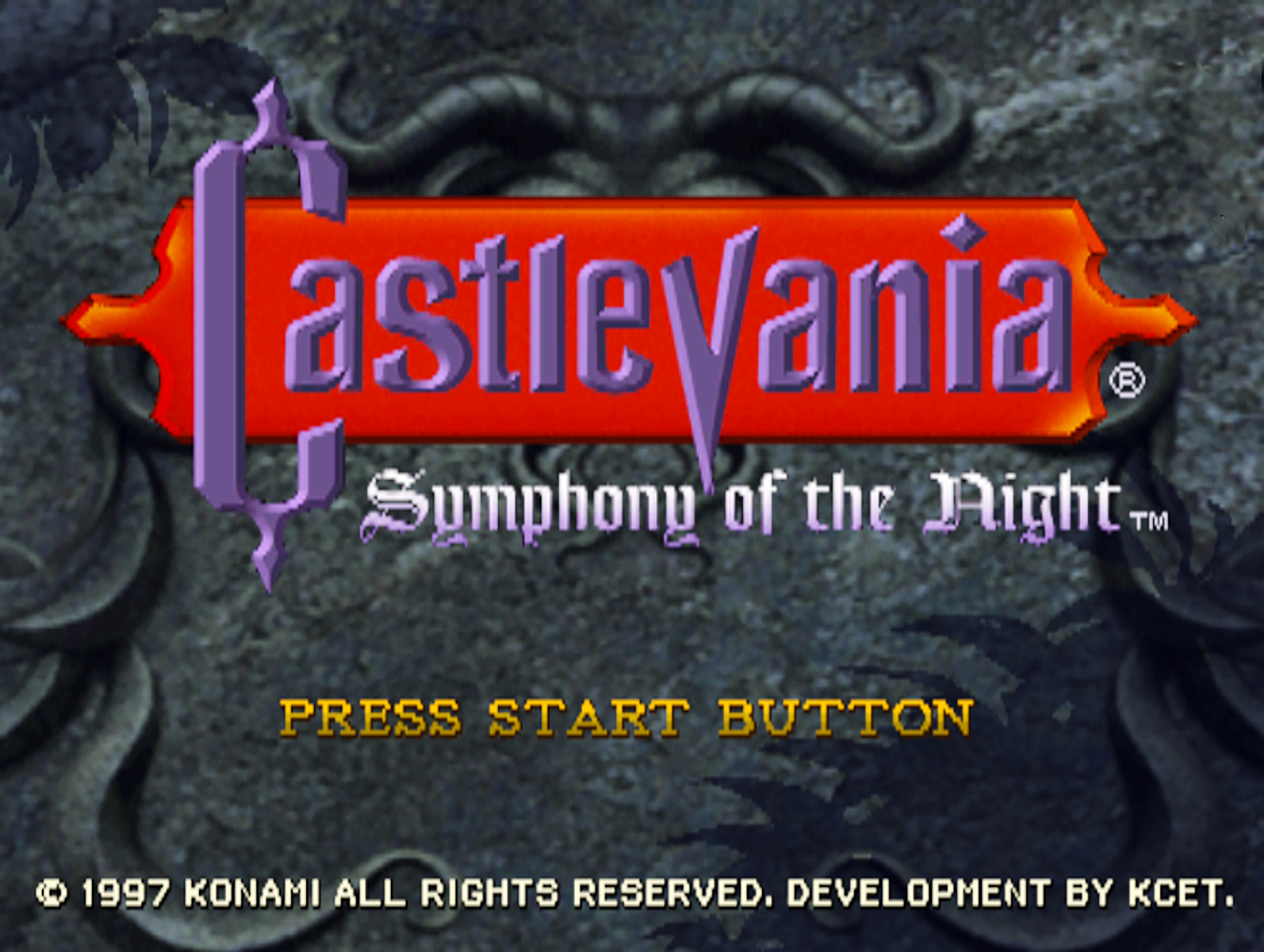
Castlevania: Symphony of the Night Konami, 1997
Symphony of the Night plays a sweet song of woe
I fully admit that I’m a little late for the Halloween party that is Castlevania: Symphony of the Night. I really stopped paying attention to the series after Super Castlevania IV, mostly because it’s a hard series and I have a lot of love for that game and the original. I didn’t need anymore Castlevania. But after coaxing from friends, making the MetroidVania connections and knowing its legendary status, here we are, and it’s taken a bite out of me.
Symphony of the Night, in all its gothic horror, appeals to me on several levels. The story is familiar in that Alucard — son of Dracula and a supporting character in the third game — is attempting to stop his father once again. That familiarity is enough to get me going because it’s all I need to know about what’s going on. Sure, I’m kind of used to a Belmont leading the way, but Symphony of the Night doesn’t need to rely on that kind of tradition.
The tradition that it does lean on is gameplay. The combat and movement are excellent, and it feels second nature to move around. Keeping it simple but adding the RPG elements was a fantastic design choice. Most of the new weapons are cool, and fighting enemies is a beautifully built song and dance. Best of all, there is an in-game map included. For a sprawling game requiring massive platforming, a map is required, and Symphony hits the mark by automatically including this.
Graphically, the game is gorgeous. Konami did something beautiful here and Castlevania looks better than ever. The gothic details are something to behold and are eye-catching as well as pleasing to someone with a goth sensibility and yearning for video games. The soundtrack is just as beautiful, necessitating finding the soundtrack to add to the collection. There are familiar riffs (Vampire Killer makes a cameo) and new chords to strike that are masterpieces, which is expected of the legendary Konami sound.
Alas, while trying to think of anything wrong with it, I’ve concluded that Symphony of the Night is a well-executed masterpiece. It hits all the marks and pulls no punches in elegance, craftsmanship. It’s telling that most Castlevania games later in the series use Symphony as the template on which they build. Symphony is a building crescendo of greatness, culminating in solid storytelling, gameplay and world-building.
We love to say that this isn’t your old man’s whatever whenever something has changed. As cliché as this is — and make no mistake this is cliché — Capcom’s newest entry in the old man fighting game that is Street Fighter isn’t your daddy’s Street Fighter. It isn’t even your brother’s Street Fighter, where he used to let you beat him up in versus mode and hit you with Flash Kicks to magically come back and win. No, this is the young man and casual’s Street Fighter. This is a new era of fighting designed to get everyone involved whether they’ve executed a Hadoken or not.
Street Fighter 6 came out with a fresh coat of paint, new mechanics but something different under the hood. It plays like Street Fighter V, but without the V‑Trigger mechanics. Now, it’s back to the basics and Drive Gauge, a new mechanic that can turn the tide of a battle quickly. The Drive Gauge rewards offense and creativity in combos while discouraging defensive turtling. This plays into the larger, established Street Fighter repertoire of super arts and parries. It’s nice for a veteran because it’s something new and good for newbies to the world of Street Fighter because it’s not super complicated to learn.
Something else new that benefits everyone is the introduction of three types of control schemes: Classic, Modern and Dynamic. Classic plays much like the old Street Fighter of yore with a six-button layout (Jab, Strong, Fierce, Short, Forward, Roundhouse), Modern has a simplified four-button layout (think Marvel vs. Capcom 2) and Dynamic is an offline only slant where the CPU chooses the most appropriate button presses for moves. It’s a strong, smart decision designed to open the door for more players to get involved in your long-running series that seems overwhelming and daunting at first. Another smart decision included is the tutorial and variety of modes. SF6 does its darndest to have something for everyone, and it’s immediately seen in the modes available at the start. Fight Hub, a returning and revamped World Tour Mode and a robust training mode make this a massive buy and win for the fighting game connoisseur. Fight Hub is where you’ll probably spend most of your time; it’s where matchmaking takes place as well as emulated older versions of Street Fighter live.
However, I tend to live in World Tour Mode. As a devoted fan of the original mode (Editor’s note: See Issue 52 for our coverage of the popular mode from Street Fighter Alpha 3), as soon as it was announced I knew I was a day one purchase. And with more than two years of wheeling and dealing with my created character, I can enthusiastically say I love it. I enjoy running around the fleshed-out Metro City (of Final Fight fame) with my lookalike fighter. I love that they took the concept born of Alpha 3 and gave it a soul and personality after so many years, and I love that it’s easy to get into and plays as well as it does.
The beauty of this new chapter of Street Fighter also lies in the character and environment designs. Street Fighter has always looked nice and SF6 is no different. The stage design is gorgeous, and the character models look nice. Even the weird creations that can come out of World Tour Mode have a nice look to them. We spent time at GI going through some of the characters and just marveling over how far Street Fighter has come with character design because it’s evident in this game just in the character select screen. The newbies in Marisa, Manon, Kimberly, Lily and JP are fun and cool, and the older stalwarts like Ryu, Ken and Dhalsim look fantastic. The soundtrack, while lacking in some areas, does have some toe tappers. Though I’m not a fan of Juri, I love her theme and Luke’s has grown on me. I’m almost certain there will be more additions to my liking as more seasons are released and revisions are made.
While there is so much to like here, I do have some nitpicks to address. First, while I’m a fan of seeing familiar faces, there are so many returning folks that don’t need to be here. We are in a post-Street Fighter III: 3rd Strike land in-game story-wise, so why are we still dealing with M. Bison/Super Dead Dictator™? Capcom said he really was dead after the in-game events of Street Fighter V, so having him as DLC is unnecessary. Likewise, I don’t need to know what Akuma is up to. I want more of the 3rd Strike characters back and I want the mystery of G, my favorite Street Fighter character, solved. Also, Capcom better not give us a million paid revisions, either. They better roll out updates as free upgrades and act like they’ve learned their lesson during the past 34 years of Street Fighter II agency. I say this because I can see the writing on the wall, and I don’t want to have to pay for the next upgrade of the mainline series.
I love Street Fighter 6. I love seeing the plot payoff of older games (i.e. Li-Fen, the young girl in the intro of 3rd Strike, is here and older, which helps tie down when the game takes place), and I love to see the continuity of Street Fighter and other Capcom games coming together. I really enjoy playing SF6, it’s teaching this old dog new tricks and I find myself fully invested in the future of the granddaddy of fighting games more than ever.
There was a time when all the early generation Street Fighter games weren’t available in the same place. Us old-timers had to own multiple systems and collections on those systems to complete the library of fighting street games. But then along came the 30th anniversary of the landmark fighting game franchise and wouldn’t you know, Capcom thought it prudent to offer a bonanza of Street Fighter. Whether or not it’s a bountiful buffet is still up for judgment.
Street Fighter 30th Anniversary Collection aims to do one thing: Give you all the Street Fighter you can shake a stick at. Included out of the box are: Street Fighter, all versions of Street Fighter II (including Tournament Battle, exclusive to the Nintendo Switch); Street Fighter Alpha, Street Fighter Alpha 2 and Street Fighter Alpha 3 Upper; and, Street Fighter III: New Generation, 2nd Impact: Giant Attack and 3rd Strike. This essentially covers all the bases for early Street Fighter, which is great. Give me everything in one package and let me choose what I want to play. But alas, there is a catch: All the versions included are the arcade versions of the games. That means, for example, with Street Fighter Alpha 3 you aren’t going to get World Tour Mode. Whatever you received in the arcade is what you’re getting here so I hope you like the vanilla versions because that’s what’s served here. That’s not a bad thing if you love Street Fighter, and it’s the smart solution because including the home additions would have pushed this collection to double discs or more.
The package is fine graphically. The games included are going to look exactly the way they did when they were released, which is exactly how they should here and isn’t the focus. What should be the focus is the surrounding package and it’s nice. The graphics look clean, and menus are inviting. However, I do have a gripe with the menus: Capcom is in dire need of a copy editor. I found at least one error in the text (Akuma’s bio in Super Street Fighter II X for the curious), and this isn’t the first time I’ve found this type of thing (there’s an error in Super Street Fighter IV’s text as well).
As a former professional editor, this type of thing in video games gets on my nerves. Capcom is a billion-dollar company; hiring a copy editor to spell check the menus and text shouldn’t be a problem. It reeks of sloppiness, though I shouldn’t be surprised as this is the same company that refuses to translate the board game in Project Justice or the dating sims in both versions of Rival Schools. But I digress. The presentation is good, and it looks fine on modern systems.
The music is the same as the graphics: just as you remember it and perfectly fine. There is a sound test and that’s helpful if you don’t already have any of the tracks in your music collection. There are a few remixes in the menus that you may not have heard before, but there isn’t anything noteworthy like say Mega Man X Legacy Collection. The extras are mid, though some of the artwork and the official timelines provided are neat. It’s just that there isn’t a lot of it and there should be with this many games included.
And just like the presentation, the playability is just as good as you remember. I was able to finish several games in the arcade mode — once I adjusted the difficulty, which is a godsend — and everything felt great even with a PlayStation 4 Pro controller. I also jumped online to test the netcode, and it was decent. However, with the superior Fightcade now in full swing, fighting online with 30th Anniversary has been made irrelevant.
This is the collection to end all Capcom collections for their fighting games. Yes, Capcom insists on releasing other collections with these games, but this is a good stop gap if you want the mainstream stuff all in one place. Come for the nostalgia and the convenience and maybe stay for the extras. Three decades of Street Fighter should be a spectacle to behold but it’s lacking in the knock your socks off draw-ins. It’s still a rad street fight, however.
Metroid Dread a return to form for veteran series
That foreboding sense of … dread. The anticipation of walking into an unknown room and possibly finding a secret. It’s the stuff many old-school gamers and Metroid fans like me cut our teeth on growing up with Metroidvania games. The original Metroid set the tone, but Super Metroid is the house of cards that everything in the genre rests on. And Metroid Dread, while an admirable attempt to recreate that nostalgic feeling, is a few missiles short.
Don’t misunderstand me: I love Metroid Dread. It’s the return to form that we all expect of a Metroid game, and you can tell that within the first five minutes. The opening cinematic picks the story up after Fusion where Samus Aran, the baddest bounty hunter in the known universe, has simultaneously solved the X Parasite threat and ushered in galactic peace once again. Despite that, the Galactic Federation receives verified proof that the X are not extinct and sends EMMI (Extraplanetary Multiform Mobile Identifiers) to the planet ZDR to investigate the mystery of why the X Parasite has reappeared. Soon after the EMMI land, all contact is lost with them. Ms. Aran is sent in to investigate their disappearance, and shortly after landing, finds herself in combat with a mysterious figure that resembles a Chozo. Given that the Chozo other than herself are also extinct, it’s an even deeper mystery that Samus is determined to solve.
The story is interesting, and I was genuinely invested in learning about the EMMI and what they found on the planet. I was even more intrigued about the Chozo warrior because I’m well-versed in the lore of Metroid and anything that calls back to Super Metroid and Samus’ origin story is going to have my attention. It also references Metroid Fusion, obviously, and parts of Metroid II: Samus Returns — which is the excellent remake of Metroid II: The Return of Samus. Leaning on the older story is a smart move because you’re probably going to go back and play the older games and the remake, and you’re going to buy into the story of the current game a little bit easier.
What isn’t a little easier, even on the easy difficulty level, is the combat. Listen, I’m a Super Metroid expert and I can even claim beating the original Metroid, but the first hour of Dread is hard. I got stuck on the second EMMI chase sequence and had to go watch a detailed demonstration of what to do because I just wasn’t getting it. And, yes, I love this about Dread. Metroid, at its core, is about exploration, problem-solving and figuring out things by trial and error. I’m doing that in Dread, though my old-man reflexes and patience are getting in the way. But this is what I want out of my Metroid game to a point. The other side of this, however, is that I didn’t care for the mad dash away from an all-powerful enemy in Metroid Fusion in 2002, and I don’t particularly care for the mad dash away from an all-powerful enemy in Metroid Dread now. That frantic feeling of not knowing what to do in a sequence that means instant death constantly is not a good one, and I had hoped that it wouldn’t return 20 years later, but here we are. I’ll figure it out and learn to live with it, I guess, but it’s not one of my favorite parts of the game.
One of the other things I do love about Dread is the atmosphere. The music hits the sweet spot of nostalgia and new with leitmotifs of Super and the original game mixed in, and the graphics are gorgeous. I’ve long been a fan of the music of Metroid, and this is just another masterpiece in the long history of the series. Also, Samus has never looked better. She’s more fleshed out with modern graphics, but my favorite heroine is simply stunning even in the stripped Power Suit. And while ZDR is no Zebes, it’s a deliciously dark environment that invokes the best part of brooding moody dark planet that fits right in Metroid lore.
While I love a lot of Dread, there are some things that I don’t quite love. First, as a veteran Metroid lover, I can’t help but wonder why it took so long to get a side-scrolling version of Metroid again and why it followed Fusion after so many years. Dread is fantastic, but Fusion was not exactly Super, and Dread tries a little too hard to make Fusion work. I’d rather Dread had its own identity aside from the cleanup of Fusion’s mess.
And while we’re at it, Dread tries a little too hard to lean into Super’s legacy. It’s well-known that Super is our favorite game of all time. That is not a secret. However, unless you’re going to give me a full modern remake of Super, don’t tease me with something almost there.
Dread is a tease, a “what if we were to remake the greatest game of all time with modern controls” experiment. To quote the awful Ronin in Avengers: Endgame, don’t give me hope. Don’t give it to me halfway and then be like, naw, you know what? Let’s just call it Metroid 5 and we’ll revisit that Super remake later. This technically isn’t Dread’s fault, because it’s an excellent game and it’s giving me, the Metroid fan who didn’t want a first-person shooter Metroid, exactly what I’ve been asking for since Fusion. I’m not dinging Dread per se; I’m dinging Nintendo for being a tease and a terrible one at that.
Metroid Dread does almost everything right: The atmosphere is Metroid, the graphics are Metroid, the story is Metroid and the secrecy is Metroid. It’s a must-play if you’re into the series and even if you aren’t, you still need to experience it just to see how the grand dame of Metroidvania does her thing and creates perfection. It’s just that if you’re walking into this thinking you’re going to get Super Metroid levels of perfection, you’re going to be disappointed. It’s not Other M level of disappointment, but the layers of Super haunt the outcome. Then again, let’s face it: Nothing is going to touch Super’s level of nuance. And Dread is still fine for it. Dread nearly hits on every level, and it’s the side-scrolling Metroid adventure we non-first-person shooter fans have been waiting for. It’s just that you must be willing to look past the dreaded comparisons to Super Metroid to see its true finesse.
Modernized trilogy finale falls short of masterpiece
I would be foolish to not acknowledge one of the most legendary ninjas in video game history. Ever since the appearance of the “Tecmo Presents 1989” screen heralding the Ninja Gaiden series, Ryu Hayabusa has taken up his family’s legendary Dragon Sword against many demonic foes and their lackeys who desire Earth to fall under their rule. Through many 8- and 16-bit adventures, Ryu has conquered many foes that were not just fuel that creates nightmares but those who were sci-fi adjacent with foes who were half-demon and half-tech. Ryu took a hiatus and eventually returned to his role as a ninja guardian defending his home village (and the world) through new adventures on next generation consoles. I was able to experience Mr. Hayabusa’s latest feat in Ninja Gaiden 3: Razor’s Edge.
In Razor’s Edge, Ryu, now the head leader of Hayabusa village, is called upon by the Japanese Self-Defense Forces to deal with a terrorist group known as the Legion of Alchemy whose leader has a deep grudge against the beloved dragon ninja. When the LOA launches a brutal assault on the British prime minister’s home, Ryu responds and destroys the LOA’s foot soldiers but arrives too late to save the prime minister and is attacked by the Regent of the Mask. The Regent of the Mask places a curse called the Grip of Murder on Ryu’s right arm, which absorbs the souls of Ryu’s enemies and takes the Dragon Sword into his arm. To make things worse, the Regent makes a threat to world leaders to either surrender in seven days or be destroyed. With time of the utmost essence, Ryu along with longtime ally Ayane and JSDF agent Mizuki McCloud must stop the LOA to prevent further global chaos.
Razor’s Edge’s graphics are like current hack-and-slash games on the market but also have substance. Team Ninja developed each stage with care and kept elements that make Ninja Gaiden a fan favorite. Starting in London the roads are instantly recognizable as are the backdrop of Big Ben and the Knight buses instead of a copy and paste inserted stage. The cut scenes, stage start, and recap areas are beautifully done and add polish to all characters without going too far to explain who’s good and evil. A small gripe about the presentation and graphics is that the stage start/recap areas were too similar to the Metal Gear and Tom Clancy series where it’s a bit too dramatic in some areas and they don’t allow the awesome graphics to set the tone.
The controls to guide our hero are simple but need practice in some areas that require parkour-type jumps to get to other parts of some stages. In some parts of the game where Ayane is called upon, she is a little more flexible than Ryu, but that doesn’t make the controls more difficult. I did have a few issues with controls regarding battles with bosses that require more focus to strike various spots. Also, when Ryu is required to use his kunai to climb, timing to focus on climbing is needed while various enemies fiercely attempt to eliminate you. It taxed my patience and was kind of tedious.
The music is paired perfectly with each stage and has a balance from slow-rising to energetic when facing off with various enemies. The LOA museum is my favorite stage; while battling through the stage, enemies, including attack dogs, pop out to attack you with fierce music. When defeated, the music goes back to a light rock style. The game music is excellent all-around, and the voice acting is perfect with Troy Baker as Ryu and Ali Hillis as Mizuki. The cast includes well-known voice actors such as Yuri Lowenthal, Stephanie Sheh, Janice Kawaye and Michael McConnohie.
While I enjoyed Razor’s Edge, I do have a few dislikes. First, its targeting system for Ryu when he uses his ninpo has hit and miss accuracy, taking out some enemies while missing others. My other problem is that while the game has various dub and subtitles included, the English subtitles were not timed well with its audio, which made the story difficult to follow in some cut scenes. Noticing that, It wasn’t a dealbreaker, but it was disappointing.
Ninja Gaiden 3: Razor’s Edge breathes new life and new adventures into a legendary ninja in video games. Ryu Hayabusa is a prime example of being able to teach an old dog a few new tricks and they succeed. The third game in the remake series puts the Hayabusa name back at the edge of greatness.
A new stage of history Soulcalibur returns to its roots
It’s been a long time since Soulcalibur was good. And I mean, really good, where it’s about the fighting and the locales and the sick character designs. Because make no mistake, Soulcalibur hit a brick wall right about the time of the fourth entry. Seriously, no one asked for Star Wars draped all over Soulcalibur, yet there we were with Yoda and the gang making themselves at home in the series known for its sword and sorcery. But then something happened: Someone on Project Soul said, “you know what would be great? Returning back to the thing that made us successful in the first place: Soulcalibur.” And here we are with the sixth entry and it’s a return to form.
Soulcalibur VI is essentially a retelling of the second game in the series, Soulcalibur. The evil sword Soul Edge has fallen into the wrong hands throughout history, and it has now found its way into the embrace of one Siegfried. Sigfried, having lost his tenuous grasp on sanity and reality in general, has transformed into the Azure Knight, better known as Nightmare, and begun wreaking havoc on the world in this demonic possessed guise. There are those who seek the sword for righteous reasons and those who seek it for greed and glory, but the sword must be stopped. Because it’s a retread of Soulcalibur, not too much has changed story-wise. The entire cast of the game has returned with some new folks sprinkled in for good measure. This is fine because that cast was legendary and set the standard for future entries.
But what if you wanted to do a little something different this time around? The excellent character creator has everything covered. This mode is so well done and such a time sink. I spent at least two hours making a reasonable facsimile of the Capcom’s Ruby Heart — my favorite pirate — and it was painless and easy to do, even with the default offerings. This creator mode has been around a long time in Soulcalibur — since the third game — but here it’s refined and polished. I spent more time here than anywhere else, and what I wanted to make was only limited by my lack of ideas.
Despite lacking in skill with Soulcalibur over the years, I was pleasantly surprised with the ease of jumping into fighting. I have had an extended absence from the series, but I could still pull off moves and combos with old favorites like Mitsurugi, Cervantes, Ivy and Voldo. The fighting felt polished and clean, much like older entries, which is critical in drawing in someone like me that hasn’t really played much since Soulcalibur II.
Another good nostalgic draw was the presentation. Soulcalibur as a series has never lacked in the aesthetics department, and this game is no different. It looks nice, with good character models and enticing backgrounds. Because it’s basically a remake, the backgrounds are references to previous stages but with a more modern cleanup job applied. I absolutely loved the original Soulcalibur’s look and still do, and this version does good in reminding me of why that is. While not quite as groundbreaking in its graphics as the arcade and Dreamcast port were 25 years ago, they’re still quite breathtaking and beautiful.
And, there isn’t too much to dislike about Soulcalibur VI. I’m not fond of the AI difficulty, which seems a little too spotty. A few matches felt like rubber banding in the second round if I won the first round, but then if there was a third round, the AI would just stand there and let me wail away. That’s weird in a fighting game, but then again, most Soulcalibur entries felt that way in the beginning of the series. I just wish that was fixed by the sixth game.
Overall, Soulcalibur VI tries to make up for the missteps of the past with a solid re-imagining and return to its roots. Though it’s been five years since release and no new content has been on the horizon, it’s a still a viable fighting game for those who haven’t dived back into the world of souls. The soul still burns in this rehabbed and reformed sequel.
Capcom tends to tread a lot of the same ground these days. Whether it’s “getting back to their roots” with Street Fighter’s modern versions or returning to the past with a lot of upgraded collections, Capcom sure has a way of reminding you that, yes, they made Street Fighter and a bunch of other fighting games. The question is do we care? Yes and no, if this current collection is to be judged.
I will admit that, despite being a strict Mortal Kombat old head, I am inclined to speak up about my favorite genre in fighting games and how it relates to Capcom. This collection, filled to the brim with nothing but Capcom fighters, aims to show that Capcom had some hits and memorable properties. Fighting Collection features 10 entries: Vampire/Darkstalkers 1–3, Vampire Hunter 2, Vampire Savior 2, Cyberbots: Full Metal Madness, WarZard/Red Earth, Hyper Street Fighter II: The Anniversary Edition, Super Gem Fighter Mini Mix/Pocket Fighter and Super Puzzle Fighter II Turbo, with the North American or Japanese versions available for play. In all cases, these are arcade rom versions gathered together in one spot and you can freely switch between them on free play. Collection-wise, this is a top-tier package for those who love fighting games made by Capcom. Mainstream money maker that’s still around today? That’s Hyper Street Fighter II. Obscure weird fighter that no one even knows that Capcom made it? Take your pick from Cyberbots and WarZard. Cutesy, chibi fighter that unabashedly mocks its maker? Puzzle Fighter and Pocket Fighter have that on lock. Defunct series that should still be a thing, but Capcom doesn’t pay attention? All of the Vampire you can possibly shake a stick at satisfies that requirement. There is literally something for everyone here. But the question is, do you want it, especially now that you know what’s available here? As earlier, yes and no.
While the presentation is top-notch, the actual assortment of the games involved is a mixed bag. Gentle readers, I just compiled and created an entire issue devoted to Vampire (Editor’s note: That’d be Issue 46. Go download it now if you haven’t.) and its inner workings and the history behind the series. Knowing that, please explain to me why I have Vampire burnout and why I had it before I did that issue because of this collection. Capcom does this song and dance every single time Vampire is whispered somewhere by some unsuspecting gamer who loves the series and wants to see it once more have its day in the sun. I wrote an entire column in that previous issue discussing the need for a Vampire revival — a new game, not an old rehash — and how we were never going to get that because Capcom does the series dirty constantly.
Well, wouldn’t you know it, Capcom pulled a skunk out of their hat by including all of the Vampire games here. It’s like they said, “Well, you asked for more Vampire. Here, be satisfied that we released all of them finally in North America and shut up.” You know, I’m slightly happy but I’m more offended than anything else. Because, as you should have read by now gentle reader, Capcom is never going to give us a new Vampire game without there being some weirdness attached. And because this collection sold “OK,” — not great, just OK — you know we aren’t getting a new game. Because it didn’t set the world on fire in sales doesn’t mean the demand isn’t there. But I digress. Everything else in this collection has been released in some way, shape or form in either region, so it wasn’t necessary for their inclusion, either.
What I would have preferred to see are Rival Schools, Project Justice, Star Gladiator and Plasma Sword. These are defunct Capcom series that they also like to act like they didn’t create. Rival Schools and Project Justice are especially egregious because while they’ve been ported to PlayStation Network, we haven’t gotten a full, unaltered port of either game. A modern translation of the board game and simulation mode in both games is not that hard, but I digress again because we know we are never getting it. It’s a shame because this collection as pulled together in 2022 could have used some better curation.
While I love Capcom fighting games, I’m OK about this collection. It’s nice to have these in a modern package for modern consoles but I’m not enthused about the behind-the-scenes foolishness that could have been avoided with better curating on Capcom’s part. There are some heavy hitters that could have been included immediately that would have made it a better package, and the extras included could have been better also. However, it’s not a terrible package and is infinitely useful and valuable to the fighting game population so it’s not a total wash. Capcom could collect better, though.
As a connoisseur of most things related to the Teenage Mutant Ninja Turtles, I find that the first two movies, the comics and the first animated show are worth my time. In addition to those mentioned, certain games are acceptable uses of my hard-earned scrilla. I am a discerning fan, and my dollars and time are precious. So, it is with great joy and elation that I spread the word that TMNT games have recovered slightly from the Dimension X portal that the franchise fell into and the latest game, Shredder’s Revenge, is proof of this return to glory.
Conceived as a tribute game of sorts, Shredder’s Revenge takes everything we found awesome about TMNTII: The Arcade Game and TMNTIV: Turtles in Time and ramps up the awesome level. The story continues Turtles in Time, which was a wise choice. The Turtles find Rocksteady and Bebop and their adjacent villain associates guarding Krang’s exoskeleton head in various locations including Manhattan and Dimension X. Apparently, Shredder is alive and kicking again after being toppled on top of the Statue of Liberty in 1992. In 2022, he wants revenge for the Turtles stopping this particular plot of mayhem of using Lady Liberty to take over the world. Because they’re used to Shredder’s foolishness — bear in mind this is 1986 cartoon Shredder, not comic book Shredder who wasn’t a major villain — the Turtles and their friends and family band together to stop the revenge plot once and for all.
Adding April O’Neil, Casey Jones and Splinter alongside the Turtles was a smart move. It’s almost inconceivable now that we were never able to play as those three supporting characters in a Turtles beat-’em-up before, and it has to be allowed in future games. Once you get going with a character chosen, the level-up system is quick and easy to learn. And learn you will because there are so many ways to dispatch Foot Clan soldiers and other enemies for points that work within the system. It’s almost too much to keep up with, especially in the heat of battle where knowing the correct way to dispatch a boss is important. Having some previous knowledge of Turtles in Time helps tremendously, and there are in-game instructions and a tutorial, but it’s nigh overwhelming. Though, to be fair, I’d rather have too much than too little. The game is giving me a feast and thankfully, the controls are easy to grasp and clean as you romp through 16 gorgeous levels.
The game looks just as fantastic as well as it controls. The art immediately dips into the nostalgia of the original afterschool show and had me humming the super ’80s theme song. This is the area where that tribute comes into play. If you’re a fan of the show, you will love everything about how the game looks, feels, and sounds. Well, almost. While the soundtrack is also fantastic, we can’t not mention the atrocious remake of the theme song. Of all of the music chosen to remake, the theme show is the one track that you don’t mess with. It is a reverent piece of pop culture history and is sacred to most Turtle fans, including myself. My 42-year-old adult self knows the words by heart and has it in digital form; it’s on that level for me. So, hearing the theme butchered as it were in Shredder’s Revenge had me taken aback. I was grievously wounded but the soul still burns in this old Turtle girl. Because the rest of the soundtrack is great ’80s centric pop, tunes snatched directly from the early seasons of the TV show, and beautiful voicework from the original animated cast, I can let the remake theme slide, but it better not be in the sequel.
My only other gripe here is the difficulty level. Even on the easiest difficulty, there were a lot of arcade rip-off tendencies going on. Tactics like enemy AI ganging up on characters with already low health, not-so-clean hits from off-screen enemies that you can’t see and losing health rather quickly ran as rampant as those Stone Soldiers that Krang employed. Any levels involving vehicles and flying are impossibly hard and feel designed to be annoyingly frustrating. Boss fights, I’m fine with; they’re supposed to be hard. But regular levels beyond the first stage were like this on easy difficulty, which is obnoxious. It was like trying to play TMNTII: The Arcade Game all over again and watching the cabinet steal my money out of my pocket. It feels unfair and set up to be against the player, which is unfortunate. Knowing that going into the experience now makes it a little easier to navigate but is a detraction.
Despite a try-hard collision system that keeps it from obtaining legendary status, Shredder’s Revenge is a nice love letter to older TMNT fans who were around for the original craze. The quirks are noticeable, but Shredder’s Revenge tries really hard in every other area, and it succeeds well. Let’s call it a Cowabunga for now.
Bombastic yet cool. This is the dichotomy you encounter in the atmosphere of Jet Grind Radio. There’s nothing quite like it — except its sequel — and that’s a blessing because I don’t think the world could handle anything else. It’s quirky, futuristic, stunning, and undeniably cool when you get down to it: Jet Grind Radio is the future. Set in a futuristic Tokyo, Jet Grind Radio features a wide cast of rollerblading graffiti gangs vying for supremacy and struggling against an egomaniacal madman and his conglomerate, which are attempting to take over the world. The storyline serves its purpose but it’s the characters that are the draw here. Each character — including the unlockable — has an interesting look and story going on. They are the lifeblood, and it’s fun to learn about them and their motivations. While we’re loving the characters, let’s also give love to the art style that brings them to life. The art style is gorgeous and still holds up after 23 years. The graffiti cel-shaded look has aged well; graffiti never fails to be awesome and impactful, and Jet Grind Radio looks phenomenal. It’s the first game to use this technique, and it set the standard in 2000 in terms of presentation. The backgrounds are also well done and inspire runs through the game. It’s clearly an early 2000s game, but that only portends good things about the Dreamcast and what it was capable of. And as good as the game looks, the graphics almost don’t hold a candle to the soundtrack. This is one of the best soundtracks ever done, and it will have you bopping while you’re running around on inline skates. This is one of those soundtracks that you put on while working and you get some of your best work done. Funky and pop-centric, the soundtrack has so much going on thematically that there’s bound to be something for everyone. And in terms of appealing to mass consumption, the controls are a common denominator kind of sensibility. The immediate comparison here is Tony Hawk, which isn’t surprising since the Hawkman had just released his first game — Tony Hawk’s Pro Skater — a year earlier to critical acclaim. Jet Grind Radio doesn’t necessarily grind on Hawk’s coattails, but you’re bound to say to yourself at least once, “These controls sure feel familiar.” And you wouldn’t be wrong. That’s a good thing, because it plays like early Tony Hawk, you know when it was good. While everything is great in terms of presentation and control, I’d be remiss in mentioning that there is one bothersome flaw with Jet Grind Radio. While the controls are easily analogous to early Tony Hawk games, it wasn’t easy to pick up the game and know what’s going on immediately. It’s a little too inaccessible at first, like it’s asking you to have some in-depth knowledge ahead of playing for the first time. You may not be familiar with the concepts the game is throwing at you, and it’s the game’s responsibility to ease you into the fray. Thankfully, the surrounding game is so good that you’ll come back to get more in-depth with the trappings of Tokyo-to. The Jet Grind series has lasted into the modern era with re-releases and a rumored reboot, and the original game details exactly why. Easy controls, varied modes, an engaging cast (love Pots, Piranha and Beat!) and popping soundtrack make for an immediately unforgettable experience. Get in-line to get down with the fantastic Jet Grind Radio.
Lush, breathtaking, complicated, trying. If you weren’t a fan of Monster Hunter as a franchise until you played Monster Hunter: World, consider yourself missing out on something wondrous. Monster Hunter: World is as close to perfection as an action RPG can be.
Everything begins with you. You begin your adventure as a hunter joining the Fifth Fleet on an expedition to the New World. You are tasked with exploring the vast wild in search of information and science. You’re supported with an assistant — Palicoes — and other officers of the Fifth Fleet, who help with hunting the flora and fauna in the wide unknown so that you may inform the Research Commission of your findings and possibly stop the extinction of vital dragons. The story is engrossing, well-written and easily digestible with hints of more to come as you explore every nook of the new land.
And explore you will because that’s the name of the game here: Hunting. You, the hunter, go into the world to hunt monsters of all sizes. During your hunts, you’re using your wits and the environment to your advantage, careful not to faint too many times while working to take down a creature so that you may get new parts to craft gear and weapons. The crafting aspect is fantastic. The variety of gear and equipment that can be generated is off the charts, and there is nothing more satisfying than taking down a new enemy and obtaining new, more powerful gear. Capcom knew the essence of the high that comes from winning a hard-fought battle, loot, craft better gear and repeat. And they’ve captured that essence masterfully here with increasing incentives and nuanced pacing. Fighting never feels weird, and it quickly becomes second nature to swing your sword and make waves in battle. My only gripe here is that there is so much to learn with the battle mechanics and item crafting and usage that sometimes it gets overwhelming. Taking your time to read the tutorials and work through scenarios in training is the way to combat that. I’m pleased with this setup because I’d rather get too much information than not enough.
While on your expeditions or even at the hub, stop a moment when you can and admire the beauty that Capcom has created. The game is one of the most beautiful I have ever seen. I frequently stop to watch the scenery and take in the detail of the surroundings. And, I want to especially highlight the impressive character creation suite. If I can create my own character in a game, I want bold and accurate tools to do so. Monster Hunter: World gave me that and more. I spent two hours with it alone and I still wanted to spend more time there. The wealth of options is outstanding, and I’m extremely impressed with the diversity found within. I can make a character that accurately looks like me with gorgeous options for hairstyles … or not. But I love the options given, and I can’t praise that feature enough.
The soundtrack is another standout in the presentation. It’s fun, fast-paced and engaging. No track is out of place and it’s well-scored with so many different instruments that it puts almost every other adventure title to shame. This is big-budget music and it shows in every situation you’ll find yourself in every environment. Also, the Palicoes’ sound effects are some of the most adorable cat representations I’ve ever heard. If you love cats like I do, you’re going to be saying “Aww, how adorable!” every five seconds and it’s not going to ever get old. That’s the mark of good audio, honestly.
Monster Hunter: World is a masterpiece in adventure. No shortage of things to do, a wealth of options and story and great mechanics come together in a majestic magnum opus of crafting and survival. The hunt for perfection is over with Monster Hunter: World.


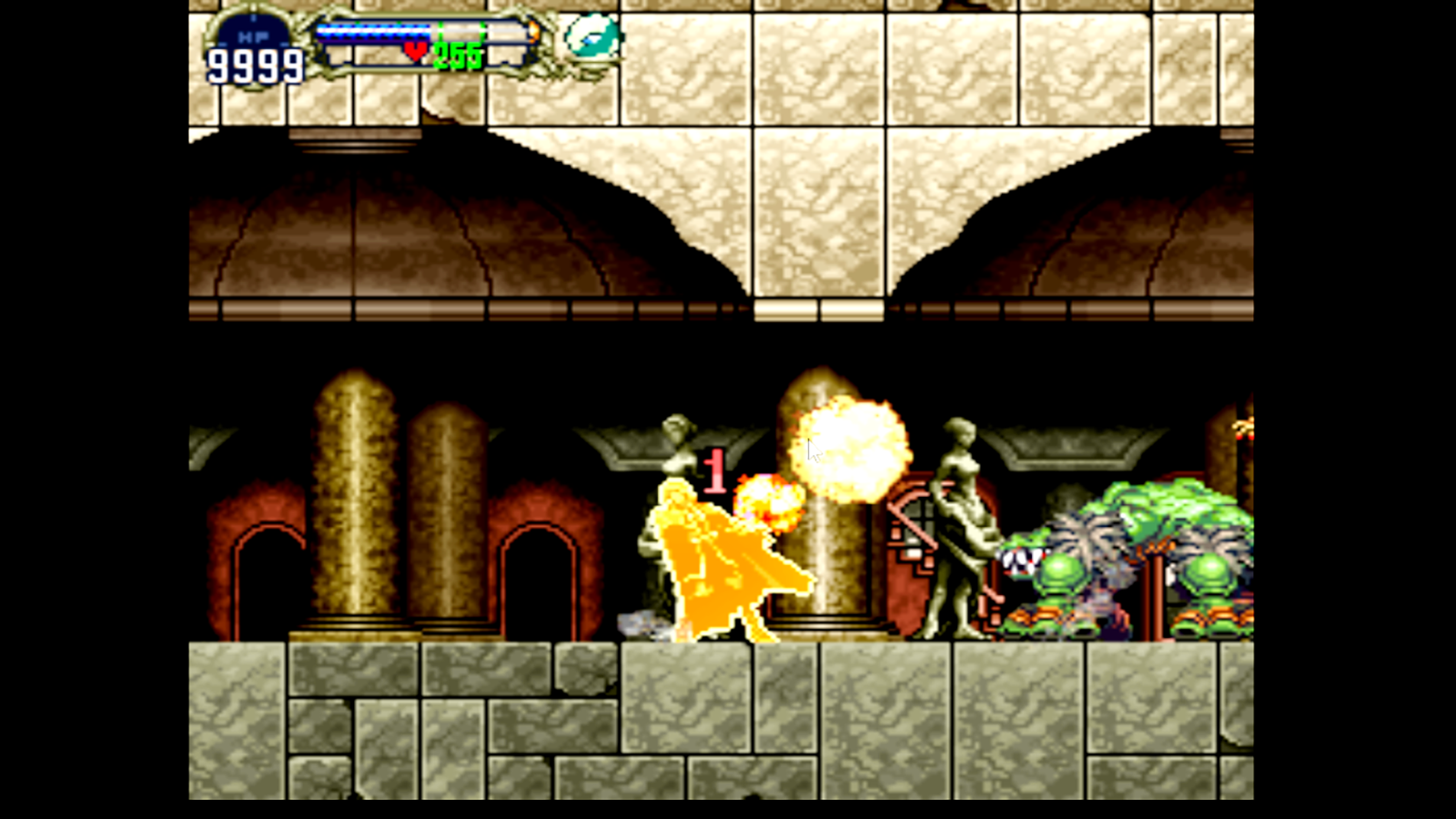
 Graphically, the game is gorgeous. Konami did something beautiful here and Castlevania looks better than ever. The gothic details are something to behold and are eye-catching as well as pleasing to someone with a goth sensibility and yearning for video games. The soundtrack is just as beautiful, necessitating finding the soundtrack to add to the collection. There are familiar riffs (Vampire Killer makes a cameo) and new chords to strike that are masterpieces, which is expected of the legendary Konami sound.


 The music is the same as the graphics: just as you remember it and perfectly fine. There is a sound test and that’s helpful if you don’t already have any of the tracks in your music collection. There are a few remixes in the menus that you may not have heard before, but there isn’t anything noteworthy like say Mega Man X Legacy Collection. The extras are mid, though some of the artwork and the official timelines provided are neat. It’s just that there isn’t a lot of it and there should be with this many games included.


 parkour-type jumps to get to other parts of some stages. In some parts of the game where Ayane is called upon, she is a little more flexible than Ryu, but that doesn’t make the controls more difficult. I did have a few issues with controls regarding battles with bosses that require more focus to strike various spots. Also, when Ryu is required to use his kunai to climb, timing to focus on climbing is needed while various enemies fiercely attempt to eliminate you. It taxed my patience and was kind of tedious.



 Turbo, with the North American or Japanese versions available for play. In all cases, these are arcade rom versions gathered together in one spot and you can freely switch between them on free play. Collection-wise, this is a top-tier package for those who love fighting games made by Capcom. Mainstream money maker that’s still around today? That’s Hyper Street Fighter
 awesome about
 looks phenomenal. It’s the first game to use this technique, and it set the standard in 2000 in terms of presentation. The backgrounds are also well done and inspire runs through the game. It’s clearly an early 2000s game, but that only portends good things about the Dreamcast and what it was capable of.
 While everything is great in terms of presentation and control, I’d be remiss in mentioning that there is one bothersome flaw with Jet Grind Radio. While the controls are easily analogous to early Tony Hawk games, it wasn’t easy to pick up the game and know what’s going on immediately. It’s a little too inaccessible at first, like it’s asking you to have some in-depth knowledge ahead of playing for the first time. You may not be familiar with the concepts the game is throwing at you, and it’s the game’s responsibility to ease you into the fray. Thankfully, the surrounding game is so good that you’ll come back to get more in-depth with the trappings of Tokyo-to.
 hunter, go into the world to hunt monsters of all sizes. During your hunts, you’re using your wits and the environment to your advantage, careful not to faint too many times while working to take down a creature so that you may get new parts to craft gear and weapons. The crafting aspect is fantastic. The variety of gear and equipment that can be generated is off the charts, and there is nothing more satisfying than taking down a new enemy and obtaining new, more powerful gear. Capcom knew the essence of the high that comes from winning a hard-fought battle, loot, craft better gear and repeat. And they’ve captured that essence masterfully here with increasing incentives and nuanced pacing. Fighting never feels weird, and it quickly becomes second nature to swing your sword and make waves in battle. My only gripe here is that there is so much to learn with the battle mechanics and item crafting and usage that sometimes it gets overwhelming. Taking your time to read the tutorials and work through scenarios in training is the way to combat that. I’m pleased with this setup because I’d rather get too much information than not enough.