Dark Knight’s second outing a rousing adventure
As a Batman fan, I hold a special place in my heart for most of the big-screen adaptations of the Caped Crusader’s fight to clean up Gotham. Batman Returns, despite its problems, is at the top of the list in terms of favorite aesthetics in a Batman film. That said, I wasn’t sure if I felt the same affection for the game version.
The story is the same as the film: You, as the Dark Knight, battle the nefarious Penguin and his equally foolish partner Catwoman as they join forces to take over Gotham and wreak havoc. Because you are technically superior (and richer) than your foes, you have an arsenal at your disposal that helps you take out the criminal element that is doing the bidding of the meddlesome bird man and troublesome minx. Really, if you’ve watched the superb film, you shouldn’t be at a loss here as to what you need to do. It follows the plot exactly, including the encounters that Batman has with lesser henchmen. Being a game based on a movie property sometimes has its perks.
Controlling the Dark Knight is much like you would expect from watching the movie. Batman is easy to guide around, though there are a few spots where the directions and what to do could be a little more clearly pointed out. However, Batman is fluid and moves quickly enough that getting around Gotham to take on the Penguin and Catwoman isn’t much of a problem.
Returns, foremost, is stunning visually. Much like the film, the game’s graphics are top-notch and evoke that well-known Tim Burton feel. The graphics are so well done that it almost appears that they were taken directly from the movie and inserted into the game. The colors are rich and pop when necessary in the game’s color palette, though it doesn’t stray far from the movie’s muted coloring too much.
Much like the graphics, the sound is also spot on and close to the movie’s backing tracks. Of course, there are a few appropriations because you’re not getting a full orchestra with composer Danny Elfman on the SNES chip, but the music is sufficient and gets the job done.
Batman Returns is a decent adventure set to the tune of the popular sequel on the silver screen. It’s a paint-by-the-numbers sequel with gorgeous, rich visuals that somehow manage to do the movie version justice in the 16-bit era. It’s comfortable and easy going, so you’re not missing anything if you’re looking for the best follow up that features Batman. The Bat, the Cat and the Penguin have a good adaptation on their hands with this 16-bit recreation of Gotham.
I’m a DanceDanceRevolution fan from way back when, in that time and space before the U.S. really discovered the series and when we dealt with hastily put-together mixes that didn’t really capture the feel of DDR. Ah, those were the heady days of 2002. Alas, DDRfinally blew up in the U.S., and we finally started receiving mixes much like Japan. The problem was, we were getting them years after the fact, and when we did get them, they were mostly lacking — broken, incomplete messes that you were better off pretending didn’t exist. That, my friends, is where we join our story already in progress with Dance Dance Revolution Extreme 2.
Never mind that there is no DDR Extreme 2 in Japan. We’re going to set that aside for a minute to focus on the fact of why it exists in the U.S. DDR Extreme 2 is borne of the failure of Konami to do right by its fans outside of Japan. We received DDR Extreme in 2004, a full two years after the original was released in arcades and for PlayStation 2 in Japan. That game is absolute garbage: It’s nothing like what Japan received, which is a game that’s much closer to the arcade version of Extreme. We received a broken and changed-for-the-worse song interface, missing and weird songlist and grading mechanics that were excised as of DDR 5th Mix. Now that you’re all caught up, you should see the reason why we needed a do-over game of sorts. That’s where Extreme 2 comes in.
Extreme 2 is a decent addition to the U.S. console DDR library of games. It features the song wheel interface and restores the 5th Mix grading mechanics. The song list is great, too, finally featuring at least some of the songs found in the Japanese version such as Cartoon Heroes (Speedy Mix), Irresistiblement, Speed Over Beethoven and Paranoia Survivor/Survivor Max, which were all new to Japanese Extreme when it was released. It closely mirrors the home release of Japanese Extreme, which meant Konami was finally taking the U.S. market seriously.
Because it’s so close to the Japanese version of Extreme (editor’s note: We reviewed this title in the 2Q2013 issue), we’re going to skip the focus on how it plays other than to tell you that the timing windows remain loose as they always are in the U.S. versions, if you care about that sort of thing. From experience, it’s much easier for me to get an A grade on Paranoia Survivor in the American version than in the Japanese version. The American versions always have had more loose timing windows, and it makes playing a lot easier. The options are pretty much the same, though you will have to spend time unlocking songs because, as with previous U.S. releases, it’s missing the System Data Support feature found in the Japanese versions. That feature unlocks a previous game’s data using the current game. While this would have been helpful in Extreme 2, it’s not so bad to have to play through the Event mode or Dance Master mode, though you will be tired of certain songs after the fifth time through.
And Dance Master mode is where you may spend a decent amount of time trying to unlock certain things. Dance Master is not a terrible mode but some of the conditions are not easy and require an intimate knowledge of DDR. If you’ve bought this version, chances are you are experienced enough with DDR for this not to be a problem, but for the unexperienced this might be a tedious exercise in, well, exercise.
And, because many of the servers are now down, we can’t really comment on the online modes. While active they were interesting and fun to play against others using the early precursor to PlayStation Network, but alas, 15 years later there are no servers for Extreme 2, so that’s a loss. You aren’t really missing anything there because there is always the latest version of DDR and Stepmania, which are immediately superior to a 15-year-old game.
DDR Extreme 2, an anomaly itself, is an OK addition to the U.S. library. Though I fault Konami and its U.S. branch heavily for screwing up DDR Extreme enough to have to do a second go-round, the well-rounded redone songlist kind of makes up for the extremely boring mess that preceded Extreme 2.
Growing up as a gamer, there was always a series I could count on to provide a lot of enjoyment: Mario Kart. High quality, fun racing ensued as did a familiarity with the system that made up racing in the Mushroom Kingdom. But as time has marched on, there are dark clouds over the kingdom and it’s not necessarily Bowser’s fault for the foolishness for once; it’s Nintendo’s greed.
Mario Kart in mobile form has always been a safe bet for the Nintendo racing fan. Being able to race with your favorite Mario characters and take it on the go? Where do I sign up? But Mario Kart Tour, the latest mobile property for the gaming giant, is not a fun tour … er, trip. It’s Mario Kart for the SNES dumbed and watered down with gatcha elements tacked on for good measure.
Mario Kart Tour takes the usual Mario Kart formula and adds things like gatcha pulls to unlock special characters, karts and gliders, usually in the high-end category, as well as level up your established roster. The gatcha pulls are obnoxious because it’s dependent on luck of the draw using real money to fund the pulls. The real money — that you’re pulling out of your wallet — is spent in the form of rubies, which allow you to pull from pipes possibly containing the high-end items in batches of one pull for five rubies or 10 pulls for 45 rubies. Though the rubies are moderately priced, it’s the fact that you must buy the rubies or complete sometimes ridiculous challenges to get rubies that makes it beyond the pale.
And, just as infuriatingly, there’s the character/kart/glider system that’s tied to the stages chosen for each tour. Each level has three or four specific characters that are favored on this track. Usually, the characters that are favored are the flavor of the tour; that is, a character or variation created especially for the specific tour. As always, they are high-end and exceedingly hard to acquire. Because this is tied into the pipe pulls, it’s also a cash grab designed to pull in the most dedicated who have the most money and time to spend fiddling around with a mobile game. These “whales,” as they are called in online circles, keep this cash grab going and endorse this continued behavior from Nintendo, which, in all honesty, is atrocious.
In addition to the tool-like single-player mode, there is the multiplayer mode from hell. I wish I could somehow convey the trash-like qualities of multiplayer in words, but I’m at a loss without getting an FCC fine for profanity. The multiplayer plays like garbage and ignores any sort of mechanics that Tour attempts to create in the single-player campaign. It is utter chaos in every match and those lucky enough to do well have to be doing that with sheer luck. It can’t be from actual skill and good mechanics, because Tour is missing the mark in both areas.
The mechanics, lacking in skill and refinement, are a serious problem. Now, I’m cognizant of the fact that this is a mobile game, so we’re not talking precision like a main entry would have. However, this is rough even for a mobile game. Often, drifting is difficult and ultra mini-turbos are next to impossible. Given that I’ve mastered the drifting feature in Mario Kart with every entry starting from the Nintendo 64 days, I shouldn’t have this much trouble maintaining a drift. The combo system, while interesting and a great feature, is not refined as well as it should be. There should be a meter that shows me the length of time between combo actions and how much time I have left if you’re going to tell me that I have a time limit on those actions. Sometimes, combos drop inexplicably, ruining a run at a challenge that requires a certain number.
Equally problematic are the weapons system and the AI level. I tend to race comfortably on 100cc, but I will race on 150cc and 200cc (with a purchased Gold Pass) if I’m working on improving scores in the bi-weekly ranked cups. In the months since I’ve begun playing, I’ve noticed the aggression of the computer-controlled karts steadily creeping up, which is a problem. It’s mostly noticeable on the weekly favored track, which quickly gets infuriating when you’re trying to maintain a ranking and the computer is hell bent on keeping you from achieving this goal. The weapons system plays a large part in this because it’s nearly impossible sometimes to receive your character’s specific weapon or a frenzy or even a useful frenzy despite your character more than likely being a high level.
Also lowering Tour’s fun factor is the character system. As in other games in the series, there are a variety of characters from the Mushroom Kingdom and Nintendo in general that can be and have been added to the roster. The sheer variety is great but the need to unlock and pay for these varieties is the problem. It’s greedy as hell that you have to buy rubies to possibly unlock a character to do well in the featured tour track or magically come up with the ways to earn them, which are far and few in between. Basically, Nintendo wants you to spend money and they’re not afraid to pimp out Mario Kart to achieve this goal, so they’ll nickel and dime you constantly.
And I hope you love a lot of the tracks already pulled into Tour because track variety is lacking. There are a lot of not-fun tracks that seem to be repeated quite often. That decreases the enjoyment of racing because you know you aren’t going to want to mess around with a cup that has an obnoxious track (I’m glaring at you, 3DS Rainbow Road).
Visually, Tour is fine. It looks like Mario Kart and has all the elements of the racing god we’ve come to know and love. As a matter of fact, the game looks like a better version of the Wii U’s Mario Kart 8, just below Mario Kart 8 Deluxe for the Switch. Those oft-repeated tracks are gorgeous recreations of old faithful favorites from the SNES, Nintendo 64 and Game Boy Advance titles with a few new cities of the world tracks thrown in the mix. In the beginning there were a lot of different city tracks, but because of the pandemic, work on the tour has been kept to already established tracks from the series that can quickly be converted for use in Tour.
Musically, Mario Kart is known as having a banger soundtrack for every game. Tour doesn’t slouch in that department with the new tracks, but it does mess up with some of the older tracks. I’m not quite sure how a game can get one part of the soundtrack right but mess up the other parts, but Tour somehow manages to do it. Any of the new tracks that were created for Tour are excellent. The menu themes are excellent, as well, with new tunes mixed in with remixed favorites from previous games. But then you get to an older track, let’s say Koopa Troopa Beach from the SNES. It does not sound the same as the original version at all. The pitch sounds off by a few notes, as if someone recreated it for Tour and kind of, sort of remembered the way the original sounded. Rainbow Road from the SNES has the same problem. It sort of resembles the original tunes but also … not really. I’m not quite sure what I’m going to get from tour to tour, so I don’t necessarily get my hopes up in terms of music quality when I see an older track announced.
All my problems with Mario Kart Tour are fixable, but that’s up to Nintendo to work on and decide if it’s worth it this far in. With increasing frequency, however, I find myself saying this might be the part of the Tour that’s my last stop.
When it comes to the Naruto video game franchise, complicated concepts have never been part of the equation. There’s nothing remotely hard about any of the games under the banner and almost all are known for their pick up and play ability. So, it stands to reason that the Naruto: Clash of Ninja series is easy to start and get into it, and that reasoning is correct. Clash of Ninja 2 continues the accessibility that the series is known for.
Naruto is a great long-running starter series if you’re just getting into anime. The basic premise of the anime is the basis of Clash of Ninja as well: A strong-willed boy from a world of ninjas strives to be the best he can be and one day become the leader of his village. Because of a devastating attack on his village the night he was born, Naruto is orphaned and ostracized by his fellow villagers while hosting a creature known as the Nine-tailed Fox. He graduates from his village’s academy and is placed on a team featuring his crush Sakura and his rival Sasuke while learning teamwork and the ways of ninjutsu. Clash of Ninja 2 follows the first half of the series, with Naruto working with his teammates through the Chunin (first level) exams that the ninja academy graduates face.
Clash of Ninja 2 does an admirable telling the beginning part of the story of Naruto, story-wise. Because the beginning of Naruto is simple to understand and follow, the punch of characters and additions aren’t overwhelming, and it’s easy to keep up with the action and character motivation. Everyone is recognizable from the anime and it’s easy enough to actually follow the story and learn more about the anime without the filler that the series is known for.
Graphically, Clash of Ninja looks just like the anime, which is a bonus in its favor. The game is gorgeous and bright, and it accomplishes the goal of making you feel like you’re playing the anime instead of a game. Likewise, the music and voice acting are great and feel and sound like they were pulled directly from the anime’s soundtrack.
Moving around within Clash of Ninja 2 is a solid experience. It’s easy to pull off moves and combos, and counters are easy to understand and get the hang of with a little practice. My only problem is that everyone seems to play the same way, so there’s not much variety in the movesets. The character you choose is merely cosmetic with the movesets and mechanics not changing from character to character. Other than that, the ability to jump right in and get to work is a welcome and refreshing change of pace in a category of gaming known for its sometimes-challenging mechanics.
Even though there have been more games released in the Clash of Ninja series and other Naruto fighting games added to its lengthy repertoire, Clash of Ninja 2 is just where you need to start if you’re wanting to get into fighting games and have a love for anime or Naruto. With a wealth of modes, great visuals and facilitated ability to ease into gameplay, this is one well-regarded ninja.
If you’re a fighting game enthusiast like myself, you’re happy to see the community enjoying mainstream success now in the esports landscape. For many years, it was relegated to a fringe activity, something only nerds with nothing else better to do and a lack of hygiene were known for entertaining. Now, it’s all over the place and there’s money to be earned. But this is now a professional-grade enterprise and anime games are taking center stage. One of the best? Dengeki Bunko: Fighting Climax.
The game series that I lovingly refer to as that “all-star anime fighting game” is a blast to play. You choose from 19 playable and 30 assist characters from various anime series who team up in duos to fight each other. Even if you’re mildly into anime, there are some well-known stars of the medium and some obscure names that will make you do a little research. For instance, your favorite editor is an anime junkie and has seen or heard of most of the series with some standout selections that she’s personally watched: Oreimo, Boogiepop Phantom, The Devil is a Part-Timer and Toradora. There are others like Sword Art Online that are mainstream enough to draw in even the newest anime watcher.
So, how does it play? Much like you’d expect an anime game to play: Super floaty physics and off-the-wall attacks that feel like they do a ton of damage but probably don’t in terms of fighting games. The game feels good once you start playing, and like most games of the genre, there are levels to the play system. You can come in on the ground floor of fighting game knowledge and be able to play and then there’s competitive fighting game-level of play that requires intimate knowledge of the game’s systems. That range serves the game well as a draw for multiple groups and it’s a testament to Sega’s development prowess.
The voice acting, a major part of a project like this, must be top notch and it is. Because Sega garnered most of the animations’ voice actors, there’s a high level of consistency and gloss over the game’s audio. The backgrounds are also faithful to the different anime series, so expect to be wowed with the production values.
Overall, if you’re into anime enough to go to conventions regularly or just having a passing interest, Dengeki Bunko: Fighting Climax is a good buy. Yes, it’s got that “super anime” feel to it, but there’s a solid engine and mechanics wrapped up in an extremely gorgeous package that deserves to be played here. This fancy fan-service fighter is enough to make an otaku like myself sit up and take notice.
Collections come a dime a dozen these days. Everyone wants to have a package of their best fighting games and then upsell them for the next couple of generations since the current console might not have backward compatibility. Capcom is no stranger to this, having released several Street Fighter collections over the years. The final game series to get this treatment was Darkstalkers aka Vampire in Japan with the Vampire Collection. For those who are uninitiated, Capcom does make fighting games beyond Street Fighter: Vampire doesn’t get as much due and press as Street Fighter but is just as good. But let’s get into the meat and potatoes of why you’re here: Is the collection any good? I can resoundingly answer yes. It’s everything you’d want of the Vampire series, including games that never made it to the U.S.
Making up the collection are Vampire/Darkstalkers, Vampire Hunter/Darkstalkers 2, Vampire Savior/Darkstalkers 3, Vampire Hunter 2, Vampire Savior 2 and what Capcom calls a hyper version of Savior 2, which pits all versions of the characters against each other. In those five games is a deep fighting game engine with great mechanics and an interesting storyline that invokes monsters of mythology.
The gameplay style didn’t change too much between games but it’s unique and has character enough to encourage even the most hardened street fighter to come back and learn more. There are advanced techniques such as Dark Force and chains to learn as well as movesets that require some controller gymnastics to master. The character design in each of the collection’s games is a bit wonky from the age of Capcom’s overstylized cartoonish era of hand-drawn sprites but it doesn’t look terrible.
The best thing about the series — other than the gameplay — is the soundtrack. Hunter 2 and Savior 2 never made it to the U.S., and Darkstalkers in general didn’t do as well as Capcom would have liked. And that’s why this collection is a must-buy item. You won’t see this in America, and it should be. The games are presented in their original form with all versions available. This package is worth finding and importing.
Just when Konami thought it had the market cornered on rhythm games along came In the Groove. The series took the formula of timed arrows, music and dance charts and finessed it into better charts and sensible ratings; or, you know, things Konami lacked after eight games. In the Groove didn’t necessarily perfect the market product but it introduced competition in a nice package that still holds up today.
ITG has the same formula as Dance Dance Revolution: Arrows are timed to a song to rise (or drop, depending on the song modification used) to meet holders. You’re judged on the timing of your steps and either pass the song or fail based on the cumulative score and effect of your timing. Let’s not get it twisted, though: DDR and ITG are the same thing. Given that ITG cribs a lot of its elements from the originator of the rhythm dance game genre, you aren’t likely to see anything new or mind-blowing when it comes to ITG.
Where ITG shines particularly, however, is the interface and the song choices. There’s a lot to like in those differences. The song wheel interface — which presents songs for play — is crisp as are the song titles. The graphics appear to mimic the best parts of the DDR interface, which is helpful since DDR made an ill-advised change to its look shortly after. It’s also the intricate details such as being able to see a song’s BPM while choosing song mods.
In the Groove’s musical selection is no slouch, either. Many songs sound like something in DDR’s catalog; for example, there’s a series of remixes that immediately calls to mind the Paranoia signature series of DDR. There’s a lot to like with a variety of genres represented.
ITG shines also in its accessibility: If you can play DDR, you’ll be able to pick up ITG. It’s not hard to understand since it’s using the same engine as DDR. However, the main playability draw comes in its song charts. ITG’s song charts make sense and are intuitive and aren’t haphazardly done or punishing. The difficulty system also makes sense — introducing charts with a higher difficulty than the standard 10 level system that DDR used at the time — which is a must have in a dancing game.
While ITG is a welcome change of pace from DDR, there are some nitpicks that bother me about the series in general. First, some of the song mods available aren’t the most helpful. I’m not keen on silly mods like mines being a default in songs. Thankfully, there’s an option to turn off the mod, but it shouldn’t be a default part of songs at any difficulty. And, likewise, the use of three and four arrows simultaneously — which requires a hand to hit at all arrows at once — is obnoxious. If a song requires it, I usually steer clear of it. That’s not good for the song list and replay value if I’m skipping tracks, and it’s dampens my enthusiasm for an otherwise great soundtrack.
ITG gets its point across with interesting gameplay additions, a good soundtrack and crisp interface. With a few more iterations of the series after its introduction, ITG is great as an alternative on the rhythm game dance floor.
People were apparently wild about ninjas in the ’80s. Really wild. I’m guessing this because it seems to be a million and one games about ninjas that were made in the 1980s. These were all made with various degrees of success in getting the point across about the ninja experience. Out of the coterie there were two that stood out: Ninja Gaiden, a timeless classic in the way of the ninja arts; and, Wrath of the Black Manta. Note that we did not use any sort of kind tribute for the latter. There is myriad reasons for this distinction.
Wrath of the Black Manta is your standard adventure game centered on finding missing children in New York City, the apparent bastion of all evil and where the most heinous crimes take place in the video game world. A drug fiend named El Toro is hellbent on turning these children into addicts and it’s up to you and your ninja skills to make Toro get down or lay down with the War on Drugs.™
The premise is run of the mill, the controls confusing and clunky and the action extremely repetitive. The backgrounds do change from level to level and there is a lot of ground to cover. But, all you’re going to do is walk around searching warehouses for children and ganging up on informants from the cartel to get information. What should be an absolute clean sweep is a cluster because getting that information without being killed from ridiculous hits is a nightmare.
The fact that most of the action is ripped off from the infinitely better and more interesting Ninja Gaiden doesn’t help here because you’re going to die a lot from terrible jumping and those aforementioned hits from enemies. The soundtrack also does Manta no favors as it’s just barely serviceable. Even the art is ripped off from somewhere else: Word on those mean streets of NYC is that some of the art was taken straight from the book “How to Draw Comics the Marvel Way” when the Japanese version was ported to the U.S. I’m guessing they thought no one would notice, but it goes over with the subtlety of a ton of bricks. Speaking of a lack of subtlety, the obvious “stay away from drugs, kids, if you want to live” message and the hit-you-over-the-head irony of characters named Tiny (a in no way surprisingly large boss character who tries to stomp you to death in the first level) means you’re in for a long ride with this whether you want to or not.
The key to this battle is, if you want to play a ninja adventure just play the released at the same time Ninja Gaiden. Gaiden is far superior in every way and has more appeal in terms of story. Wrath of the Black Manta is the poor man’s Ninja Gaiden and is in no way stealthy enough in its subtlety to earn any sort of title of ninja anything.
Every so often there will be a licensed game that’s actually worth something. It will have a great soundtrack and decent controls and not be so obnoxiously unplayable that legions of older gamers remember it with a certain hatred that burns deep within their soul to be passed down through generations to come. Cool Spot, licensed from Pepsi partner 7UP, is the exception to the norm. If you’re expecting a half-baked idea of platforming solely because it’s a mascot, think again. This romp to release sentient little red dots is actually not half bad and has genre-redeeming qualities.
Cool Spot starts off innocuous enough. Spot must rescue its friends, who are trapped throughout 11 levels in cages. Why its friends are trapped, we’ll never know but it’s up to Spot to rescue them and lecture you about not drinking dark sodas. Spot’s traversal through these 11 levels is nothing short of amazing despite the rampant product placement. It’s surprisingly good, with solid controls that don’t make controlling Spot a chore, and competent simple mechanics that don’t get in the way: It’s mostly jumping and shooting magical sparks at enemies and barred gates. The life system — hilariously denoted by an ever-peeling and deteriorating picture of Spot — is more than generous and there are helper power ups galore to get through levels. The levels themselves have a lot of depth and are timed just right with enough time to explore or get the bare minimum experience in the search for Spot’s missing friend.
While Spot might be on a product placement-filled journey, it’s a lushly drawn trip. Cool Spot is no slouch when it comes to the audio-visual department. The backgrounds are drawn with Spot moving through an obviously human world at about 25 percent of the size of everything else. It isn’t big at all but the world surrounding it is and it shows in the sheer scale, though my only gripe with the game comes here: The backgrounds, while beautiful, are recycled except for a few stages. At least the first three stages are repeated and reused, just with new stage names and some recoloring in spots.
While you’re soaking up the beauty of it all, however, the soundtrack is rocking in the background. Cool Spot is one of the best soundtracks for the Super Nintendo and should be in every gamer’s library. Magnificent production values, crisp audio and nice, deep bass lines make for some interesting tracks that don’t sound like standard 16-bit audio. Tommy Tallarico, pre-Video Games Live fame, put obvious love and care into the audio and it shows. It’s one of the best soundtracks for its time.
Cool Spot has a lot to offer in the way of good ’90s platforming. If you can work around the product placement and shilling for the 7Up brand, you’ll find an uncomplicated hop-and-bop with depth and a banging soundtrack that’s surprisingly refreshing.
My love affair with Animal Crossing began in 2003, a year after the GameCube version was released in the U.S. It wasn’t enough to merely start a life with a character — known as Rubes(kitty) — in my procedurally generated town known as Tokyo; I had to collect everything in my catalogue, build my house into a mansion and catch every insect and fish just for completion sake. In the ensuing 16 years, I have played every iteration of Animal Crossing available. So, you can imagine my palpable joy when a mobile version of Animal Crossing was announced in 2016. Cue Animal Crossing: Pocket Camp in 2017, and I’m still going strong in my quest to build the perfect camp.
Pocket Camp is a spinoff of the main Animal Crossing series but retains elements of the series. Familiar tasks such as paying off your debt for your living quarters, completing requests for animals that visit or improving your finances through item sales are abundant in the Pocket Camp landscape. New to the series is the timed rotation of the animals that are in one of four locations scattered around the landscape. Four animals will be in these locations with options to talk to you and request items; whether you choose to give them the specific items they request or just chat it up for experience points is up to you. Also new are the aforementioned experience points. Each animal has a meter that gauges their friendship level with you. The higher the level, the more rewards they give in exchange for items they request. The rewards are also new, usually in the form of Leaf Tickets and raw materials that are used in crafting furniture and clothes that can be used to decorate your camp site and RV.
Pocket Camp, in its most simplistic form, is a dumbed down portable Animal Crossing main game that requires inventory management and micro transactions. And it’s a satisfying way to get that quick Animal Crossing fix. Much like the main series, it’s relaxing and fun to pop in and check with the camp site to see what’s happening, pick up some gifts or get involved in festivals and events at my own leisure. Time is still measured realistically, and insects and fish are still viable at certain times, though the season requirement is not in use. Money is still practically around every corner, and it’s easier than ever to pay off the debt of upgrading your humble abode when rare bugs and fish are more plentiful this time around. It’s also quite nice to be able to buy items from other players worldwide in an item marketplace with the Market Boxes option. The economy that has developed still has some work to do, but the ability to find rare insects, fruit, shells and fish for sale from other friends and strangers is a great start.
For a longtime Animal Crossing player, the fun in Pocket Camp is immediately there but not without some caveats. After a certain point, the in-game currency of Bells ceases to be a problem. While scarce in the early going, Bells aren’t an issue once the final upgrade for the RV is obtained and paid off. I now regularly have about 1.8 million Bells on hand daily and can’t spend it fast enough on things other than crafting and a rare item inventory economy that has conveniently sprung up in my friends list. This is like the issue of Bells in the main series so while it’s not surprising, it’s still an issue that needs to be remedied with more things to do. And, the price of Leaf Tickets is a bit much. Their addition is helpful, but their pricing should be adjusted. Also, in-game currency should be allowed to be used to buy Leaf Tickets. That would give another reason to hoard money later in the game.
While it might not be a mainline game, Animal Crossing: Pocket Camp is still a neat and welcome addition to the Animal Crossing franchise. With its continued updates and additions, the Animal Crossing population is still growing.


 and his equally foolish partner Catwoman as they join forces to take over Gotham and wreak havoc. Because you are technically superior (and richer) than your foes, you have an arsenal at your disposal that helps you take out the criminal element that is doing the bidding of the meddlesome bird man and troublesome minx. Really, if you’ve watched the superb film, you shouldn’t be at a loss here as to what you need to do. It follows the plot exactly, including the encounters that Batman has with lesser henchmen. Being a game based on a movie property sometimes has its perks.
 Batman is easy to guide around, though there are a few spots where the directions and what to do could be a little more clearly pointed out. However, Batman is fluid and moves quickly enough that getting around Gotham to take on the Penguin and Catwoman isn’t much of a problem.
 Much like the graphics, the sound is also spot on and close to the movie’s backing tracks. Of course, there are a few appropriations because you’re not getting a full orchestra with composer Danny Elfman on the SNES chip, but the music is sufficient and gets the job done.
 finally blew up in the U.S., and we finally started receiving mixes much like Japan. The problem was, we were getting them years after the fact, and when we did get them, they were mostly lacking — broken, incomplete messes that you were better off pretending didn’t exist. That, my friends, is where we join our story already in progress with Dance Dance Revolution Extreme 2.
 2004, a full two years after the original was released in arcades and for PlayStation 2 in Japan. That game is absolute garbage: It’s nothing like what Japan received, which is a game that’s much closer to the arcade version of Extreme. We received a broken and changed-for-the-worse song interface, missing and weird songlist and grading mechanics that were excised as of

 unlock special characters, karts and gliders, usually in the high-end category, as well as level up your established roster. The gatcha pulls are obnoxious because it’s dependent on luck of the draw using real money to fund the pulls. The real money — that you’re pulling out of your wallet — is spent in the form of rubies, which allow you to pull from pipes possibly containing the high-end items in batches of one pull for five rubies or 10 pulls for 45 rubies. Though the rubies are moderately priced, it’s the fact that you must buy the rubies or complete sometimes ridiculous challenges to get rubies that makes it beyond the pale.
 In addition to the tool-like single-player mode, there is the multiplayer mode from hell. I wish I could somehow convey the trash-like qualities of multiplayer in words, but I’m at a loss without getting an
 Nine-tailed Fox. He graduates from his village’s academy and is placed on a team featuring his crush Sakura and his rival Sasuke while learning teamwork and the ways of ninjutsu. Clash of Ninja 2 follows the first half of the series, with Naruto working with his teammates through the Chunin (first level) exams that the ninja academy graduates face.
 you choose is merely cosmetic with the movesets and mechanics not changing from character to character. Other than that, the ability to jump right in and get to work is a welcome and refreshing change of pace in a category of gaming known for its sometimes-challenging mechanics.
 play. You choose from 19 playable and 30 assist characters from various anime series who team up in duos to fight each other. Even if you’re mildly into anime, there are some well-known stars of the medium and some obscure names that will make you do a little research. For instance, your favorite editor is an anime junkie and has seen or heard of most of the series with some standout selections that she’s personally watched: Oreimo, Boogiepop Phantom, The Devil is a Part-Timer and Toradora. There are others like Sword Art Online that are mainstream enough to draw in even the newest anime watcher.
  So, how does it play? Much like you’d expect an anime game to play: Super floaty physics and off-the-wall attacks that feel like they do a ton of damage but probably don’t in terms of fighting games. The game feels good once you start playing, and like most games of the genre, there are levels to the play system. You can come in on the ground floor of fighting game knowledge and be able to play and then there’s competitive fighting game-level of play that requires intimate knowledge of the game’s systems. That range serves the game well as a draw for multiple groups and it’s a testament to Sega’s development prowess.
 The gameplay style didn’t change too much between games but it’s unique and has character enough to encourage even the most hardened street fighter to come back and learn more. There are advanced techniques such as Dark Force and chains to learn as well as movesets that require some controller gymnastics to master.
  The best thing about the series — other than the gameplay — is the soundtrack.
 rise (or drop, depending on the song modification used) to meet holders. You’re judged on the timing of your steps and either pass the song or fail based on the cumulative score and effect of your timing. Let’s not get it twisted, though: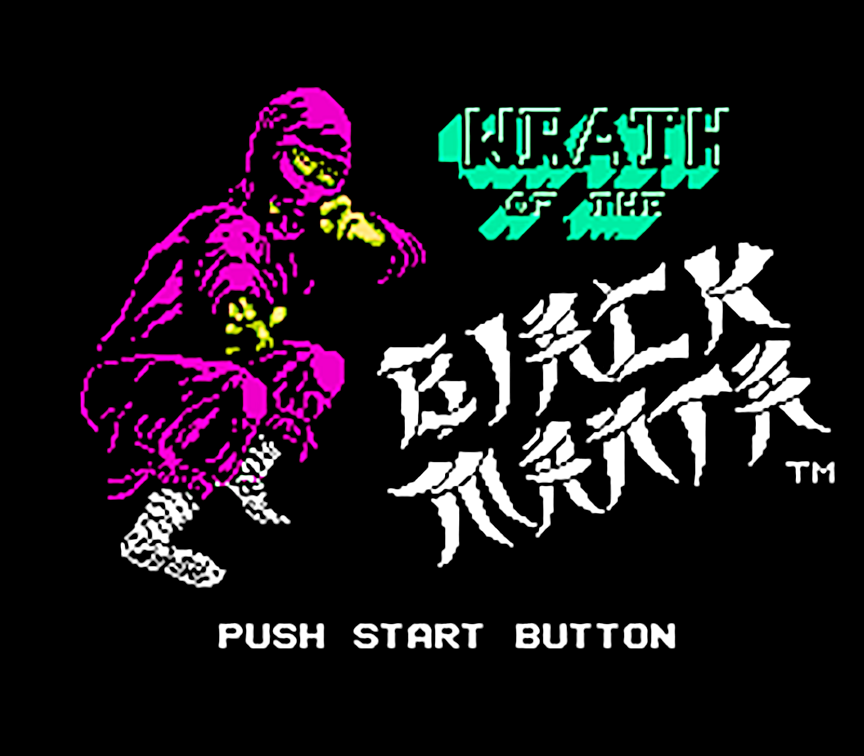
 children in New York City, the apparent bastion of all evil and where the most heinous crimes take place in the video game world. A drug fiend named El Toro is hellbent on turning these children into addicts and it’s up to you and your ninja skills to make Toro get down or lay down with the War on Drugs.™
 The fact that most of the action is ripped off from the infinitely better and more interesting Ninja Gaiden doesn’t help here because you’re going to die a lot from terrible jumping and those aforementioned hits from enemies. The soundtrack also does Manta no favors as it’s just barely serviceable. Even the art is ripped off from somewhere else: Word on those mean streets of
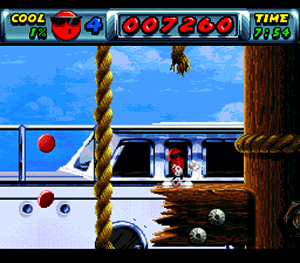 throughout 11 levels in cages. Why its friends are trapped, we’ll never know but it’s up to Spot to rescue them and lecture you about not drinking dark sodas. Spot’s traversal through these 11 levels is nothing short of amazing despite the rampant product placement. It’s surprisingly good, with solid controls that don’t make controlling Spot a chore, and competent simple mechanics that don’t get in the way: It’s mostly jumping and shooting magical sparks at enemies and barred gates. The life system — hilariously denoted by an ever-peeling and deteriorating picture of Spot — is more than generous and there are helper power ups galore to get through levels. The levels themselves have a lot of depth and are timed just right with enough time to explore or get the bare minimum experience in the search for Spot’s missing friend.
 animals that are in one of four locations scattered around the landscape. Four animals will be in these locations with options to talk to you and request items; whether you choose to give them the specific items they request or just chat it up for experience points is up to you. Also new are the aforementioned experience points. Each animal has a meter that gauges their friendship level with you. The higher the level, the more rewards they give in exchange for items they request. The rewards are also new, usually in the form of Leaf Tickets and raw materials that are used in crafting furniture and clothes that can be used to decorate your camp site and