X‑Men: Children of the Atom — Issue 55

X‑Men start the par­ty right with first Ver­sus entry

If you’re an old head video gamer like us here at Gam­ing Insur­rec­tion, you know that Cap­com and Mar­vel was THE pow­er­house cou­ple in video games dur­ing the 1990s. Start­ing in 1993 with The Pun­ish­er arcade game, Mar­vel and Cap­com estab­lished the foun­da­tion of the mod­ern com­ic book and ani­me fight­ing game scene. Dur­ing the ’90s I stum­bled across a game that helped build the path to Cap­com’s and Mar­vel’s glo­ry: X‑Men: Chil­dren of the Atom.

Based on the 1993 X‑Men Fatal Attrac­tions sto­ry­line, Mag­ne­to, with the help of the X‑Men’s most for­mi­da­ble foes, plans to launch an elec­tro­mag­net­ic pulse on the Earth, caus­ing dis­rup­tion to its mag­net­ic fields, leav­ing human­i­ty in a Dark Age. With Earth­’s future in the bal­ance, the X‑Men must bat­tle once more.

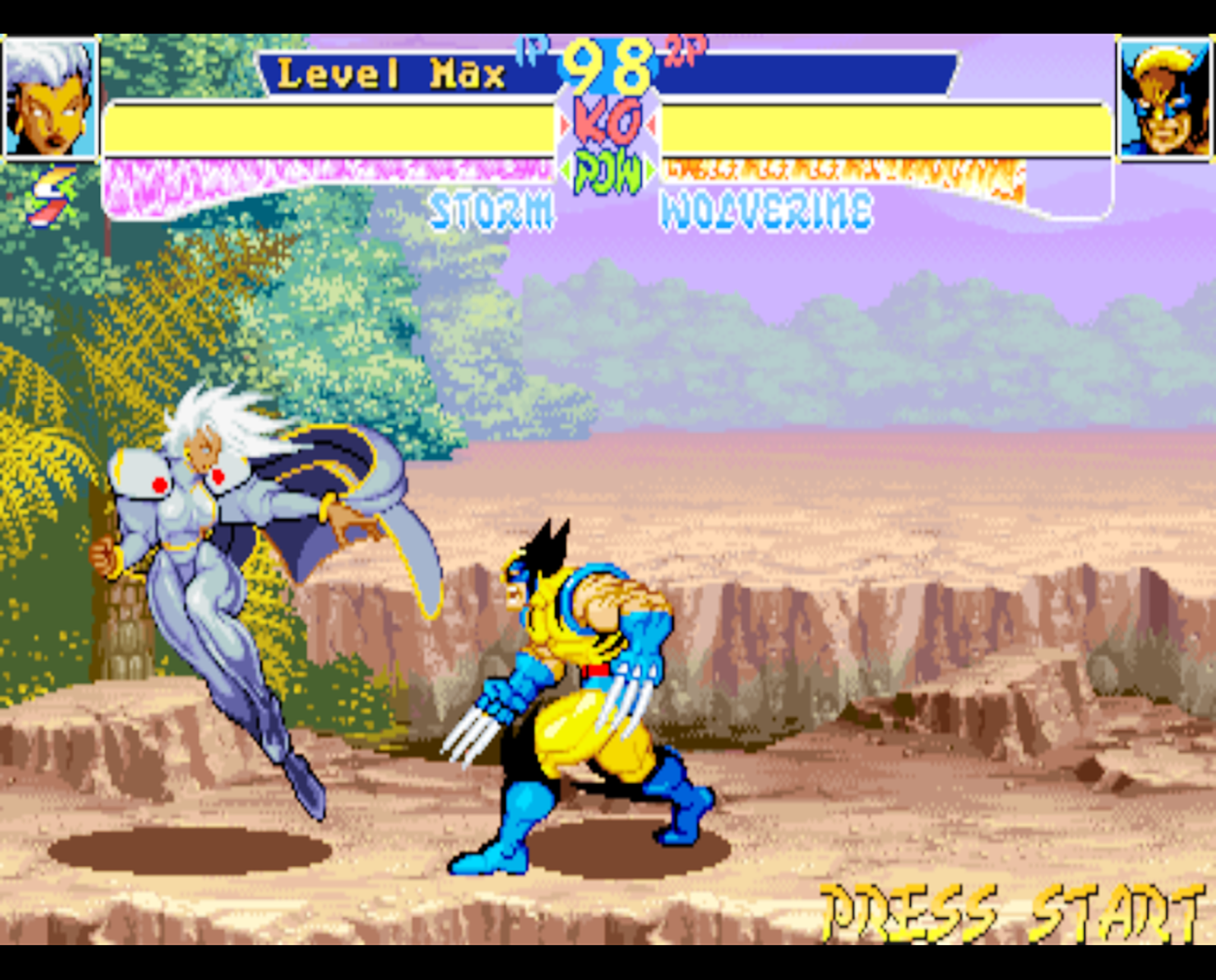
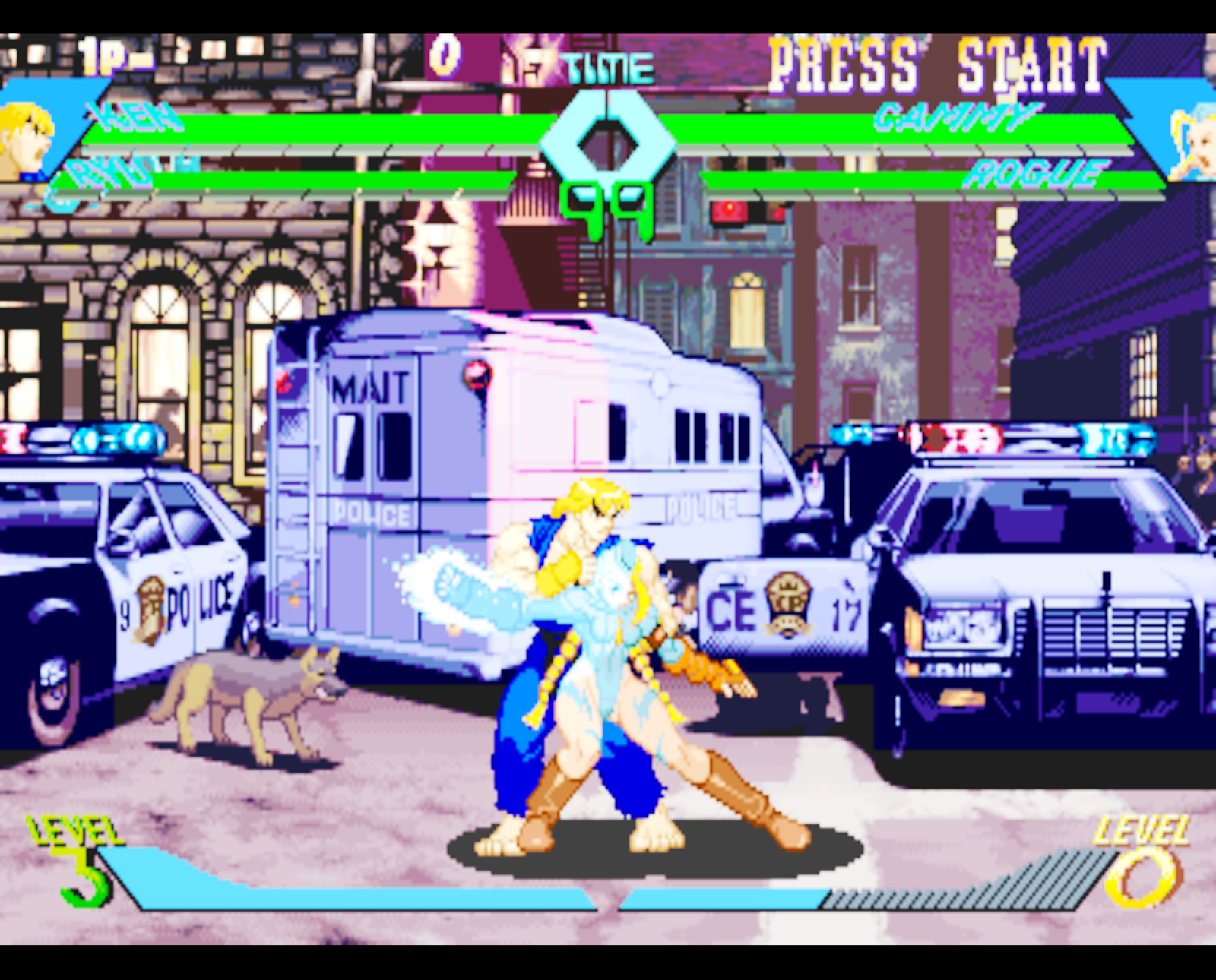
COTA’s graph­ics are crisp and clear thanks to Cap­com’s CPS‑2 board, which is revered in devel­op­ing fight­ing games for arcade cab­i­nets. I felt with the CPS‑2 board, it was easy for me to know which char­ac­ter I was using and who was the oppo­nent. The back­grounds had plen­ty of col­or that was bal­anced instead of placed hap­haz­ard­ly, and sprites were nice­ly drawn and beau­ti­ful to look at. The music is excel­lent, fit­ting in with the clas­sic Cap­com aes­thet­ic and cre­at­ing a nice vibe for fighting. 

My dis­likes of COTA are few but can be frus­trat­ing. Cap­com, while known for hav­ing inno­v­a­tive fight­ing game con­trols, need­ed to refine COTA’s con­trol scheme. It’s hard to get invest­ed as a new­com­er. The auto­mat­ic block­ing, while seen as help­ful, can be dan­ger­ous and unhelp­ful to new­com­ers also. And, the biggest mys­tery I had was why Cap­com was aggres­sive­ly push­ing a Street Fight­er char­ac­ter into a X‑Men game, forc­ing me to believe Aku­ma is an offi­cial part of X‑Men lore? Cap­com could have let Aku­ma sit this one out, even if he had just been in Super Street Fight­er II Tur­bo. There were more Street Fight­er games com­ing, obviously.

X‑Men: Chil­dren of the Atom has con­tributed to the estab­lished part­ner­ship between com­pa­nies with leg­endary prop­er­ties beloved the world over. While the future of Mar­vel and Cap­com is uncer­tain, it’s safe to say that from this union, fight­ing game and com­ic book fans ate well in these ’90s fight­ing streets.

Marvel vs. Capcom — Issue 55

The best: Mar­vel vs. Cap­com is a masterpiece

First of its name is crossover com­bi­na­tion every­one needs

Mar­vel vs. Cap­com is where I start­ed. My broad­er Mar­vel edu­ca­tion beyond the X‑Men? Mar­vel vs. Cap­com. My love for the Ver­sus series? Mar­vel vs. Cap­com. I learned these lessons through the epony­mous Ver­sus title, and I’m rich­er for it. MvC is six-but­ton perfection.

Mar­vel vs. Cap­com is tech­ni­cal­ly the third game in the Ver­sus series, not count­ing X‑Men: Chil­dren of the Atom and Mar­vel Super Heroes. This is where the mag­ic has been per­fect­ed. Loose­ly adapt­ing Mar­vel’s Onslaught sto­ry arc, MvC brings togeth­er some of Mar­vel’s biggest names that had yet to appear and the wider Cap­com uni­verse. Some big Mar­vel names like Mag­ne­to and Colos­sus reap­pear in assist roles while new­com­ers like Ven­om and War Machine join the fray, and Cap­com mines the depths of its cat­a­logue to bring in char­ac­ters such as Strid­er, Mega Man, Mor­ri­g­an and Cap­tain Com­man­do. The ros­ter is an inter­est­ing mix and good call because it intro­duces a lot of favorite faces and it tries hard to avoid retreads. 
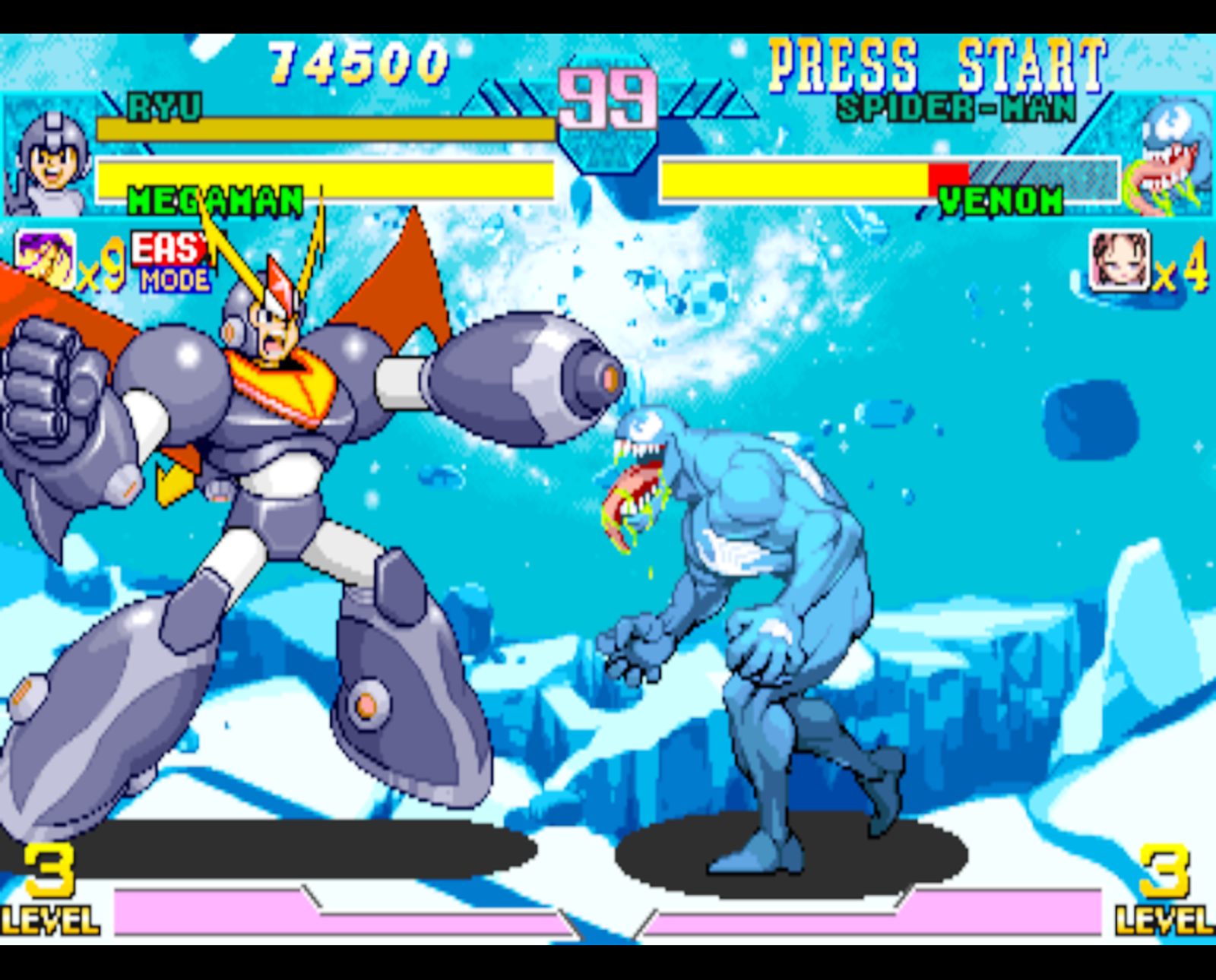
Also, a good deci­sion is the refine­ment of the two-char­ac­ter team con­cept. MvC plays like a dream and char­ac­ters feel sub­stan­tial. The game­play flows well, and moves and supers feel bom­bas­tic, as they should in a Ver­sus game. Pick­ing up the game is easy thanks to the Auto Mode and moves feel smooth. There are still some moves that are hard to per­form (look­ing at you, Eter­nal Slum­ber), but over­all, the game plays with a bet­ter han­dle on fight­ing than its pre­de­ces­sor, Mar­vel Super Heroes vs. Street Fighter.
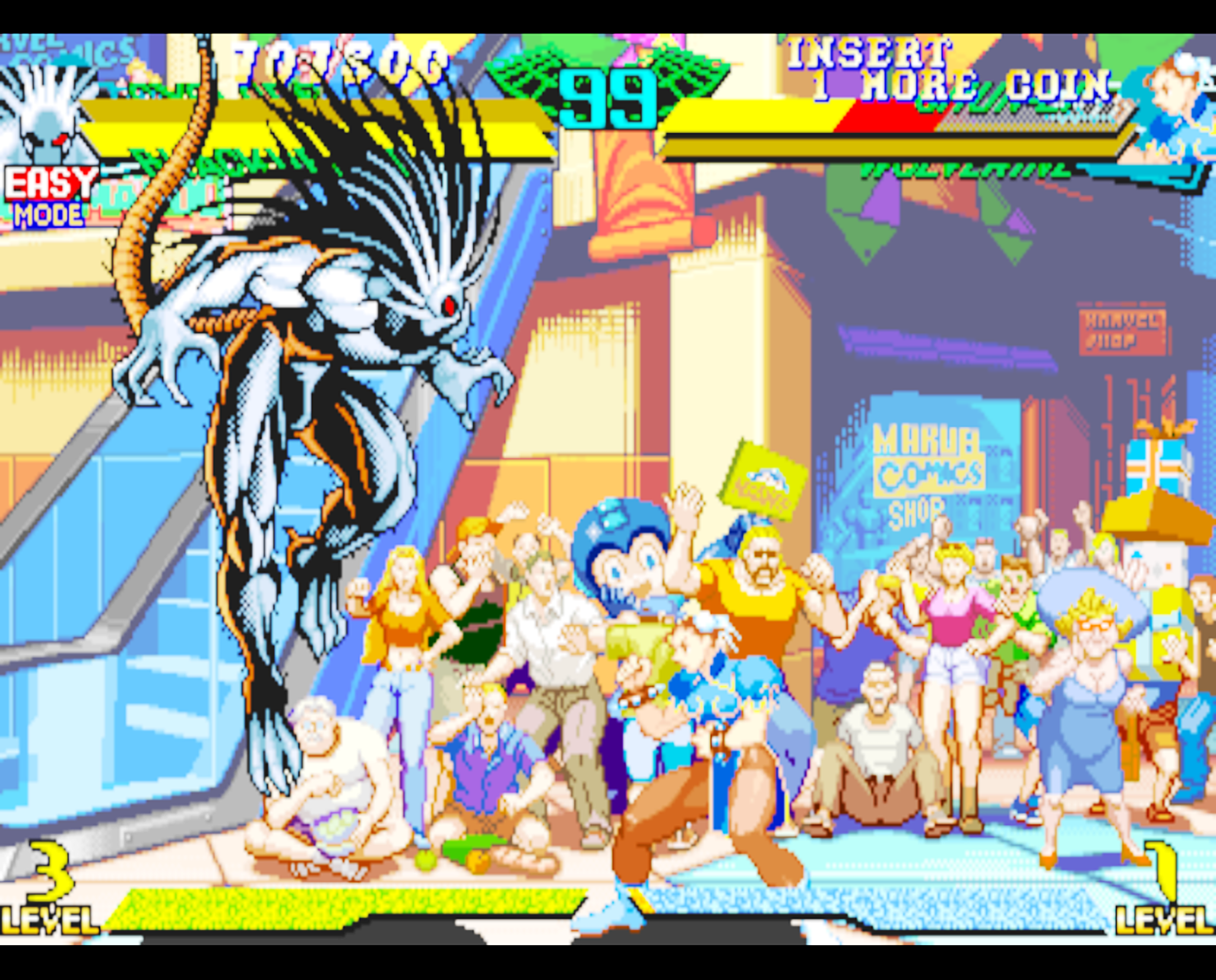
Anoth­er area where MvC excels over the pre­ced­ing game is the pre­sen­ta­tion. The game looks great, with large col­or­ful sprites and gor­geous back­grounds. Char­ac­ters ani­mate smooth­ly and look great as rep­re­sen­ta­tions of their respec­tive series. Equal­ly as impres­sive as the graph­ics is the sound­track. MvC has one of the best sound­tracks in the series, and it’s not because there are remix­es of exist­ing char­ac­ter themes. The music fits the game mood well and the announc­er — Sal­ly Cahill of Res­i­dent Evil fame — adds to the crossover atmosphere.

While MvC isn’t per­fect, it’s close. I don’t have too many com­plaints beyond dif­fi­cul­ty pac­ing issues in the arcade lad­der. The final two fights before fac­ing boss Onslaught are bru­tal, and the dif­fi­cul­ty could have been tweaked just a tad. But that is not enough for me to ding the game heavily.

What I appre­ci­ate the most is the obvi­ous care and atten­tion to detail with MvC. MvSF is unmit­i­gat­ed lazi­ness while MvC got seri­ous again about the lega­cy of the series. The ros­ter for main char­ac­ters and assists feels thought­ful, the pre­sen­ta­tion is fun and engag­ing and the game­play still holds up well. It might not be played as much as its direct sequel in Mar­vel vs. Cap­com 2, but I still find myself return­ing to pull off Duo Team Attacks fre­quent­ly. MvC is the most mar­velous of the series.

Marvel vs. Capcom Fighting Collection: Arcade Classics — Issue 55

Lat­est fight­ing col­lec­tion is a mod­ern Marvel

I might have got­ten mad at Cap­com with this release if they had­n’t includ­ed every­thing I need­ed for a mod­ern Ver­sus col­lec­tion. As I am wont to do when there is a new Cap­com cash grab, I take a hard, long look at the offer­ings and judge whether it’s worth my dol­lars or is skip­pable. With Mar­vel vs. Cap­com Fight­ing Col­lec­tion: Arcade Clas­sics, that judg­ing pro­duced a win­ning run on my wal­let quickly.

Let’s get straight to the point. The Mar­vel vs. Cap­com col­lec­tion, while great, is exact­ly like the oth­er col­lec­tions Cap­com has released in the past four years. If you already bought the Cap­com Clas­sics Col­lec­tions with the entire Vam­pire series and then Cap­com vs. SNK 2 and Rival Schools, you already know what to expect with this. The pack­age of games this time, how­ev­er, is strict­ly Ver­sus series titles. Every­thing from the start of the series is includ­ed — start­ing with X‑Men: Chil­dren of the Atom and end­ing with Mar­vel vs. Cap­com 2. All ver­sions fea­tured are the arcade ports of the respec­tive games with train­ing modes and secrets unlocked from the begin­ning. So, no, you won’t have to play to unlock all char­ac­ters in MvC2 or go through the round­about unlock­ing process in MvC. That makes it eas­i­ly acces­si­ble, which I need because I’m not about the unlock­ing life at this stage of the game.

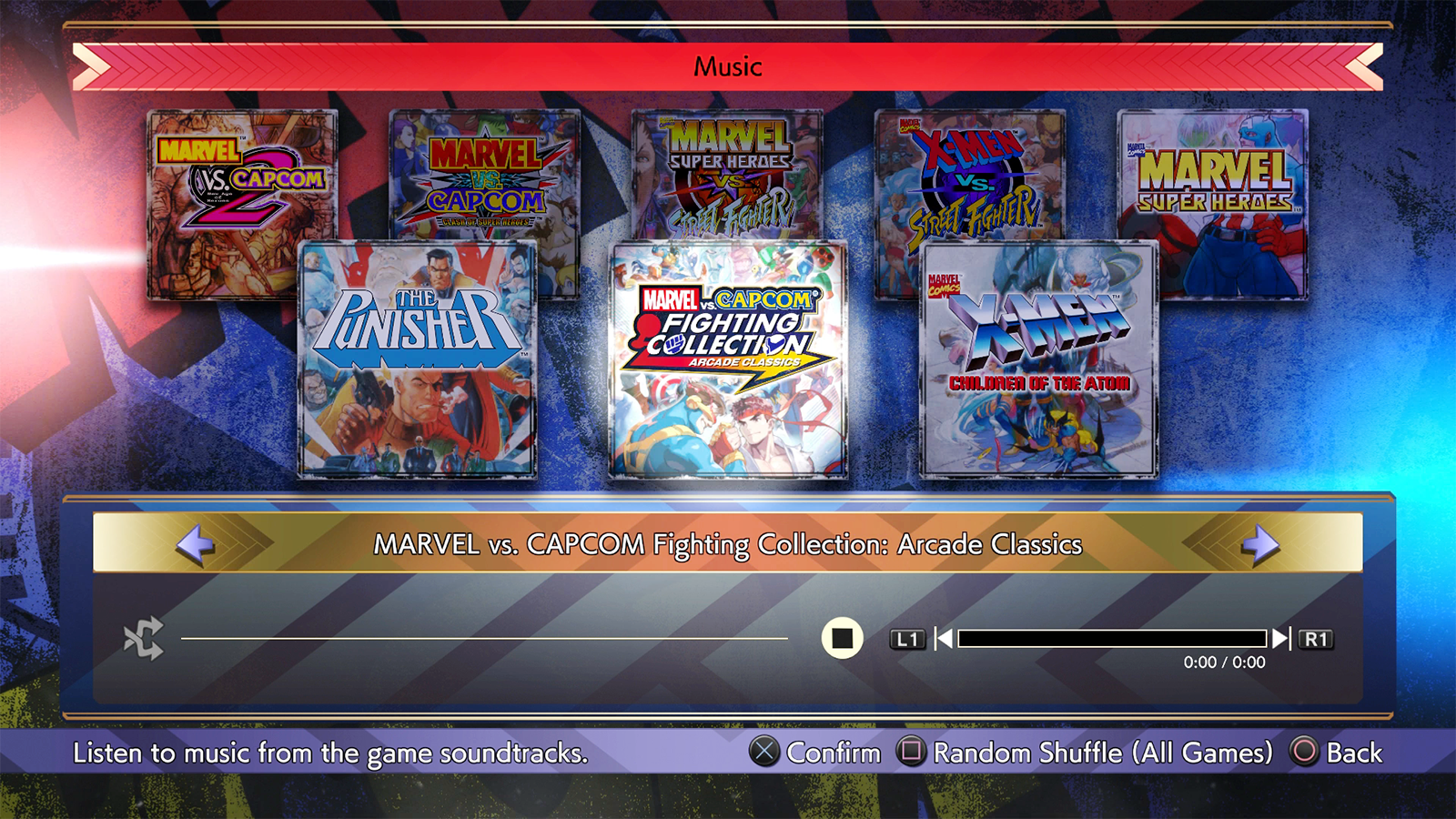
The col­lec­tion looks and plays like the oth­er col­lec­tions. There is a sound­track mode and gal­leries with infor­ma­tion and pro­mo­tion­al art­work for each game along with leader­boards and online play for all games. Cap­com did­n’t rock the boat with the pre­sen­ta­tion and I guess fig­ured, it worked for the oth­er pack­ages we’ve released so don’t be dif­fer­ent. I’m not com­plain­ing because that’s exact­ly what I expect. I want famil­iar­i­ty so I can just jump right in when I’m ready. And as with the oth­er pack­ages, I love the but­ton set­up customization. 


There isn’t too much that I don’t love about the col­lec­tion. Going in and out the train­ing mode is slight­ly tedious — as it is with the oth­er col­lec­tions — but it’s not a deal­break­er. The announc­er for the over­all col­lec­tion is also a bit weird, but it, too, is not some­thing hold­ing the game back. These are admit­ted­ly nit­pick­ing things about the game, and it does­n’t sub­tract from the over­all package.

The Mar­vel vs. Cap­com Fight­ing Col­lec­tion is the quin­tes­sen­tial col­lec­tion of Ver­sus games. It super­sedes any oth­er mod­ern Mar­vel col­lec­tion released in the past 15 years and is the best col­lec­tion of the bunch so far that Cap­com has released. The fact that it’s all ear­ly Mar­vel Ver­sus games in a mod­ern set­ting and read­i­ly acces­si­ble makes this worth an imme­di­ate purchase.


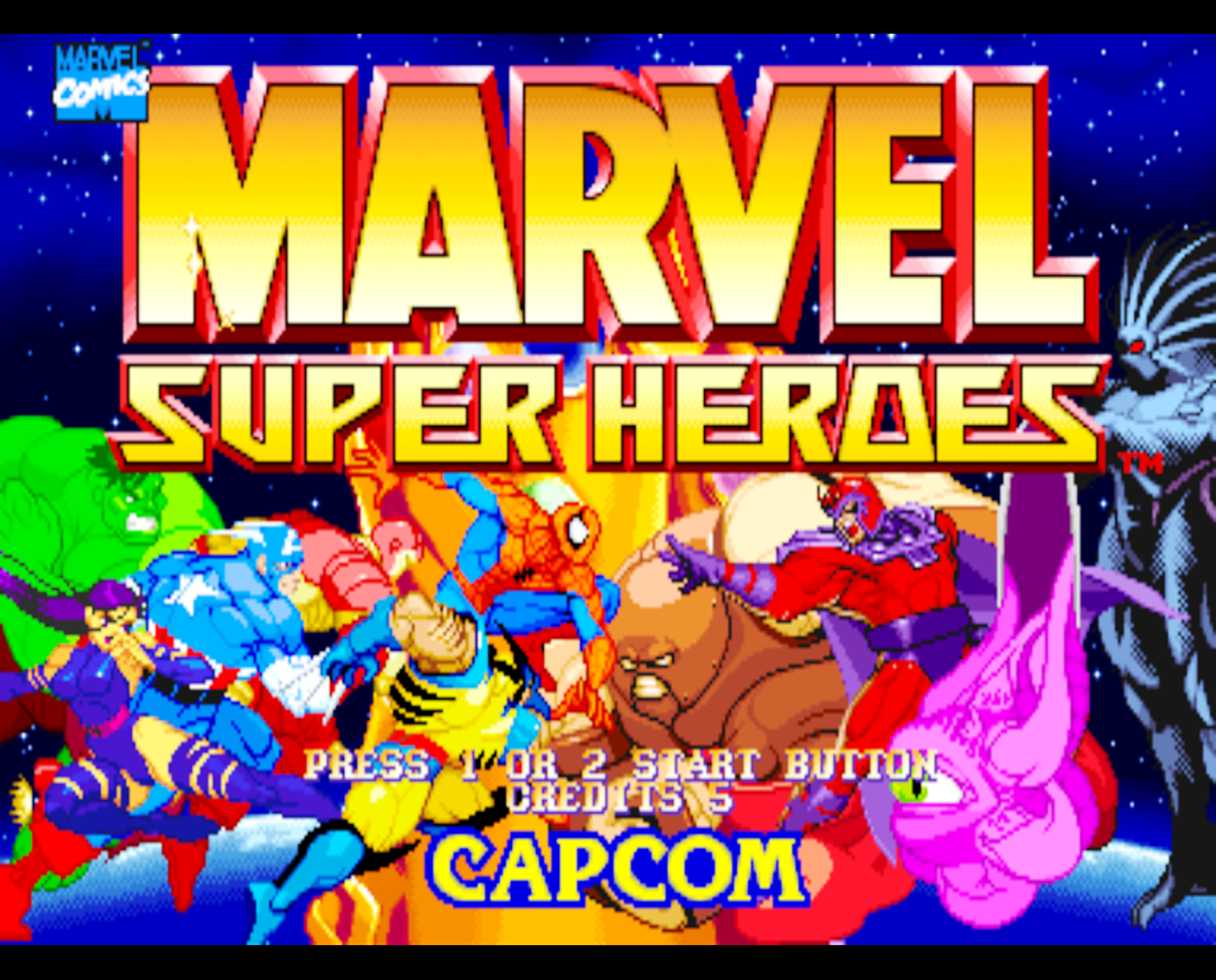
Marvel Super Heroes — Issue 55

Super­heroes have super start in Mar­vel Super Heroes

Edi­tor’s note: This review orig­i­nal­ly appeared in Issue 11 (3Q2010). It has been edit­ed for spelling, gram­mar and clarity.

By Jamie Mosley, for­mer asso­ciate editor
Gam­ing Insurrection

By now, every­one read­ing this should know about Cap­com’s 2D fight­ers. Cap­com likes to keep cer­tain stan­dards for their famous fight­ing titles that car­ry over from one fight­er to the next. There will be col­or­ful supers, tight-yet-famil­iar con­trols and fast paced action. Mar­vel Super Heroes is no excep­tion to this. 

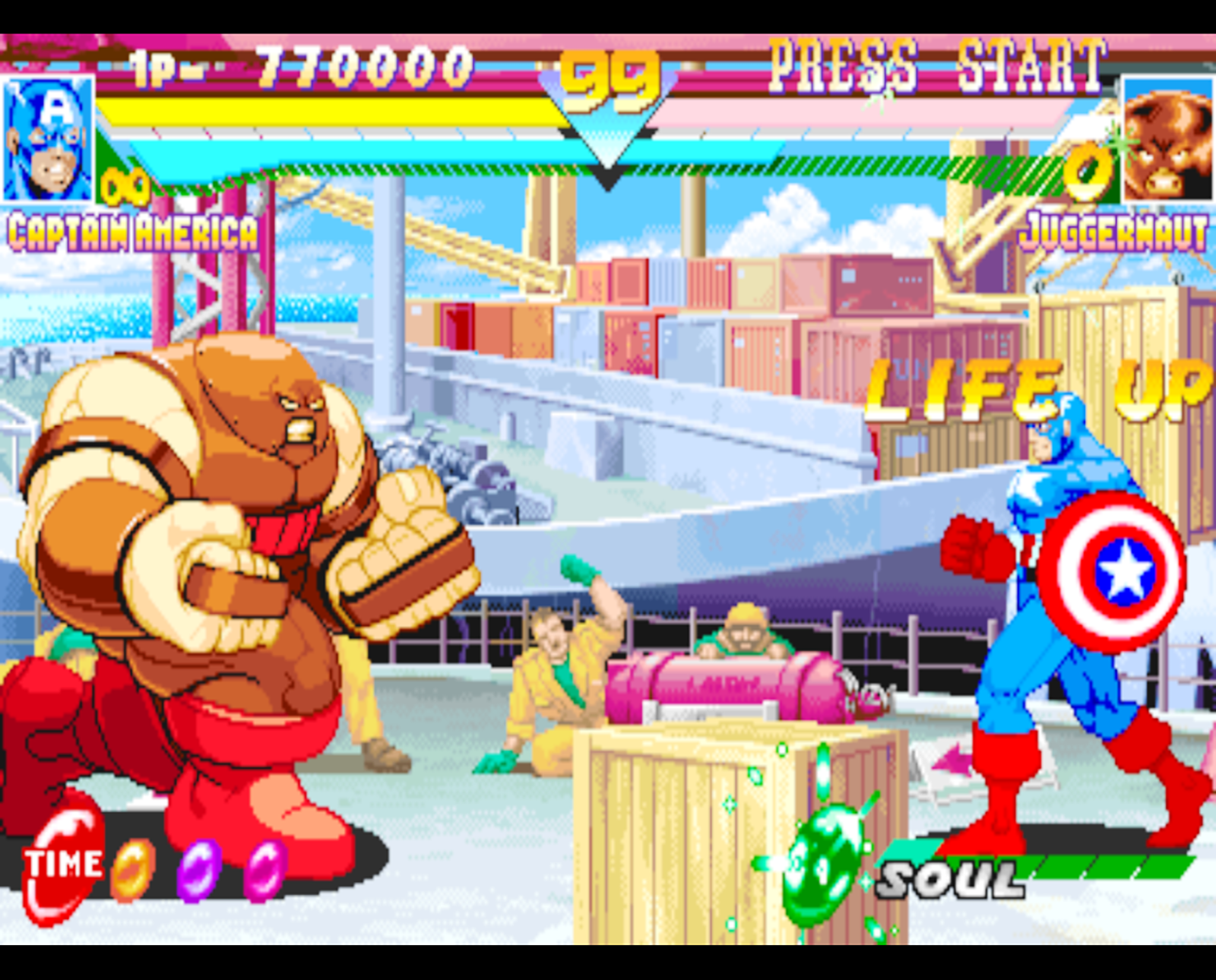
Fol­low­ing the still-pop­u­lar X‑Men: Chil­dren of the Atom in art style and game­play, Cap­com has allowed oppor­tu­ni­ties to pum­mel your oppo­nents to con­tin­ue by launch­ing them in the air for that super­hero-type feel. Some of Mar­vel’s famous heroes and vil­lains appear so you, the true believ­ers, can give swift jus­tice over your foes. Use Cap­tain Amer­i­ca, Spi­der-Man, Iron Man, Jug­ger­naut and Mag­ne­to to fight your way to Thanos. While on your way, be sure to pick up and use the Infin­i­ty Gems you find. You may need them.


The con­trols and game­play are what I con­sid­er clas­sic for any 2D Street Fight­er. The main dif­fer­ence in this game comes from Infin­i­ty Gems. Each gem has the poten­tial to unlock spe­cial abil­i­ties for a hero. For exam­ple, if Mag­ne­to uses the Space Gem, he pro­duces a force field and he will not take dam­age for a lim­it­ed time. In each match, the AI oppo­nent will have a gem with them. You must kick, punch or stare hard at them to take it.

Not all is per­fect in this entry. The music in the game does­n’t stand out but the upbeat tem­po of each stage helps you stay in the action. Also, the game may slow to a crawl depend­ing on the gem effects if both char­ac­ters are using them at the same time. Some­times the game is so slow that a full sec­ond will go by before your char­ac­ter reacts to your but­ton com­mands. But this slow­down is rare.

I still enjoy this game. Despite the game’s occa­sion­al prob­lems, I remem­ber my friend Ted King and I going to the local depart­ment store in my home­town and play­ing it for hours. Once it was released for home con­soles, we played it even more. The zany com­bos that one can do are almost lim­it­less. In some skilled play­er’s hands, they are lim­it­less because of infi­nite com­bos that near­ly every char­ac­ter had. That’s anoth­er stan­dard that Cap­com kept with their fighters. 

Mar­vel Super Heroes paved the way for the famous Ver­sus series of which Cap­com is very proud. And they should be proud. With games like Mar­vel vs. Street Fight­er, the Mar­vel vs. Cap­com series and the Cap­com vs. SNK entries, few oth­er com­pa­nies have been suc­cess­ful in cre­at­ing a more pop­u­lar series that mil­lions enjoy to date. And now with the announce­ment of Mar­vel vs. Cap­com 3, I’m going to play them all until it is released.

If you want a fight­er that you can pick up and play with lit­tle knowl­edge about Street Fight­er, Mar­vel Super Heroes is it. If you want to make cre­ative com­bos, look no fur­ther. This is good, clas­sic fun made for com­ic book fans around the world to enjoy.

2UP eval­u­a­tion

By Lyn­d­sey Beatty

The Ver­sus series has come a long way since the heroes and vil­lains of Mar­vel Super Heroes gath­ered in 1996 for this slugfest. The graph­ics may have evolved, and the Mar­vel license revert­ed sev­er­al times, but one thing remains the same: Fight­ing with super­heroes of the Mar­vel ilk is fun. 

Mar­vel Super Heroes neat­ly upgrad­ed the expe­ri­ence of X‑Men: Chil­dren of the Atom. With a more acces­si­ble com­bo sys­tem and bet­ter play feel, Mar­vel Super Heroes is almost a dream to play, even by mod­ern stan­dards. There are still prob­lems, though, such as touch-of-death com­bos for every­one and a lim­it­ed ros­ter imme­di­ate­ly made obso­lete by suc­ces­sive games. But Mar­vel Super Heroes is still playable, and there’s still a scene in 2026, so Cap­com got some­thing right. 

Score: 3.5 out of 5

X‑Men vs. Street Fighter — Issue 55

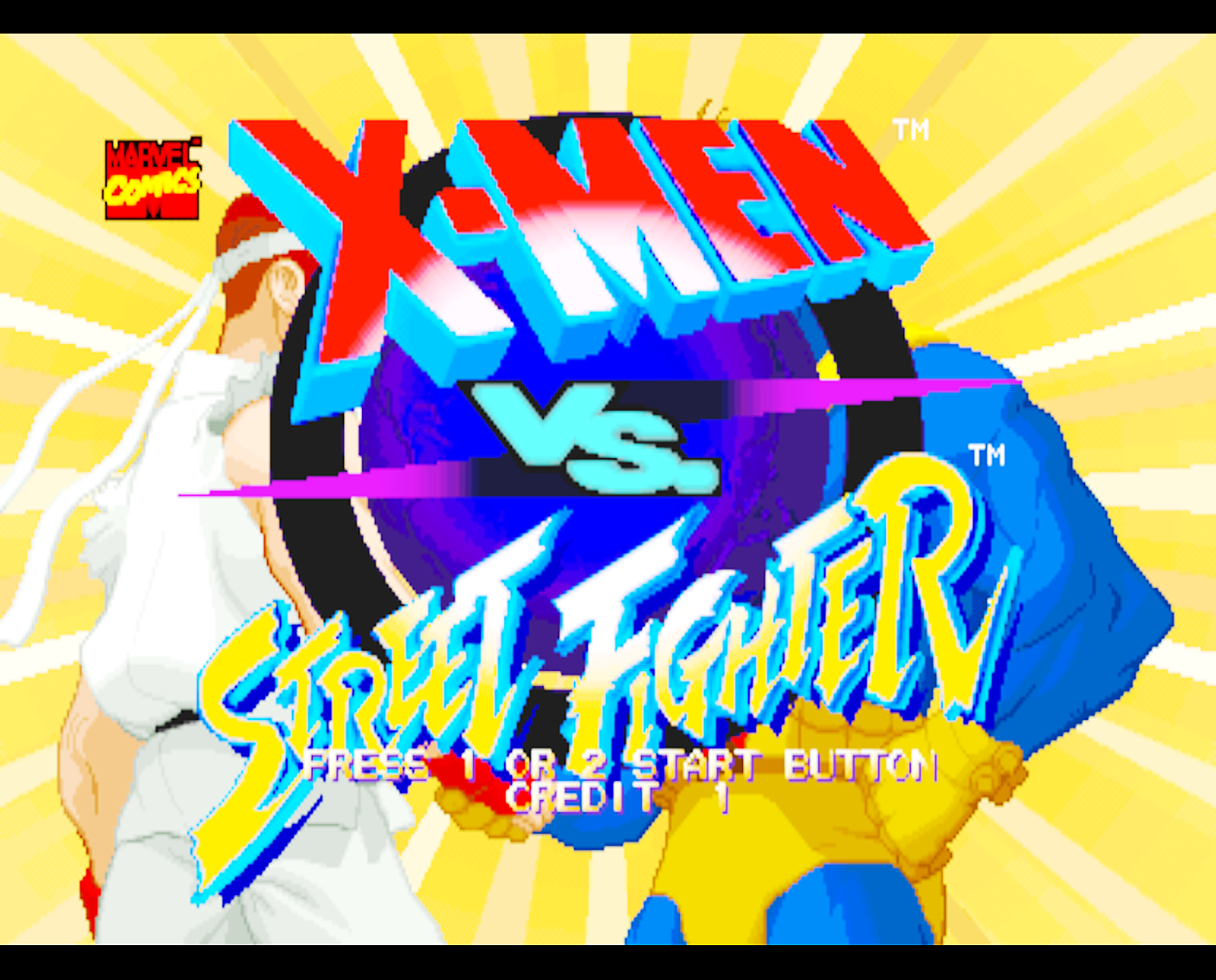
X marks the spot with fan­tas­tic third entry in Ver­sus series

Are you ready, True Believ­ers? In keep­ing pace with this issue’s trib­ute to Mar­vel vs. Cap­com, I’m intro­duc­ing anoth­er game that helped make this series renowned by com­ic book afi­ciona­dos and fight­ing games fans alike. Yep, you bet your excel­sior prayers, this is X‑Men vs. Street Fighter.

X‑Men vs. Street Fight­er take place two years after the release of X‑Men: Chil­dren of the Atom and Mar­vel Super Heroes. The back­sto­ry is a leg­endary X‑Men vil­lain, Apoc­a­lypse, appears stat­ing that Earth­’s sur­vival depends on only the strongest being able to sur­vive. Lit­tle does Apoc­a­lypse know, M. Bison and Shadaloo as well as Mag­ne­to and the Broth­er­hood of Mutants have their own plans for Earth. The X‑Men along with var­i­ous Street Fight­ers hear this and now a bat­tle with high stakes for Earth begins with unlike­ly teams bat­tling against Apocalypse. 

The con­trols are the usu­al set up in any Cap­com fight­ing game, only this time you have con­trol of two char­ac­ters that can con­sist of any X‑Men or Street Fight­er char­ac­ter. I enjoyed the abil­i­ty to mix an X‑Men and a Street Fight­er char­ac­ter togeth­er as a team. X‑Men vs. SF also fea­tures the super jump and aer­i­al rave from COTA but intro­duces three fea­tures: the Hyper Com­bo Gauge, which allows for super moves; the Vari­able Com­bi­na­tion, which allows both char­ac­ters to exe­cute their Hyper Com­bos; and, the Vari­able Counter allows you to pull off an offen­sive attack from a defen­sive block sim­ply by tag­ging your off­screen part­ner. These new moves and fea­tures great­ly increase the playa­bil­i­ty from the pre­vi­ous games and make X‑Men vs. Street Fight­er a bet­ter play­ing game.


The graph­ics and pre­sen­ta­tion are like COTA and MSH, bear­ing strik­ing resem­blance in arcade qual­i­ty. I enjoyed the scenery and bright back­grounds that took out guess­work of my point char­ac­ter and the visu­al theme of each stage. The music is ener­getic and on point thanks to Cap­com’s sound team work­ing their awe­some wizardry. 

While it’s fun to play, I do have some gripes. While I enjoyed the over­all game­play, I did­n’t like the heavy reliance on touch-of-death com­bos and infin­ites. Also, while the music was enjoy­able, the reuse of Street Fight­er’s char­ac­ter themes was kind of bor­ing and lazy. Yes, I real­ize they want­ed to use some­thing that is eas­i­ly rec­og­niz­able but some­times I think they rely on it too much and it’s obvi­ous here. My last gripe is Aku­ma. Don’t get me wrong, I’m not hat­ing on the OG, but come on Cap­com, Aku­ma is pushed on every ear­ly Mar­vel Ver­sus game like he’s a main play­er in the MCU. That’s overkill and too much use of the Red Demon will force pay­ing clien­tele to think about spend­ing mon­ey on future games where he is run­ning amok. Mod­er­a­tion, Cap­com. Mod­er­a­tion, please.

X‑Men vs. Street Fight­er is enjoy­able and helped estab­lish the trend of com­ic books meet­ing fight­ing games. As Mar­vel and Cap­com were the pio­neers, oth­er com­ic book com­pa­nies and game devel­op­ers fol­lowed suit, mak­ing it nor­mal for the gam­ing indus­try. This is a good ori­gin sto­ry for the Ver­sus series.

Marvel Super Heroes vs. Street Fighter — Issue 55

Miss Mar­vel: Apoc­a­lypse retread should be skipped

Extra­ne­ous. Super­flu­ous. Unnec­es­sary. Fight­ing game sequels should be doing some­thing to move the nee­dle, whether it be new sys­tems or char­ac­ters to break up the retread. Retro fight­ing games espe­cial­ly had to bring some­thing new with every entry lest they be left behind in a mar­ket where con­sumer choice is king. Mar­vel vs. Street Fight­er did absolute­ly noth­ing new and it shows in the mod­ern fight­ing game scene.

Mar­vel vs. Street Fight­er is the sib­ling of the Ver­sus series that is the for­got­ten child. Using basi­cal­ly the same sto­ry as direct pre­de­ces­sor X‑Men vs. Street Fight­er, MvSF intro­duces one mechan­ic (Vari­able Assist — call­ing your part­ner to assist) and swaps some char­ac­ters. The boss, Apoc­a­lypse, is a retread from the pre­vi­ous game. That’s about it. It plays the same as X‑Men vs. Street Fight­er and gen­er­al­ly fairs less favor­ably by com­par­i­son because of the char­ac­ter swaps and the unnec­es­sary inclu­sion of come­di­an Nori­take Kinashi’s joke char­ac­ter Nori­maro and Cyber Akuma.


And while it leans heav­i­ly on XvSF, the game does­n’t play near­ly as well. It feels slow­er and more plod­ding, just a chore to do much of any­thing. Assists don’t real­ly add any­thing to the game­play flow and gen­er­al­ly can get tagged as soon as they come out. And you can’t choose what move the assist does, some­thing that did­n’t come into play until Mar­vel vs. Cap­com 2. That lack of advance­ment feels lazy. It feels like Cap­com put out a game to check box­es and ful­fill a con­tract. And it shows in the mod­ern fight­ing game tour­na­ment scene where XvSF still enjoys a healthy engage­ment, but no one plays MvSF.

One area where it does do well is the sound depart­ment, though there are a few recy­cled tracks here, too. The sound­track car­ries the game and has some bangers that work for the atmos­phere of MvSF, but you’ve prob­a­bly already heard them (Edi­tor’s note: See this issue’s Beat.Trip.Game for our sound­track choices).

If you’re play­ing Mar­vel vs. Street Fight­er, know that you’re get­ting warmed over Ver­sus series. It’s not ter­ri­ble but it’s not the best that Cap­com is capa­ble of when it comes to the Ver­sus series. Skip this one and jump straight from X‑Men vs. Street Fight­er to Mar­vel vs. Capcom.

Marvel vs. Capcom 2 — Issue 55

Mar­vel vs. Cap­com 2 a new age of frustration

I have a polar­iz­ing rela­tion­ship with Mar­vel vs. Cap­com 2. While it’s revered as one of the great­est games of all time, and I spent a lot of time play­ing it, I don’t love it as much as I once did. There are rea­sons for my trans­ac­tion­al love for the Cap­com stal­wart, and there are rea­sons why it’s tak­en this long for Gam­ing Insur­rec­tion to engage.

Mar­vel vs. Cap­com 2 rounds up every­one who was present in the Ver­sus uni­verse, adds a few new faces and throws them togeth­er to cre­ate a mashup of epic pro­por­tions. Vet­er­ans such as Mag­ne­to, Dr. Doom, M. Bison, Ryu and Chun-Li join new­com­ers such as Ruby Heart, Cable and Amin­go. The rag­tag mot­ley crew join forces to take on new vil­lain Abyss, whose main goal is world dom­i­na­tion through decay. The sto­ry is engag­ing enough to jus­ti­fy the col­lid­ing of the respec­tive uni­vers­es but not too deep to jus­ti­fy any sort of lore research.

The mashup, how­ev­er, is what is most impor­tant. The meld­ing of realms and reunion of the pre­vi­ous games’ ros­ter brings togeth­er 56 char­ac­ters to make three-char­ac­ter teams. The over­pow­ered gods of pre­vi­ous out­ings return to set up shop in the upper ech­e­lon of the game’s tiers, and the joke char­ac­ters and non-essen­tials also return for the ride. 

All of this is wrapped up in a futur­is­tic seri­ous-look­ing bow, com­plete with a seri­ous announc­er that lacks com­ic book trap­pings. The back­grounds are mod­eled well and are an impres­sive leap from the pre­vi­ous hand-drawn entries. The sound­track is also OK. I’m not one of the legions that appar­ent­ly hat­ed the sound­track back in the day, and it’s fine now. The smooth jazz has always fit the action, and I nev­er saw what the prob­lem was with it. Jazz has always been a part of the Ver­sus series expe­ri­ence, and it did­n’t seem dif­fer­ent this time around than any of the oth­er games in the series. I’ve always felt the response to the sound­track was overblown and sil­ly. Focus on the more impor­tant things that are wrong with the game.


And here’s where I want to put that focus and explore why it’s the source of my ire and apa­thy with MvC2. For a game that touts 56 char­ac­ters, in hind­sight, only 10 are viable tour­na­ment options. Yes, tour­na­ments have been played with the low tier char­ac­ters, but his­tor­i­cal­ly, the major tour­na­ments of the day have always fea­tured teams that have the Mar­vel 2 gods involved. You’re going to see a Cable, Storm, Sen­tinel, Mag­ne­to or Iron Man in the top 3. You’re going to see the same assists anchor­ing those teams as well. That’s a prob­lem. With that many char­ac­ters avail­able, the same hand­ful of names should not be dom­i­nat­ing. There should be vari­ety. This has been a prob­lem in the Mar­vel 2 tour­na­ment scene since the first six months post release when every­one fig­ured out the ini­tial tech and real­ized Tiger Knee Hyper Viper Beam and Fly­/Un-fly com­bos were the way to vic­to­ry. And, yes, I real­ize it’s been 25 years since the game was released, new tech still pops up that makes char­ac­ters look bet­ter than they ever did, and ambas­sadors such as Justin Wong use dif­fer­ent teams to high­light this dis­par­i­ty. But it was a mas­sive prob­lem back in the day and ruined the expe­ri­ence for me going forward.

Mar­vel vs. Cap­com 2 gets near­ly every­thing right: Evolved game­play with assists, clean­er visu­als and a gigan­tic ros­ter with famil­iar faces and cool addi­tions. How­ev­er, that near­ly is what breaks the game for me. I can’t rec­on­cile my nos­tal­gia for the game and the time spent trav­el­ing, meet­ing new peo­ple, the gift of Ruby Heart and lov­ing the Ver­sus series with the absolute fool­ish­ness that is the game­play. This is the point of the Ver­sus ride where I get off.

House of the Dead — Issue 54

House of the Dead
Sega, 1998

Retro House of the Dead sets up shop for franchise

Ah, the progress that has been made. The on rails shoot­ers genre has made strides in the last 27 years. Mod­ern con­trols — includ­ing light guns avail­able for the home mar­ket — have made play­ing a lot more enjoy­able. And that has made the House of the Dead series — and espe­cial­ly the orig­i­nal game — a tad bit more tolerable.

House of the Dead starts off as most zom­bie hor­ror games of the day did: A mega­lo­ma­ni­a­cal weirdo is mess­ing with bioter­ror­ism unnec­es­sar­i­ly and has cre­at­ed a mess. And by mess, I mean mutat­ed, trans­formed humans with a taste for flesh. That’s lit­er­al­ly the plot of the game. There’s some­thing about a fiancée that needs sav­ing and stop­ping this blight from spread­ing to the rest of human­i­ty, but that’s the basics. It’s ser­vice­able and real­ly does­n’t do much to affect the game­play. You’re killing zom­bies, boss zom­bies and most like­ly the end boss guy who cre­at­ed the prob­lem. Clean it up and go on in future sequels to take on an even larg­er threat in the bad guy’s boss because, of course, he has a boss.


Clean­ing up the prob­lem is the fun part here. The con­trols are your stan­dard light gun shoot­er but they’re fine. Aim­ing and shoot­ing was­n’t bad, though lin­ing up my shot some­times was not exact­ly sharp. There were a few times fight­ing some of the aer­i­al boss­es that the cur­sor just was­n’t keep­ing up so I took cheap hits. As an arcade old head, I know that’s the name of the game here: It’s designed to be a quar­ter-munch­er. But by the time I get home, there should be a bet­ter under­stand­ing that this isn’t going to fly. Thank­ful­ly, cheat codes exist so it’s not a prob­lem. But for arcade con­di­tions sake, this real­ly isn’t cool.

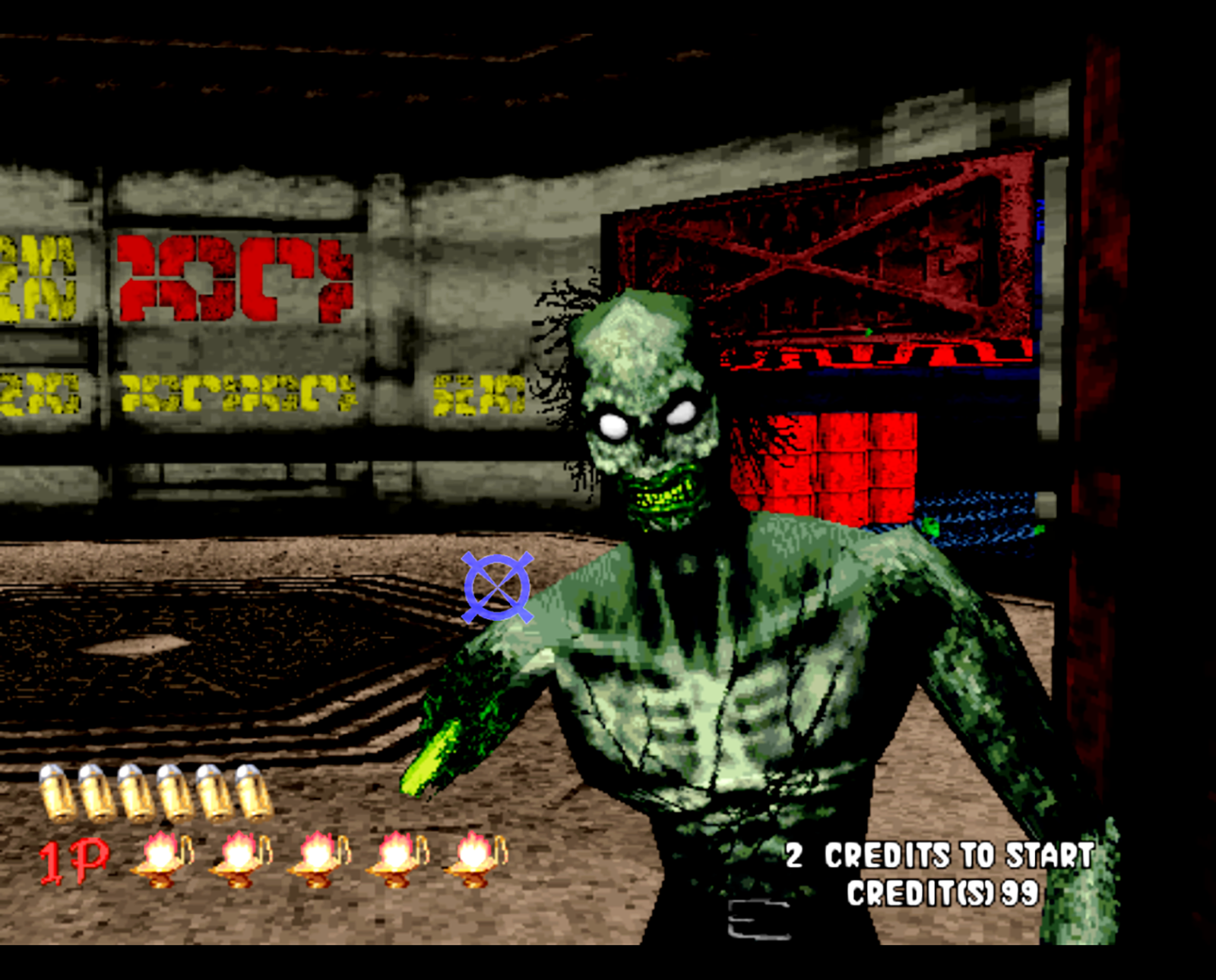
Because this is a 1998 prod­uct we’re talk­ing about, I’m also not expect­ing the graph­ics to look like much. And they don’t, beyond these zom­bies look­ing OK. Keep in mind that these graph­ics did­n’t real­ly improve until well beyond the sec­ond game/Typing of the Dead, so you’re going to be see­ing them for a long time. The music fares about the same, too. They are decent enough for the late ’90s, and they work well in the con­fines of House of the Dead.

House of the Dead has made many improve­ments in the near­ly 30 years since the orig­i­nal game. It did­n’t set the barn on fire then but it’s a nice rail shoot­er if you’re into zom­bie hor­ror and like what the series has to offer. Per­son­al­ly, I’m more apt to play Typ­ing of the Dead before House of the Dead, but that’s because I pre­fer to be a key­board sharp­shoot­er these days. House of the Dead­’s ret­i­cle is set in the mid­dle with the abil­i­ty to go higher.

Garou: Mark of the Wolves — Issue 53

Garou: Mark of the Wolves
SNK Play­more, 1999

Leav­ing an indeli­ble mark

SNK is still around doing things in this mod­ern fight­ing game land­scape. Their lat­est release, Garou: City of the Wolves, is a cer­ti­fied banger and is get­ting a lot of play in the crit­ic sphere because the orig­i­nal is so beloved. And that’s one of the best things Mark of the Wolves man­aged to do: Leave a good lega­cy and stay rel­e­vant 25 years later.
Mark of the Wolves does a lot of things with the Fatal Fury name for the sake of progress. Tak­ing place 10 years after the death of crime lord Geese Howard dur­ing the King of Fight­ers Tour­na­ment as depict­ed in Real Bout Fatal Fury, Mark intro­duces a new cast with Ter­ry Bog­a­rd return­ing to the fray to lead the charge. Ter­ry takes the young Rock Howard, Geese’s scion, under his wing to fight for South Town and jus­tice in gen­er­al. But the specter of Geese haunts them. And there is a new vil­lain in the mix, Kain, to take Geese’s place and up the stakes. The plot is inter­est­ing and engag­ing. Get­ting used to a whole new cast minus Ter­ry takes a minute and learn­ing their back­ground and moti­va­tion is fun.

The char­ac­ter designs are cool, as they are in most SNK games. The sprites look great and are large and detailed. The back­grounds, while col­or­ful, aren’t near­ly as detailed, though there are a lot of ani­ma­tions going on that make them live­ly. Over­all, the look isn’t too dif­fer­ent than what you’d expect from an SNK arcade game, but the Dream­cast does give it a lit­tle boost. 

The sound­track is a lit­tle gener­ic, which is sur­pris­ing because I was expect­ing some nice tracks. I’m spoiled by the often-maligned SvC Chaos, which had a great sound­track despite the sur­round­ing mess, because it was released in the same era by SNK. How­ev­er, despite the gener­ic under­tones, the sound­track does­n’t deter the sur­round­ing over­all product.

And the sur­round­ing prod­uct, game­play-wise, is fine. New mechan­ics, like the Tac­ti­cal Offense Posi­tion and Just Defend, are wel­come new pieces in the series’ reper­toire. Just Defend, which is like Street Fight­er III’s par­ry mechan­ic, has hung around and made appear­ances in oth­er games such as Cap­com vs. SNK 2’s K‑Groove so I’d say it’s a good addi­tion 25 years lat­er. And with the new mechan­ics, the game plays well, too. If I could pick it up and play it with lit­tle expo­sure to SNK’s style of fight­ing and do well, it’s safe to say that Mark has a good feel. That feel is present in the var­ied modes, with Sur­vival as the most fun out of all offered.

Mark is a great fight­ing game and still holds up well. It has the attrac­tion of ear­ly 2000s fight­ing game finesse, and it serves as a good intro­duc­tion to the world of SNK if you’re not well-versed in the series. A well-round­ed fight­ing game with strong mechan­ics and good envi­ron­ment are the marks of a future legend.

Gunbird 2 — Issue 44

This is good and clean bul­let hell fun

Bom­bas­tic bul­lets, bombs, and spe­cial attacks. You’re get­ting a taste of every­thing in the wild ver­ti­cal shoot­er Gun­bird 2 from shoot-’em-up prac­ti­tion­er Psikyo. Whether that taste is enough to whet your appetite for fur­ther shmup adven­tures is anoth­er sto­ry, one I believe is worth at least reading.

Gun­bird 2 is your aver­age ver­ti­cal shoot­er in that it sub­scribes to bul­let hell envi­ron­ments. There are sev­en char­ac­ters to choose from, each with their own moti­va­tions for cap­tur­ing three mys­ti­cal ele­ments and pre­sent­ing them to their god. All of them fly around var­i­ous stages in the Gun­bird world, blow­ing up ene­mies and tak­ing on the boss Shark and her cronies Blade and Gim­mick of the Queen Pirates. The sto­ry is sim­ple to get into and won’t take up too much of your time through sta­t­ic screens explain­ing the sit­u­a­tion at hand. 

It’s easy to under­stand the mechan­ics as well. Each char­ac­ter has five attacks: Pri­ma­ry, sec­ondary, charge, melee, and super weapon. The pri­ma­ry weapon is either a con­cen­trat­ed or spread shot with all oth­er weapons spe­cif­ic to the char­ac­ter in ani­ma­tion. It’s fun to try all of the char­ac­ters to see how their weapons ani­mate and behave, and it’s impor­tant to as well, because there is strat­e­gy involved. Know­ing when to ini­ti­ate a super weapon is cru­cial for main­tain­ing com­bos and sav­ing your­self or your team­mate if you’re play­ing along­side some­one else. The attacks are all assigned to but­tons so you don’t have to do too much to move around and attack. It’s sim­plis­tic and yet chaot­ic at times, but it’s fun chaos.

The pre­sen­ta­tion is gor­geous while you’re dodg­ing ene­mies and get­ting shot from all direc­tions. The col­or palette is beau­ti­ful and the char­ac­ter ani­ma­tion shines. And, yes, even though Psikyo car­ried over Mor­ri­g­an’s dog-tired sprite from Dark­stalk­ers it still works here. You imme­di­ate­ly know who she is, and it does­n’t look to ter­ri­ble against the back­drops of bul­let hell. The oth­er char­ac­ters look good for late ’90s ani­ma­tion. While the ani­ma­tion is good, the sound­track is pass­ing, if not a bit late ’90s mediocre. It’s not ter­ri­ble, but it does­n’t stand­out. A sin­gle track caught our atten­tion, which is OK. Not all shoot-’em-ups get to be Gala­ga Arrange­ment or Gradius.

Over­all, Gun­bird 2 is a good ver­ti­cal shoot­er in a crowd­ed genre pop­u­lat­ed by heavy hit­ters. It shoots its way to the mid­dle of the pack, and while it won’t knock your socks off, it’s got replay val­ue and charm built into its laser.