
Superheroes have super start in Marvel Super Heroes
Editor’s note: This review originally appeared in Issue 11 (3Q2010). It has been edited for spelling, grammar and clarity.
By Jamie Mosley, former associate editor
Gaming Insurrection
By now, everyone reading this should know about Capcom’s 2D fighters. Capcom likes to keep certain standards for their famous fighting titles that carry over from one fighter to the next. There will be colorful supers, tight-yet-familiar controls and fast paced action. Marvel Super Heroes is no exception to this.
Following the still-popular X‑Men: Children of the Atom in art style and gameplay, Capcom has allowed opportunities to pummel your opponents to continue by launching them in the air for that superhero-type feel. Some of Marvel’s famous heroes and villains appear so you, the true believers, can give swift justice over your foes. Use Captain America, Spider-Man, Iron Man, Juggernaut and Magneto to fight your way to Thanos. While on your way, be sure to pick up and use the Infinity Gems you find. You may need them.
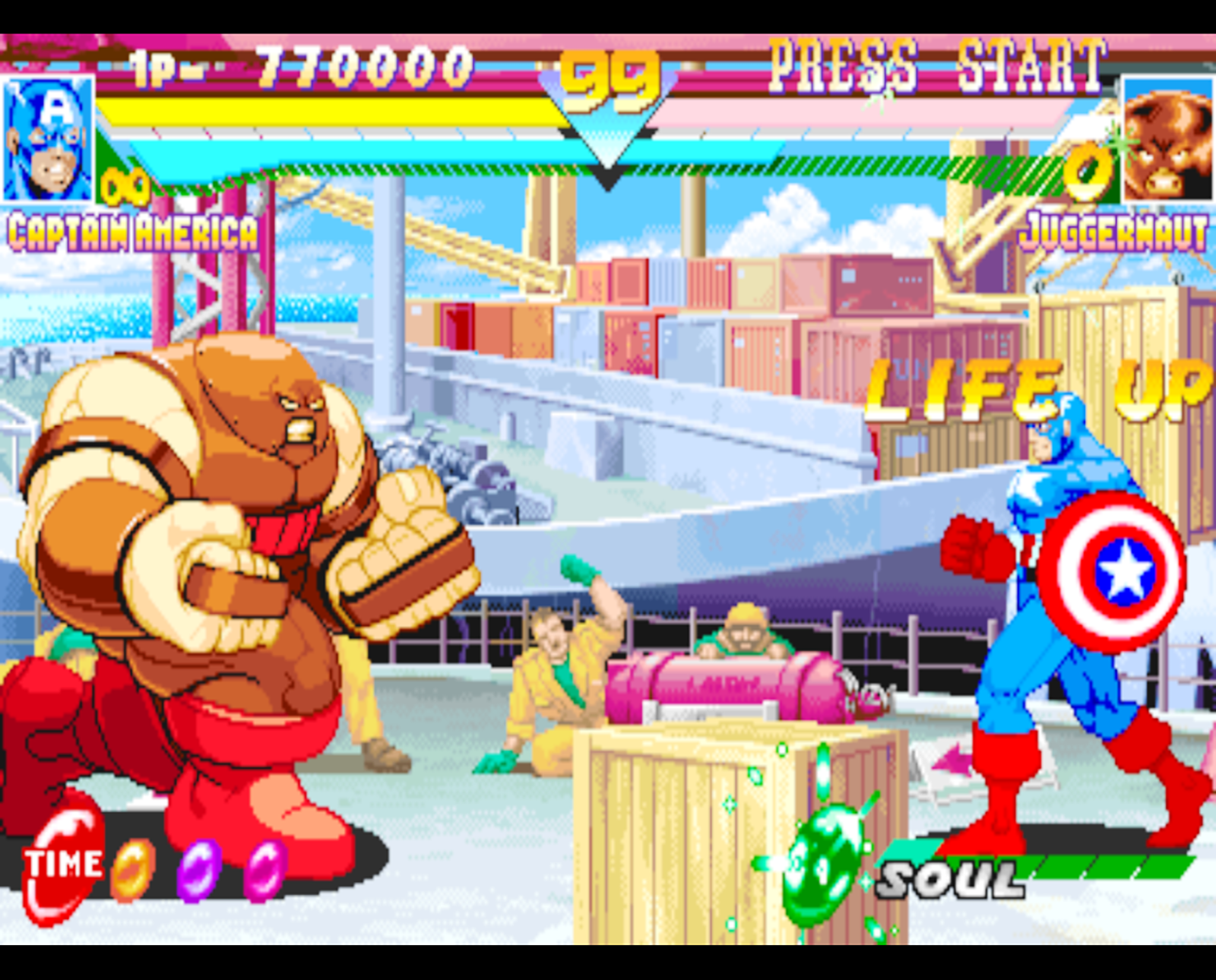
The controls and gameplay are what I consider classic for any 2D Street Fighter. The main difference in this game comes from Infinity Gems. Each gem has the potential to unlock special abilities for a hero. For example, if Magneto uses the Space Gem, he produces a force field and he will not take damage for a limited time. In each match, the AI opponent will have a gem with them. You must kick, punch or stare hard at them to take it.
Not all is perfect in this entry. The music in the game doesn’t stand out but the upbeat tempo of each stage helps you stay in the action. Also, the game may slow to a crawl depending on the gem effects if both characters are using them at the same time. Sometimes the game is so slow that a full second will go by before your character reacts to your button commands. But this slowdown is rare.
I still enjoy this game. Despite the game’s occasional problems, I remember my friend Ted King and I going to the local department store in my hometown and playing it for hours. Once it was released for home consoles, we played it even more. The zany combos that one can do are almost limitless. In some skilled player’s hands, they are limitless because of infinite combos that nearly every character had. That’s another standard that Capcom kept with their fighters.
Marvel Super Heroes paved the way for the famous Versus series of which Capcom is very proud. And they should be proud. With games like Marvel vs. Street Fighter, the Marvel vs. Capcom series and the Capcom vs. SNK entries, few other companies have been successful in creating a more popular series that millions enjoy to date. And now with the announcement of Marvel vs. Capcom 3, I’m going to play them all until it is released.
If you want a fighter that you can pick up and play with little knowledge about Street Fighter, Marvel Super Heroes is it. If you want to make creative combos, look no further. This is good, classic fun made for comic book fans around the world to enjoy.
2UP evaluation
By Lyndsey Beatty
The Versus series has come a long way since the heroes and villains of Marvel Super Heroes gathered in 1996 for this slugfest. The graphics may have evolved, and the Marvel license reverted several times, but one thing remains the same: Fighting with superheroes of the Marvel ilk is fun.
Marvel Super Heroes neatly upgraded the experience of X‑Men: Children of the Atom. With a more accessible combo system and better play feel, Marvel Super Heroes is almost a dream to play, even by modern standards. There are still problems, though, such as touch-of-death combos for everyone and a limited roster immediately made obsolete by successive games. But Marvel Super Heroes is still playable, and there’s still a scene in 2026, so Capcom got something right.
Score: 3.5 out of 5


 One of the more nonsensical and cringe-worthy moments that stuck out to me was naming each stage after well-known movies and pop culture series. Toyz in the Hood, Stair Wars, Far Trek and Terminate Her Too were named after the movies Boyz in the Hood, Star Wars, Star Trek, and Terminator 2. Don’t get me wrong, I understood that Treasure was trying to seize the moment but should have found other ways to accomplish the task because it came off as goofy and grating, not cute.