
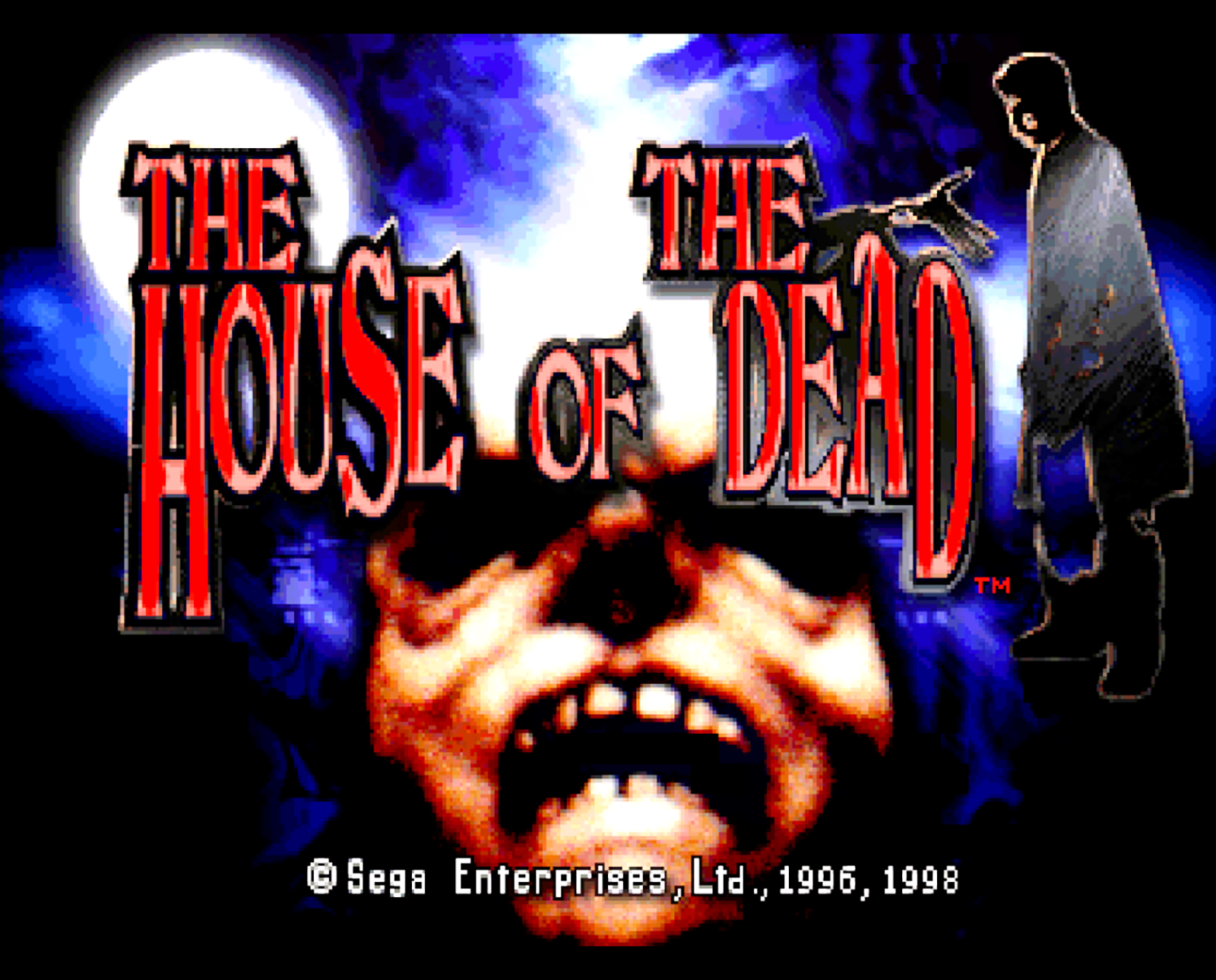
House of the Dead
Sega, 1998
Retro House of the Dead sets up shop for franchise
Ah, the progress that has been made. The on rails shooters genre has made strides in the last 27 years. Modern controls — including light guns available for the home market — have made playing a lot more enjoyable. And that has made the House of the Dead series — and especially the original game — a tad bit more tolerable.
House of the Dead starts off as most zombie horror games of the day did: A megalomaniacal weirdo is messing with bioterrorism unnecessarily and has created a mess. And by mess, I mean mutated, transformed humans with a taste for flesh. That’s literally the plot of the game. There’s something about a fiancée that needs saving and stopping this blight from spreading to the rest of humanity, but that’s the basics. It’s serviceable and really doesn’t do much to affect the gameplay. You’re killing zombies, boss zombies and most likely the end boss guy who created the problem. Clean it up and go on in future sequels to take on an even larger threat in the bad guy’s boss because, of course, he has a boss.
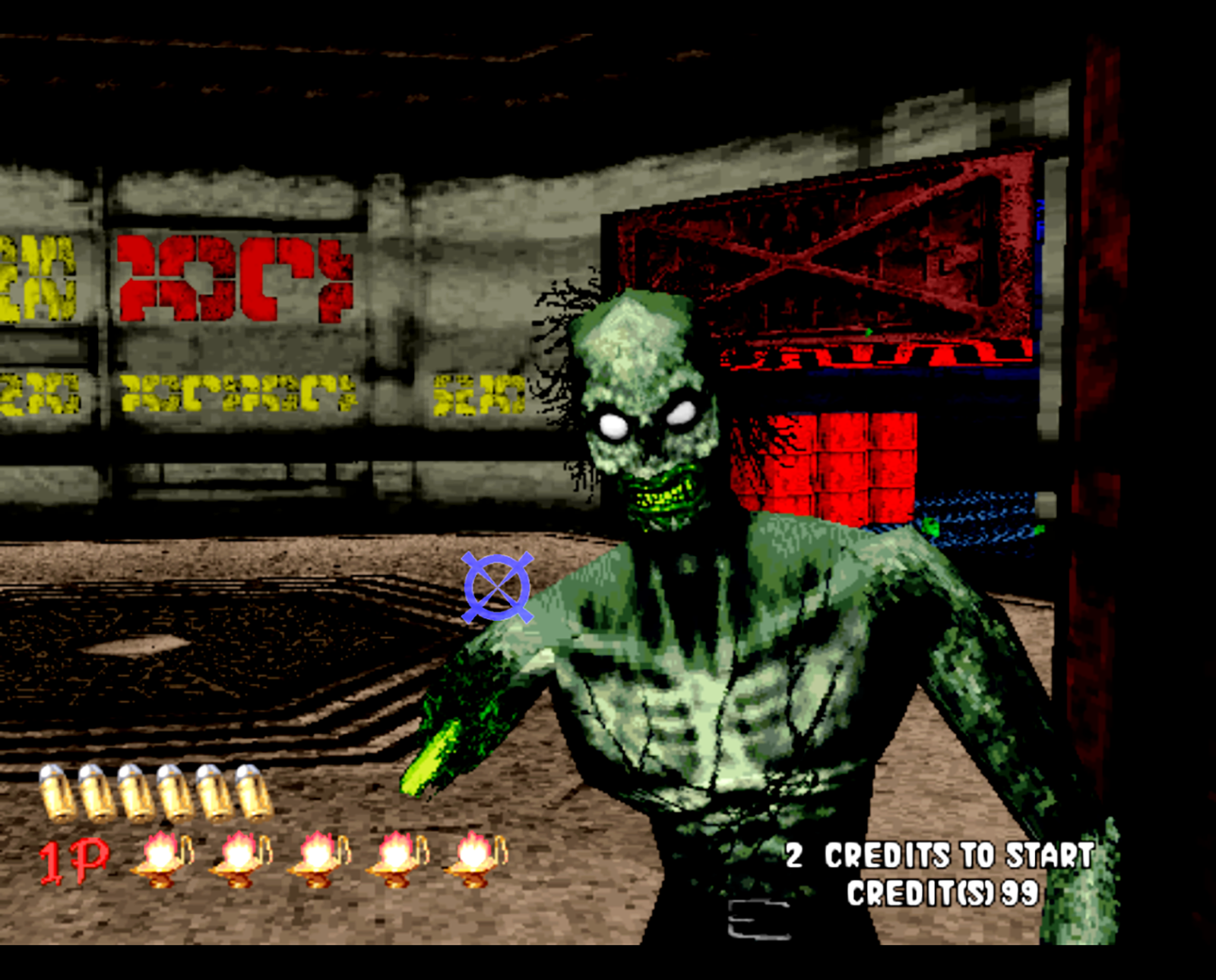
Cleaning up the problem is the fun part here. The controls are your standard light gun shooter but they’re fine. Aiming and shooting wasn’t bad, though lining up my shot sometimes was not exactly sharp. There were a few times fighting some of the aerial bosses that the cursor just wasn’t keeping up so I took cheap hits. As an arcade old head, I know that’s the name of the game here: It’s designed to be a quarter-muncher. But by the time I get home, there should be a better understanding that this isn’t going to fly. Thankfully, cheat codes exist so it’s not a problem. But for arcade conditions sake, this really isn’t cool.
 Because this is a 1998 product we’re talking about, I’m also not expecting the graphics to look like much. And they don’t, beyond these zombies looking OK. Keep in mind that these graphics didn’t really improve until well beyond the second game/Typing of the Dead, so you’re going to be seeing them for a long time. The music fares about the same, too. They are decent enough for the late ’90s, and they work well in the confines of House of the Dead.
House of the Dead has made many improvements in the nearly 30 years since the original game. It didn’t set the barn on fire then but it’s a nice rail shooter if you’re into zombie horror and like what the series has to offer. Personally, I’m more apt to play Typing of the Dead before House of the Dead, but that’s because I prefer to be a keyboard sharpshooter these days. House of the Dead’s reticle is set in the middle with the ability to go higher.

 Pandora. Until it wasn’t. You see, Borderlands has charm and grace, knowing when it’s hitting its limit at the bar. Borderlands 2, well, you have to tell it when to stop because it thinks it can handle its liquor but really can’t. Pre-Sequel? Brown liquor gives it courage to talk to folks a certain way, and it winds up getting thrown out of the bar and Ubered home. It’s because Pre-Sequel thinks it’s something we’ve never seen before, when we all have and we’re not buying.
 of General Knoxx
  touch down on the planet, the new mechanics of oxygen management and low gravity are a pain to deal with and obnoxious. Yes, you do need something new to spice things up a bit, but it’s not implemented with any type of precision or enjoyment. Constantly having to manage how much oxygen is left while trying to avoid taking damage means distraction, and it ruins any sort of sandbox vibe the game might have been going for. Oxygen management is also taking precedence while working through Borderlands Beginning Syndrome, or when you start a character in a Borderlands playthrough with little to no help. The first few hours of any Borderlands playthrough are slow and a slog with no help, and Pre-Sequel is no exception. All other mechanics are Borderlands 2 based, so
  Much like the non-new mechanics, the graphics are Borderlands 2 based as well. So, you’re not going to see new textures, though there are a few new enemies and NPCs to change things up a bit. The new enemies are slightly interesting, as are some of the bosses. This has always been Borderlands’ strength as franchise: Colorful characters that leave an impression. Pre-Sequel manages to create some goodwill with some new characters, but they’re all in the style of Borderlands 2. Borderlands 2 was serviceable in its graphics as a marginally better upgrade to Borderlands, so you’re getting that marginal upgrade here as well. The soundtrack also is Borderlands 2 based, so if you enjoyed that, you’re probably going to enjoy this, too. There are a few tracks that stand out, but nothing special … much like everything else offered here.