

Let this low-flying mess stay grounded
As a child of the 1980s, there was one major requirement I had to know: the major prime time action shows and what nights and networks that they came on. Two of those shows were Knight Rider on Fridays on NBC and Airwolf on Saturdays on CBS. These  two shows were so popular that Acclaim Entertainment was able to get license rights from Universal Television to develop video games for both shows. In a previous issue of GI, we reviewed Knight Rider for the NES in the Torture of the Quarter section. Could Airwolf break this curse of popular shows turned into horrible games? It was time to find out.
Airwolf follows the plot based on the TV show in that you take the role of Stringfellow “String” Hawke, who is given a mission by the CIA to rescue prisoners of war from  unknown terrorist groups using the top-secret helicopter known as Airwolf. As String conducts the mission, he finds out that one of the prisoners being held is his long-lost brother who was declared missing in action during the Vietnam War. This gives him added incentive to carry out his given mission.
Airwolf’s gameplay is a simulated first-person view that was applied to the Knight Rider game. You have the view of Airwolf that is clear enough to see your enemies and to attack enemy strongholds such as aircraft towers, prisoner camps and repair depots. However, this is the game’s Achilles’ heel. Control is not flexible when you need it to be during dogfights with enemy aircraft. You’re required to shoot first or destroy aircraft towers if you don’t fire your limited missiles with precise timing. The inflexibility rears again when you land at a prisoner camp landing gently and still die.
 The graphics were OK, but they were akin to flight simulator games that were highly popular during the ’80s. To give Airwolf a fraction of a chance for a good review, I found the debriefing scene excellent, giving me the appropriate data of destroyed enemies, rescued prisoners and intercepted missiles.
Sadly, I was ENRAGED that Acclaim could be this sloppy with a franchise such as Airwolf. Don’t get me wrong, Acclaim did go on to make better video games based on popular franchises, but like Knight Rider, Airwolf failed to show me any redeeming reason for replay.
Airwolf — like Knight Rider — are games that are recommended only for the diehard fans of the ’80s that want to relive the action-packed nights of their childhood. While I loved both shows, unfortunately their action-packed formula that produced major ratings for TV did not translate well into video game format. Acclaim did learn well from these mistakes, but they gave the first MasterClass lesson in video gaming of being careful with popular franchises. If you want my advice, skip both games and play them on readily available emulators; you’ll save time and hard-earned money.
Fun Facts
- Airwolf was created by Donald P. Belisario, who was known for pop culture-worthy shows such as Quantum Leap, Magnum, P.I., JAG and NCIS, which is still airing on CBS.
- The actual Airwolf was based on a Bell 222 helicopter designed for corporate travel, emergency medical transport and utility transport. A full replica of Airwolf was on display at a Tennessee aviation museum but has since been sold to a private collector in Bel Aire, Calif.
- There were numerous versions of Airwolf made for various home systems, but a side scrolling arcade version was developed by Japanese developer Kyugo in 1987. Acclaim released the NES version a year later, after the show went off the air four years earlier.

 and his equally foolish partner Catwoman as they join forces to take over Gotham and wreak havoc. Because you are technically superior (and richer) than your foes, you have an arsenal at your disposal that helps you take out the criminal element that is doing the bidding of the meddlesome bird man and troublesome minx. Really, if you’ve watched the superb film, you shouldn’t be at a loss here as to what you need to do. It follows the plot exactly, including the encounters that Batman has with lesser henchmen. Being a game based on a movie property sometimes has its perks.
 Batman is easy to guide around, though there are a few spots where the directions and what to do could be a little more clearly pointed out. However, Batman is fluid and moves quickly enough that getting around Gotham to take on the Penguin and Catwoman isn’t much of a problem.
 Much like the graphics, the sound is also spot on and close to the movie’s backing tracks. Of course, there are a few appropriations because you’re not getting a full orchestra with composer Danny Elfman on the
 moving left and right with the control pad, jumping with a button, and attacking with basic weapons by using combinations for special weapons. These controls have special designations for Grant, controlling how high he can jump and climb walls, and for Alucard, who can transform into a bat. To give this team of vampire hunters an extra advantage, Trevor can upgrade his mystic whip to a long-ranged chain whip and can use various Warakiya items such as the banshee boomerang, battle ax and a pocket watch that temporarily freezes enemies. Sypha has her magic staff as her main weapon in addition to using elemental orbs that can produce fire, ice and thunder attacks. Grant has use of the dagger, but he can only use the mystic ax as his secondary weapon. Alucard has use of a destructive ball that can be upgraded to shoot three directions.
 While I appreciate these effective techniques to dispatch the undead, there were flaws such as learning to time each attack or risk falling off a stage. Also, whichever partner spirit Trevor teams up with, the partner takes damage, creating a struggle to survive in certain stages. I also learned that you collect stone hearts to power weapons and if Alucard is your partner, he would turn into a bat. That’s fine but that skill eats up your hearts and if you run out, he could turn back into human form putting him and Trevor in a
 finally blew up in the U.S., and we finally started receiving mixes much like Japan. The problem was, we were getting them years after the fact, and when we did get them, they were mostly lacking — broken, incomplete messes that you were better off pretending didn’t exist. That, my friends, is where we join our story already in progress with Dance Dance Revolution Extreme 2.
 2004, a full two years after the original was released in arcades and for PlayStation 2 in Japan. That game is absolute garbage: It’s nothing like what Japan received, which is a game that’s much closer to the arcade version of Extreme. We received a broken and changed-for-the-worse song interface, missing and weird songlist and grading mechanics that were excised as of
 Nine-tailed Fox. He graduates from his village’s academy and is placed on a team featuring his crush Sakura and his rival Sasuke while learning teamwork and the ways of ninjutsu. Clash of Ninja 2 follows the first half of the series, with Naruto working with his teammates through the Chunin (first level) exams that the ninja academy graduates face.
 you choose is merely cosmetic with the movesets and mechanics not changing from character to character. Other than that, the ability to jump right in and get to work is a welcome and refreshing change of pace in a category of gaming known for its sometimes-challenging mechanics.
 The gameplay style didn’t change too much between games but it’s unique and has character enough to encourage even the most hardened street fighter to come back and learn more. There are advanced techniques such as Dark Force and chains to learn as well as movesets that require some controller gymnastics to master.
  The best thing about the series — other than the gameplay — is the soundtrack.
 rise (or drop, depending on the song modification used) to meet holders. You’re judged on the timing of your steps and either pass the song or fail based on the cumulative score and effect of your timing. Let’s not get it twisted, though: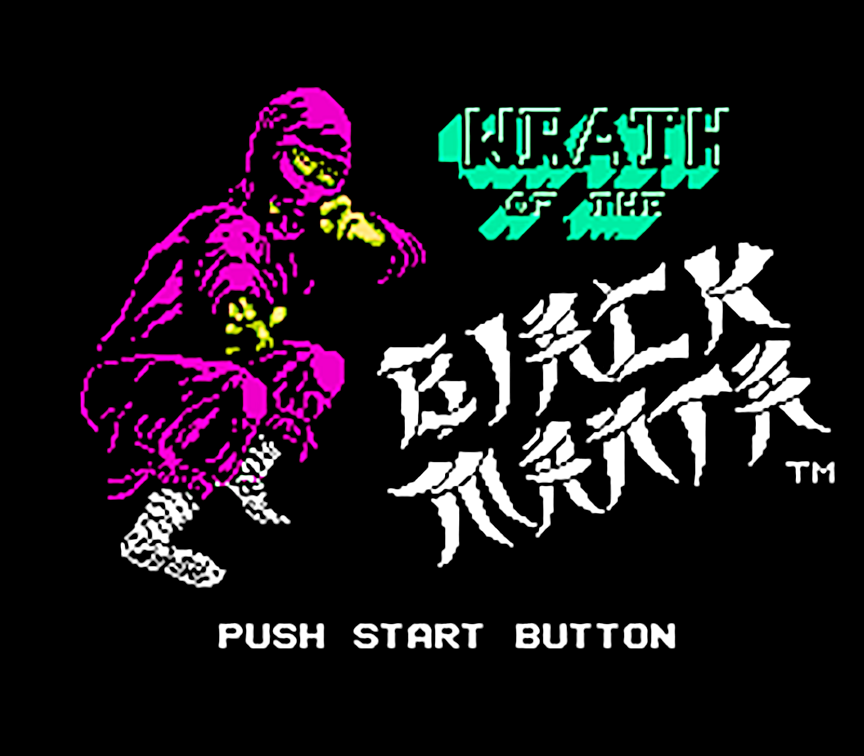
 children in New York City, the apparent bastion of all evil and where the most heinous crimes take place in the video game world. A drug fiend named El Toro is hellbent on turning these children into addicts and it’s up to you and your ninja skills to make Toro get down or lay down with the War on Drugs.™
 adventure on the
  by Dr. Light years after the original Mega Man. X is a more powerful version of our blue titan but with free will. 100 years later, after Dr. Light’s death, X was found by Dr. Cain, a robotics expert who developed robots based on X’s design known as “reploids.” However, this began a rise of rebellious reploids, known as mavericks, which led to the formation of a group known as maverick hunters to stop them. Alas, the maverick hunter’s leader Sigma became a maverick (and the series’ main villain), forcing X to team up with another maverick hunter named Zero to stop Sigma’s plan for global domination.
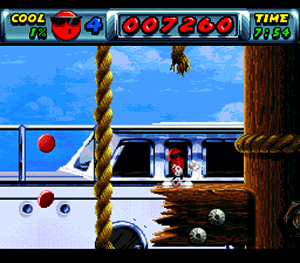 throughout 11 levels in cages. Why its friends are trapped, we’ll never know but it’s up to Spot to rescue them and lecture you about not drinking dark sodas. Spot’s traversal through these 11 levels is nothing short of amazing despite the rampant product placement. It’s surprisingly good, with solid controls that don’t make controlling Spot a chore, and competent simple mechanics that don’t get in the way: It’s mostly jumping and shooting magical sparks at enemies and barred gates. The life system — hilariously denoted by an ever-peeling and deteriorating picture of Spot — is more than generous and there are helper power ups galore to get through levels. The levels themselves have a lot of depth and are timed just right with enough time to explore or get the bare minimum experience in the search for Spot’s missing friend.