

Pacific battles fly in 8‑bit form
Capcom’s warfighting 1940 series reminds me of the good times when arcade gaming  ruled my weekends and I was fortunate to find some rare gems that later became gaming classics. During that time, I played 1942 in the arcade and on the NES and walked away from this experience with some valuable information: 1. The first game in a series may or may not guarantee future success; and, 2. The creators of some of our favorite games had to cut their teeth on low-tier games before they received the big breaks that made them what they are today. One of those games is 1942.
1942 is a vertical-scrolling shooter that takes place on the Pacific front of World War II. You take control of a P‑38 Lightning plane assigned to go to Tokyo and destroy the Imperial Air Force fleet.
Gameplay of 1942 is simple: You can move either vertically or horizontally. Consisting of 32 stages, the P‑38 will be challenged by Ki-61s, A6M Zeros, and Ki-48s with a long-range bomber known as G8N as level bosses. To give the P‑38 Lightning a fighting  chance against these planes, it can do air rolls or vertical loops. If you time your attacks right, some planes will drop upgraded firepower or an escort team of two smaller fighter planes to combat the relentless assault from planes that WILL attempt to knock you out of the skies, especially if you’re just taking off from your aircraft carrier.
While I liked 1942, there are some issues that annoyed me. Timing of movements, including the vertical drops and air rolls, must be precise because of the high chance of being shot down by enemy planes. Also, you must watch for attacking planes in front and behind as the Ki-48s are masterful at getting the unsuspected into close-area shootouts, which will reduce the number of lives quickly.
 The music quality of 1942 is an acquired taste as the repeated use of a snare drum made me think that Capcom phoned in a lackluster drum beat, which made me turn the volume down to continue playing. The challenge is decent since you will be on your toes to avoid enemy fire nonstop. It has strong replay value and would be a great time-killer as a nostalgia trip for arcade veterans. Also, it’s a great example for those who want to know how side-scrolling games played a major impact in the gaming world.
1942 serves not only as an icon in gaming’s hall of fame but also doubles as one of Capcom’s entries into the gaming world. It helps that 1942 was the start of looking at Capcom as an up-and-coming game company wanting to expand beyond its home of Osaka, Japan.
Fun facts:
-
- The P‑38, Ki-61, A6M and Ki-48 were actual war planes used heavily in the Pacific Conflict between the U.S. and Japan. The companies who built them — Lockheed Martin, Kawasaki, and Mitsubishi — are well-established in the defense industry and continue to play vital roles in various areas of aerospace technology.
- 1942 was Yoshiki Okamoto’s debut game for Capcom. He was also the original game designer of Konami’s Gyruss. Because of internal disputes involving pay, he was fired from Konami. After 1942’s success, Okamoto remained at Capcom where he played an important role in producing Final Fight, Street Fighter II and Biohazard/Resident Evil. He retired from game development for consoles in 2012 and is currently developing games for various mobile devices.
- The P‑38, Ki-61, A6M and Ki-48 were actual war planes used heavily in the Pacific Conflict between the U.S. and Japan. The companies who built them — Lockheed Martin, Kawasaki, and Mitsubishi — are well-established in the defense industry and continue to play vital roles in various areas of aerospace technology.

 concept of new games coming into my beloved franchise is not always welcome. There have been particularly good games (i.e. Wild World, the original game) and mediocre offerings (Happy Home Designer and City Folk). Amiibo Festival is a little bit of both: It’s a fun take on the Animal Crossing universe, but it needs a little bit of polish and more things to do to keep the concept of a board game based on the franchise interesting.
 Festival takes that concept and turns it on its head. With Festival, you’re tasked with moving around a typical Animal Crossing town in the form of a large board game. The town is transformed by spaces that can be events, Stalk Market sale stops and visits from the usual assortment of guests that visit a normal town in the franchise.
  the game. For example,
 a nightmare and a chore to actually control. The Fighter flaps his arms to stay afloat and even with both balloons still present, this is extra hard to do and maintain. More often than not, I don’t lose balloons because an enemy popped them; it’s because I landed in the water, was eaten by the large fish or steered myself unwittingly into the lightning I was desperately trying to avoid. Precision flying this is not. To get a sense of what it’s like to control the Fighter, imagine if the horrible Ice Climbers were flying instead of jumping terribly up a mountain.
  And while the game is barely playable, the soundtrack also manages to squeak by in presentation. It is a sad day when I declare that a soundtrack from Metroid sound director Hip Tanaka is irredeemable. There is nothing that makes me want to listen to this, and nearly everything that Tanaka has created gets high marks from me. The songs aren’t memorable, there are few songs there anyway, and the lack of varied sound effects is disconcerting. Add the soundtrack woes to an underwhelming graphical palette and the game overall is a mess.
 play begins: For every line cleared, a small amount of energy is added to a magic meter. Fill up the magic meter and you get what we’ve termed at
  The game shines in its visuals, which benefit from that Disney touch. The game is bright and colorful and designed in the way of Disney games and animation, meaning it’s top-notch through and through. The graphics are still good for an N64-era game and haven’t aged badly. The soundtrack has aged well, too, and is still one of the best of the era. Each character’s stage is memorably themed and stands out enough for you to remember it well after your game is over.

 checking out by itself. On the other hand, the difficulty and rating system make it a frustrating experience. If you’re used to the rubber band
 friendly. If you didn’t start with Super Mario Bros., stop right now and go back and study up that game. The sequel is designed to be set up and buoyed by the original. If you start here, you’re setting yourself up for failure.
 This frustrating tactic of punishing the player for being too good is exactly why the follow up to Super Mario Bros. would have never flown in America and why we didn’t see the game until a full five years after its release in Japan. People traditionally play Mario to relax, not be thrown backward in a never-ending loop of anger and frustration. This doesn’t appeal to the mass players and it’s cheap and perverse that Mario is used in this way.
 Mastering powersliding means a world of difference in race times, especially when you have bragging rights at stake. Old mechanics, such as the weight class concept, are still present but it seems everyone has a better representation with respect to how a class really controls. The lightweights feel like, well, lightweights. The heavyweights actually feel like they’re heavy to handle.
 Palace is interestingly laid out and the graphical quality of the castle still blows away the competition 20 years later. Watching Mario run around, run and jump and be Mario but in a non-2D sprite is pure heaven for Mario lovers like myself.
  The soundtrack makes up for the illness-inducing gameplay. The soundtrack is fantastic and it’s worthy of a mainline Mario game, easily. From running around in the plains of Bob-omb Battlefield to traversing numerous obstacles to take on the King of the Koopas, Mario 64 is a dream come true in terms of audio pleasure.
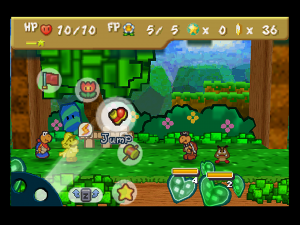 Mario fills that void nicely with an engaging tale of teamwork and camaraderie. I was most impressed with the depth of the characters and the deft way Intelligent Systems fleshed out the world of Mario and some of his never-before-seen allies who come from all walks of the Mario life.
 elements from the original platforming masterpieces Super Mario Bros. and Super Mario Bros. 3. Joining those are secondary greatest hit Super Mario World and the more recent hit New Super Mario Bros. U. All four games represent some crowning achievement for the everyday plumber and thus have some merit for making you revisit these set pieces to create your own masterpiece.
 nitial two and ultimately the majority of your creation library are unlocked via a time system that goes by days. You can speed it up, but it’s intended to make you the creator spend several days trying out the system and getting a feel for new elements in a paced environment. I can appreciate the sense of not wanting too many elements all at once, but the system is a little slow and frustrating when I have a million ideas that I can’t fully implement for several days initially.