Marvel Origins — Issue 55

Mar­vel Ori­gins did series proud with two best games

Editor’s note: This review orig­i­nal­ly appeared in Issue 21 (1Q2013). It has been edit­ed for spelling, gram­mar and clarity.

There are those of us who love games and com­ic books, and then there’s those of us who love the Ver­sus fight­ing game series. I’m firm­ly in the camp that loves the Ver­sus series with pas­sion. Some games more than oth­ers attack my heart, but I real­ly appre­ci­ate the depth and intri­ca­cy that can be found in Mar­vel char­ac­ters team­ing up to fight along­side or against each oth­er or Cap­com char­ac­ters. Out of all the series’ offer­ings, I seem to derive the most plea­sure from Mar­vel vs. Capcom.

Of the var­i­ous ver­sions of the game out on the mar­ket, this newest ver­sion belongs in the pre­mier ech­e­lon of treat­ment. It’s pack­aged with Mar­vel Super Heroes ― the sec­ond game in the series ― and gives some of the new­er gamers the back­ground nec­es­sary to ful­ly under­stand what’s being dan­gled in front of them today with Ulti­mate Mar­vel vs. Cap­com 3. True, there isn’t an excess of 56 char­ac­ters or the gaudi­ness of X‑Factor as a draw, but the foun­da­tion and the buildup on that foun­da­tion are present through both games and that’s what mat­ters when you want to learn where a fran­chise comes from.

If you’re a purist in terms of the struc­ture of the game, this is a ver­sion that deserves a purist’s crit­i­cal eye. The game­play in both games is per­fect. It’s as smooth an expe­ri­ence as putting in quar­ters at an arcade and play­ing to your heart’s con­tent. Moves work the way they should, and com­bos can be pulled off very well. Game­play quirks ― such as Mar­vel vs. Cap­com’s frus­trat­ing dif­fi­cul­ty in the arcade mode ― are still there, but that should­n’t be a deter­rent to the over­all expe­ri­ence. And for me, it was­n’t. I picked it up and played Mar­vel vs. Cap­com imme­di­ate­ly as if it were the Dream­cast ver­sion, which is also an arcade-per­fect port. Mar­vel Super Heroes is a sub­lime play expe­ri­ence as well for many of the same reasons.
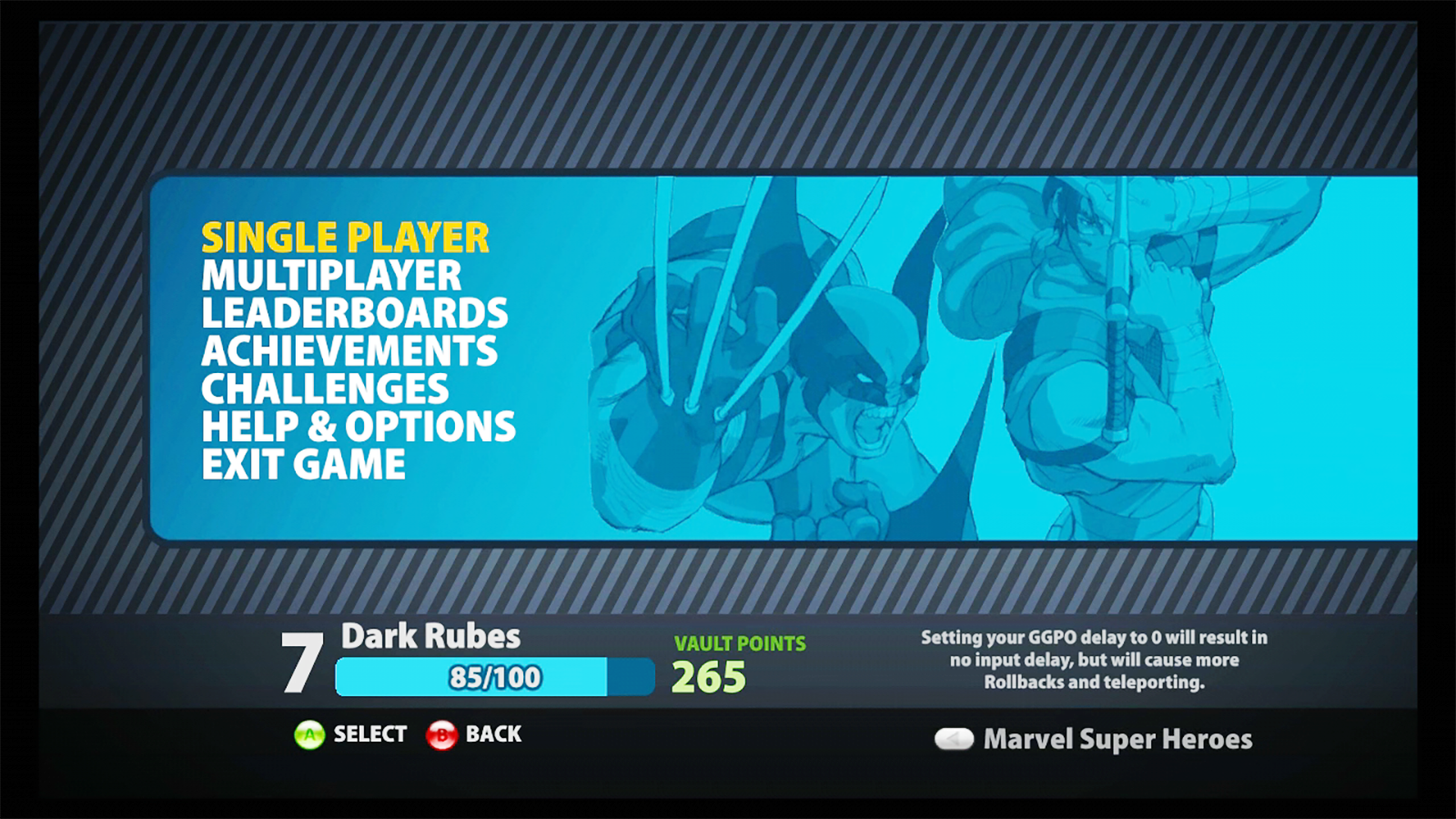

Because these are arcade-per­fect ren­di­tions of the games, the music and graph­ics are pret­ty much the same, too. There are a few options added for the view, and I must applaud the cre­ation of the chal­lenge side­bar that can be turned on or off for both games. It’s a neat way to keep abreast of progress in the games’ accom­plish­ments, and the view doesn’t get in the way of the game­play. Done in an arcade cab­i­net style, it’s eas­i­er to keep up with the action than if the game were in wide-screen format.

If you con­sid­er your­self a fight­ing game effec­tor and you loved the Ver­sus series, you’re prob­a­bly going to love this. It’s espe­cial­ly poignant to be able to play the ear­ly entries in the series now that con­soles and fight­ing games have moved on from this style of play. It’s easy to for­get about the prog­en­i­tors of a series when there’s fresh blood in town. Mar­vel vs. Cap­com Ori­gins some­how man­ages to bring back famil­iar game­play while retelling its ori­gin sto­ry to a new­er generation.


Marvel Super Heroes — Issue 55

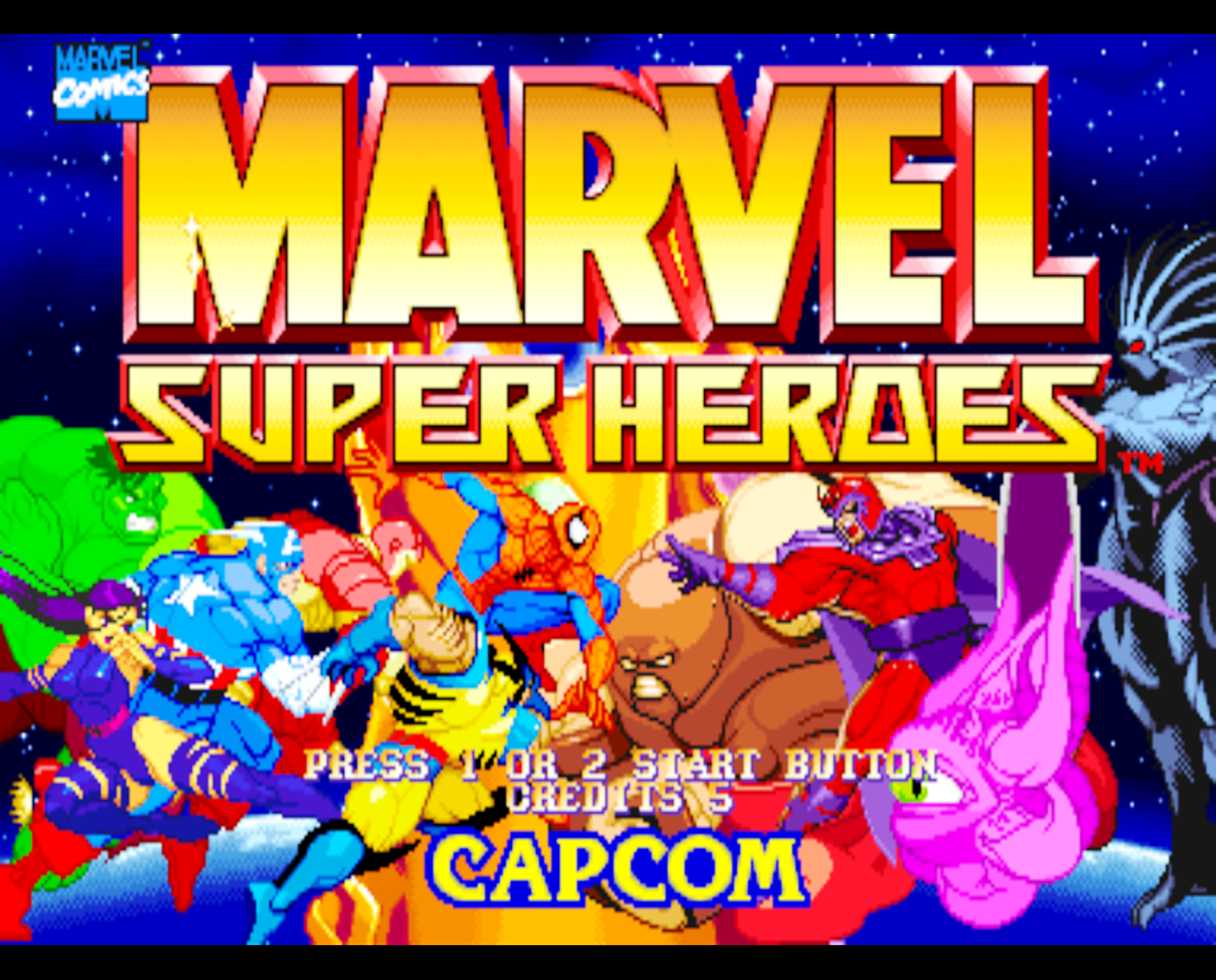
Super­heroes have super start in Mar­vel Super Heroes

Edi­tor’s note: This review orig­i­nal­ly appeared in Issue 11 (3Q2010). It has been edit­ed for spelling, gram­mar and clarity.

By Jamie Mosley, for­mer asso­ciate editor
Gam­ing Insurrection

By now, every­one read­ing this should know about Cap­com’s 2D fight­ers. Cap­com likes to keep cer­tain stan­dards for their famous fight­ing titles that car­ry over from one fight­er to the next. There will be col­or­ful supers, tight-yet-famil­iar con­trols and fast paced action. Mar­vel Super Heroes is no excep­tion to this. 

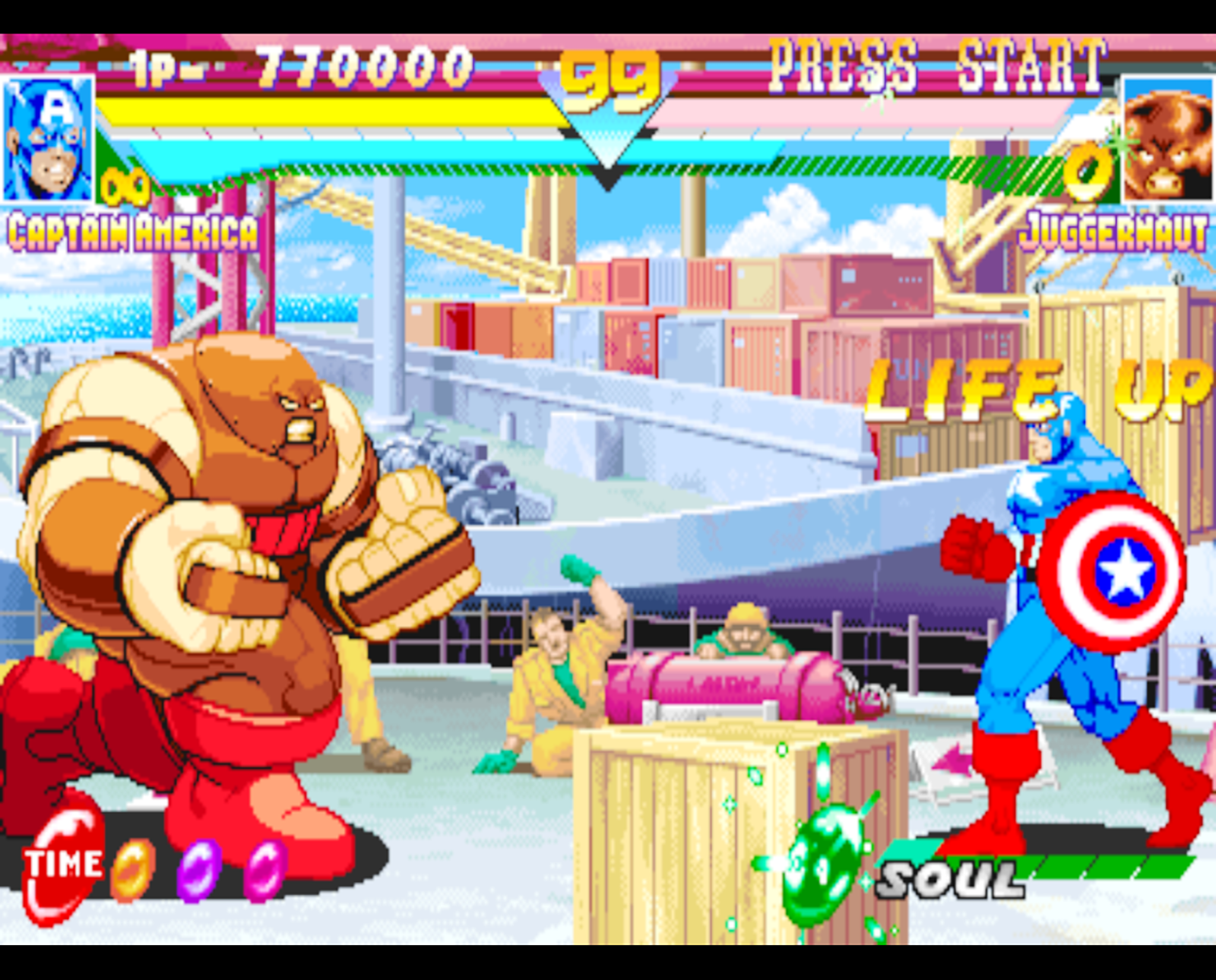
Fol­low­ing the still-pop­u­lar X‑Men: Chil­dren of the Atom in art style and game­play, Cap­com has allowed oppor­tu­ni­ties to pum­mel your oppo­nents to con­tin­ue by launch­ing them in the air for that super­hero-type feel. Some of Mar­vel’s famous heroes and vil­lains appear so you, the true believ­ers, can give swift jus­tice over your foes. Use Cap­tain Amer­i­ca, Spi­der-Man, Iron Man, Jug­ger­naut and Mag­ne­to to fight your way to Thanos. While on your way, be sure to pick up and use the Infin­i­ty Gems you find. You may need them.


The con­trols and game­play are what I con­sid­er clas­sic for any 2D Street Fight­er. The main dif­fer­ence in this game comes from Infin­i­ty Gems. Each gem has the poten­tial to unlock spe­cial abil­i­ties for a hero. For exam­ple, if Mag­ne­to uses the Space Gem, he pro­duces a force field and he will not take dam­age for a lim­it­ed time. In each match, the AI oppo­nent will have a gem with them. You must kick, punch or stare hard at them to take it.

Not all is per­fect in this entry. The music in the game does­n’t stand out but the upbeat tem­po of each stage helps you stay in the action. Also, the game may slow to a crawl depend­ing on the gem effects if both char­ac­ters are using them at the same time. Some­times the game is so slow that a full sec­ond will go by before your char­ac­ter reacts to your but­ton com­mands. But this slow­down is rare.

I still enjoy this game. Despite the game’s occa­sion­al prob­lems, I remem­ber my friend Ted King and I going to the local depart­ment store in my home­town and play­ing it for hours. Once it was released for home con­soles, we played it even more. The zany com­bos that one can do are almost lim­it­less. In some skilled play­er’s hands, they are lim­it­less because of infi­nite com­bos that near­ly every char­ac­ter had. That’s anoth­er stan­dard that Cap­com kept with their fighters. 

Mar­vel Super Heroes paved the way for the famous Ver­sus series of which Cap­com is very proud. And they should be proud. With games like Mar­vel vs. Street Fight­er, the Mar­vel vs. Cap­com series and the Cap­com vs. SNK entries, few oth­er com­pa­nies have been suc­cess­ful in cre­at­ing a more pop­u­lar series that mil­lions enjoy to date. And now with the announce­ment of Mar­vel vs. Cap­com 3, I’m going to play them all until it is released.

If you want a fight­er that you can pick up and play with lit­tle knowl­edge about Street Fight­er, Mar­vel Super Heroes is it. If you want to make cre­ative com­bos, look no fur­ther. This is good, clas­sic fun made for com­ic book fans around the world to enjoy.

2UP eval­u­a­tion

By Lyn­d­sey Beatty

The Ver­sus series has come a long way since the heroes and vil­lains of Mar­vel Super Heroes gath­ered in 1996 for this slugfest. The graph­ics may have evolved, and the Mar­vel license revert­ed sev­er­al times, but one thing remains the same: Fight­ing with super­heroes of the Mar­vel ilk is fun. 

Mar­vel Super Heroes neat­ly upgrad­ed the expe­ri­ence of X‑Men: Chil­dren of the Atom. With a more acces­si­ble com­bo sys­tem and bet­ter play feel, Mar­vel Super Heroes is almost a dream to play, even by mod­ern stan­dards. There are still prob­lems, though, such as touch-of-death com­bos for every­one and a lim­it­ed ros­ter imme­di­ate­ly made obso­lete by suc­ces­sive games. But Mar­vel Super Heroes is still playable, and there’s still a scene in 2026, so Cap­com got some­thing right. 

Score: 3.5 out of 5