

The ultimate beginning
Naruto Uzimaki. From 1999 to 2017, Shonen Jump Magazine’s hyperactive ninja  knucklehead had a major impact on the geek culture scene as well as anime and manga. From graphic novels, to other novelty merchandise and video games, many anime fans worldwide followed his rise from outcast of his ninja village to its legendary savior. During Naruto’s rise, there were many video games for various systems that followed every adventure of our blonde, blue-eyed hero and his friends. I got the opportunity to play one of the Naruto-based games after a recent game shopping expedition when I found Naruto: Ultimate Ninja: Storm.
Ultimate Ninja: Storm is a hybrid consisting of fighting and role playing game elements.  Free Battle mode allows you to choose one main fighter with two backup characters against another player or the console’s choice of characters in various stages taken right out of the Naruto universe. Free Battle also allows you to earn extra cash if you defeat their opponents using various moves known as ninjutsu. The extra coinage will be needed in the role playing mode, Ultimate Mission Mode, during which you control Naruto in various missions that involve episodes 1 to 135 of the anime series.
 I found everything from the cinematic intro to actual gameplay excellent. Namco Bandai brought their experience in making games like Tekken and Soul Calibur and combined it with Masashi Kishimoto’s guidance in developing the perfect example of a video game based on a popular anime franchise. Every stage, landmark and character are portrayed perfectly in the game making me as if I was transported to the Hidden Leaf Village. The controls are easy and will help you pull off some up-close cool combos when certain buttons are displayed. They’re also great during the exploration of Ultimate Mission Mode as you’re trying to find hidden items and mission locations.
Another cool thing about the game was that the music from the anime series was not only kept intact, but also was done in Dolby Digital Sound. The voice acting in the game is high caliber thanks to Namco Bandai working with Viz Media and Studiopolis Inc. to bring together the original English voice actors to reprise their respective roles. Even with the excellent English voice acting, you can also play the game in Japanese with English subtitles for a more authentic feel. Anyone who has not played a Naruto video game will find it perfect for either a hot or rainy-day afternoon, or a friendly fighting game tournament at any anime convention.
Namco Bandai did an awesome job of bringing Naruto to the PS3 in addition to publishing additional games based off this iconic franchise. For now, Naruto’s journey to be hokage has ended successfully, with a son ready to take up his own challenges. Ultimate Ninja: Storm is a great start showcasing Naruto’s early adventures.

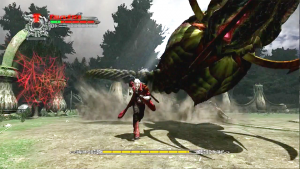 has changed for a more intense experience. Taking place in a remote island town called Fortuna, you assume the role of Nero — a younger version of Dante — who is a member of the Order of the Sword. The Order of the Sword is a militant religious organization formed to destroy demons based on the actions of the Demon-Knight Sparda, who rebelled against the demon underworld to protect humanity. At a recent ceremony to honor Sparda, Dante smashes though a skylight and kills the priest leading the ceremony, setting off a chain of events that would not only put Dante and Nero on a collision course with each other, but also would lead both demon-hunters through a greater mystery to find out the true intentions of the Order and to stop a more vicious plot of a demon-invasion.
 The excellent detail that is used in each level comes to life in the background and cinematic scenes. These were done with high definition technology that will make you feel like you are playing with a masterpiece of art instead of a video game. Capcom’s sound team brings their A‑game again. Each sound and vocal effect combined with Dolby Digital Sound gives an orchestral quality to the game. Capcom did a great job in voice and motion capture for
 Forever, the fifth game in the quirky series. Whether or not you’re into the “if it’s not broke then don’t fix it” method of gaming will determine if you can stand another trip to the cosmos with a katamari.
 repertoire of the Prince, such as the Prince Hop and the King Shock, but otherwise you’re still rolling along to pick up items to make your katamari grow. The series isn’t known for its growth and this is a major reason why. While it’s easy to control the Prince and maneuver the Katamari, there still should be some innovation at this point, five games in.
 soundtrack relentlessly throughout our lifespan at
 much like playing any platformer of the past 20 years and the control scheme is simple and intuitive in letting you figure out what to do and how to apply it later. Where it falters is the jumping mechanics. While obvious and simple, the jumping does feel slightly off and floaty, which is a problem in a game that relies on that mechanic to carry it. It’s annoying to have to re-do sections of a level solely because of a missed jump, and that detracts from the core experience.
 While the mechanics could use tweaking, not much else needs work. The soundtrack is fantastic and fits the game perfectly. It’s a good mixture of indie folk and pop, and it immediately reminds of the brilliance that is Katamari Damacy. The graphics are also in the realm of perfect and evoke a certain sort of charm that begs more playthroughs just to see what developer Media Molecule could come up with next. It’s breathtaking and simplistic, like a child’s world come to life, and begs to be admired.