Glorified tech demo MK entry is actually glorious
DC Universe is last game before WB shift
 The world as we MK heads knew it was colliding and coming to an end, but we didn’t know it just yet. Midway was on its last legs, the story for all intents and purposes had been wrapped up, and Mortal Kombat just didn’t have anywhere to go. Except that it did, and it jumped into the arms of the DC Universe. We desperate acolytes saw something special and that was the glorified yet nice tech demo that is Mortal Kombat vs. DC Universe.
MK vs. DC Universe is a weird crossover combination in terms of plot. There’s a rage virus running around affecting both universes and they are merging. Select folks from both are involved including villains Shao Kahn and Darkseid. What transpires is a battle between the universes to unmerge them and rid themselves of Darkseid and Kahn all in one fell swoop. It’s a little light on plot but it’s a fighting game and other comparable crossovers such as the early Marvel Versus franchise don’t really push the plot point either so it’s fine. For what it’s worth, at least Midway was consistent in having the theme of rage causing the ruckus carryover to the fighting mechanics as well.
The fighting is nice, too. The actual meat-and-potatoes mechanics of the game are solid and easy to get into. I’d played surrounding 3D era MK products for years and was easily able to get into DC Universe. It plays a lot like Deception and Deadly Alliance, which means if you were decent at those games, you’d do well here also. It’s smooth, although some of the AI programming leaves a lot to be desired. However, even though I’m griping about Dark Kahn, I’ll kind of let it slide because I expect an MK boss to be cheap.
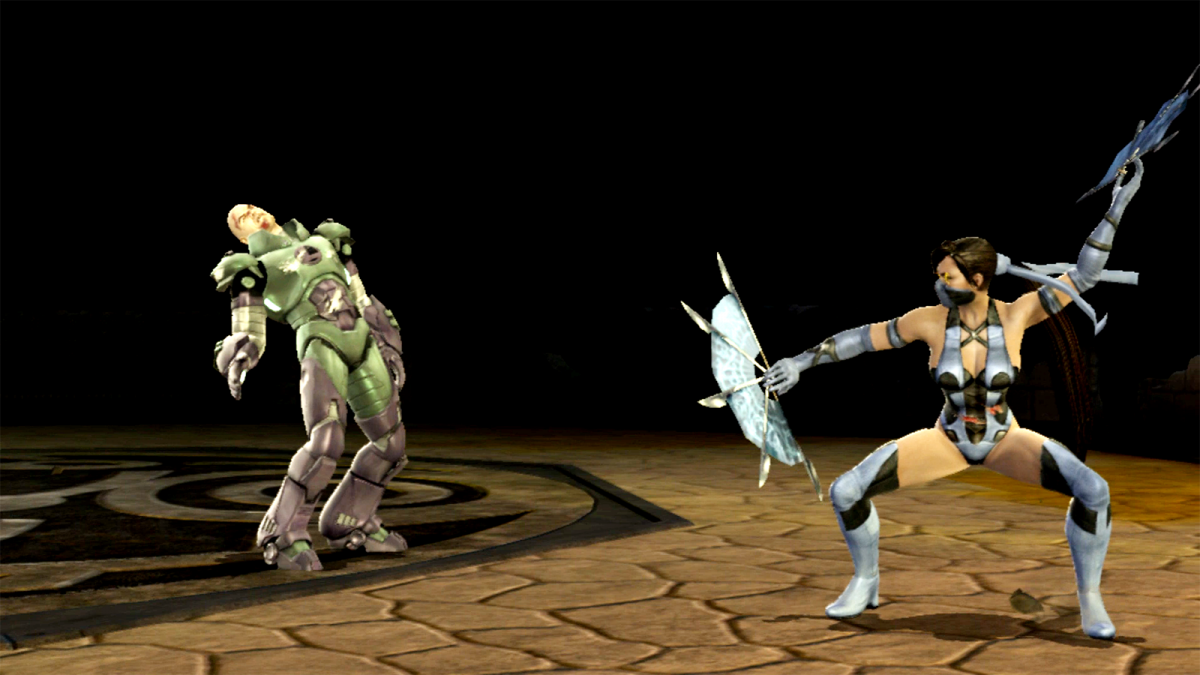
While all of the fighting happening was great, the graphics really took center stage. The presentation of DC Universe is extremely impressive. Much like its siblings in the 3D era, DC Universe looks good, but it goes the extra mile in the crispness of the character models and the backgrounds. Even the sparse Fortress of Solitude is nice with the character models standing out against the barren cold landscape. By this point, you could tell the MK team had mastered the graphics situation because these character models hit hard and still hold up more than 15 years later. Also hard-hitting is the soundtrack. DC Universe features several bangers on its soundtrack, with most of my favorites coming from the DC side, surprisingly. Midway was known for its great sound department, and the soundtrack doesn’t miss here.
I don’t have too many problems with MK vs. DC Universe, which is, quite frankly, shocking. I think the only complaint that I might have is that it’s a watered-down crossover that doesn’t live up to the gory standards set by pure Mortal Kombat. I want the insane finishing moves that make me think about the plausibility of how they kill an opponent. But I knew going in that I wasn’t getting that here, because there was absolutely no way Warner Bros. was going to let DC characters get ripped apart or eviscerated as MK is wont to do 1,000 percent of 100 percent of the time. It’s the same principle in why you will never see the much-requested Street Fighter vs. Mortal Kombat or certain guest characters in Mortal Kombat. So, it’s disappointing that a lot of the finishing moves aren’t MK standards compliant and Heroic Brutalities are a dumb compromise, but at least there’s something.
MK vs. DC Universe may not be the Mortal Kombat game that we asked for, but given the fruits that were born of it – Injustice and modern Mortal Kombat – I can’t fault the game for existing. It does a fantastic job of setting up the now-standard MK experience and showing what the Mortal Kombat team could do. Yes, it’s a tech demo for Injustice and yes, Ed Boon and Co. pulled a miracle out their hat, but it’s a very competent demo and it’s a fortunate miracle because without this competency, we wouldn’t be talking about Mortal Kombat beyond this game. This crossover Rubicon from the MK team holds up.
Score: 4 out of 5
The rise, fall and rise again of MK’s developers
Mortal Kombat, as a franchise, has longevity and stability to its name in its 30-plus years of history. It’s had two publishers (Midway and Warner Bros.) and has had two developers (Midway and NetherRealm). But what happened to have the franchise change hands?
In the beginning, was a pitched idea from co-creators Ed Boon and John Tobias in 1991. Both worked with other properties at Midway but joined forces to create the fighting game we know and love today. Mortal Kombat 1992 was a smash hit and led to increased team resources. By 1995, a third sequel, Mortal Kombat 3, and a box office hit live-action movie – Mortal Kombat – placed Midway in the upper echelon of fighting game prowess. But change was afoot.
Trends toward polygonal-based fighters meant MK was behind. And other competitors emerged such as Killer Instinct, Virtua Fighter and Tekken. While Midway was attempting to compete with newer entries, its market share grew smaller with each new entry. Mortal Kombat remained a force to be reckoned with in its fully 3D era with Deadly Alliance and Deception, but there were flops that didn’t help, i.e. Special Forces in 2000, and other disappointing releases elsewhere in the company. Midway began hemorrhaging cash, according to a GameSpot news story from March 2009. Also, according to this story, Midway confirmed that it was looking to sell the MK IP. The doors were about to shut on MK, but there was a glimmer of hope: Warner Bros. stepped in and bought Midway.
Warner Bros. bought the studio for $49 million in July 2009 and rebranded it to NetherRealm Studios in 2010. Warner Bros. had previously worked with Midway to create Mortal Kombat vs. DC Universe and this was seen as a natural evolution of that partnership. NetherRealm has since produced Mortal Kombat 2011, Mortal Kombat XL, Mortal Kombat 11: Aftermath, Mortal Kombat One and the Injustice series under the Warner Bros. banner.