Revisiting an older Mortal Kombat game renders changed opinion
 Hindsight is a wonderful thing. A game critic for many years, I’ve learned to go back and revisit a young opinion of mine. I can admit when I’m wrong about a game that I played when I was a young buck floating around spending money I didn’t have on video games. As such, as a more discerning elder statesman critic, Mortal Kombat: Deadly Alliance is one of those games that I have to admit that I messed up with in my initial assessment.
Taking stock of what’s going on with the fifth game in the series, the titular Deadly Alliance is composed of Quan Chi and Shang Tsung, who decide to strike out on their own in the mad scramble for power that opened up in the wake of Shao Kahn’s failure in Mortal Kombat 3 and Shinnok’s failure in Mortal Kombat 4. The two plucky sorcerers join forces to achieve what their masters could not: Total domination, starting with killing Kahn and series stalwart hero Liu Kang. Earthrealm folks, guided once again by Raiden, set out to stop them. Some new faces join the older crew on the roster, such as Kenshi, Nitara, Li Mei, Mavado and Frost while a large contingent of older characters like Raiden, Sub-Zero, Scorpion and Cyrax remain. That balance is a nice mix of old and new, which makes the shocking change of Liu Kang being killed off a little more palatable.
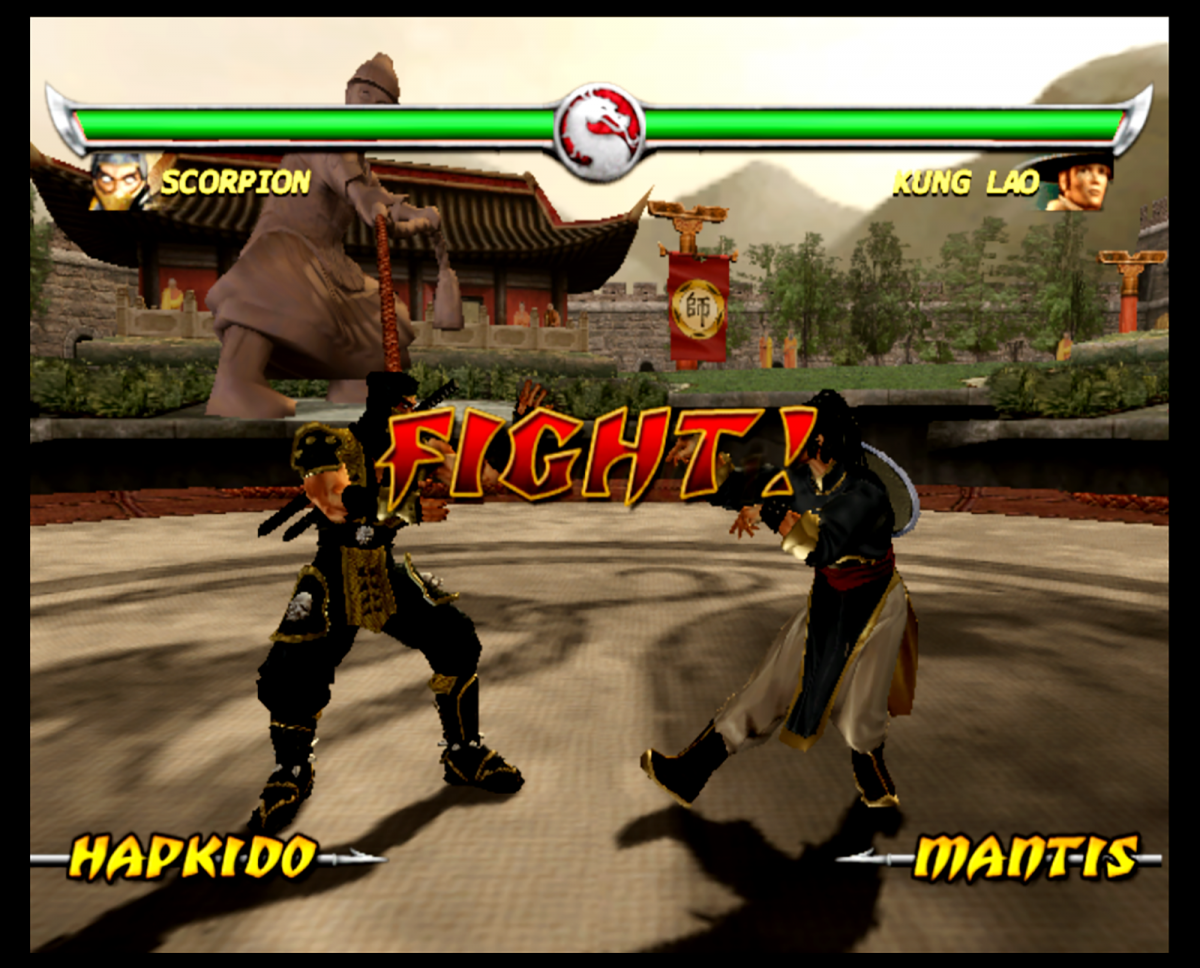
And, while I was highly critical of the look of its predecessor in MK4, I’m not sour at all on the look of Deadly Alliance. The move to RenderWare was a smart one, and it results in much better-looking graphics overall. The characters, while a little plasticky, look so much better and more realistic than MK4, while the backgrounds are still nicely done. The room for improvement was in the character models, and Midway knocked it out of the park this time around.
Equally well done is the soundtrack. Mortal Kombat has never been a slouch in the sound department, and Deadly Alliance is killer where this is concerned. The soundtrack has quite a few bangers, and fits exceedingly well with the theme. This is one of the better offerings to come out of the middle age of Mortal Kombat.
The game still plays surprisingly well for it to be an early journey into the 3D arena for the series, and with modern advancements in offering different styles, the decision to give most characters three different styles of play is refreshing. Deadly Alliance turned out to be the wave of the future as a lot of fighting games started looking at this as a solution to the variety problem. Though Deadly Alliance plays nicely, I do take issue with some of the fighting mechanics. Yes, I understand that Mortal Kombat had to change direction and the 3D fighting space was all the rage at the time, but some things were unnecessary, such as changing the button combination for Scorpion’s Spear. It’s a small gripe, but one that sticks out nonetheless.
With a new and improved look, new features such as the Krypt and Konquest mode, Deadly Alliance manages to break new ground and redeem MK as a series. Thankfully, with hindsight and maturity, I managed to take another critical look at the game that I was most wrong about initially and find innovation and depth where I once found contempt and scorn for the changes I wasn’t ready to make as a young MK head. Thank the Elder Gods for adulting and Mortal Kombat revisiting.
Score: 4 out 5
Mortal Kombat side hustle
Mortal Kombat isn’t just about fighting. The series also has its fair share of adventure games, which delve a little deeper into the franchise lore.
Mortal Kombat Mythologies: Sub-Zero
Released: 1997
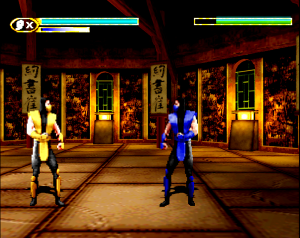
Premise: The first spinoff game focuses on Sub-Zero (Bi-Han) as he is contracted to steal the Map of the Elements unwittingly for the sorcerer Quan Chi. Notable for its fantastic soundtrack but also for its notorious control scheme, Mythologies isn’t a total loss because it expands on the Tournament lore and provided the origin of the Scorpion/Sub-Zero rivalry that defined some the franchise’s best years.
Mortal Kombat: Special Forces
Released: 2000
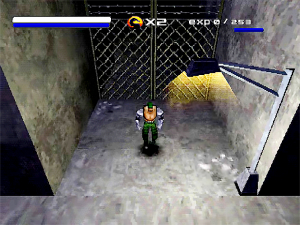
Premise: The second spinoff focused on the Special Forces, which includes series stalwarts Kano, Sonya Blade and Jax Briggs. It’s known as one of the worst games ever made but not for a lack of trying. It’s considered incomplete and rushed – rife with problems from that stemmed from behind-the-scenes chicanery – but it also cleared up some small parts of the lore. The introduction sequence is awful, though.
Mortal Kombat: Shaolin Monks
Released: 2005
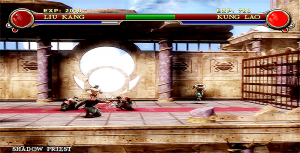
Premise: The titular bros Liu Kang and Kung Lao investigate the Outworld and its threat to Earthrealm in this re-imagining of the time between Mortal Kombat 1992 and Mortal Kombat II. It works well as a co-op adventure that we all wanted and needed featuring some of the more popular MK characters. Also, it manages to fix some of the damage left in the wake of Special Forces with tight gameplay and plenty of references to the golden age of MK.
Mortal Kombat vs. DC Universe
Released: 2008
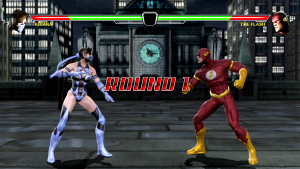
Premise: Simultaneously a main game and a spinoff, MK vs. DC Universe is a what-if crossover involving the Mortal Kombat universe colliding with the DC universe. Featuring a who’s who roster on both sides, it should have been a recipe for success. Except it wasn’t as big as a success as it could have been because of inside baseball at former developer Midway (bankruptcy) and the fact that it was clearly an audition for NetherRealm Studios to join the WB bandwagon. It’s not a terrible entry, but it’s not quite up to snuff like Mortal Kombat 2011 was to become later.

Mortal Kombat Mobile
Released: 2015
Premise: Following in the footsteps of other popular card-collecting mobile games, MK Mobile takes the variant concept and applies it to Mortal Kombat characters from the past and present. Character teams of three are created to battle against other teams with weapons, armor and accessories potentially applied to the team to increase their potency. The mobile game is still going strong nine years after its launch and is frequently updated with new characters pulled from the most recent main game. Be forewarned: It is a time and money sink.
Mortal Kombat: Onslaught
Released: 2023
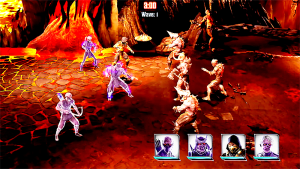
Premise: A second mobile game featuring Mortal Kombat characters, Onslaught takes the concept of group battles and card collection and mixes it with the franchise roster. It’s a cute and fun Mortal Kombat distraction that like, the main mobile game, is a time and money sink. It’s got depth to keep you coming back and characters that you’re already familiar with to hook you quickly.