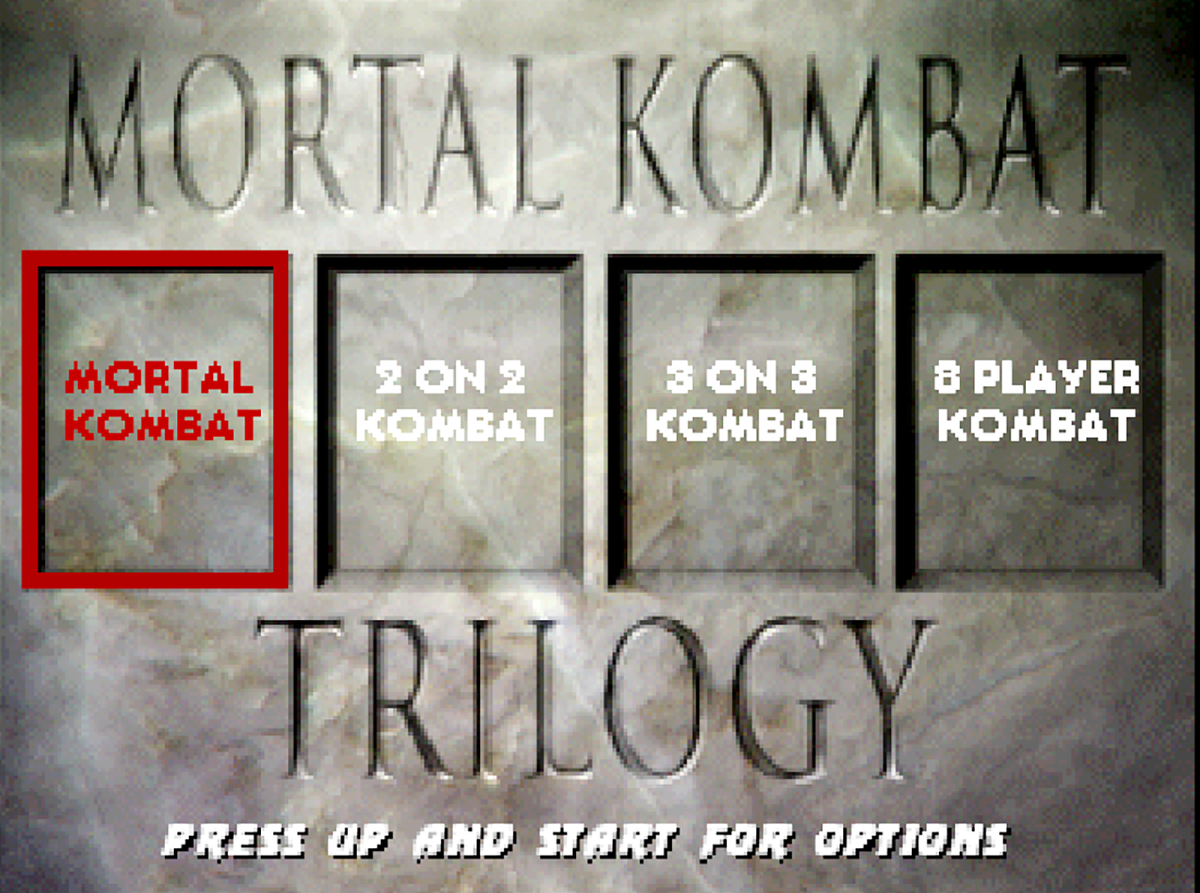
Kombat komes home for N64
Mortal Kombat Trilogy has few flaws that deny must-purchase status
Editor’s note: This review originally appeared in 1Q2010. It has been edited for spelling, grammar and clarity.
 Widely considered the beginning of the end of the Mortal Kombat fighting game franchise, MK3 took the series to dizzying heights with its dial-a-combos and mind-numbing lows with Animalities. Where the series excelled in MK3 were the upgrades: Ultimate MK3 and MK Trilogy.
MK Trilogy is, at its best, an amalgamation of the entire series up to 1995. The game attempts to present the entire storyline up to the point of MK3 with the characters present in all of the games plus two new fighters: Chameleon/Khameleon and Rain. Noob Saibot is finally playable without codes or being a dark swap of Scorpion or Kano. In the PlayStation version, all of the series’ bosses are available and you can choose from the previous versions of Kano, Jax and Kung Lao. In the Nintendo 64 version, well, you have choices. This makes recommending the Nintendo version a bit of a conundrum.
The N64 version is a strange beast. The game plays smoothly with slowdown when there’s too much going happening onscreen. That’s bad enough, but then there’s the issue of the backgrounds. The original game and its sequel have their associated backgrounds included but this version is missing at least three: The Courtyard with the Buddha statue and Shang Tsung’s Throne Room from MK 1992 and The Bank from MK3. Now, for storyline purposes, I could understand the lack of the Throne Room. After all, Tsung can’t show up as an old man again when he’s being played on screen as a young man. However, the Buddha statue stage shouldn’t have been left out. Whether it’s an issue of space or whatever, it should be there. They could have benefited by removing the Bridge Under the Stars or the Blue Portal stage, which are wholly unnecessary.
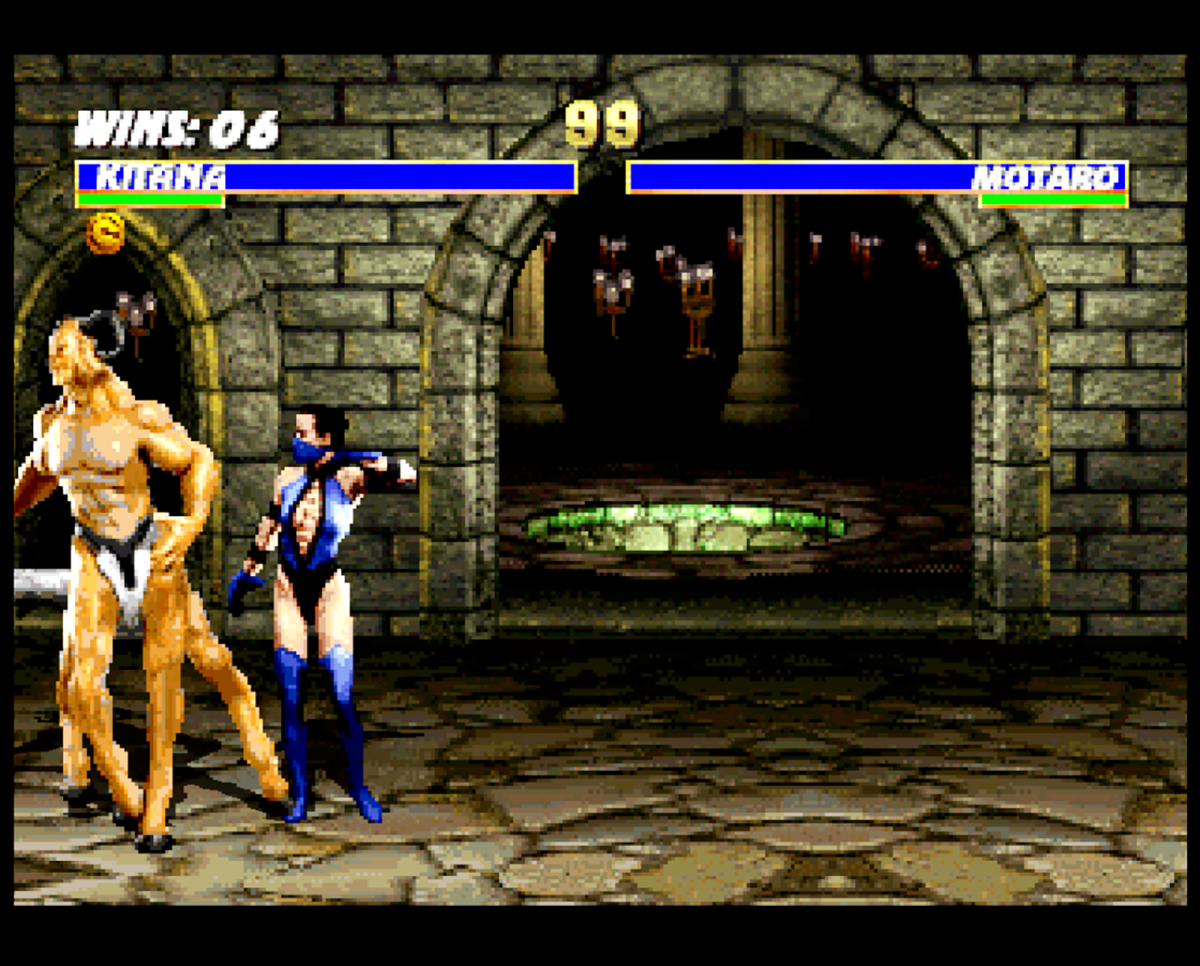
Along with the stage fluxor comes the issue with the music. Again, MK purists will recognize that some tunes aren’t included and that’s a turn off since some of the appeal for MK was its music. Well, you’ll care about that if you can get past the tinny sound. Because the game is packaged into the cartridge format, the sound has a noticeable underwater quality to it. It’s not really that bad, but it does stand out.
The only other detractors to this version are the lack of MK 1992 Kano and MKII version characters, Kintaro and Goro, the mashup of Sub-Zero characters and the game-breaking bug that might crash the game if you fight against Noob Saibot in an endurance match.
It’s not without its problems, but what this game gets right is its fun factor. I enjoy playing Mortal Kombat a great deal. It’s the series I grew up with in the arcades that makes me hunt down working machines and seek out matches. It’s an enjoyable experience for me and this was my only N64 game for some time in late 1996 and early 1997. Because of that I can still play this version and find a bright spot in its flaws.
If you, too, can wrap your mind around the issues at hand with this game, then by all means buy it. Be prepared, however, for other problems exclusive to the PSOne version, such as poor load times. It’s something to consider when thinking about Trilogy kombat.
Score: 3 out of 5